
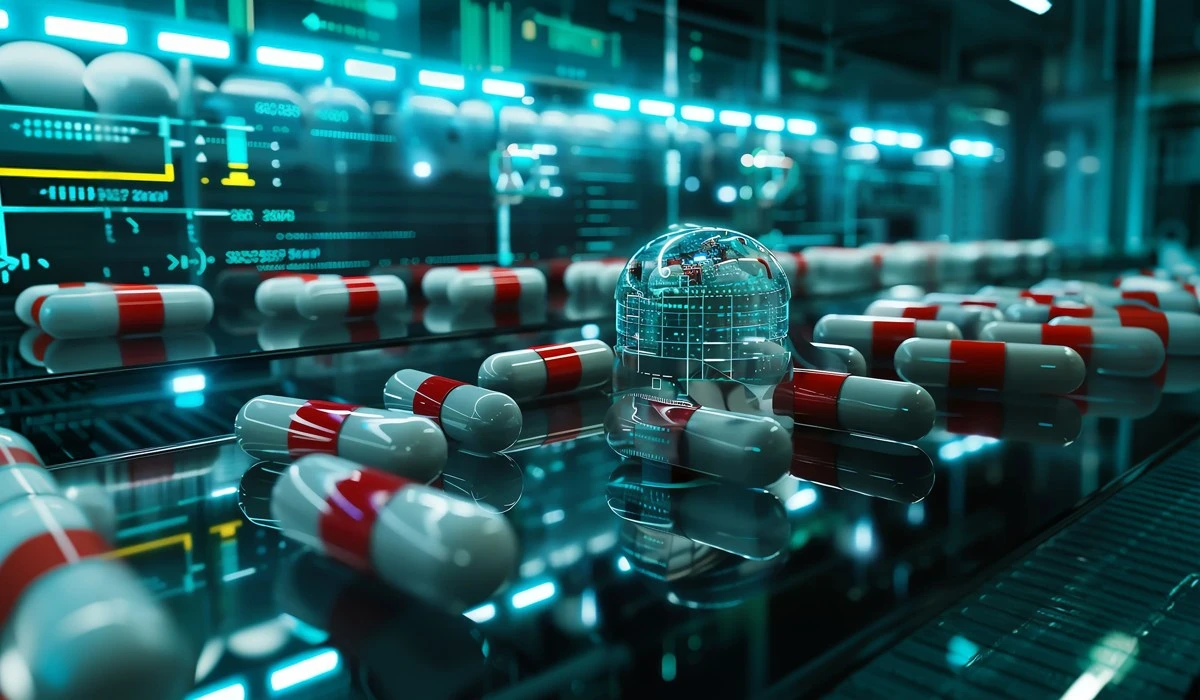
AI In Drug Design Targets 7,000 Rare Conditions
A child wakes up with a tremor that no doctor can name. For seven years, the family has traveled thousands of miles. They meet eight specialists and receive eight wrong answers. According to a report by the World Health Organization, more than 300 million people globally live with one or more of over 7,000 rare diseases, a reality that defines this "diagnostic odyssey." Within the pharmaceutical industry today, companies often ignore these patients because rare diseases offer little profit. Research published in Nature indicates that the cost to develop a single drug has reached $2.6 billion in 2013 dollars.
This financial wall leaves the majority of patients without treatment; data published on PubMed suggests that about 90% of rare diseases remain without an approved medication, affecting an estimated 350 million people. However, AI in Drug Design changes this math. It permits researchers to process thousands of conditions at the same time. According to the U.S. Food and Drug Administration (FDA), there are approximately 7,000 rare diseases that affect over 30 million Americans. This technology functions as the great equalizer for these orphan conditions that traditional medicine left behind. It changes how we find medicines for the smallest patient groups.
The Economic and Biological Hurdles of Rare Disease Research
Traditional drug finding moves at a crawl. It usually takes 12 years and billions of dollars to bring one medicine to the shelf. Most companies focus on "blockbuster" drugs for common illnesses like heart disease or diabetes. As noted in Wired, they require a massive return on investment because over 90% of drug candidates never make it to the market.
Why traditional pharma leaves "orphans" behind
The pharmaceutical industry follows the money. Developing a drug for only 1,000 people globally rarely makes sense to a corporate board. Because of this, the FDA labels these conditions as "orphans" and maintains a commitment to advancing therapies through the development of orphan products. The current system prioritizes diseases with millions of potential customers. This leaves rare disease patients waiting decades for a breakthrough that may never come.
The data scarcity challenge
Researchers struggle with a "small data" problem. Clinical trials require thousands of participants to prove a drug works. As noted by research in PubMed Central, although individual patient counts for many rare conditions are low, these disorders collectively affect between 6% and 8% of the world population. This makes traditional testing nearly impossible. Scientists cannot find enough people to fill a standard study, so the research stalls before it even begins.
How AI in Drug Design Bridges the Knowledge Gap
New technology solves the problem of small numbers. AI in Drug Design uses sophisticated math to find answers where humans only see gaps. It looks at the biology of a rare disease and compares it to more common conditions. This allows researchers to borrow knowledge from one field and apply it to another.
Pattern recognition in sparse datasets
Machine learning finds "signals" in noisy, limited data. Even if a study only has ten patients, the software identifies shared biological traits. It spots tiny changes in blood or tissue that a human eye would miss. This helps scientists understand why a disease happens without needing a 10,000-person trial.
Decoding the "dark genome."
Most of our DNA does not code for proteins. Scientists call this the "dark genome." In 2025, tools like AlphaGenome began decoding these obscured regions. These tools identify the specific genetic switches that start rare disorders. Because these switches are identified, AI in Drug Design points scientists toward the exact spot they need to fix.
Accelerating Early Hits with Virtual Drug Screening
In the past, scientists physically mixed chemicals in test tubes to see what worked. This manual work takes months and costs a fortune. Now, virtual drug screening allows researchers to test billions of chemicals in a digital environment. They find promising leads without ever touching a liquid.
Simulations over test tubes

High-speed computers simulate how a drug interacts with a protein. While a human lab might test a few thousand compounds a week, a digital system tests a billion in 24 hours. How does virtual drug screening work? It uses computational algorithms to predict how a small molecule will bind to a target protein, effectively narrowing down millions of candidates to the most promising few in a matter of days. This speed allows researchers to find a "hit" for a rare disease in a single afternoon.
Reducing the cost of "failure."
Most drugs fail during the early stages of testing. These failures drain budgets and stop research for rare conditions. Scientists identify high-probability leads early through virtual drug screening. They stop wasting money on molecules that will never work. This productivity makes it profitable to study diseases that affect only a handful of people.
Digital Drug Screening: From Prediction to Precision
Finding a molecule that sticks to a protein is only the first step. Scientists must also know if the drug will harm the patient. Digital drug screening models the whole human body to predict safety and side effects. This moves the research from a simple "yes or no" to a precise understanding of the drug's effect. According to ScienceDirect, AI-powered models provide early and accurate identification of toxicity risks, which prevents toxic reactions before a human ever takes the pill.
High-throughput digital modeling
This technology views the body as a whole system. It tracks how a drug travels through the liver, the heart, and the brain. What is digital drug screening in medicine? It is the use of computer-based models to evaluate the safety and efficacy of chemical libraries, permitting scientists to see drug reactions before a single drop of liquid is touched in a lab.
Personalizing treatments for ultra-rare mutations
Every patient is different, especially in rare diseases. Scientists now use "Bio-AI Twins" to create a digital version of a specific patient. They test different drug doses on the digital twin first. This allows for "N-of-1" trials where the medicine fits the individual’s unique genetic code perfectly.
Repurposing Existing Meds for Rare Conditions
Sometimes the cure already exists on the shelf of a local pharmacy. AI in Drug Design scans 8,000 existing, safe drugs to see if they can treat a rare condition. This "repurposing" strategy provides the fastest route to a cure. It turns a blood pressure pill into a life-saving treatment for a rare muscle disorder.
Teaching old drugs new tricks
In 2024, Harvard researchers released TxGNN. This tool scans 17,000 diseases and suggests existing drugs for them. It finds obscure connections that humans never suspected. For example, a drug used for skin rashes might accidentally fix a rare metabolic problem. The software finds these matches by looking at the deep biological roots of the disease.
Shortcutting the FDA approval path
New drugs usually take a decade to get approval. Repurposed drugs already have a safety record. According to Frontiers, drug repurposing can significantly shorten the development timeline to three to five years. This cuts years off the process, so patients get their medicine years sooner than they would with a brand-new molecule.
Real-World Success Stories Driven by AI in Drug Design
These technologies are no longer merely future theories, as people are receiving treatments today because of them. Companies like Insilico Medicine and Recursion Pharmaceuticals are filling their pipelines with drugs that a human never could have designed alone. These successes provide a path forward for the thousands of conditions still waiting for a name.
Breakthroughs in Neuromuscular and Metabolic Disorders
Research found on PubMed notes that Insilico Medicine recently moved the first phase 2a trial of an AI-designed drug for lung disease into human trials. This drug targets a protein that scientists previously thought was "undruggable." Can AI help find a cure for rare diseases? Yes, AI significantly shortens the path to a cure through the analysis of vast biological datasets to identify new therapeutic targets and predict which existing drugs can be repurposed. This same process is now identifying leads for ALS and Huntington’s disease.
The shift from "treatment" to "cure."
Most rare disease medicines only manage the symptoms. They do not fix the primary cause. New design tools are helping scientists build gene therapies. These therapies go inside the cell to repair the broken DNA. Researchers move closer to providing a permanent cure for genetic disorders when they use software to design these genetic "patches."
The Future of the Human-AI Partnership in the Lab
Technology supports the scientist by providing a more powerful set of eyes rather than replacing them. The best results happen when human intuition meets the processing speed of a computer. This partnership will define the next century of medicine.
Keeping the "Human in the Loop"
A computer can predict a result, but a human must understand the "why." Scientists use these digital tools to narrow down the options. Then, they use their expertise to make the final decision. This ensures that every drug identified remains safe and grounded in real-world biology. The software handles the grunt work, and the human handles the difficult ethics.
Ensuring global access to AI-identified cures
Finding a drug is only half the battle. We must also make sure patients can afford it. Because AI in Drug Design lowers the cost of research, it should also lower the price of the final medicine. Governments and companies must work together to ensure that these breakthroughs reach every corner of the world, not just wealthy nations.
The Dawn of a New Time for Rare Disease Patients
The 300 million people living with rare conditions no longer have to wait in the shadows. The integration of virtual drug screening and digital drug screening has shifted the rare disease field from "neglected" to "solvable." We are moving toward a world where every disease has a target, and every patient has a plan. AI in Drug Design provides faster research along with a moral commitment to the people the world once forgot. The diagnostic odyssey is finally reaching its end.
Recently Added
Categories
- Arts And Humanities
- Blog
- Business And Management
- Criminology
- Education
- Environment And Conservation
- Farming And Animal Care
- Geopolitics
- Lifestyle And Beauty
- Medicine And Science
- Mental Health
- Nutrition And Diet
- Religion And Spirituality
- Social Care And Health
- Sport And Fitness
- Technology
- Uncategorized
- Videos

