

Graphology: Does Handwriting Hide Deep Truths?
Most people watch a person’s eyes or listen for a hitch in their voice to judge their character. They believe they can spot a lie by looking for a sweaty palm or a shifty gaze. In reality, the most honest record of a person’s temperament sits on the paper they just signed. When someone picks up a pen, their brain sends a specific stream of electrical pulses to the small muscles in their hand. These movements happen too fast for the conscious mind to manipulate every stroke.
The pen leaves a physical trail of the writer’s nervous system. This "brain-print" bypasses the social masks people wear during interviews or first dates. Measuring the angle of the letters allows you to see how a person truly manages their emotions and relates to the world around them. Graphology provides a clear look at the internal state of the writer before they have a chance to filter their presentation.
The Core Principles of Graphology in Vetting Trust
Your brain treats writing as an ideomotor response. This means your thoughts initiate muscular movements without you consciously deciding to move. Jean-Hippolyte Michon recognized this in 1871 when he identified "fixed signs" in handwriting that matched specific character traits. He spent years comparing thousands of samples to prove that certain pen strokes consistently belong to certain types of people.
Today, handwriting trait analysis works like a psychological X-ray. It reveals the depth of a person’s emotional stability and their likely reactions under pressure. Analysts look at the "baseline" of a sentence to judge reliability. This is the imaginary line where the letters sit. According to a study published in ScienceDirect validating Milton Bunker's popular method linking specific handwriting elements to character traits, a straight, steady baseline suggests a person with a grounded moral compass and high self-discipline. The research also notes that a baseline that wanders or sinks often indicates a lack of mental stamina or shifting ethics. Graphology uses these indicators to build a profile of how a person handles responsibility.
As detailed in the history provided by the American Association of Handwriting Analysts (aahahandwriting.org), Milton Bunker expanded this field in 1929 by establishing a school that later became the International Graphoanalysis Society. He focused on individual stroke movements rather than just the general look of the writing. He noticed that small "knots" or vertical lines inside ovals like the letters a or o suggest secretiveness. These tiny marks act as red flags for anyone trying to determine if a person tells the whole truth.
Decoding the Psychology Behind Stroke Slant Interpretation
The angle of a person's writing shows their emotional direction. Analysts use a Slant Protractor to measure the lean of long downstrokes in letters like b, d, f, and t. This stroke slant interpretation reveals if a person leads with their heart or their head. It shows how much they let their feelings influence their actions.
The Vertical Slant (The AB Slant)
Research published on ResearchGate points out that there appears to be no strong relationship between handwriting and personality traits; however, graphologists claim a vertical slant sits at exactly 90 degrees on the page. In stroke slant interpretation, this is the AB slant. This style indicates a "head-over-heart" personality. Practitioners also believe these writers rely on logic and objective facts rather than emotional impulses. They keep a distance between their feelings and their decisions, which makes them very reliable in high-stress jobs.
You often find vertical writing in the notes of engineers, pilots, and emergency room doctors. These professionals must remain calm when things go wrong. While a vertical writer might seem cold or detached in a conversation, they usually stay consistent. You can trust them to follow through on a promise because they made the choice based entirely on reason.
Right-Leaning Slants and the Vulnerability of Honesty
Most people in Western cultures write with a rightward lean. This forward motion reflects a desire to move toward other people and the future. Jules Crépieux-Jamin, a pioneer in the field, noted that a rightward slant suggests a socialized personality. These writers want to connect, but the degree of the lean determines how much control they have over those connections.
The Moderate Right Lean (The BC Slant)
The BC slant falls between 100 and 120 degrees. This is the most common slant for balanced, socialized adults. It represents a person who is expressive but still keeps their emotions in check. They care about others and respond to kindness, but they do not lose their sense of self in the process.
How can you tell if someone is lying by their handwriting? Although a dissertation from Walden University ScholarWorks notes that this psychodiagnostic approach has not been proven valid or reliable for deception detection, graphologists maintain that sudden changes in slant within a single sentence often signal a conflict between what is felt and what is being written, indicating potential deception. If a person usually writes with a steady BC slant but suddenly switches to vertical or left-leaning strokes when answering a specific question, they are likely hiding their true reaction. Graphology helps you spot these moments of internal friction that the writer tries to mask with their words.
Identifying Self-Preservation in Leftward Graphology Slants
A left-leaning slant moves away from the right side of the page. Historically, analysts link the right side of the page to the future and other people. The left side represents the past and the self. When someone slants their writing to the left, they are pulling back into themselves.
The Leftward Lean (The FA Slant)
The FA slant measures between 60 and 80 degrees. This leftward lean suggests a person who is emotionally guarded. They often hide their true feelings to protect themselves from getting hurt. This person may have experienced situations that taught them to keep their guard up at all times.
What does a left-leaning slant mean in graphology? Even though an article in Science Focus points out that contemporary psychology views the practice as a joke, analysts argue that a leftward slant generally represents emotional withdrawal, indicating a person who prioritizes self-protection and may be harder to truly "know" or trust intimately. While a left-slant writer is not necessarily dishonest, they are secretive. They find it difficult to be vulnerable. This makes building a foundation of trust with them a slower and more difficult process. They often observe a situation for a long time before they decide to participate.
Detecting Volatility via Inconsistent Stroke Slant Interpretation
The most concerning sign in a trust assessment is an inconsistent slant. This occurs when letters in the same word lean in different directions. One letter might lean far right, the next stays vertical, and the third pulls left. This creates a messy, chaotic look on the page.
The "Tossed" Slant and Unpredictability
A "tossed" slant reveals a lack of emotional stability. It indicates a person who does not have a consistent way of responding to life. One day, they might be overly friendly, and the next day, they are cold and withdrawn. This inconsistency in stroke slant interpretation serves as a warning of a "chameleon" personality.
This person often changes their behavior to fit what they think others want to see. They lack a solid internal core, making them unpredictable in long-term relationships or business partnerships. You cannot easily trust someone whose emotional foundation shifts every hour. Their handwriting reflects this internal storm, showing that they struggle to control their impulses.
Holistic Handwriting Trait Analysis for Better Reliability
You should never judge a person based on a single trait. A professional analyst looks for clusters of signs that point to the same conclusion. While the slant shows emotional direction, other factors like pressure and size show the intensity of those emotions.
Combining Slant with Pressure and Size
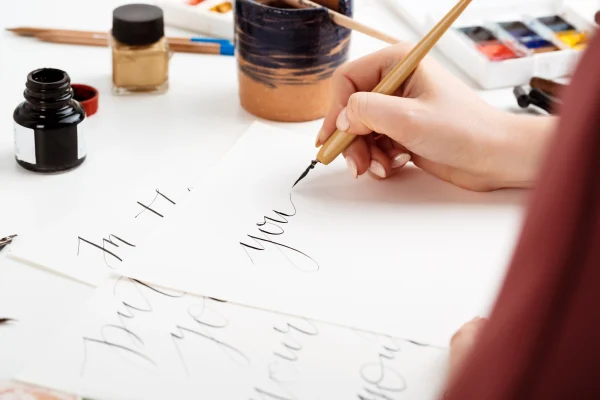
High pressure occurs when the writer pushes the pen hard into the paper, leaving indentations on the back. If a person writes with high pressure and a far-right slant, they have intense, passionate feelings that they struggle to hide. If they write with very light pressure and a vertical slant, they are likely detached and unaffected by their environment.
Is handwriting analysis accurate for vetting people? When performed by experts, it is a highly accurate tool for identifying consistent behavioral patterns and temperament, though it should be used alongside other assessment methods. Handwriting trait analysis allows you to see if a person’s energy levels match their emotional claims. If someone claims to be highly motivated but their writing is small, light, and slanted, their actions will likely prove otherwise. Graphology provides the evidence needed to verify their claims.
Practical Ways to Use Graphology for Immediate Insight
Observing how people sign their names compared to how they write notes offers an immediate way to start using these tools. Your signature represents your public face—the person you want the world to see. The body of your writing represents your private self.
The "Signature vs. Text" Discrepancy
Look for a difference in slant between a signature and a paragraph of text. If the signature slants to the right but the text slants left, the person is putting on a show. They want you to think they are outgoing and friendly, but in reality, they are guarded and self-protective.
This discrepancy is a key finding in Graphology. It tells you that the person is wearing a mask. When the signature and the text match in slant and size, the person is being authentic. They are the same person in public as they are in private. This alignment is a strong indicator of a trustworthy character. Always check for this consistency when you receive a signed document or a handwritten letter.
Learning the Art of Trust with Graphology
Analyzing the lean of a pen stroke gives you a significant advantage in reading people. Stroke slant interpretation serves as a window into the soul that words alone cannot provide. It allows you to see the difference between a person’s chosen persona and their natural temperament. While Graphology takes practice to learn, it offers a reliable way to verify the character of those around you.
Paying attention to these physical cues helps you protect yourself from deception and find people who are truly reliable. You no longer have to guess about a person’s motives or emotional stability. Instead, you can look at the evidence left behind on the page. Start looking at the slant of every note you receive today. Graphology will help you see the truth concealed in plain sight.
Recently Added
Categories
- Arts And Humanities
- Blog
- Business And Management
- Criminology
- Education
- Environment And Conservation
- Farming And Animal Care
- Geopolitics
- Lifestyle And Beauty
- Medicine And Science
- Mental Health
- Nutrition And Diet
- Religion And Spirituality
- Social Care And Health
- Sport And Fitness
- Technology
- Uncategorized
- Videos

