
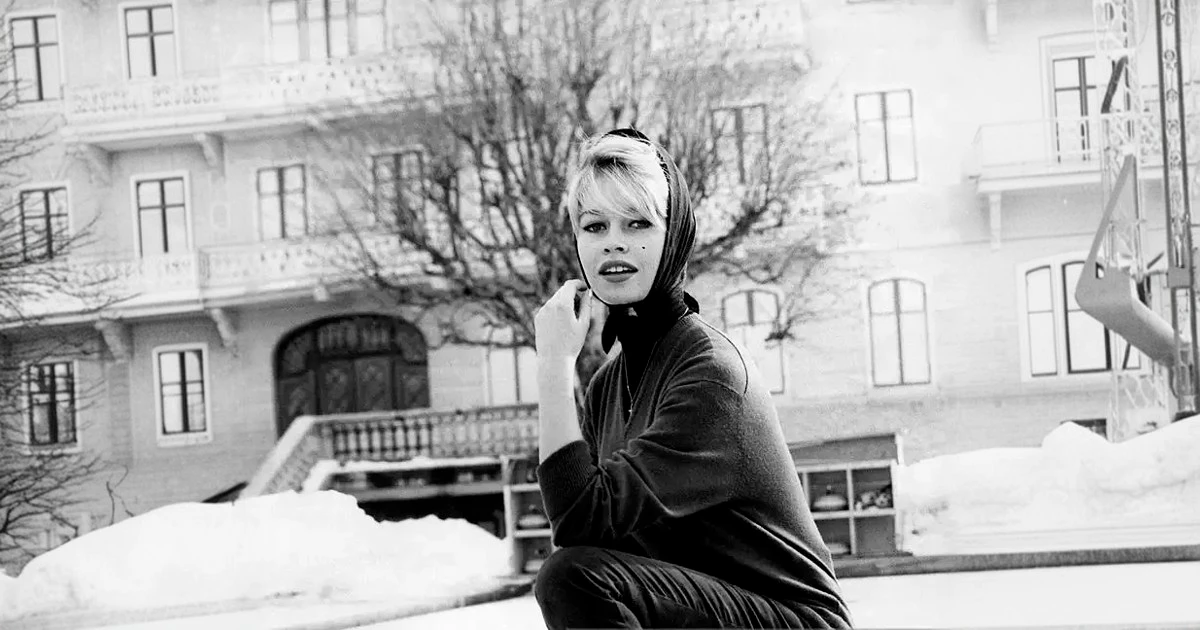
Image Credit - Wikimedia Commons
Brigitte Bardot: Legacy of Beauty and Conflict
A woman who gives her youth to the public creates a debt she can never fully repay. Brigitte Bardot spent twenty-one years as the most watched person on earth, but the cameras never actually saw her. They saw a sign of freedom that trapped the real person inside a cage of flashbulbs. People remember the blonde hair and the pout, but they often miss the way the industry turned a human being into a product for global consumption. This pressure forced a girl from a wealthy Catholic family to become the face of a revolution she did not always want to lead. When she walked away from the screen at age thirty-nine, she had already tried to end her life multiple times. She eventually traded her fame for the company of animals because creatures do not ask for autographs or judge a fading face. The legacy of Brigitte Bardot remains a study in how extreme visibility leads to total isolation.
The Early Rise of a French Icon
Rigid discipline in childhood often makes adult rebellion look completely effortless. Brigitte Bardot began her journey in Paris in 1934, entering a wealthy Catholic family that valued tradition. She started ballet training at the Paris Conservatoire at age seven, which gave her the upright, graceful posture she carried throughout her life. This training provided her with a height of 5′ 5½″ and a poise that captured the attention of the fashion world.
By 1949, she appeared on Elle magazine's cover at only fifteen years old. This instant sensation moved her from the dance floor to the movie set. In 1952, she married director Roger Vadim at age 18. Vadim saw a specific potential in her that went beyond her acting skills. He recognized that the public wanted a new kind of woman. Brigitte Bardot married 4 times throughout her life, starting with Vadim and eventually finding a long-term partner in her 4th husband, Bernard d’Ormale. Her early marriage to Vadim set the stage for a career that changed the world’s view of women forever.
From Ballet to the Big Screen
Her transition from a student to a star happened almost overnight. The French film industry in the early 1950s felt stale and old-fashioned. Bardot brought a "natural" look that skipped heavy makeup and stiff hairstyles. She popularized messy hair and bare feet, creating a style that influencers like Claudia Schiffer and Kate Moss later copied. This look signaled a departure from the polished, untouchable stars of previous decades.
God Created the Brigitte Bardot Brand
Fame acts like a vacuum that removes all the air from a room before a star even enters. In 1956, the release of And God Created Woman turned Bardot into a global phenomenon. The film became a massive success in the USA, shattering the conservative box office rules of that period. She personified "absolute freedom" and destroyed the old female tropes of the 1950s.
She did not play the typical "damsel in distress" or the "perfect housewife." Instead, she portrayed characters who owned their desires. This shift caused a massive marketing conflict. The industry pushed the "sex kitten" branding while Bardot held onto serious artistic ambitions. She often felt frustrated over the constant requirements for nudity in her contracts. Meanwhile, she became a national icon. In 1969, she modeled for the bust of "Marianne," the symbol of the French Republic. She retired at age thirty-nine to escape the "gilded cage" of stardom and dedicated her life to animal welfare. This move shocked the world, but for her, it felt like escaping a prison.
The Global Influence of a Sensation
Her influence reached into every corner of pop culture. She popularized the bikini on the beaches of Saint-Tropez and made the beehive hairstyle a global trend. Even the Beatles felt her impact. Paul McCartney and John Lennon reportedly felt a deep infatuation with her, often pressuring their own partners to dye their hair blonde to match her look. She moved beyond simple stardom and set the aesthetic standard for an entire generation.
The Heavy Burden of the Sex Kitten Label
When a person sells the image of "absolute freedom" to the public, they lose the right to say no to the buyer. Bardot lived under constant surveillance. Paparazzi followed her every move, even during her son's birth in 1960. She delivered her baby while a siege of photographers surrounded her home. This constant pressure turned her life into a series of crises.
Beginning in 1950, she tried to commit suicide at least 6 times. On her 26th birthday in 1960, she took an overdose and cut her wrists. She described her stardom as a "gilded cage" where people mocked her while they watched her. Simone de Beauvoir once noted that Bardot acted as both a predator and a target in romantic games. Her equality in desire often bruised the masculine egos of the men around her. She refused to play the role of the faithful, traditional wife, leading Roger Vadim to remark that he preferred an unfaithful spouse over a woman with exclusive, stifling affection.
A Career Defined by Contradictions
Ironically, her professional success grew while her personal happiness withered. She starred in over 40 productions, including critically acclaimed films like Le Mépris and La Vérité. Despite the praise from critics, she often dismissed her own talent. She saw herself as a prisoner of fame rather than a master of her craft. The story of Brigitte Bardot shows that being the most desired woman of the world often results in having the least amount of control over your own life.
Why Bardot Rejected Motherhood
Some women view pregnancy as an invasion of their own bodies and reject the idea of it as a gift to the future. Bardot’s relationship with motherhood struggled. During her 2nd marriage to actor Jacques Charrier, she became pregnant with her son, Nicolas. She did not welcome the experience. In her writings, she compared her growing belly to a "coffin lid" and described the pregnancy as an internal tumor.
She openly admitted that she preferred canine offspring over human infants. This rejection of the traditional maternal role sparked intense public debate. While some reports cite a minor medical procedure in October 2025, official records describe her passing at age ninety-one as the result of a long illness at her home in Saint-Tropez. Her honesty about her lack of maternal instinct broke one of the strongest social taboos of her era.
The Conflict of Family Life
After her divorce from Charrier, her son lived with his father’s family. The distance between them remained a permanent fixture of her life. She chose a path that prioritized her own identity and her commitment to other causes over the expectations of family life. This decision solidified her reputation as a woman who lived entirely her own way, regardless of the social cost.
The Shift from Cinema to Animal Advocacy
Helping those who cannot speak provides a voice to those the world refused to hear. In 1973, Bardot walked away from the movie industry forever. She declared that the cinema was a closed chapter and that she had no interest in returning to the screen. She donated her youth and physical beauty to men, but she reserved her history and wisdom for animals.
In 1986, she launched the Brigitte Bardot Foundation. To fund this mission, she auctioned off her jewelry and personal memorabilia, raising 3,000,000 francs. She became a strong advocate against Canadian seal hunts, the culling of stray dogs in Romania, and the consumption of horse meat. She found a sense of purpose in animal welfare that she never found in Hollywood. Animals did not judge her past or demand she stay young forever.

Image by Marcelo César Augusto Romeo, CC BY 2.0
A Lifelong Mission for Welfare
Her foundation became a powerful force in international conservation. She used her remaining fame to force world leaders to address animal cruelty. Even when she faced health challenges, like her battle with breast cancer, she remained focused on her work. She initially refused treatment for her cancer but eventually agreed to it after persuasion from her friend Marina Vlady. Her dedication to animals defined the latter half of her life far more than her film career ever did.
The Political Controversy of Her Later Years
Reclusion often breeds a worldview built on fear of the changing outside world. As Bardot aged, her public image shifted from a symbol of liberation to a figure of the far-right. She became a vocal supporter of Marine Le Pen and the National Rally party. Her 4th husband, Bernard d’Ormale, served as a far-right political advisor, which further tied her name to controversial movements.
Between 1997 and 2008, she received six legal guilty verdicts for inciting racial hatred. Her autobiography and various public statements included anti-Muslim commentary and homophobic rhetoric. In 2004, a court fined her €15,000 for her remarks. This evolution troubled many who saw her as the "Marianne" of liberty. She moved from being a champion of "absolute freedom" to someone who advocated for restricting the liberties of minority groups.
The Divide in Her Legacy
People like Marine Le Pen praised her as a quintessential French spirit and a non-conformist warrior. Others, like Matteo Salvini, saw her as a star beyond time who defended traditional values. However, her legal troubles and political stances created a deep divide in the story of Bardot. The icon of the 1960s sexual revolution had become a recluse fighting against the modernization of French society.
The Final Act in Saint-Tropez
A legend dies when the public finally stops looking, an event far more final than the heart stopping. Bardot spent her final decades at her abode, "La Madrague," in Saint-Tropez. This town, which she helped make famous, became her sanctuary and her bunker. She lived surrounded by her animals, away from the prying eyes of the industry she left behind decades earlier.
Her death on 28th December, 2025, marked the end of an era. Emmanuel Macron described her as a legend of the century, a face of Marianne who embodied both glory and sorrow. Even in death, she remained a figure of intense contradiction. She revolutionized fashion and female autonomy but spent her later life criticizing the very world she helped create.
A Century of Influence
The story of Brigitte Bardot shows a woman who escaped the "sex kitten" label only to build a different kind of wall around herself. She proved that a person could walk away from the height of global fame and never look back. Whether she was fighting for the rights of seals or facing a judge in a Parisian court, she remained "unfettered and complete," as her supporters claimed. Her life shows that the price of being a national symbol is often the loss of one's private humanity.
A Legacy of Unapologetic Truth
The journey of Brigitte Bardot reminds us that public icons rarely match the people we imagine them to be. She broke the mold of the 1950s woman through her refusal to act as a puppet. Her refusal to enjoy motherhood, her retirement at the peak of her beauty, and her late-life political fire all point to a person who ignored every script written for her. She lived a life of total autonomy, even when that autonomy led her into dark and unpopular places.
Ultimately, Brigitte Bardot’s impact survives in the way women dress, the way society views animal rights, and the ongoing debate over the limits of free speech. She gave the world her image for twenty-one years and then spent the rest of her life trying to get her soul back. She died at ninety-one, leaving behind a world that still struggles to reconcile the beautiful girl on the beach with the complicated woman in the villa. Her story remains a powerful example of what happens when a human being becomes a monument before they finish growing.
Recently Added
Categories
- Arts And Humanities
- Blog
- Business And Management
- Criminology
- Education
- Environment And Conservation
- Farming And Animal Care
- Geopolitics
- Lifestyle And Beauty
- Medicine And Science
- Mental Health
- Nutrition And Diet
- Religion And Spirituality
- Social Care And Health
- Sport And Fitness
- Technology
- Uncategorized
- Videos

