
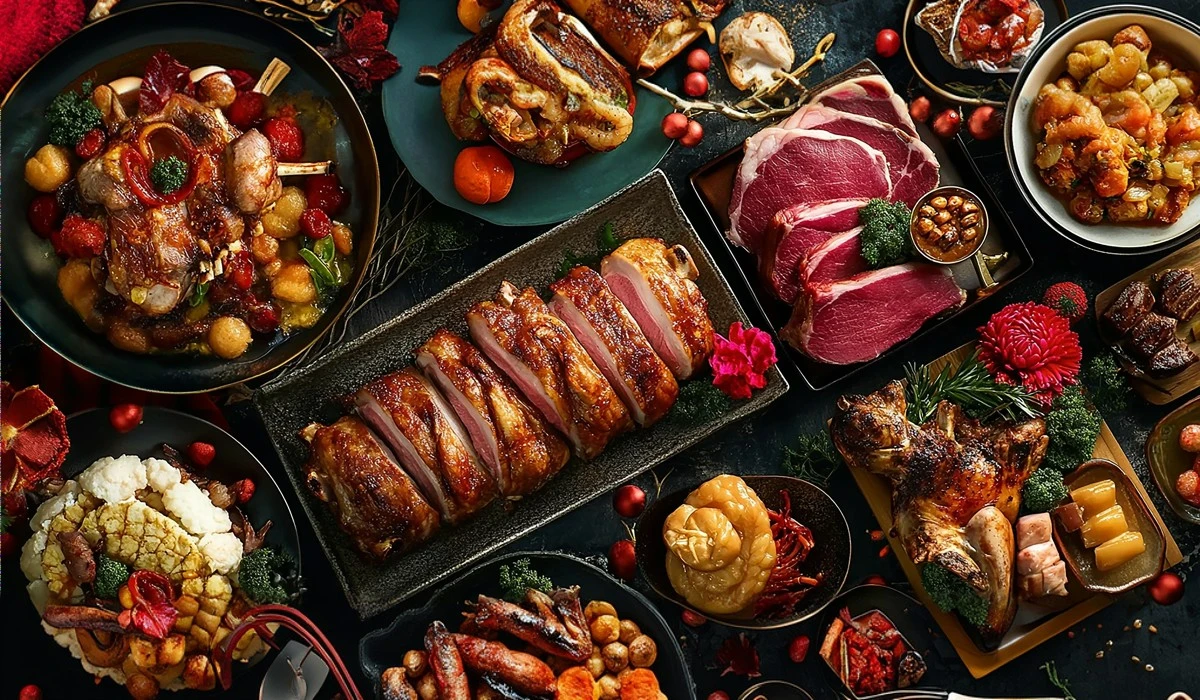
Banquet In Chongqing Is A Viral Pork Hit
Algorithms typically design digital walls to keep users passively scrolling, yet a single moment of genuine vulnerability can smash through those barriers and mobilize a physical army. A young woman in Southwest China realized this reality when a simple request for help turned her quiet village into a national focal point. Her request ignored marketing budgets and influencers in favor of muscle.
According to a report by China Daily, Daidai, a woman in her 20s shared a video on Douyin on January 9, saying she was worried that her father could no longer handle the physical strain of the family’s year-end pig-slaughter tradition by himself and asking for help. The reaction was extraordinary: according to Sixth Tone, the post triggered a surge of online attention that brought thousands of people from across China to her village, turning it into a huge Chongqing pork banquet that fascinated millions.
The event quickly spiraled beyond a family chore. It evolved into a huge social phenomenon where luxury car owners washed dishes alongside local farmers. The roads became gridlocked with volunteers, and the scent of fresh pork stew filled the air for days. This gathering proved that digital communities still crave physical connection, even if it requires driving miles to a remote village to chop vegetables.
The Signal That Moved the Masses
Vulnerability often outperforms high-budget advertising because people desperate for purpose jump at the chance to be useful. Daidai requested labor instead of money. Her father faced a dilemma common in rural areas. He owned heavy livestock that needed processing before the Spring Festival, yet age had sapped his strength. Killing and dressing a pig requires four to five capable adults. He was one old man.
The video touched a raw nerve regarding filial piety and family dignity. Daidai wanted to preserve her father’s pride. She offered a free meal, known locally as "Paozhutang," to anyone willing to help. The internet responded with overwhelming force. The original video racked up over one million likes. Viewers saw a chance to help a daughter honor her father, and they hit the road.
Drivers traveled over 100 kilometers (65 miles) to reach Qingfu village in the Hechuan district. They abandoned the comfort of city life for the muddy reality of farm work. The traffic became so dense that cars queued past rice crops, clogging narrow country lanes. Police had to issue warnings about potential crowds, but the momentum was unstoppable.
Logistics of a Chongqing Pork Banquet
Feeding a sudden army requires a web of community favors that money alone cannot buy. A standard family dinner turned into a logistical beast. The hosts originally planned to process two pigs. As the crowd size ballooned, the scope of the Chongqing pork banquet expanded drastically. Neighbors and the local tourism department stepped in, donating 3 additional pigs to bring the total to five.
The raw materials list reads like a supply manifest for a military mess hall. The kitchen team burned through over 500 kg of rice and 350 kg of oil. Truckloads of vegetables arrived to supplement the meat. The cost for raw materials alone soared past 100,000 yuan ($14,000). A single family could never sustain this output.
Support came from unexpected places. Chef Jiang Xiaoyan, a veteran with 16 years of experience, led the culinary charge. The Yanzi catering team mobilized to handle the volume. They set up massive outdoor woks, turning the village square into a high-capacity kitchen. Locals dragged furniture out of their homes so strangers would have places to sit. The father watched in shock as his private struggle turned into a public festival.
When Status Dissolves Over Stew
Social hierarchies evaporate the moment manual labor becomes the only currency that matters. The scene in Qingfu village stripped away titles and bank accounts. Witnesses reported seeing Porsche owners rolling up their sleeves to scrub dirty dishes. Wealthy visitors stood shoulder-to-shoulder with local villagers, chopping meat and carrying supplies.
This leveling effect defined the atmosphere. The "Paozhutang" tradition centers on community bonding, and the attendees took that mandate seriously. A driver remarked that the event reminded him of his childhood. He felt a restoration of lost community spirit that city life often erases. Strangers acted like long-lost relatives.
Why did the Chongqing pork banquet go viral? It went viral because a daughter's sincere request for help with her elderly father touched a nerve about filial piety and community.
Daidai credited these strangers for the event's success. She described a warm "big family" feeling that permeated the chaos. People arrived to participate rather than merely to eat. The labor exchange became a form of social currency. A local villager noted that mutual aid is a core value of rural life, and for 2 days, the internet brought that value back to the forefront.
The Heavy Price of Viral Fame
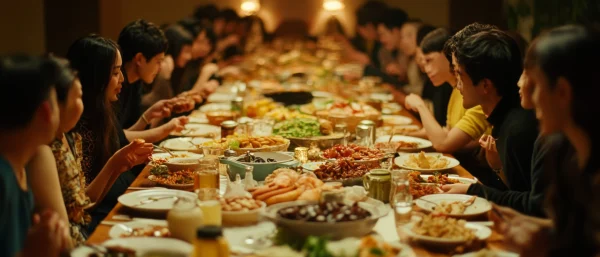
Generosity scales linearly, but the physical toll of hosting the world scales exponentially. While the internet celebrated the heartwarming visuals, the reality on the ground was grueling. The banquet ran for two days, serving thousands of diners. Estimates suggest the total foot traffic exceeded 10,000 people, with peak crowds hitting 3,000 at once.
The hosts barely slept. Daidai and her family managed only about four hours of sleep over the 48-hour period. The father expressed joy at the turnout, but the physical strain on the family was undeniable. Daidai eventually had to plead for a return to normalcy. She posted a correction to the enthusiastic public, admitting her inability to sustain the hosting duties due to extreme fatigue.
The financial burden was also significant. While labor was free, the 100,000 yuan cost for materials hit hard. The family traded their privacy and savings for a moment of collective joy. Daidai was seen in tears on camera, a sign of the immense pressure resting on her shoulders. The event was a success, but it pushed the organizers to their absolute limits.
Chaos Behind the Camera Lens
Online narratives often smooth over the messy reality of large crowds to present a clean story of unity. The truth of the Chongqing pork banquet contained sharper edges. Reports contradicted each other regarding the atmosphere. Mainstream articles painted a picture of pure warmth and healing. Supporting data revealed a more chaotic underbelly.
Livestreamers descended on the village, jostling for the best angles to capture the action. Some attendees were there strictly for "clout," using the family’s hard work as a backdrop for their own content. Impersonator accounts sprang up on social media, trying to siphon off Daidai’s newfound fame.
What is the Paozhutang tradition? Paozhutang is a pre-Spring Festival custom in Southwest China where neighbors gather to share fresh pork and bond before the New Year.
The sheer density of people created friction. How many people attended the pork banquet? Data cited by Sixth Tone from the local culture and tourism bureau indicates that more than 10,000 people arrived in the village over two days, with peak crowds reaching around 3,000 at a time. Managing such a throng in a village without formal event infrastructure led to inevitable disorder. Yet, the core purpose survived. The pigs were slaughtered. The father was helped. The community ate.
Reviving a Fading Rural Ritual
Modernization tends to atomize societies, making events that enforce collective reliance feel radical. The Paozhutang custom is a traditional pre-Spring Festival ritual. It involves sharing fresh pork and offal with neighbors to celebrate the upcoming new year. In the past, this was a necessity. No single family could eat a whole pig before it spoiled, so sharing was a survival strategy.
This event proved that the hunger for this tradition remains alive. ABC Media reports that when the event finally happened, it was watched live online by more than 100,000 viewers and registered 20 million likes. People watching on screens felt a nostalgic pull toward this rural lifestyle.
The government took notice. Officials deployed traffic police to manage the gridlock and distributed free tickets to the nearby Diaoyucheng Fortress to disperse the crowds. According to Sixth Tone, officials even announced that January 11 would be designated as Paozhutang Day each year to extend the momentum.
Academics like Lu Junwei analyzed the phenomenon. He argued that the event resonated because of the deep cultural value of filial piety. The public support was unconditional because the motivation—helping a father—was pure.
The Aftermath of the Feast
Viral spikes always crash, leaving the hosts to clean up the physical and emotional debris. The event concluded with a request for privacy. The family was exhausted. They had achieved their goal, but the cost was a total disruption of their lives. Sixth Tone highlights that within a day, her post went viral, and by Thursday, her follower count had surged to more than 2.3 million. She became an accidental celebrity.
The consequence rippled outward. Copycat events began to spring up. In Hunan, a similar call for help attracted 10,000 signups, proving that this was not an isolated incident but a tapped vein of social demand. The "flash-tourism" model, driven by digital pleas, showed the power of the internet to reshape real-world geography.
The Chongqing pork banquet ended as it began: with a family trying to manage their farm. The difference is that now, millions of people are watching. The dad got his help, the village got its fame, and the internet got its story.
The Legacy of the Stew
Real connection often requires getting your hands dirty. The Chongqing pork banquet began as a solution to a labor shortage and ended as a national case study in community mobilization. It exposed a deep desire for shared purpose that exists beneath the surface of digital interactions. Strangers drove for hours to find belonging rather than just a meal.
The event merged the ancient tradition of Paozhutang with modern viral speed. It showed that technology holds the capacity to bring thousands of people to a muddy field to clean dishes for an old man they never met, despite its tendency to isolate us. The grease has been scrubbed away and the cars have left the rice fields, but the precedent remains. When a plea is sincere, the world will still show up.
Recently Added
Categories
- Arts And Humanities
- Blog
- Business And Management
- Criminology
- Education
- Environment And Conservation
- Farming And Animal Care
- Geopolitics
- Lifestyle And Beauty
- Medicine And Science
- Mental Health
- Nutrition And Diet
- Religion And Spirituality
- Social Care And Health
- Sport And Fitness
- Technology
- Uncategorized
- Videos

