
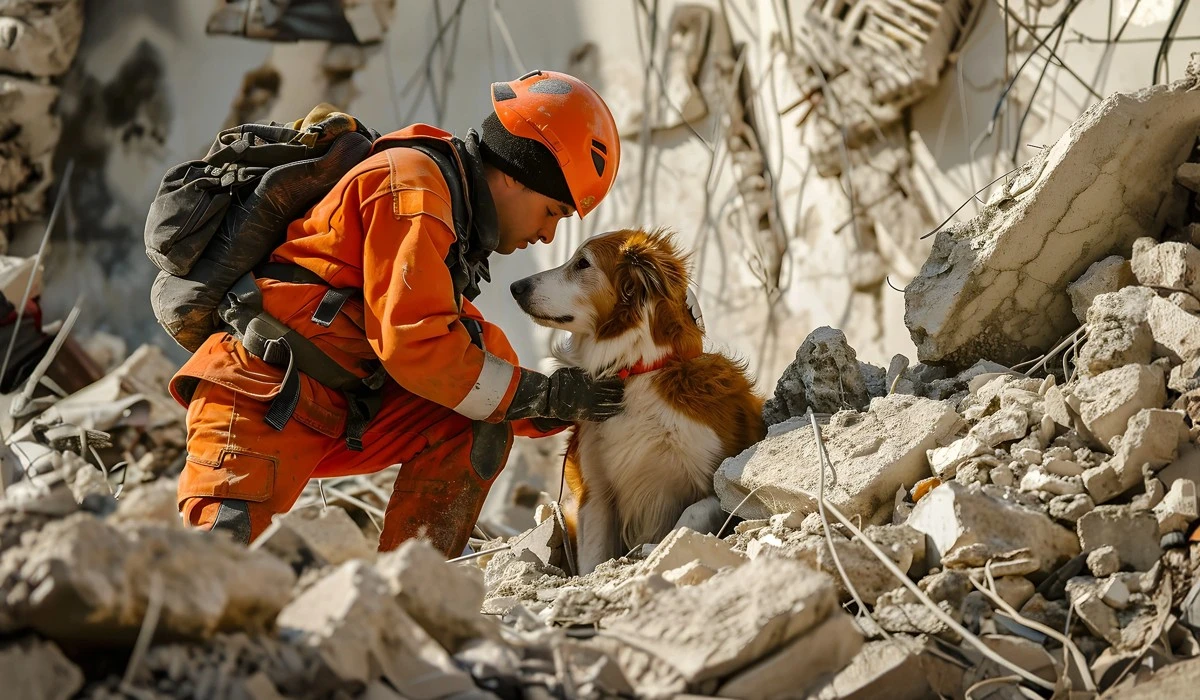
Search and Rescue Dog Training for Locating Victims
Every minute, your body sheds roughly 40,000 skin cells. These microscopic flakes, known as "rafts," drift through the air and settle on the ground like a constant, biological snowstorm. While a human sees only a dusty room or a pile of debris, a dog perceives a detailed map of identity and movement. Professional Search And Rescue Dog Training turns this natural scavenging instinct into a high-precision tool for saving lives.
These dogs actively process odors far beyond basic sniffing. They utilize a specialized vomeronasal organ to detect non-volatile molecules that bypass our own senses entirely. This physiological advantage allows a dog to locate a buried survivor when thermal cameras and microphones fail. Success depends on a rigorous system of preparation that readies disaster recovery canines for the most unforgiving environments on Earth.
Refining these skills through specific scent trailing drills allows handlers to build a reliable bridge between human tragedy and successful recovery. Every second matters during a structural collapse or a wilderness disappearance. A certified team represents the fastest way to turn a search area into a rescue site.
The Core Pillars of Professional Search And Rescue Dog Training
Success begins with the raw material of the dog. Trainers look for an obsessive focus on toys or food, often called "high drive." This drive pushes the dog to crawl through dark tunnels and climb over jagged metal for a single reward. Without this internal fire, a dog will quit when the rain starts or the rubble shifts.
Selecting the Right Drive and Temperament
A candidate dog must possess "environmental soundness." This means the animal remains calm during loud explosions, sirens, or the roar of heavy machinery. If a dog flinches at a loud noise, it cannot function on a disaster site. Trainers also test for "social attraction," ensuring the dog wants to find people rather than chase squirrels or other animals.
High-intensity work requires a dog to think independently. In Search and Rescue Dog Training, the dog often knows more than the handler about the location of a victim. We select dogs that show "problem-solving" behaviors, meaning they will try multiple ways to reach a scent source without waiting for a command.
Building a Foundation of Operant Conditioning
Handlers use the four quadrants of operant conditioning to shape behavior, focusing heavily on positive reinforcement. When the dog finds the victim, they receive their favorite toy or a high-protein treat. This creates a strong association between the "find" and a massive dopamine spike in the dog's brain.
Consistency builds reliability. How long does it take to prepare a search and rescue dog? According to the American Kennel Club (AKC), the preparation for each discipline is demanding and expensive, and most teams require 18 to 24 months—sometimes up to two to three years—of consistent, rigorous work to reach operational certification. This timeframe ensures the dog can handle demanding scenarios without losing motivation.
The dog learns that searching is a game with the highest possible stakes for the human, but the most fun for the canine. We fade out rewards over time, so the dog works for longer durations before receiving the prize. This builds the "stamina" needed for real-world missions.
Specialized Skills for disaster recovery canines
Working in a collapse zone presents dangers that would paralyze an average pet. Concrete slabs shift underfoot, and the air often carries the smell of leaking gas or smoke. Specialized disaster recovery canines learn to ignore these terrors to focus on the faint scent of a survivor trapped deep beneath the surface.
Navigating Unstable and Shifting Terrain
Teams practice on "rubble piles" that mimic collapsed apartment buildings. The dog must learn to distribute its weight across "void spaces" to avoid falling through. As noted in American Kennel Club coverage of certified rescue dogs, candidates must complete agility courses featuring ladders, high planks, and teeters to build the dog's "proprioception," or the awareness of where its paws are at all times, alongside regular fitness exercises focusing on balance.
This physical confidence prevents injuries. A dog that trusts its footing can keep its nose to the ground instead of worrying about a fall. We gradually increase the height and instability of the practice structures until the dog moves across jagged rebar as easily as a sidewalk.
Differentiating Live Scent from Distractions
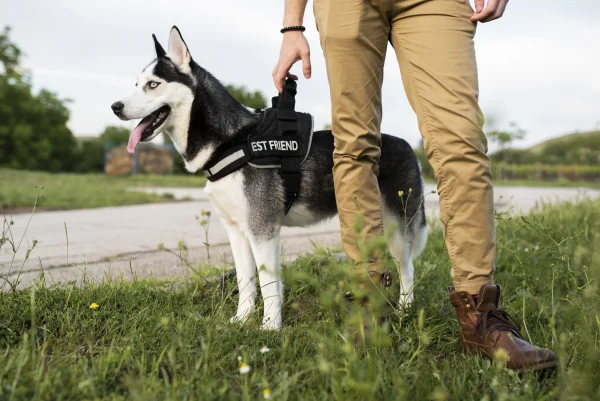
A disaster site contains thousands of smells, including discarded food, old clothes, and even other rescuers. The dog must ignore these "non-target" scents to find the specific "scent signature" of a trapped person. This skill prevents the team from wasting hours digging in the wrong spot.
What are the best dog breeds for disaster recovery? As detailed by the American Kennel Club, dogs typically specialize in one area of expertise; while Labradors and German Shepherds are frequently referenced as common working breeds, any medium-to-large breed with high work drive and solid health can excel. The breed matters less than the dog's willingness to work through distractions. We use "proofing" drills where we hide food or dead animals in the search area to ensure the dog stays focused on live human scent.
Refining Precision with scent trailing drills
While some dogs search large areas for any human scent, others follow a specific individual's path. These scent-trailing drills require the dog to identify one person's unique "skin rafts" among a sea of others. This stands as the ultimate test for finding a missing child or an elderly person who walked away from home.
Establishing a "Scent Start" in Chaotic Zones
The handler presents the dog with a "scent article," such as a hat or a pillowcase. The dog must sniff this item and then "lock on" to that specific smell in the environment. We use a "T-start" drill, where the dog enters a path at a 90-degree angle to ensure they are actively choosing the trail rather than just running forward.
Precision starts at the beginning. If the dog picks up the wrong trail, the entire search fails. We use sterile glass jars to store scent articles to prevent the handler's smell from contaminating the sample. The dog learns that only the scent in the jar leads to the reward.
Managing Scent Contamination and "Pooling"
Air currents move scent like water. It flows around corners and settles in low spots, creating "pools" that can trick an inexperienced dog. In urban scent trailing drills, we teach the dog to work through "hard surfaces" like asphalt, where scent doesn't stick as well as it does in grass.
Ironically, moisture helps the search. According to FNS Mantrailing, moisture in the air acts like a glue for odor; scent particles are hygroscopic, meaning they absorb water and become heavier. The organization notes that on days with high humidity, dogs tend to have an easier time following the trail because the moisture keeps the scent "heavy" and closer to the ground, making it easier to track. We train in different weather conditions to teach the dog how scent behaves in heat, rain, and wind.
Advanced Phases of Search And Rescue Dog Training
Once a dog completes the basics, we introduce "blind" searches. In these drills, the handler does not know where the victim is hiding. This removes the risk of the handler accidentally "cueing" the dog with body language, a common error that leads to false alerts in the field.
Night Operations and Low-Visibility Scenarios
Real disasters rarely happen in perfect daylight. We conduct Search And Rescue Dog Training at 2:00 AM to ensure the dog can work by nose alone. Darkness forces the handler to trust the dog's alerts completely, as visual cues disappear.
Night training also involves different "thermals." Based on atmospheric principles detailed by Wings & Wheels, these drafts can spring up during the evening as the ground cools, causing air currents to start flowing downhill and move downward into valleys and depressions. The dog must learn to follow these "katabatic" winds to find where the scent has settled overnight. This level of expertise separates hobbyists from professional teams.
Sustaining Focus During Long-Duration Searches
A dog's nose can literally get tired. The physical act of "active sniffing" uses significant energy and dries out the nasal membranes. We build "search stamina" by gradually increasing the time the dog spends working without a find.
Can any dog become a search and rescue dog? Not every dog has the necessary nerves or physical stamina, as the work requires an elite level of environmental confidence. Some dogs have the nose but lack the "grit" to keep working after six hours of failure. We only certify dogs that show a relentless desire to find the victim regardless of how much time has passed.
The Vital Role of the Handler in SAR Success
The dog provides the nose, but the human provides the strategy. A handler must understand fluid movement, weather patterns, and canine ethology. As highlighted by Splitboard Magazine, managing the operation correctly requires introducing the canine facing the wind; if the handler places the dog downwind of a search area, the dog will never cut and catch the scent cone, regardless of how good its nose is.
Understanding Canine Body Language and "The Tell"
Every dog has a "tell"—a subtle change in behavior when it hits a "fringe" scent. This might be a quick head flick, a change in tail carriage, or a specific breathing rhythm. Experienced handlers recognize these signs long before the dog gives a formal bark alert.
Reading the dog allows the handler to "bracket" the area. If the dog shows interest but loses the scent, the handler directs them back into the wind to find the "apex" of the scent cone. This partnership turns a random search into a systematic sweep of the terrain.
Tactical Navigation and Wind Direction Analysis
Handlers use "kestrel" meters and smoke puffs to track wind direction in real-time. During scent-trailing drills, the wind can change instantly when moving between buildings. The handler must reposition the dog to ensure they stay "in the scent."
We also study "anabatic" winds, which are daytime updrafts that pull scent uphill. Comprehending these environmental factors ensures the handler does not waste the dog's efforts. A smart handler manages the physics of the search to make the dog's job easier.
Physical Conditioning and Health for Field Readiness
A search dog is a professional athlete. They require specific conditioning to prevent injuries on the jagged surfaces of a disaster site. Research published in the National Center for Biotechnology Information (NCBI) indicates that participating in foundational fitness exercises three times a week builds overall balance; therefore, we focus on "core stability" and "posterior chain" strength, allowing the dog to leap over gaps and climb steep embankments without straining a muscle.
Developing Cardiovascular Endurance for Steep Grades
Standard walks in the park do not prepare a dog for a 12-hour mission. Search and Rescue Dog Training includes hill sprints and long-distance swimming to build lung capacity. This endurance ensures the dog's brain stays sharp even when its body is tired.
Fatigue leads to mistakes. A tired dog might miss a faint scent or take a dangerous step on a piece of unstable rubble. We use interval training to mimic the "burst and rest" nature of real-world search operations.
Nutritional Support for High-Performance Work
Searching burns an incredible amount of calories. The brain alone consumes a large portion of the dog's energy when it is processing layered scent data. We feed disaster recovery canines high-fat, high-protein diets to provide sustained energy.
Hydration is equally critical. A dry nose does not catch scent particles as effectively as a wet one. Handlers carry "squirt bottles" to keep the dog's mouth and nose moist during intense scent trailing drills in hot weather.
Essential Gear for the Search And Rescue Dog Training Process
While the dog's nose is the primary tool, specialized equipment keeps the team safe and connected. Modern technology allows handlers to track their dog's movements in real-time, even when the dog is out of sight inside a collapsed building.
Protective Equipment for Paws and Body
Disaster recovery canines often wear rugged boots to protect their paw pads from broken glass, hot asphalt, and sharp rebar. While some dogs dislike the feeling at first, they eventually view the boots as part of their "work uniform."
Kevlar-lined vests protect the dog's chest and belly from puncture wounds. These vests often include handles, allowing the handler to lift the dog over obstacles or rappel down a cliff face together. Safety gear ensures the dog can return for the next mission.
Technology Integration for Real-Time Tracking
GPS collars provide a "heat map" of where the dog has searched. This data is vital for incident commanders who need to know which areas are cleared and which still require attention. During wilderness scent trailing drills, the GPS allows the handler to see exactly where the dog "lost" the trail.
Long-range radios and "bone-conduction" speakers allow handlers to give commands to the dog from a distance. If a dog enters a dangerous area, the handler can whistle or call the dog back instantly. This pairing between biology and technology maximizes the chances of a successful recovery.
The Future of Life-Saving Search And Rescue Dog Training
The world continues to develop new sensors and drones, yet the canine nose remains the most reliable tool in a disaster. No machine can match the speed, mobility, and discrimination of a well-trained dog. The commitment to Search And Rescue Dog Training represents a massive investment of time and emotion, but the payoff is a life returned to a waiting family.
As we refine our understanding of scent science and canine behavior, our teams become more capable. We continue to push the boundaries of what these animals can achieve, from finding victims deep underwater to locating survivors under feet of packed snow. The bond between the handler and the dog serves as the basis for every find.
True excellence in this field requires a lifetime of learning. If you feel called to this work, seek out a local search and rescue organization and begin the path toward certification. Your dedication to Search And Rescue Dog Training could be the difference between a tragedy and a miracle during the next great disaster.
Recently Added
Categories
- Arts And Humanities
- Blog
- Business And Management
- Criminology
- Education
- Environment And Conservation
- Farming And Animal Care
- Geopolitics
- Lifestyle And Beauty
- Medicine And Science
- Mental Health
- Nutrition And Diet
- Religion And Spirituality
- Social Care And Health
- Sport And Fitness
- Technology
- Uncategorized
- Videos

