
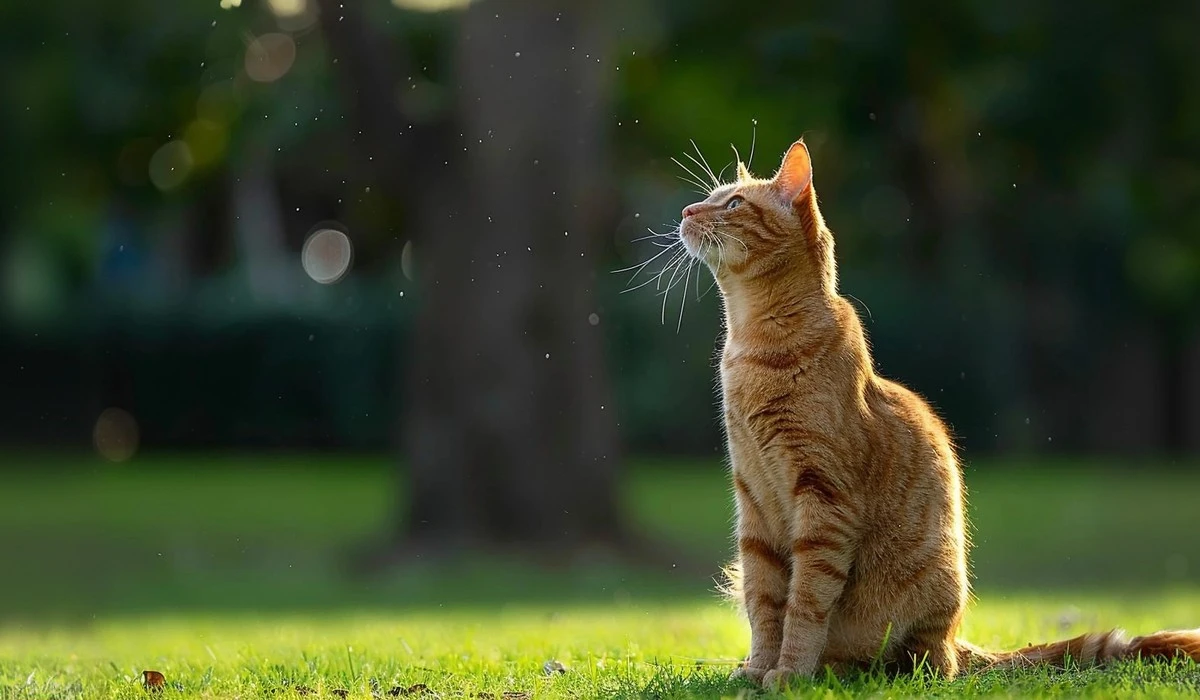
Greeting Behavior Shows Cats Meow More at Men
Rather than saying "I love you," the animal is often fixing a communication breakdown when it gets loud. Most owners assume a vocal pet is simply happy, but new data suggests volume acts as a tool to bridge a gap in human understanding. A recent study published in the journal Ethology tracked cat greeting behavior to reveal a surprising pattern in how our pets handle us. Researchers from Ankara University analyzed the first 100 seconds of owners returning home. As reported by Profolus, the team discovered that felines change their strategy entirely depending on the gender of the human walking through the door.
According to Phys.org, the results disrupt the idea that cats treat all humans the same. This study, led by Yasemin Salgirli Demirbas, highlights a distinct divide in how cats talk to men versus women. The difference stems from how well the human pays attention rather than the cat’s emotional preference. Felines appear to profile their owners and adjust their vocal output to ensure they get noticed.
The Strategic Mind Behind the Meow
Felines treat humans as puzzles that require specific inputs to solve rather than just owners. We often view domestication as humans taming animals, but the last 10,000 years also involved cats learning to manage us. This new research focuses on how cats navigate the homecoming moment. The team observed 31 bonded pairs of cats and owners to capture raw data on interaction styles.
Kaan Kerman, a co-author of the study, notes that these responses show high cognitive skill. Beyond simple reactions, the cat categorizes the human it bonds with. If one human acts like a stone wall, the cat adapts. If another acts like an open door, the cat changes tactics. This flexibility proves that felines possess a social intelligence often overlooked by critics who call them solitary.
Analyzing Cat Greeting Behavior Stats
A volume knob turns up only when the listener fails to hear the quiet notes. The raw numbers from the study paint a clear picture of this adjustment. When greeting male owners, cats vocalized an average of 4.3 times per 100-second session. In contrast, female owners received only 1.8 meows in the same timeframe. The disparity is huge.
The cats essentially double their vocal effort for men. This increase suggests that cat greeting behavior relies on feedback. If the human responds, the cat stays quiet. If the human ignores the signal, the cat amplifies the message. Do cats prefer male or female owners? An analysis by The Nature Network explains that research shows cats change their strategy based on who gives them better attention rather than preferring one gender. Phys.org notes that the study excluded nine initial participants, leaving a solid sample size of 31 to prove this pattern.
The Male Responsiveness Gap
Indifference forces a demand for attention that subtle body language cannot satisfy alone. The study authors suggest that men tend to be less verbally responsive to their pets. They also appear less attentive to small physical cues. A slight tail twitch or a silent rub against the leg often goes unnoticed by male owners.
Dennis Turner, an external expert, points to male inattention as a likely driver for the noise. If a whisper fails, the speaker must shout. The cat learns that silence yields zero results with a male owner. To get engagement, the animal must escalate to vocalization. This behavior represents practical problem-solving rather than anger. The cat simply wants interaction and uses the only tool that works.
Why Women Hear More with Less Sound
Sensitivity to small signals creates a shorthand where loud demands become unnecessary. A summary by Kiwi Kids News notes that women tend to engage in "pet-directed speech," often called baby talk, more frequently than men. They also pick up on non-vocal signals quickly. Since women respond to the first hint of a greeting, the cat has no reason to meow repeatedly.
Dennis Turner observed that women are more likely to move down to the cat’s physical level. This immediate engagement satisfies the cat’s need for contact. Why do cats meow less at women? Cats likely meow less at women because female owners notice silent cues like tail rubs faster than men do. The study indicates that cats distinguish between these communication styles and save their energy when interacting with more responsive owners.
Motivation Beyond the Food Bowl
Engagement often matters more than survival needs when a bonded pair reunites. Cynics often claim cats only want food, but the Ankara University study challenges this view. The greeting interactions happened regardless of feeding schedules. Attention drove the behavior rather than hunger.
Kaan Kerman emphasizes that the "solitary" reputation of cats is outdated. They actively seek social contact. The vocalization toward men serves as manipulation for engagement. The cat wants the owner to acknowledge its presence. When the owner fails to do so, the cat persists. This proves that the bond goes deeper than a simple transaction for kibble.

Evolution of the Solicitation Cry
Thousands of years of living indoors sharpened a specific set of tools for hacking human psychology. The domestication history of the cat created a creature designed to tolerate and influence humans. Researchers like McComb (2009) have previously identified "solicitation purrs." These sounds contain a high-pitch cry that mimics the distress signals of a human infant.
This acoustic adaptation triggers a caretaking response in humans. The current study adds another layer to this evolutionary history. Beyond mimicking babies, cats identify which humans require the "baby cry" and which ones pay attention to polite requests. This adaptive signaling ensures the cat survives and thrives in a multi-human household.
Physical Nuance in Cat Greeting Behavior
Local norms shape how humans act, which inevitably changes how their animals respond to them. While vocalization varied wildly, physical cat greeting behavior remained consistent. Cats rubbed against legs and used tail signals equally with both genders. The study coded 22 distinct greeting behaviors, including tail position and posture.
As highlighted by ScienceAlert, the difference lay entirely in the sound. This reinforces the idea that the physical affection was the baseline, while the meowing was the correction tool. Are cats solitary animals? Modern studies prove cats are socially flexible and actively seek interaction rather than staying solitary. However, the study location in Turkey introduces a cultural variable. Cultural norms regarding how men interact with pets might influence the degree of the findings, requiring cross-cultural replication to confirm global applicability.
A Lesson in Feline Management
A cat’s noise level acts as a direct report card on its owner’s listening skills. The Ankara University findings settle the debate: cat greeting behavior is about practicality rather than favoritism. Men receive more meows because they require more prompting to engage. Women receive fewer meows because they respond to the initial whisper.
Your cat judges your responsiveness rather than your gender. If you want a quieter greeting, you might need to start listening with your eyes instead of waiting for a shout. The study proves that these animals serve as active participants in the social structure of the home rather than robotic dependents. They train us just as much as we train them.
Recently Added
Categories
- Arts And Humanities
- Blog
- Business And Management
- Criminology
- Education
- Environment And Conservation
- Farming And Animal Care
- Geopolitics
- Lifestyle And Beauty
- Medicine And Science
- Mental Health
- Nutrition And Diet
- Religion And Spirituality
- Social Care And Health
- Sport And Fitness
- Technology
- Uncategorized
- Videos

