
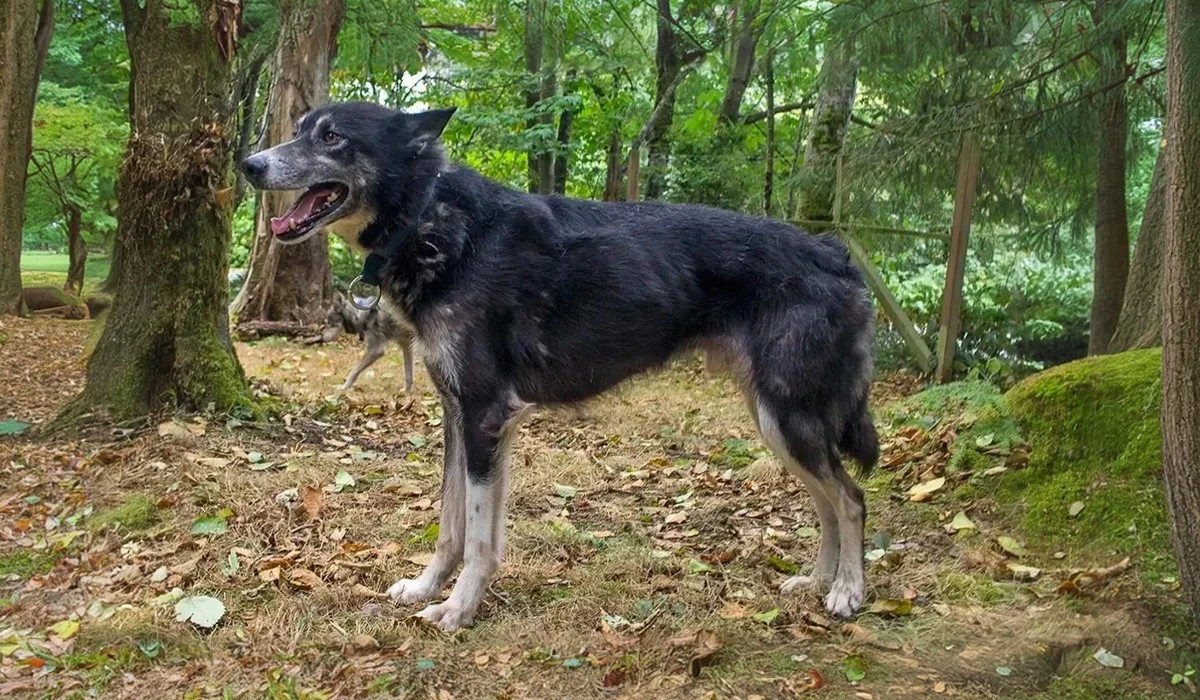
Image Credit - by Asigglin, CC BY-SA 4.0, via Wikimedia Commons
Designer Dogs Show Higher Aggression Levels
Crossing two highly specialized working animals to get a cute, low-shedding pet guarantees one thing: a wildly unpredictable genetic collision. People expect the perfect companion. They get an animal wired to herd sheep or retrieve waterfowl, trapped inside a suburban apartment. According to a study published in PLOS One, a 2023 Royal Veterinary College survey representing 9,402 valid dog responses exposed a harsh reality about designer dog behavior. Buyers assume these dogs offer effortless handling and easy training. The same PLOS One study indicates the actual data reveals a sharp spike in anxiety, aggression, and highly exaggerated reactions that elevate the risk of dog bites and threaten public health. We assume mixing a Poodle with another purebred cancels out the flaws of both. The genetic lottery actually works the exact opposite way, pulling dominant working traits to the surface and creating challenges few first-time owners know how to handle.
The Surprising Reality of Designer Dog Behavior
Believing a crossbreed inherits only the best traits from its parents ignores how dominant genetics actually dictate canine development. Most people purchase these animals based solely on their stellar online reputation. Social media paints them as the ultimate family pet. The data tells a completely different story. During a massive survey running from February to April 2023, researchers found severe behavioral divergence. Over 50% of these dogs act completely differently than their purebred parents.
Even more alarming, as reported by The Guardian, 82% of owners noted exaggerated problem behaviors such as fear, excitability, separation anxiety, and aggression. Many of these buyers are first-time owners who rely heavily on social media or family for training advice. They bring home a puppy expecting an easy shift. Instead, they face an animal demanding rigorous, professional-level handling. Are designer dogs harder to train? Yes, many owners find them significantly harder to train because they often inherit conflicting working-dog traits that require immediate professional behavioral support to manage safely.
Experts like Dr. Rowena Packer warn that these actions pose real hazards. Assuming these pets require zero effort puts families, particularly children, at immediate risk. You cannot simply ignore these non-trivial actions. Without empirical backing and proper education, families place themselves in potentially hazardous situations. Predicting designer dog behavior based purely on a cute appearance sets both the dog and the owner up for massive failure.
The Working Dog Trap Inside Your Living Room
Slapping a cute portmanteau naming convention onto a dog hides the functional, high-intensity purpose bred into its DNA for centuries. Every Shepsky, Schnoodle, and Puggle carries a specific genetic history. As noted in research published by the NCBI, humans developed many dogs for highly specialized tasks—partially dictated at the genetic level—like pulling sleds, retrieving game, or hunting rodents. Long before the modern fad, humans intentionally created purpose-driven combinations. In the 14th century, breeders combined hounds to create the lurcher and the longdog. These early crossbreeds served highly specific working roles.
The Domestic Mismatch
We see similar specialized breeding in sled dog genetics today. Mushers combine specific traits to create the Mackenzie River husky, the Alaskan husky, the eurohound, and the greyster. These function-specific crossbreeds thrive in extreme, demanding environments. Modern pet owners attempt to force these exact same intense drives into a relaxed family home. You place a dog wired with high energy, mental resilience, and sharp intelligence into a quiet living room. That dog quickly becomes bored, anxious, and destructive.
The traits that made their purebred ancestors exceptional working dogs make them incredibly difficult domestic pets. These dogs need intense mental stimulation. Without it, their intelligence turns into problem-solving mischief. They figure out how to escape enclosures, guard resources, and dominate other household pets. First-time owners rarely understand this reality. They expect a lap dog. They receive an unemployed athlete desperately looking for a job to do.
Genetics Roulette and the Myth of Hybrid Vigor
The assumption of superior health in mixed breeds relies on a genetic principle that rapidly degrades after the first generation. Many buyers believe crossing two breeds automatically creates a healthier dog. They rely on the concept of heterosis, or hybrid vigor. A first-generation (F1) cross might occasionally show a reduction in inherited disorders. Subsequent generations tell a completely different story.
Once breeders start crossing these hybrids together to create F2 or F3 generations, the genetic dilution becomes extreme. You get high physical variance among siblings in the exact same litter. One puppy might look exactly like a Poodle. Another might look entirely like a Golden Retriever. Do designer dogs have more health problems? They can actually inherit dual negative traits from both parents, and veterinary data shows minimal life expectancy differences when compared directly to purebreds.
As detailed by the National Human Genome Research Institute, more than 350 inherited diseases have been identified in domestic dogs. Journalist Jon Mooallem notes that crossing purebreds can expand the gene pool effectively under responsible execution. Careless mixing often results in the inheritance of specific disease risks. For example, Puggles face elevated risks for conditions like PNMG. The assumption of guaranteed superior health directly contradicts the reality of irresponsible breeding practices.
When Doodle Crossbreeds Grow Up: Grooming and Guarding
The promise of a maintenance-free, hypoallergenic coat masks a physically painful reality for the animal when proper care fails. The late 20th century sparked a massive fad. The primary goal involved capturing the Poodle's hypoallergenic coat while retaining desirable traits from other breeds. This resulted in the global explosion of doodle crossbreeds. Buyers flocked to these dogs, assuming they required zero maintenance.
The Fur and the Fury
The hypoallergenic promise rarely holds up. Coat genetics remain highly unpredictable. Some Labradoodles shed heavily. Most require incredibly high grooming maintenance. When owners neglect this intense grooming, the fur mats tightly against the skin. Animal behaviorist Hannah Molloy notes that this matting causes severe physical pain, which directly leads to severe behavioral degradation. A dog in constant physical pain quickly becomes reactive and unpredictable.
Mixing dual-retriever ancestries creates another massive risk: resource-guarding. These dogs instinctively want to hold onto objects. Owners must implement early item-exchange training to prevent this issue. Without this essential training step, a simple game of fetch can quickly turn into an aggressive standoff. First-time owners often misinterpret this dangerous resource-guarding as playful stubbornness.

Image Credit - by Jmaley1, CC BY-SA 3.0, via Wikimedia Commons
Unpacking Cockapoo Aggression and Owner Expectations
A ubiquitous, friendly reputation often forces owners to ignore early warning signs of rivalry and biting until severe incidents occur. The Cockapoo stands out as one of the most popular crosses on the market. Families buy them assuming they are the perfect companion for children. The reality often shatters these expectations. Recent data highlights a strong tendency toward elevated cockapoo aggression and intense rivalry toward other canines.
Take the case of Viv Smith and her Cockapoo, Dolly, acquired in September 2021. The breed’s stellar reputation drove her initial purchase. Dolly's actual pet behavior proved severe, resulting in three separate biting incidents. This created a total trust deficit within the home. Smith entirely withdrew her recommendation of the breed, deeming them highly unsuitable for households with children. Why is my Cockapoo so aggressive? Cockapoos can develop aggression due to a combination of maternal gestational stress, poor early socialization, and conflicting breed instincts that cause severe daily anxiety.
To grasp designer dog behavior, owners must look past the cute exterior. A 2023 PDSA report notes that separation-related issues and a lack of socialization opportunities act as major areas of concern driving behavioral problems, alongside the mother's stress levels during pregnancy. When breeders neglect these elements, the dog inevitably suffers.
The Financial Motives Driving the Trend
High consumer demand transforms living animals into lucrative status symbols, heavily incentivizing rapid, careless reproduction. The man who created the first Labradoodle to serve as a guide dog, Wally Conron, later compared his creation to Frankenstein's monster. He watched a functional, purpose-driven crossbreed mutate into a massive global fad. Modern hybrid breeding focuses almost entirely on profit.
High demand acts as a magnet for unethical breeders and puppy smuggling rings. The careful genetic curation buyers expect rarely exists. Profit-driven puppy mills churn out litters with zero regard for parental health screenings. These dogs become expensive status symbols. Breeders completely disregard animal health in favor of delivering trendy puppies to eager buyers.
Experts like Dom Burke and Karol Watson Todd emphasize that breed alone cannot predict an animal's actions. Proper socialization and responsible breeding remain essential for ideal companions. Sadly, the financial incentive to produce trendy puppies quickly overshadows these necessary steps. Uneducated buyers fund these operations, perpetuating a cycle of poor genetics and deeply troubled adult dogs.
Rethinking Designer Dog Behavior and Ownership
Ignoring the complicated, multi-factor nature of an animal's upbringing directly leads to the very behavioral crises buyers desperately want to avoid. Canine behavior depends on a wide range of factors. Environmental context, health, and socialization play equal roles alongside genetics. Buyers who ignore these realities face immense challenges. Grasping true designer dog behavior means accepting the immense responsibility of training a highly intelligent, energetic animal.
Alternatives to the High-Priced Gamble
Major kennel clubs like the AKC, UKC, and CKC still refuse to recognize these dogs as official breeds. They remain entirely undocumented, lacking the established lineages seen in older, functional crosses like the Cesky Terrier. Consumers looking for a companion animal possess better options. Animal shelters overflow with abundant mixed breeds. Choosing a rescue offers a practical alternative to funding expensive, unpredictable genetic experiments.
Families spending thousands on a trendy crossbreed must recognize the intense professional behavioral support required to ensure proper training and safety. These dogs demand massive amounts of time, energy, and financial resources. If a family cannot provide a rigorous training environment, they should strongly reconsider bringing a high-energy crossbreed into their home.
The Genetic Reality
Mixing working dogs to create the perfect suburban pet guarantees a volatile clash of genetics and environment. We buy these animals expecting a calm, non-shedding companion. We end up with a frustrated, high-energy athlete trapped indoors. The data consistently proves that designer dog behavior heavily leans toward unpredictability, anxiety, and extreme physical variation. Buyers must look past the social media hype and acknowledge the demanding reality of owning these dogs. Without responsible breeding, rigorous training, and proper socialization, the popular designer dog remains a highly risky gamble for the average family.
Recently Added
Categories
- Arts And Humanities
- Blog
- Business And Management
- Criminology
- Education
- Environment And Conservation
- Farming And Animal Care
- Geopolitics
- Lifestyle And Beauty
- Medicine And Science
- Mental Health
- Nutrition And Diet
- Religion And Spirituality
- Social Care And Health
- Sport And Fitness
- Technology
- Uncategorized
- Videos

