
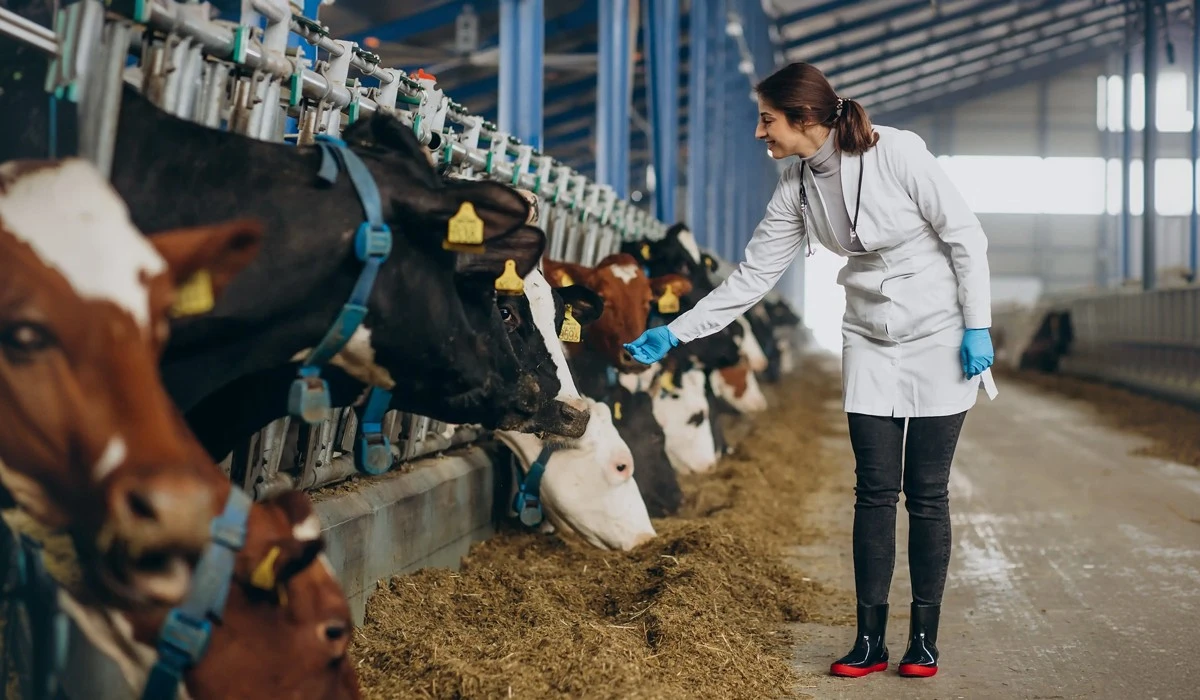
Dairy Herd Management: Early Mastitis Alerts
Your favorite cow walks into the parlor looking perfect. Her udder is tight. Her coat shines. You see no flakes in the filter sock. Yet, this cow is currently stealing hundreds of dollars from your monthly check. High somatic cell counts act like a slow leak in a pressurized pipe. You do not see the spray, but the pressure drops until the whole system fails. This happens because common farming habits often miss the struggle happening inside the udder tissue.
Effective Dairy Herd Management stops these losses when managers identify the problem before it becomes a crisis. The battle for that lactation’s peak yield is already lost when chunky milk appears. Most farmers wait for signs they can see with their eyes. The most profitable managers look for signs they can only see with data. This change in focus saves cows and protects your bank account.
The Economics of Proactive Dairy Herd Management
According to research published on PubMed, a single case of clinical mastitis in the first 30 days of lactation costs a farmer an average of $444. The study notes that lost milk production accounts for 31% of that total, while culling costs represent another 23%, and veterinary fees and drugs make up 24%. As reported in a study found on PubMed Central, mastitis costs the global dairy industry up to $32 billion every single year.
Calculating the Cost of a Single Case
Every time you dump milk from a treated cow, you lose the feed and labor costs that went into making it. However, the unseen cost is the future yield. A cow that suffers an early infection rarely hits her genetic potential for the rest of the year. This "lost opportunity" milk often totals thousands of pounds over the cow's lifetime.
Premiums and Somatic Cell Count (SCC) Targets
High-quality milk pays more. Information from Penn State Extension indicates that most cooperatives offer significant premiums for milk under 200,000 SCC. Beyond the bonus check, lower SCC cows are simply more productive. Research published in PubMed explains that cows with 250,000 SCC eat less food and produce less milk per pound of feed than cows with 50,000 SCC. This makes mastitis prevention in dairy cows a main part of your daily profit strategy.
Signs of Trouble: Bridging the Gap Between Observation and Data
A report on PubMed Central suggests that subclinical mastitis accounts for 70% to 80% of all udder infections. In these cases, the milk looks normal to the naked eye. However, the cow's body is already fighting a war. The milk composition changes as the cow’s blood-milk barrier begins to break down. This allows minerals and white blood cells to pour into the udder.
Physical Red Flags in the Parlor

Check for heat or swelling in the quarters during every milking. What are the first signs of mastitis in dairy cows? The earliest indicators often include a slight decrease in milk yield, subtle changes in milk consistency like tiny clots, or a cow becoming "kicky" during cluster attachment due to udder sensitivity. The California Mastitis Test (CMT) provides an immediate answer. According to ScienceDirect, the CMT reagent reacts with the DNA of white blood cells to form a gel. If the milk thickens, the SCC is likely over 200,000.
Behavioral Shifts You Can’t Ignore
Cows often change their habits before the milk changes color. Sick cows spend less time ruminating. They may also stand up more frequently because of udder discomfort. These behavioral shifts serve as an early warning system for anyone practicing careful Dairy Herd Management.
Using Technology for Real-Time Dairy Herd Management
Modern technology gives you eyes inside the udder. Inline sensors now track the electrical conductivity of milk during every single milking session. When an infection starts, the levels of Sodium and Chloride in the milk rise. At the same time, Potassium levels drop. This shift makes the milk more conductive to electricity.
Inline Conductivity and Yield Sensors
Software like Afimilk or DeLaval flags a cow when her milk conductivity jumps 19% above her 10-day average. This alert usually happens 24 to 36 hours before you see physical symptoms. This lead time allows you to intervene with non-antibiotic treatments like frequent milk-outs or anti-inflammatories.
Wearable Sensors and AI Integration
Ear tags and collars track movement and chewing 24/7. How do you check for mastitis in cows at home? While professional lab tests are best, you can check on the farm with a California Mastitis Test (CMT) kit to identify gel-like thickening in the milk or by stripping the first few streams of milk onto a dark plate to look for flakes. These wearable tools alert you to a "well-being score" drop, often catching a fever before the cow even enters the parlor.
Perfecting the Parlor Routine for Mastitis Prevention in Dairy Cows
The milking parlor is the most common place for bacteria to spread. You must follow strict protocols to keep the teat canal safe. As documented in the MSD Veterinary Manual, bacteria like Staphylococcus aureus spread via liners and hands. Consistent routines break this cycle of infection.
Pre-Dipping and Effective Teat Preparation
Use a pre-dip with 0.5% to 1% iodine. This concentration kills 99.9% of bacteria on the teat skin. You must allow the dip to sit for at least 30 seconds. If you wipe it off too early, the bacteria survive and enter the milk line or the teat canal once the vacuum starts.
Post-Milking Sealing and the 30-Minute Rule
Research from Penn State Extension shows that the teat sphincter muscle stays open for 30 to 60 minutes after the milker comes off. This is the most dangerous time for the cow. A high-quality post-dip creates a germicidal film that seals the opening. Guidelines from the University of Minnesota Extension suggest that providing fresh feed immediately after milking keeps cows standing, which prevents them from laying their open teat canals in mud or manure. This simple habit is an essential part of mastitis prevention in dairy cows.
Environmental Control: The Bedding-Health Connection
Where a cow sleeps determines her udder health. Bacteria need food, moisture, and warmth to grow. If you remove any of these three, you lower the infection pressure. Your choice of bedding material changes the entire health profile of your herd.
Sand vs. Organic Bedding Performance
The Agriculture and Horticulture Development Board notes that sand is inorganic, meaning it contains no nutrients for bacteria to eat. Organic bedding, like straw or sawdust, provides a feast for pathogens like E. coli. Research from the Cornell University College of Veterinary Medicine points out that Klebsiella bacteria thrive in hardwood sawdust, often leading to severe infections that resist common antibiotics.
Ventilation and Moisture Management
Bacteria growth in bedding explodes once moisture levels top 10%. High humidity and heat stress also weaken the cow's immune system. Large fans and proper barn orientation keep the bedding dry and the cows cool. This environmental control reduces the number of bacteria pressing against the teat end all day.
The Role of Nutrition and Immunity in Udder Health
A cow with a strong immune system can often fight off bacteria before an infection takes hold. Nutrition provides the raw materials for this internal defense. If the cow lacks specific minerals, her white blood cells move too slowly to stop an invasion.
Essential Minerals: Selenium and Vitamin E
Selenium and Vitamin E work together to help white blood cells kill bacteria. Most high-performing herds supplement diets with 0.3 ppm of Selenium. This helps the cow's "scout" cells reach the udder faster when they detect a pathogen. Without these nutrients, the bacteria multiply faster than the cow can respond.
Energy Balance and Fresh Cow Success
According to the National Center for Biotechnology Information, post-calving cows often face a negative energy balance, and this metabolic stress creates ketones in the blood. Can a cow recover from mastitis without antibiotics? Mild cases of clinical mastitis may occasionally resolve through a cow’s natural immune system and frequent milk-outs, but most infections require targeted veterinary intervention to prevent permanent tissue damage or the spread of bacteria. Keeping energy levels high ensures the immune system has the fuel it needs for mastitis prevention in dairy cows.
Data-Driven Decision Making in Dairy Herd Management
Good managers do not just react to problems; they use data to predict them. Your farm software contains a history of every infection and every SCC spike. Use this data to spot patterns. If the same cow gets sick three times in one year, she is no longer a profitable asset.
Analyzing Individual Cow History
Chronic "repeater" cows act as a reservoir for contagious bacteria. They infect the liners and pass the disease to healthy heifers. Identifying these cows for culling protects the rest of the herd. Smart Dairy Herd Management means knowing when to stop investing in a cow that cannot stay healthy.
Staff Training and Protocol Consistency
A protocol only works if everyone follows it. Every milker on the team must prep cows exactly the same way. Inconsistency creates stress for the cows and gaps in hygiene. Regularly review SCC reports with your staff so they see the direct result of their hard work in the parlor.
Securing the Future of Your Farm
Early detection of udder health issues transforms a dairy from a reactive business into a proactive powerhouse. You cannot afford to wait for clinical signs to appear in the milk. Integrating smart sensors, clean bedding, and precise nutrition creates an environment where cows thrive, and profits grow.
The future of Dairy Herd Management rests on using every tool available to catch infections before they drain your bank account. Consistency in the parlor and cleanliness in the stalls serve as your best defense. When you combine these basics with modern data, you secure a healthier herd and a more stable financial future for your farm. High-quality milk occurs because of a deliberate system designed to protect the cow.
Recently Added
Categories
- Arts And Humanities
- Blog
- Business And Management
- Criminology
- Education
- Environment And Conservation
- Farming And Animal Care
- Geopolitics
- Lifestyle And Beauty
- Medicine And Science
- Mental Health
- Nutrition And Diet
- Religion And Spirituality
- Social Care And Health
- Sport And Fitness
- Technology
- Uncategorized
- Videos

