
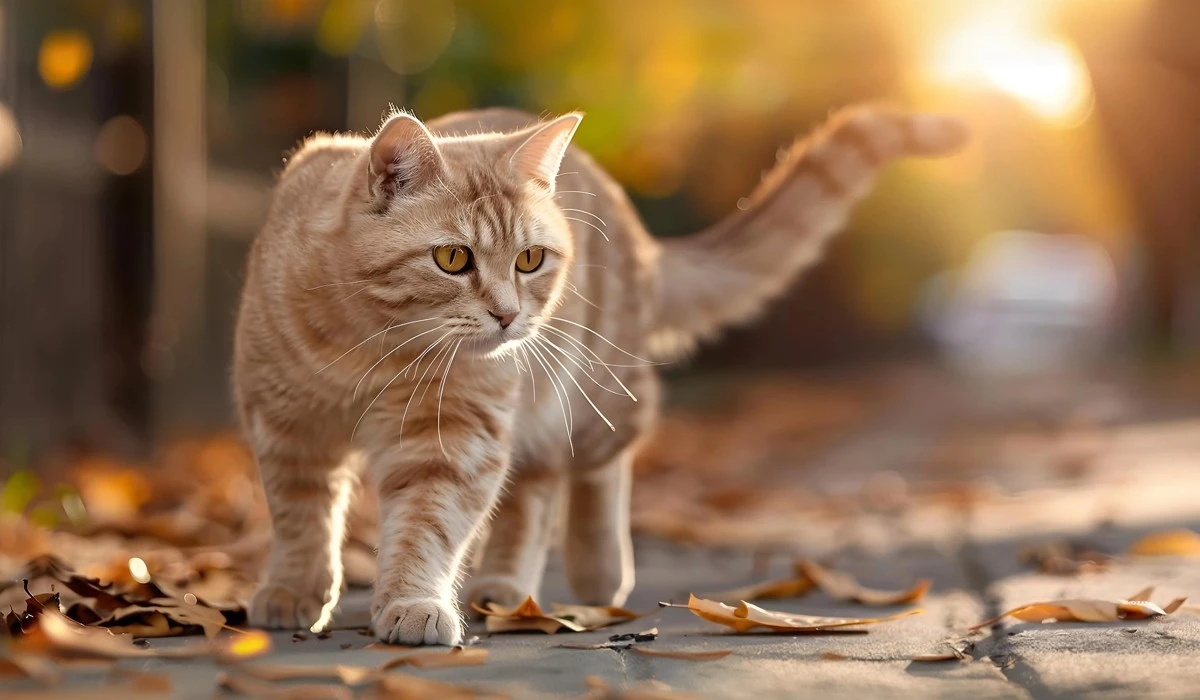
Cat Domestication In Ancient Egypt
The Cat Who Walked by Himself: Unravelling the Late Arrival of Our Feline Friends
Modern society exhibits a fascination with felines that borders on religious worship, as these creatures dominate our screens and households with effortless charisma. Internet culture fuels this obsession, transforming simple videos of pets chasing laser pointers into a global entertainment industry worth billions of dollars. Yet this immense digital fame masks a biological puzzle that has confused experts for decades.
Researchers have long struggled to pinpoint exactly when these solitary hunters decided to trade the freedom of the wilderness for the comfort of a warm lap. Felines notoriously march to the beat of their own drum, and their history reflects this stubborn, independent spirit. Fresh evidence suggests that while dogs joined human campfires tens of thousands of years ago, felines hesitated significantly before accepting our hospitality. The journey from wild predator to sofa-bound friend occurred far more recently compared to previous assumptions, rewriting the timeline of one of humanity's most enduring partnerships.
Shattering the Agricultural Myth
Textbooks and nature documentaries have frequently cited the start of farming in the Fertile Crescent as the definitive starting point for cat domestication roughly ten millennia back. This narrative seemed logical to historians, as early farmers needed protection from the rodents that threatened their precious grain stores. However, recent scientific analysis challenges this established timeline completely. Oxford University academics now argue that the true bond between people and cats formed much closer to the modern era. Data points to a shift occurring merely three or four thousand years in the past, rather than the ancient dates often quoted. This revelation shifts the entire scope of the human-feline relationship, suggesting that for thousands of years, humans farmed crops and built complex civilisations without domestic cats by their side. The transition was not an ancient necessity but a relatively recent cultural development that changed domestic life forever.
Tracing the Genetic Blueprint
Geneticists have successfully traced the lineage of every house cat on the planet back to a single ancestral species. The wildcat of Africa, known scientifically as Felis lybica, stands as the sole forefather of modern tabbies and toms. Researchers reached this conclusion by extracting DNA from skeletal remains discovered during excavations across Anatolia, Europe, and North Africa. By comparing this genetic material with the profiles of living animals, they constructed a family tree that points squarely away from the Middle East. The domestication process appears to have centred across North Africa, specifically Egypt, rather than the Levant. This geographic pivot contradicts earlier assumptions that the process began simultaneously wherever humans started tilling the earth. Instead, one specific region played the crucial role in transforming a savannah hunter into a household staple, proving that geography played a bigger role than previously thought.
The Magnetism of the Granary
Hunger drove the initial contact between the two species rather than a desire for friendship or companionship. Early agricultural settlements in Egypt created massive stockpiles of grain which inevitably attracted legions of mice and rats. These rodent populations offered an easy, concentrated food source that local predators could not resist. Felines began patrolling the perimeter of human villages, acting as natural pest control agents. This arrangement, known to biologists as a commensal relationship, allowed both parties to benefit without requiring close social bonds. Humans tolerated the cats because they protected food supplies, while the animals enjoyed a steady diet without the dangers of the deep wilderness. Over centuries, the cats that were less fearful of people gained an evolutionary advantage, slowly adapting to life within the bustling human sphere.
Divinity in the Realm of Pharaohs
Ancient Egypt provided the perfect cultural environment for this relationship to deepen beyond mere utility or pest control. Egyptian society did not just tolerate these animals; they elevated them to a divine status that solidified their place in human homes. Artists immortalised felines in statues, wall paintings, and intricate jewellery, reflecting a deep societal respect. The goddess Bastet, often depicted with a lioness or domestic cat head, symbolised protection and family, further integrating the animal into spiritual life. Archaeological finds confirm this devotion, as vast cemeteries containing mummified cats reveal that people went to great lengths to preserve their companions for the afterlife. This intense cultural focus likely accelerated the taming process, as humans began actively caring for and perhaps breeding the animals that roamed their temples and palaces, viewing them as sacred vessels.
The Cyprus Burial Anomaly
Archaeologists previously used a famous discovery on the island of Cyprus to argue for a much older domestication date. A grave dating back nine thousand years contained the skeleton of a human buried alongside a wildcat, suggesting a pet-like relationship. However, experts now interpret this find differently in light of the new Egyptian timeline. The Cyprus cat was likely a tamed wild animal brought over from the mainland by boat, rather than a truly domesticated species. Taming an individual animal differs biologically from domesticating an entire species over generations. This singular burial represents an early experiment in companionship but does not mark the widespread genetic shift that occurred millennia later. It proves humans liked cats long ago, but the species had not yet fundamentally changed its nature to suit human needs.
Legions and the Roman Spread
Once cats established themselves in Egypt, they began a rapid expansion across the ancient world via trade routes. The Roman Empire played a pivotal role in this dispersal, treating the animals as essential working cargo. Soldiers and traders carried them on ships and in caravans to protect supplies from vermin during long campaigns. Skeletal fragments found at Roman forts across Europe and in the United Kingdom confirm their presence roughly two millennia past. This arrival date is significantly later than previous estimates, which assumed cats had migrated north with the very first farmers. The Romans effectively acted as a distribution network, seeding domestic cat populations from the Mediterranean all the way to the misty British Isles, ensuring the cat's conquest of Europe.
Voyagers of the Eastern Routes
Movement towards the East followed a similar pattern of trade and utility along ancient paths. Merchants traversing the Silk Route brought domesticated cats from the Middle East and Egypt into Central Asia and eventually China. These animals were valuable commodities, prized for their ability to safeguard precious fabric and spices from gnawing rodents. Genetic studies on remains found in Kazakhstan show that true domestic cats were present along these trade hubs by the medieval period. This eastward migration introduced the Felis catus lineage to regions that had never seen this specific type of feline before. The arrival of these Western cats would eventually alter the biological landscape of Asia, displacing local wild populations that had occupied a similar ecological niche.
The Mystery of the Leopard Cat
A fascinating twist in the story of domestication emerged from excavations inside China. Ages prior to the arrival of Western domestic cats, people in ancient Chinese settlements had formed a bond with a completely different species. The leopard cat, a small wild feline with distinct spots, lived alongside farmers for thousands of years. Bones found at the Quanhucun site in Shaanxi province, dating back over five thousand years, show that these animals consumed a diet heavy in millet-fed rodents. This proves that a separate, independent domestication event began in East Asia. Ancient farmers in the Yangshao culture welcomed those competing predators into their villages for the same pest-control reasons that Egyptians welcomed the wildcat of Africa.
A Relationship That Faded Away
The connection between the Chinese farmers and the leopard cat lasted for at least three thousand years. Peking University scholar Shu-Jin Luo describes the relationship as mutually beneficial, with the cats thriving within populated villages without causing harm. However, unlike their African cousins, these Asian felines never fully completed the journey to becoming permanent house pets. They remained somewhat wild, maintaining their independence even while living in close proximity to people. When the more docile and adaptable Felis catus arrived via ancient trade paths, the leopard cat relationship largely dissolved. The imported cats were likely friendlier and easier to handle, leading to the gradual disappearance of the leopard cat from the domestic sphere.
The Enduring Wildness of Asia
Although the ancient bond faded, the leopard cat did not vanish from the wild ecosystem. The species, Prionailurus bengalensis, continues to roam forests across Asia today, retaining its feral nature. It remains a shy, solitary hunter that avoids human contact, a sharp contrast to the animals that once hunted mice in Neolithic granaries. This historical divergence highlights how domestication is not inevitable; it requires a specific set of circumstances and genetic traits to succeed. The leopard cat represents a "false start" in the history of pets—a moment where humanity almost took a different path with a different species. It serves as a reminder that the animals on our sofas today are the result of a unique and specific evolutionary lottery.
The Creation of the Bengal
Interest in the leopard cat reignited in the twentieth century, leading to a new chapter in feline history. Breeders in the nineteen-eighties began crossing domestic cats with Asian leopard cats to create a hybrid known as the Bengal. This intentional mixing of genes aimed to produce a pet with the stunning spotted coat of a jungle predator but the gentle temperament of a house cat. Jean Mill, a pioneer of the breed, worked to stabilise these hybrids, eventually gaining official recognition from cat registries. The existence of the Bengal cat brings the story full circle, reuniting the bloodlines of the two distinct species that humans befriended thousands of years apart. It stands as a living tribute to the ancient, forgotten relationship in China.
Sailors and Their Shipmates
Maritime history further explains how cats achieved their current distribution across the globe. Beyond the Romans, later seafaring cultures like the Vikings and medieval traders mandated the presence of cats on voyages. A ship without a cat was a ship vulnerable to disease and starvation, as rats could decimate provisions and spread plague. Genetic analysis of Viking remains reveals that they transported cats from the Middle East to northern Europe and potentially beyond. These nautical felines were not pampered pets but working crew members, earning their keep in the harsh environment of the open ocean. Their descendants jumped ship at ports globally, establishing colonies in the Americas, Australia, and remote islands.
Physical Changes in Captivity
Coexisting alongside people altered the domestic cat physically, though less drastically than one might expect. While dogs have developed a massive variety of shapes and sizes, cats have remained structurally similar to their wild ancestors. The most significant changes have occurred in their coat colours and neural biology. Life in safety reduced the need for the large, reactive brains required for survival in the wild, leading to a slight reduction in cranial capacity. Additionally, the pressure to camouflage disappeared, allowing for the explosion of coat patterns—orange, white, black, and calico—that we see today. These aesthetic changes were likely favoured by humans, who began to view the animals as companions rather than just tools.
The Solitary Socialite Paradox
The psychology of the house cat remains a subject of intense scientific interest and debate. Unlike dogs, which are pack animals wired for social hierarchy, wildcats are solitary and territorial. This makes their successful domestication somewhat of a biological contradiction. They did not evolve to understand human commands or social cues in the way canines did. Instead, they adapted by becoming "socially flexible," capable of living in groups when food is abundant but retaining the ability to survive alone. This explains why modern cats can be affectionate one moment and aloof the next. They are not pack members looking for a leader; they are solitary predators who have decided that living with us is a convenient survival strategy.
Invading Every Continent
The success of this strategy is evident in the sheer numbers of cats found worldwide today. From the skyscrapers of Tokyo to the farmhouses of Texas, Felis catus has established itself in every climate and culture. The only continent that remains free of their paw prints is Antarctica, due to its extreme environment and strict conservation rules. This ubiquity speaks to the cat’s incredible adaptability. They can thrive on high-grade commercial food in a city apartment or hunt for survival in a rural barn. This adaptability, however, has also made them a controversial invasive species in some ecosystems, where their hunting skills threaten local wildlife that never evolved to evade such an efficient predator.
Medieval Persecution and Survival
The journey of the cat was not always smooth, particularly during the European Middle Ages. While Egyptians worshipped them, medieval religious leaders often viewed cats with suspicion, linking them to paganism and witchcraft. Historical records suggest that the persecution of cats in the thirteenth century may have inadvertently aided the spread of the Black Death, as fewer predators meant more plague-carrying rats. Despite these centuries of cruelty and superstition, the species survived due to its indispensability as a mouser. The fact that they persisted through such hostility proves their resilience and the undeniable value they brought to human households, even when society turned against them.
The Rise of the Fancy
Public perception shifted dramatically during the Victorian era, marking the birth of the "cat fancy." In the late nineteenth century, artist Harrison Weir organised the first modern cat show at the Crystal Palace in London. This event transformed the humble mouser into a prize-winning exhibit, encouraging selective breeding for aesthetic traits. Humans began to manipulate feline genetics to create long-haired Persians and sleek Siamese, focusing on beauty rather than hunting prowess. This era cemented the cat's status as a luxury companion, moving them from the barn to the parlour. The modern obsession with breeds and pedigrees finds its roots in this specific moment of cultural change.
A Bond Beyond Utility
Modern ownership has moved far beyond the original contract of pest control or grain protection. People today keep cats primarily for emotional support and companionship, valuing their calming presence. Studies have shown that the frequency of a cat's purr can lower human blood pressure and reduce stress levels. This shift from worker to family member represents the final stage of domestication. We no longer need them to protect our grain, yet we feed and house them with a dedication that rivals the worship of ancient Egypt. The relationship has inverted; the cats are now the ones being served, while humans derive psychological benefits from the arrangement.
Unanswered Questions Remain
Despite the advances in DNA analysis and archaeology, many questions about the feline past remain unanswered. The exact routes of their dispersal through Africa and the specifics of their daily lives in ancient settlements are still debated. Future excavations in the Sahara and the Middle East may yield bones that further refine the timeline. Scientists are also investigating the genetic basis for behaviour, trying to understand exactly which genes turned a fierce wildcat into a purring lap warmer. The story of the cat is far from closed. Every new fossil and genetic sequence adds another piece to the puzzle of how a solitary, fierce predator became the world's most popular pet.
Recently Added
Categories
- Arts And Humanities
- Blog
- Business And Management
- Criminology
- Education
- Environment And Conservation
- Farming And Animal Care
- Geopolitics
- Lifestyle And Beauty
- Medicine And Science
- Mental Health
- Nutrition And Diet
- Religion And Spirituality
- Social Care And Health
- Sport And Fitness
- Technology
- Uncategorized
- Videos

