
UK Heat Pumps: What’s Shaping the Market Today
You install a machine to warm your living room, but you actually place a reversed refrigerator in your backyard. Heating a house usually means burning fuel. UK heat pumps flip this logic entirely. They refuse to generate heat. As explained by the European Heat Pump Association, they simply steal existing warmth from the freezing winter air, earth, or water and pump it indoors. This thermal theft sits at the center of a massive national shift.
The government wants to change how an entire country stays warm. Officials point to ambitious climate goals and £15 billion budgets. Meanwhile, homeowners look at the immediate £5,000 out-of-pocket costs and hesitate. The clash between political deadlines and household economics creates a high-stakes standoff. You must understand the physical constraints, the pricing, and the property rules before making a choice.
Homeowners must navigate conflicting advice, fluctuating energy prices, and rigid planning permissions. Those who adapt early stand to gain long-term thermal independence. Those who rush blindly into the process face severe financial penalties.
The Core Physics Driving UK Heat Pumps
Extracting fire from freezing air relies entirely on the strange behavior of boiling refrigerants. You pull thermal energy from the outdoor environment using a heat exchanger. The system feeds this environmental warmth into a liquid refrigerant. This liquid evaporates into a gas at very low temperatures. Charlotte Lee from the Heat Pump Association explains this process clearly. She notes that the system captures environmental warmth via an exchanger, allowing the refrigerant gas to absorb energy.
A compressor then crushes this gas. Squeezing the gas forces its temperature to spike dramatically. A secondary exchanger transfers this intense warmth into your water pipes and radiators. This cycle yields a high Coefficient of Performance (COP). As noted in a Reuters report, a single unit of electrical power can transfer three to five times more energy than it consumes, generating substantial actual warmth. Furthermore, the European Heat Pump Association states that this technology provides a highly sustainable and renewable method for heating and cooling that outclasses traditional gas or oil boilers by a wide margin.
Homeowners often worry about the daily financial strain of these modern setups. Are heat pumps cheaper to run than gas boilers? They absolutely can be, provided you pair a high-performance system with a specialized electricity tariff to offset current energy prices. Without a smart tariff, the high cost of electricity quickly erases your daily operational savings.
The Water Heating Challenge
Richard Halsey from the Energy Systems Catapult points out that the water heating process works similarly to gas boilers. However, system optimization remains essential to maximize performance. Homeowners often find that larger radiators become absolutely necessary to distribute this low-flow heat effectively across older rooms.
The Financial Reality of the Boiler Upgrade Scheme
Government grants wipe away the initial sticker shock while leaving a permanent mark on your property's electrical demands. The equipment upgrade requires serious capital upfront. UK heat pumps carry a total setup cost between £6,500 and £11,500. Joanna O’Loan from the Energy Saving Trust confirms this typical pricing range includes VAT, labor, and the equipment itself. She advises buyers to secure triple quotes to find the optimal pricing and layout.
The Boiler Upgrade Scheme offers a massive lifeline for consumers. Homeowners in England and Wales receive a £7,500 allowance to offset the installation. This grant completely changes the financial math for average families. According to Ofgem, you must use an installer certified by the Microgeneration Certification Scheme (MCS) to claim this government money.
However, the UK Spending Watchdog warns that the remaining £5,000 out-of-pocket expense remains prohibitive for many households. The grant helps, but average families still struggle to fund the remaining balance. Furthermore, this specific scheme carries a strict deadline. The extension expiration hits in 2029 or 2030, creating a ticking clock for homeowners who want to secure government funding.
The Warm Homes Plan Budget
To support this massive national shift, the government allocated a £15 billion budget for green tech and bill reductions under the UK Warm Homes Plan. A significant £5 billion slice goes directly to the Social Housing Fund and Local Grants. This money funds upgrades exclusively for low-income and social housing properties, preventing a green energy divide.
Why Performance Metrics Clash with Operational Costs
Multiplying energy output by three means nothing if the input electricity costs four times more than gas. The Climate Change Committee notes that future operating expenses will eventually drop below gas boilers. Today, that financial victory relies heavily on fluctuating energy pricing and the inherent unit performance of the installation.
Experts point out a harsh contradiction in the current rollout. The government removed the mandatory insulation rule for the Boiler Upgrade Scheme to save homeowners an average of £2,500 upfront. This removal definitely encourages faster initial adoption among reluctant buyers. Yet, skipping insulation forces the equipment to work drastically harder.
Poorly insulated homes suffer rapid heat loss, driving up daily electricity consumption. You save money on day one, only to bleed cash every winter month. Many older homes lack the electrical capacity to handle this constant strain. Do you need a bigger fuse box for a heat pump? Yes, most older properties require an 80A or 100A main fuse, and according to a joint government and Ofgem plan, all Distribution Network Operators will provide this mandatory domestic upgrade to standard sizes at no cost to accommodate low-carbon connections. You must secure this electrical baseline first.
The Push for Thermal Retention
Bean Beanland from the Heat Pump Federation emphasizes that thermal leak reduction remains vital for older structure compatibility. Without proper draft proofing and loft insulation, your high-output system simply pumps expensive heat out through your roof and walls.
How Mandates Force the UK Heat Pumps Market
Political mandates rewrite building codes long before consumer demand organically catches up. The government treats home heating as a primary target for strict emission reductions. As reported by Reuters, the home heating sector currently accounts for roughly 18% of the overall planet-warming gases produced by the country. To fix this, the UK set massive legal targets.
A UK Parliament report outlines that by 2040, 52% of existing homes must utilize UK heat pumps. The short-term goal demands 450,000 installations per year by 2030, scaling to a staggering 1.5 million annually by 2035. The current market status tells a very different story. In 2023, the nation only saw around 60,000 sales. The trajectory points upward, with 2025 projections hitting 125,000 units.
Still, the UK installation rate severely lags behind France, Germany, and Italy. To force the issue, the government introduced aggressive New Building Regulations. These rules make solar panels and low-carbon heating absolutely mandatory for all new homes in England.
The Cost to Home Builders
The Home Builders Federation estimates this strict mandate adds around £10,000 to the construction cost of every single new property. Builders pass these high compliance costs directly onto the new homebuyers, baking the green shift into the rising cost of real estate.
The Sub-Zero Survival of Modern Equipment
The absolute coldest winter nights reveal the extreme limits of refrigerant gas compression. Skeptics often question if air source models fail during severe freezes. The operational data proves their resilience against extreme weather. Katy King from Nesta confirms these units harvest frigid air thermal energy effortlessly.
Even during intense cold snaps, she notes the performance remains high, a point supported by research published in Joule, which confirms that during severe freezes, these systems provide heat at up to double the performance rate of standard electrical resistive heating. US labels guarantee functionality down to 5°F. Other data points to solid performance at -15°C, or even -30°C. Buyers frequently question the system's absolute breaking point. How cold is too cold for a heat pump? Modern systems continue heating your home flawlessly down to -15°C and even -30°C, though they consume slightly more electricity to maintain indoor temperatures during extreme blizzards.
Karen notes there is a slight drop in overall performance during extreme cold. The compressor simply works longer hours to elevate the temperature. High-temperature models offer an easier switch from fossil fuels because they closely match the intense heat output of traditional radiators.
Expanding the Technology
Manufacturers use variable-speed motors and multi-speed compressors to squeeze out maximum performance in bad weather. Some systems also feature desuperheaters specifically designed for rapid water heating. Beyond the standard air-to-water units, homeowners can explore air-to-air, ground source, water source, hybrid dual-fuel, and even gas-fired absorption types. Ground source models utilize deep boreholes or wide trenches to extract stable ground heat.
Spatial Requirements and Property Clashes
The physical footprint of low-carbon heating demands property compromises that older homes rarely possess. You must carefully assess your property's physical boundaries before making a purchase. Zoe Guijarro from Citizens Advice stresses the necessity of a strict property suitability assessment. She warns that performance upgrades and spatial checks for the indoor cylinder remain absolutely mandatory.
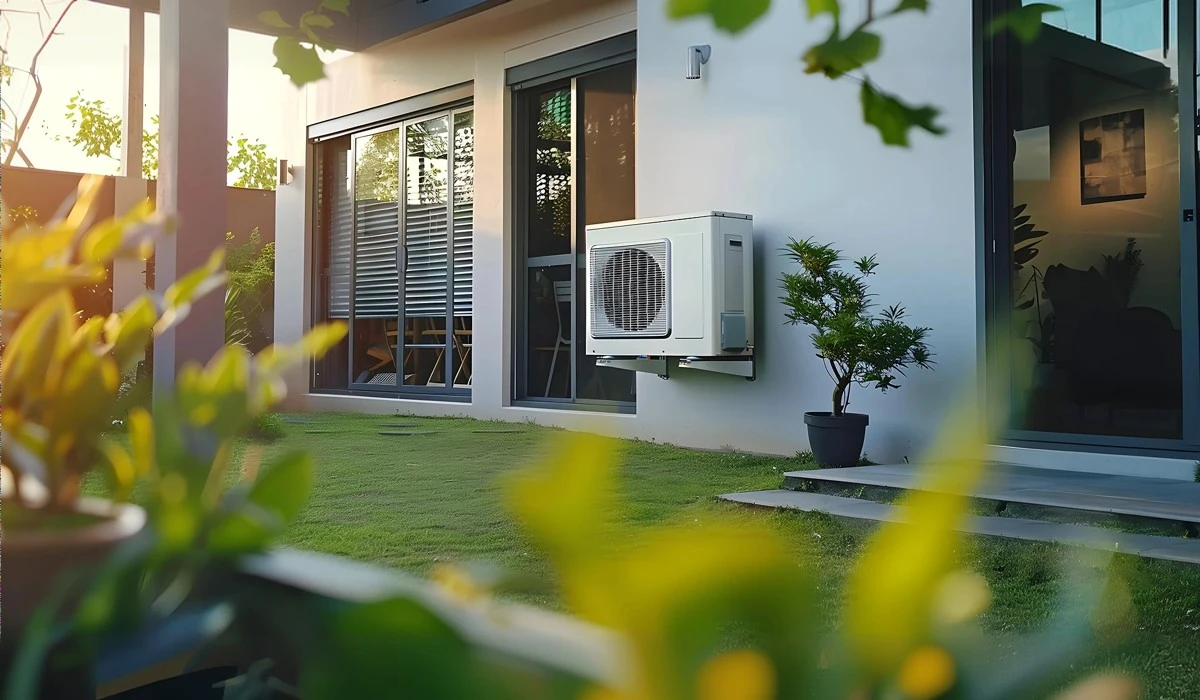
An air source outdoor box takes up about 1m x 1m x 0.4m of physical space. Ground source systems demand vast gardens to accommodate shallow trenches or expensive machinery for deep boreholes. Water source systems strictly require your property to sit within 100 meters of a suitable lake or river. Furthermore, most systems demand significant indoor space for a dedicated hot water cylinder.
The government recently removed the strict 1-meter planning permission boundary to encourage faster uptake. You can now place the outdoor unit closer to your neighbor's property lines without fighting local councils.
Beating the Noise Limits
Noise generation also causes intense anxiety for tightly packed residential neighborhoods. To prevent property disputes, newer devices operate under a strict 42db noise limit. This specific sound level perfectly matches the quiet hum of a standard kitchen refrigerator, ensuring peaceful relations with the houses next door.
Maximizing Savings with UK Heat Pumps and Tariffs
The difference between saving thousands and losing money depends entirely on your contract with the national grid. The National Grid actively aims to deliver 95% low-carbon, clean electricity to Great Britain by the year 2030. The Climate Change Committee explicitly states that this specific renewable energy expansion will eventually result in cheaper electricity across the board.
Right now, the financial returns vary wildly based on your specific setup. A standard standalone setup, paired with a smart tariff and complete gas meter removal, yields about £234 in annual savings compared to gas. This baseline figure comes directly from Warmur's latest analysis.
If you choose to combine UK heat pumps with rooftop solar panels, the financial picture improves dramatically. Nesta estimates this dual-tech approach reduces your annual utility bills by roughly £1,000. Jan Rosenow from RAP outlines the ultimate formula for success. He states that a high-caliber setup, combined with top-tier equipment and a specialized tariff, easily delivers a 50% operating cost reduction versus traditional gas heating.
The Final Verdict on UK Heat Pumps
The move away from fossil fuels places an enormous physical and financial burden directly onto homeowners. You face high initial installation costs, strict electrical grid demands, and demanding property spatial assessments. Government grants ease the initial financial pain, yet the final out-of-pocket expenses remain steep for average families.
Despite the temporary hurdles, the core technology proves undeniably powerful. Stealing thermal energy directly from freezing air completely outsmarts traditional combustion heating methods. As the national grid shifts rapidly toward cheaper renewable energy, the daily operational costs of these systems will steadily drop.
UK heat pumps force an immediate and permanent upgrade to our living spaces. You must actively navigate smart tariffs, insulation strategies, and spatial compromises to win this nationwide shift. Those who properly optimize their homes today will successfully secure total thermal independence for decades to come.
Recently Added
Categories
- Arts And Humanities
- Blog
- Business And Management
- Criminology
- Education
- Environment And Conservation
- Farming And Animal Care
- Geopolitics
- Lifestyle And Beauty
- Medicine And Science
- Mental Health
- Nutrition And Diet
- Religion And Spirituality
- Social Care And Health
- Sport And Fitness
- Technology
- Uncategorized
- Videos

