
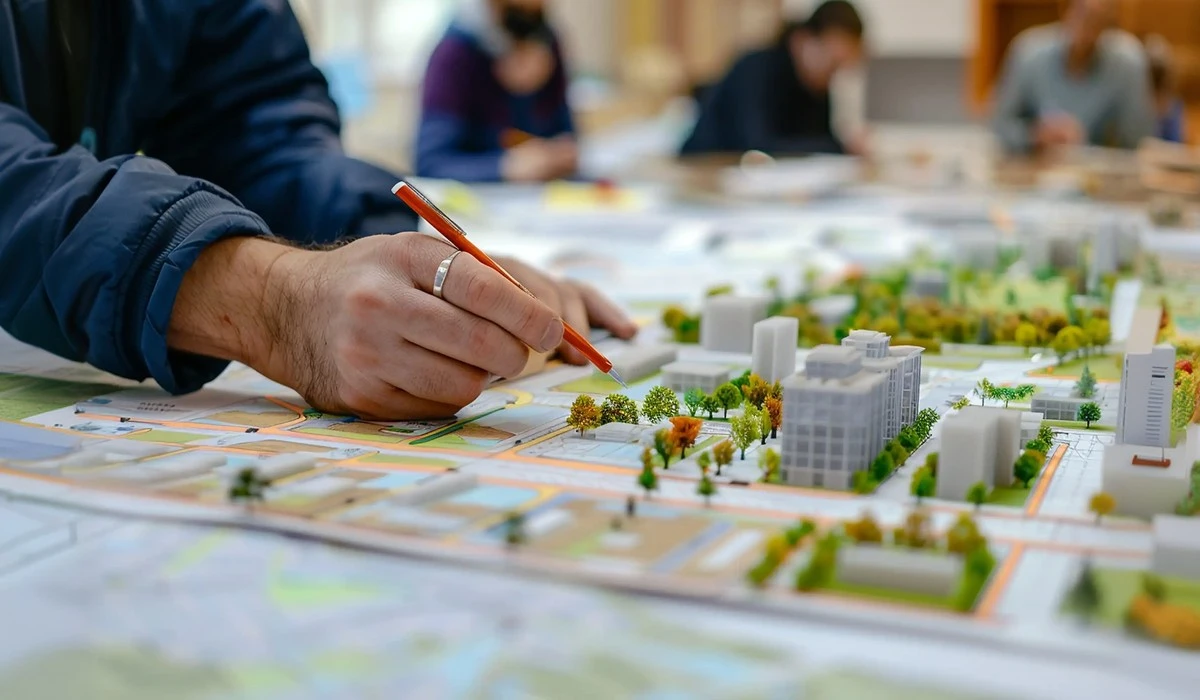
Town Planning Solutions to End Urban Sprawl
When you build a house ten miles from the nearest grocery store, you force a city to pay for miles of pipes and pavement it cannot afford. Most people think traffic is a side effect of growth. In reality, the way we lay out our streets determines if a city thrives or goes bankrupt.
Outdated urban sprawl zoning often traps neighborhoods in a cycle of high taxes and long commutes. Smart Town Planning offers a way out by focusing on effectiveness. Constructing sustainable city grids creates neighborhoods where everything sits within a short walk. This shift moves us away from messy expansion and toward a future where our towns actually pay for themselves.
The Evolution of Modern Town Planning Practices
Modern planners now prioritize vacant lots within city limits rather than green fields on the edge of town. According to a report published by NJTOD, this strategy, known as infill development, uses existing roads and sewers to support new homes, helping to reduce public infrastructure costs. Building "in" instead of "out" saves municipalities millions of dollars in new infrastructure costs.
Ironically, as noted by Britannica, many cities still follow the Garden City Movement of 1898, an ideal of a planned residential community that pushed people away from town centers. Today, we need the opposite. How does urban sprawl affect the environment? Research in ScienceDirect highlights that urban sprawl increases carbon emissions and destroys natural habitats because it lengthens commuting distances and encroaches on agricultural land. Filling the gaps in our current streets protects the forests outside the city.
Reforming Urban Sprawl Zoning for Density
Traditional "bedroom community" codes create traffic and isolation by separating where people live from where they work. According to records from Justia, a 1926 Supreme Court case called Village of Euclid v. Ambler Realty Co. made this separation the law. As detailed by Britannica, this rigid urban sprawl zoning heavily contributes to car dependence, requiring residents to drive for most errands.
To fix this, cities must allow for multi-family units and small shops within residential blocks. Small changes to local laws can turn a quiet street into a vibrant neighborhood. We need more duplexes and townhomes that sit comfortably next to single-family houses. This variety creates a "Missing Middle" that gives people more choices in where they live.
Implementing Transit-Oriented Development (TOD)
Effective Town Planning centers life around transit hubs rather than highways. When we zone for high-density living near train stations or bus stops, we remove the need for massive parking lots. These lots often sit empty and waste valuable space that could hold parks or businesses.
As detailed by Provident Housing, transit-oriented development works by putting compact growth, such as hundreds of apartments, within a quick five- to ten-minute walk of a transit station. This density supports local rail and bus systems, making them more reliable for everyone. It turns the station into a neighborhood heart.
Designing Sustainable City Grids for Maximum Effectiveness
A great city feels small to a person on foot. We achieve this by breaking down large "super-blocks" into smaller, more navigable units. Research on urban form and walkability published via Voog suggests that on average, smaller blocks give pedestrians more routes to their destination. What is the difference between zoning and town planning? According to insights from the NADI Group, zoning implements specific regulations as the legal framework, whereas Town Planning provides the overall strategic vision and management of urban growth and community functions.
Sustainable city grids use a tight network of streets to keep traffic moving slowly and safely. Barcelona uses "Superblocks" to reclaim 70% of street space for people. According to Datawrapper, planners close the inner streets to through-traffic and reduce speed limits to let kids play where cars used to park. This design supports the "15-minute city" concept, where you find everything you need within a short stroll.
Economic Benefits of Smart Town Planning
Compact development uses math to save taxpayers money. One mile of road serves ten times as many people in a dense grid as it does in a sprawling suburb. Shorter sewer lines and localized utilities mean lower repair bills for the city.
A report published by the Upper Great Plains Transportation Institute (UGPTI) shows that compact Town Planning reduces infrastructure costs, with some estimates citing savings of nearly 38%. Furthermore, studies highlighted in a 2012 CORP paper indicate that when houses sit closer together, the city spends less on public services like garbage collection, water, police patrols, and fire protection. These savings allow the city to invest in better parks and libraries.
Boosting Local Small Business Growth

High density creates a "captive audience" for local shops. When people live in sustainable city grids, they walk past storefronts every day. This foot traffic provides a more stable customer base than car-dependent malls.
Small businesses thrive when they don't have to provide huge parking lots for every customer. Density also creates "agglomeration economies," where similar businesses group together to share ideas and workers. This proximity leads to more innovation and higher wages for everyone in the area.
Environmental Preservation Through Town Planning
We must create hard boundaries to stop cities from bleeding into the countryside. Permanent greenbelts act as a wall against expansion. These zones protect the farms that feed us and the forests that clean our air.
Planners use Urban Growth Boundaries to mandate that all new construction happens inside a specific line. This keeps the city compact and the countryside wild. It also prevents "leapfrog development," where builders skip over expensive land to build cheap houses in the middle of nowhere.
Urban Heat Island Mitigation Strategies
Sprawl creates massive heat islands because asphalt absorbs the sun's energy. Smart Town Planning solves this by adding "green fingers" to the city. These linear parks act as natural air conditioners for entire neighborhoods.
Sustainable city grids use trees and permeable pavements to lower temperatures. Trees provide shade and release moisture, which can drop local temperatures by ten degrees. Using light-colored materials on roads and roofs also helps reflect heat away from the ground.
Technology and Data in Town Planning Design
Planners now use AI to simulate how changes in urban sprawl zoning affect daily movement. These digital tools show exactly where bottlenecks will form before a single shovel hits the dirt. Data-driven decisions prevent the traffic jams common in poorly planned suburbs.
Can old cities switch to sustainable city grids? Yes, through tactical urbanism and retrofitting existing streets to prioritize pedestrians and cycling over car traffic. Analyzing data allows us to identify which streets to close and which intersections to tighten. This makes the city safer for everyone without starting from scratch.
Community Equity and Social Town Planning
The "Missing Middle" housing crisis happens when we only build huge houses or giant apartment towers. Better Town Planning encourages a mix of townhomes, duplexes, and cottages. This variety makes housing more affordable for young families and seniors.
Diversified land use allows people of all income levels to live in the same neighborhood. This creates a more stable and equitable community. When we allow for smaller homes on smaller lots, we lower the entry price for new homeowners.
Public Participation in the Planning Process
The best plans come from the people who live in the neighborhood. Local engagement ensures that new buildings meet the actual needs of the residents. Transparent planning builds trust between the city and its citizens.
Planners now use workshops and digital tools to gather feedback on new projects. This democratic process prevents "top-down" mistakes that ignore local history. When residents help design their own streets, they take more pride in their community.
Building Resilient Communities Through Town Planning
Ending sprawl is a financial and environmental necessity for the modern world. We cannot afford to keep building cities that destroy nature and drain our bank accounts. Through better urban sprawl zoning and a commitment to sustainable city grids, we can build a more resilient future.
Smart Town Planning gives us the tools to create walkable, vibrant, and wealthy neighborhoods. It allows us to protect our natural environments while improving our daily lives. Choosing density and practicality over expansion ensures our cities remain great places to live for generations to come.
Recently Added
Categories
- Arts And Humanities
- Blog
- Business And Management
- Criminology
- Education
- Environment And Conservation
- Farming And Animal Care
- Geopolitics
- Lifestyle And Beauty
- Medicine And Science
- Mental Health
- Nutrition And Diet
- Religion And Spirituality
- Social Care And Health
- Sport And Fitness
- Technology
- Uncategorized
- Videos

