
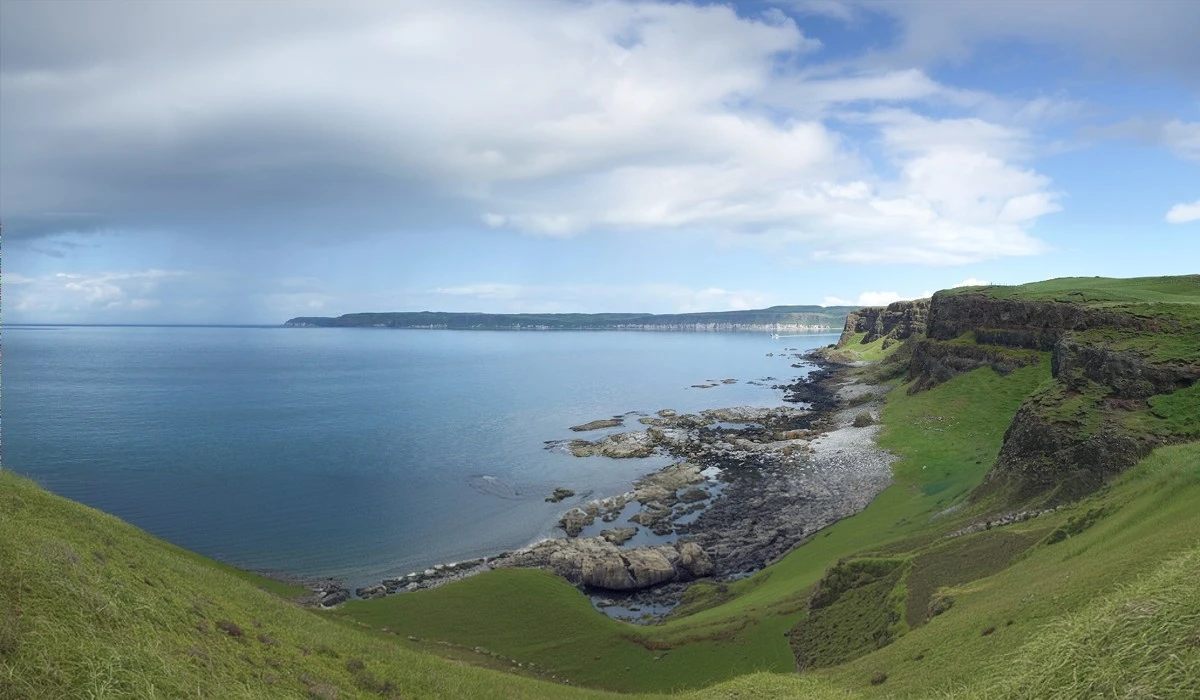
Image Credit - By Brian O'Neill - Own work, CC BY-SA 3.0, Wikimedia Commons
Rathlin Island Ferret Eradication Plan Underway
Humans often deploy one predator to eliminate another, accidentally causing a catastrophic collapse of native wildlife. According to the Irish News, locals during the 1980s released ferrets onto a remote Northern Ireland shoreline in an attempt to control an aggressive rabbit population. They thought a male-only group would prevent breeding. As detailed by The Guardian, someone misidentified the animals, and the resulting population explosion—eventually surpassing 100 ferrets—decimated local seabirds for decades.
Today, the £4.5 million Life Raft project aims to reverse this massive historical error through the Rathlin Island ferret eradication campaign. This massive five-year initiative targets invasive ferrets and rats to save over 250,000 breeding birds. Reports from the Irish News state that conservationists rely on a network of over 100 cameras alongside thermal drones, specially trained dogs, and community coordination to sweep the rugged cliffs.
You cannot simply place traps and hope for the best. Success requires a hyper-calculated ground operation to completely reset a damaged environment. This massive community and agency partnership represents a world-first feral ferret removal, setting a new global standard for biodiversity recovery.
A Flawed Solution Becomes the Ultimate Threat
Pest control interventions often fail because humans completely misunderstand the biological drives of the animals they release. During the 1980s, residents brought ferrets to this isolated landmass to manage an out-of-control rabbit population. The original organizers claimed they released only male ferrets to guarantee a strict natural population cap. They miscalculated horribly. Females infiltrated the initial release group, and the animals bred at a terrifying rate. The resulting swarm quickly grew to over 100 highly skilled predators.
The 1980s Breeding Miscalculation
These hunters soon realized that ground-nesting seabirds offered an easier meal than fast-moving rabbits. They aggressively shifted their diet, targeting the most vulnerable species along the jagged cliffs. How do ferrets affect island seabirds? Invasive ferrets hunt ground-nesting birds, eat their eggs, and easily decimate entire colonies because marine fowl lack natural defenses against agile land predators. Puffins, razorbills, and guillemots suddenly faced a relentless ground assault.
The 2017 Puffin Colony Massacre
In 2017, a single ferret launched a devastating attack on a local puffin colony. This solitary hunter killed 27 birds within a brutal 48-hour window. Conservationists recognized a total Rathlin Island ferret eradication as an absolute necessity to prevent a complete biological collapse. Erin McKeown, a senior seabird and marine policy officer, emphasizes the severe global decline of native marine birds. She notes that alleviating this intense invasive pressure finally restores a safe breeding space. Future hatchlings now face a significantly higher probability of survival.
The Mathematics of the Rathlin Island Ferret Eradication
Effective wildlife management relies heavily on strict geographic grid systems rather than random, hopeful trapping. The Life Raft project launched in 2021 as a highly structured, £4.5 million operation spanning five critical years. Major funders aggressively backed the ambitious timeline. EU LIFE, the National Lottery Heritage Fund, the Garfield Weston Foundation, and DAERA provided the necessary financial muscle to mount a full-scale territorial sweep.
Funding a Five-Year Intervention
Field workers established an intense perimeter, setting up more than 400 specialized ferret traps across the rough terrain by 2023. The team systematically caught 98 ferrets during this critical initial phase. According to the Island Ocean Connection Challenge (IOCC), a workforce of roughly 30 on-site project staff, 11 field assistants, and over a dozen residential volunteers executed the heavy physical lifting. The organization notes they also hired seven local residents to help run operations. Marina McMullan, Chair of the Rathlin Development & Community Association, calls the massive island-wide undertaking an economic enhancement that successfully generates local employment and develops new skills.
Deploying the Trapping Grid
The rigid grid approach guaranteed no predator slipped through the cracks. By October 2023, the ground team recorded their final ferret sighting. Eradication Manager Michael Rafferty considers this milestone a historic victory for the community and the expert consortium. He credits the collaborative creation of a predator-free sanctuary as the absolute pinnacle of wildlife protection.
Scaling the Cliffs with Advanced Detection
Traditional visual tracking falls apart on jagged coastlines, forcing experts to adopt entirely different biological and technological detection methods. Human eyes cannot easily scan every dark crevice of a massive sea cliff. The eradication crew deployed AI cameras and thermal drones to identify concealed heat signatures at night. The core collaborators stationed 110 cameras to track every movement across the hillsides. However, the most effective detection tool relied on raw biological sense. Workers brought in a specially trained conservation dog named Woody to sweep the rugged terrain.
Drones and AI Integration
Woody possesses superior olfactory capabilities. He sniffs out lingering pests long before digital cameras detect them. How do conservation dogs help native birds? Specially trained dogs detect the scent of invasive predators, allowing teams to locate and remove threats before they attack vulnerable nests. Woody even lost an eye to a bramble strike during his service, yet he maintained uninterrupted performance in the field. Scent trumps sight in dense brush.
Woody the Conservation Dog
The dog now moves into a permanent, highly visible biosecurity role. He patrols the ferry terminals to inspect incoming cargo and luggage. Claire Barnett, RSPB NI Area Manager, notes the incredible capacity for rapid marine bird recovery following these canine sweeps. She expresses deep optimism for the upcoming breeding cycle. The visibility of initial positive indicators sets a strong expectation for fully secure bird populations in the near future.
The Ground War Against Rodent Invasions
Marine shipping routes inadvertently act as massive distribution networks for highly destructive, fast-breeding rodent populations. Long before the ferrets arrived, cargo ships brought brown rats to the island shores during the 19th century. Once the team contained the ferret crisis, they immediately pivoted to target the deeply entrenched rat population in 2024. Why are brown rats a problem on islands? Rats reproduce rapidly in isolated environments and consume bird eggs, severely threatening the survival of native avian species.
19th-Century Ship Arrivals
The logistics of this second phase demanded massive physical resources. Workers hauled 6 kilometers of steel cliff cable to access dangerous, plunging drops. They cleared 997 discarded tires from the environment to eliminate concealed nesting spots. The crew then used two tonnes of wax to mold 28,000 monitoring blocks. These wax blocks register tiny teeth marks, confirming predator presence before workers deploy active bait.
The 2024 Baiting Campaign
Field assistants ultimately placed approximately 7,000 rat bait traps across 6,500 highly specific bait stations. The Rathlin Island ferret eradication framework provided the exact logistical map needed for the rat assault. Elizabeth 'Biz' Bell, Managing Director of Wildlife Management International, views this massive trap layout as a perfect model of community-agency partnership. She considers the strategy a global template for island restoration. The crew recorded their final rat sighting in June 2025. They now target a completely rat-free declaration by 2027.
Conflicting Metrics on a Fragile Coastline
Ecological field data rarely presents a uniform timeline, leaving scientists to reconcile competing statistics regarding species decline and equipment spacing. Various reports present slightly different numbers regarding the exact spacing of the eradication equipment. Some project guidelines state teams placed traps strictly every 250 meters. Other records indicate ferret traps sat 250 meters apart while workers tightened the rat stations to a dense 50-meter grid. Regardless of the exact spacing, the sheer density of the hardware effectively cornered the invasive populations.
Discrepancies in Grid Spacing
Historical effect reports also feature conflicting measurements regarding the severity of the avian losses. Researchers gather data from different cliffs at different times, resulting in overlapping data points:
- The 62% metric: Represents a two-decade decline across all UK and Ireland breeding seabirds.
- The 83% metric: Highlights a specific puffin population crash between 1985 and 2021.
- The 70% metric: Tracks a localized drop in general nesting numbers over the last twenty years.
Analyzing the Avian Decline Data
The timeline of the Manx shearwater return similarly varies across records. Some experts note their first breeding in 40 years, while others cite a shorter 20-year absence. Despite these differing metrics, the overall environment finally shows true stabilization. The project protects a massive biodiversity footprint, securing over 250,000 seabirds. Highly vulnerable species like corncrakes, peregrine falcons, and choughs finally have safe room to recover.
Local Economies Rebound When Predators Leave
Restoring native bird populations unexpectedly sparks a massive resurgence in traditional domestic agriculture for local residents. The Rathlin Island ferret eradication extends far beyond wildlife conservation. The local human demographic of roughly 150 residents directly benefits from the removal of ground predators. For decades, locals completely abandoned domestic poultry farming. Ferrets constantly raided their coops and slaughtered their birds. Island dwellers lived with intense daily anxiety over their livestock.
The Return of Poultry Farming
Now, the elimination of these pests allows the community to greatly increase its self-sufficiency. Residents are successfully raising chickens and ducks once again. Marina McMullan highlights this revival of domestic poultry farming as a key victory. She also celebrates the reappearance of familiar cliff-dwellers, noting the deep elevation of community spirit.
Revitalizing the Mammal Population
Native land mammals also experience a sudden surge in survival rates. Tom McDonnell, a lifelong resident and wildlife photographer, guarantees a complete ecological victory. He anticipates a huge boom in the native Irish hare population. He recalls the prior severity of young hare predation, noting that ferrets hunted them relentlessly in the tall grass. McDonnell considers the total elimination of poultry farming anxiety a definite positive outcome for his neighbors.
Global Precedents Informing Rathlin Island Ferret Eradication
Isolated landmasses share similar vulnerability profiles, allowing conservationists to accurately replicate successful recovery strategies across completely different oceans. The strategy draws heavily from parallel projects worldwide. In 2018, South Georgia effectively cleared its land of invasive rats and mice. The Shiant Islands successfully removed black rats from their shores. Currently, the Orkney Islands run an aggressive initiative to clear out invasive stoats.
International Island Successes
Research published by the RSPB highlights that Lundy Island offers the strongest proof of concept for the current campaign. After a strict rat removal initiative on Lundy, the organization notes puffin numbers skyrocketed from just 13 in 2000 to over 1,300. Their data also shows the island now provides a sanctuary for 95% of England's breeding Manx shearwaters. Joanne Sherwood, RSPB NI Director, views the Northern Ireland initiative as a monumental achievement for regional and global conservation. She anticipates a similar population rebound here on the northern coast.
Securing the Harbor Against Future Threats
Eradicating the current pests solves only half the problem. The harbor and ferry routes represent a severe biosecurity vulnerability. Constant port inspections actively block re-infestation. Life Raft Programme Manager Erin McKeown calls the island an ultimate safe haven for marine fowl. She stresses the absolute necessity of rigorous community collaboration for permanent pest exclusion.
A Permanent Shift in the Island Environment
Human interference broke this natural environment, and highly coordinated human intervention finally fixed it. The massive scale of the Rathlin Island ferret eradication proves that dedicated teams can successfully reverse severe biological damage. Eradicating a firmly entrenched predator requires immense funding, relentless physical labor, and strict community buy-in.
The £4.5 million Life Raft project successfully united residents, government agencies, and dedicated experts to sweep every inch of the rugged terrain. With the ferrets and rats finally gone, the cliffs offer a highly secure haven for vulnerable seabirds. The return of the puffins, Manx shearwaters, and domestic poultry signals a definitive biological victory. The local community stands ready to protect this thriving, predator-free environment for generations to come.
Recently Added
Categories
- Arts And Humanities
- Blog
- Business And Management
- Criminology
- Education
- Environment And Conservation
- Farming And Animal Care
- Geopolitics
- Lifestyle And Beauty
- Medicine And Science
- Mental Health
- Nutrition And Diet
- Religion And Spirituality
- Social Care And Health
- Sport And Fitness
- Technology
- Uncategorized
- Videos

