
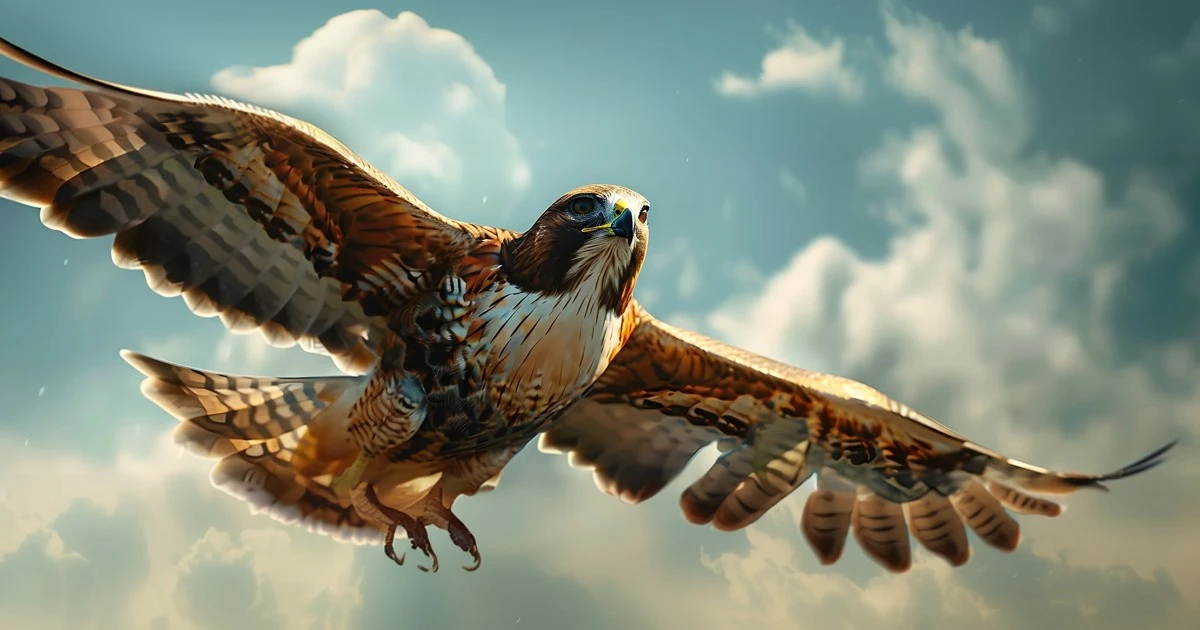
Peregrine Falcon: UK’s Iconic Hunter Disappearing
According to a report by The Guardian, the Peregrine Falcon nearly died out in the 1950s due to the use of DDT pesticides before the chemicals were banned. Today, the species faces a different threat that comes from high-market demand instead of chemicals. Police data cited in the report indicates that thousands of these birds leave British shores every year for the Middle East, with 5,000 exports recorded this year. While many move through legal channels, a growing shadow industry relies on stealing eggs from the wild to satisfy wealthy buyers. This trade connects remote Scottish cliffs to luxury exhibitions in Abu Dhabi.
The captive breeding facilities in the UK grew from 27 in the 1980s to over 160 today. These centers produced 5,000 exports in 2024 alone. Data from the Cites database shows that most of these birds travel to the UAE, which accounted for 88% of total UK exports in 2023. This massive trade volume hides a disturbing reality. Investigators find that many "captive-bred" birds actually come from wild nests. Criminals steal eggs and hatch them in incubators, then forge paperwork to make the birds look legal. This practice puts the fragile recovery of the Peregrine at risk of a total collapse.
The High Price of Wild Bloodlines
As noted by an employee of an Emirati falconry body, buyers pay a premium for wild instincts because they believe farmed birds lack the stamina of a natural hunter. Within high-stakes Middle Eastern falcon racing, performance is everything. A report by The Guardian and ARIJ states that a single American falcon can sell for AED 350,000, which is about £71,000. It also mentions that owners provide these falcons with specialized medical care and even their own passports for international travel. However, a "pure" bloodline remains the ultimate prize. Many buyers believe that birds hatched in a lab cannot compete with those born on a cliffside.
This preference for natural lineages drives the illegal market. The Emirati falconry employee further noted that UK birds have high utility in competitive racing. They specifically look for unadulterated lineages found in nature. This demand creates a massive incentive for poachers to raid nests. How many peregrines are in the UK? Freedom of Information data indicates there are currently about 1,750 breeding pairs in the wild and 1,200 registered in captive facilities. While the wild population seems stable, the constant removal of eggs weakens the natural population over time.
How the Falcon Industry Operates
A massive increase in breeding centers masks the theft of eggs from remote cliffs. According to experts and police, the industry has changed from a small hobby into a commercial powerhouse to satisfy global demand. FoI data shows that in 2000, there were only 750 registered falcons in captive populations, but by 2024, that number reached 1,200. This growth matches the rise in global demand for hybrid birds, specifically Gyr-peregrine crosses. These hybrids require a Falcon mother to provide the necessary strength and speed traits. Breeders essentially run these facilities like high-tech factories.
PC Gavin Ross describes this commercial exploitation as something resembling poultry factory farming. To keep up with demand, some breeders use supplements to force birds to produce more eggs than they would in nature. This creates a life of captivity without flight for many female birds. The pressure to produce "perfect" specimens leads some to bypass the slow process of natural breeding. They find it faster and cheaper to simply steal from the wild. Is it legal to own a peregrine falcon? People can legally own these birds if they have the proper registration and proof that the bird was bred in captivity. However, the high rate of non-compliance in breeding centers suggests that legal paperwork does not always guarantee a legal bird.
The Route from UK Cliffs to Syrian Markets
Smugglers use established trade routes where paper trails disappear at the border. The movement of a stolen Peregrine Falcon from UK often begins in places like South-east Scotland. In the current year, ten chicks disappeared from just four nests in that region. Once poachers take the eggs or chicks, they move them into the captive breeding system. From there, the birds often travel through international hubs. Syria acts as a major regional trade center, particularly the town of al-Rahiba, often called the "capital of falcons."
The economic crisis in Syria fuels this trade. The war and high inflation make the price of a falcon incredibly valuable compared to the local currency. Birds also move through Jordan, where the Royal Society for the Conservation of Nature (RSCN) operates desert facilities to house seized raptors. Iraq also hosts open-air markets in cities like Baghdad and Duhok. In these markets, people sell protected species and Egyptian vultures openly. The lack of law enforcement in remote desert zones makes it nearly impossible to track every bird that crosses the border.
Engineering the Peregrine for Profit
Breeders use chemical supplements and genetic mixing to turn a predator into a factory product. The modern trade focuses on creating the fastest, most aggressive birds possible. This often involves cross-breeding different species to get the best traits. While the UK Peregrine Falcon provides the base for many of these hybrids, the process strips away the bird’s natural role in the food chain. George Smith, a nest monitor, warns that this destruction of wildlife networks marks a regression to the high crime levels of the early 1970s.
Poachers use modern technology to track nests and coordinate thefts. They use cell phones and high-speed cars to navigate the desert and the countryside. This puts constant stress on the natural environment. Why are peregrine falcons poached? Hunters value wild birds for their perceived superior speed and genetic purity compared to those raised on farms. This cultural obsession makes a wild bird valued far higher than its gold weight.
The Failure of Regulatory Inspections
Forged documents and swapped eggs allow wild-caught raptors to pass as domestic livestock. Police records indicate the system designed to protect the Peregrine is currently struggling to keep up with the volume of trade, noting a non-compliance rate of over 50%. This means more than half of the inspected centers fail to follow the rules. FoI data also shows that during checks in 2023 and 2024, officials confiscated 15 wild birds that people tried to pass off as captive-bred specimens.
Kevin Kelly of the National Wildlife Crime Unit (NWCU) points out that hundreds of avian specimens disappear every year. The thefts are pervasive. There is a clear gap between what the industry claims and what the police find. While some trade groups claim that smuggling is rare, DNA evidence and camera footage prove otherwise. Based on investigations by the Royal Society for the Protection of Birds (RSPB), 21 specific cases of nest raids were verified between 2014 and 2023 using advanced forensic tools. Ironically, the very system meant to regulate the trade often provides the legal cover for the crime.
Cultural Obsession versus Conservation Reality
Ancient hunting traditions now collide with modern technology and high-speed desert vehicles. For many in the Middle East, falconry represents more than a sport; it is a deep connection to heritage and masculinity. Abu Saddam, a Syrian hunter, describes it as a biological compulsion or a cultural obsession that exists regardless of profit. This "addiction" to desert survival keeps the demand high. In the past, Bedouin tribes practiced a seasonal catch-and-release method. They caught birds for the hunting season and released them afterward.
Today, that tradition has shifted toward permanent ownership and high-priced auctions. This change increases the pressure on wild populations. Some experts, like Nick Fox, suggest that the best way to stop poaching is to saturate the market with legal, captive-bred birds. If the price of a legal bird drops, the incentive to steal a wild one might disappear. However, as long as buyers believe wild birds are superior, the Peregrine Falcon will remain a target.

Rebuilding the Broken Falcon Populations
Success in rewilding depends on keeping the release sites as secret as a government intelligence operation. Conservationists are fighting back with their own specialized methods. In Bulgaria, a reintroduction program uses eggs from captive breeders to restart the wild population. Andrew Dixon, a biologist, explains that they use a method of egg replacement in wild nests to ensure the best chance of survival. These programs show that the captive breeding industry can serve a positive purpose when managed correctly.
In Jordan, the RSCN takes extreme measures to protect the birds they release. Nashat Hamidan compares their reintroduction procedures to intelligence agency operations. They use secretive launch sites to prevent poachers from immediately recapturing the birds. This level of secrecy is necessary because the threat of poaching never truly goes away. The battle to protect the Peregrine Falcons of UK requires a constant balance between legal trade and the preservation of the wild.
The Future of the Peregrine
The survival of the Peregrine depends on our ability to separate legitimate tradition from commercial greed. We see a clear pattern where the high value of "pure" genetics leads directly to the theft of wild eggs. While the industry has grown significantly since the 1980s, the lack of oversight has allowed criminal activity to flourish. To protect these birds, authorities must improve inspection rates and use DNA testing to verify every bird entering the market. Breaking the link between the legal trade and the illegal theft is the only way to ensure that the peregrine remains a ruler of the skies rather than a product in a cage.
Recently Added
Categories
- Arts And Humanities
- Blog
- Business And Management
- Criminology
- Education
- Environment And Conservation
- Farming And Animal Care
- Geopolitics
- Lifestyle And Beauty
- Medicine And Science
- Mental Health
- Nutrition And Diet
- Religion And Spirituality
- Social Care And Health
- Sport And Fitness
- Technology
- Uncategorized
- Videos

