

New Deer Management Plan To Cull Millions In UK
We often imagine nature as a self-correcting system, but that balance collapses when the top of the food chain vanishes completely. Without wolves, bears, or lynx to patrol the forests, prey species stop acting like prey and start treating agricultural land like an all-you-can-eat buffet. This specific gap in the food chain has allowed the wild deer population to swell to levels unseen in a millennium. Now, the government faces a stark reality where the only predator capable of saving the woodlands is a human with a license. The newly announced deer management plan attempts to fix this broken equation before the damage becomes irreversible.
The Scale of the Population Crisis
Abundance looks like a success story until you realize that too much life can actually kill the habitat that supports it. The sheer weight of numbers tells a frightening story about the state of the British countryside.
A Historic Surge
A consultation by Defra confirms that the UK deer population has surged past 2 million. This represents the highest number of wild deer roaming the land in over 1,000 years. To put this in perspective, the Forestry Commission notes that the population in the mid-1970s sat at a manageable 450,000. In just five decades, the numbers have quadrupled. This explosion results directly from a lack of natural checks and balances.
The Woodland Toll
The consequences of this surge manifest clearly in the physical condition of the forests. Official reports classify 33% of English woodlands as being in "unfavourable condition." The damage comes primarily from trampling and intense grazing. Deer strip the bark from young trees and devour ground vegetation, which prevents the forest from regenerating naturally. The deer management plan prioritizes these areas because a forest that cannot grow new trees is a forest that is slowly dying.
Species Breakdown
As outlined by Countryfile, the crisis involves six distinct species—Red, Roe, Fallow, Sika, Muntjac, and Chinese Water—creating a difficult biological puzzle.
- Native Species: Only Red and Roe deer are indigenous to the UK.
- Invasive Threats: The Non-native Species Secretariat lists the Muntjac strictly as an invasive species of concern. Meanwhile, Sika and Chinese Water deer are currently under assessment for the invasive list.
- The Mix: Fallow deer make up the remainder.
How many deer are in the UK?
Recent estimates place the wild deer population at over 2 million, which is the highest level recorded in 1,000 years.
Economic Costs and Public Safety
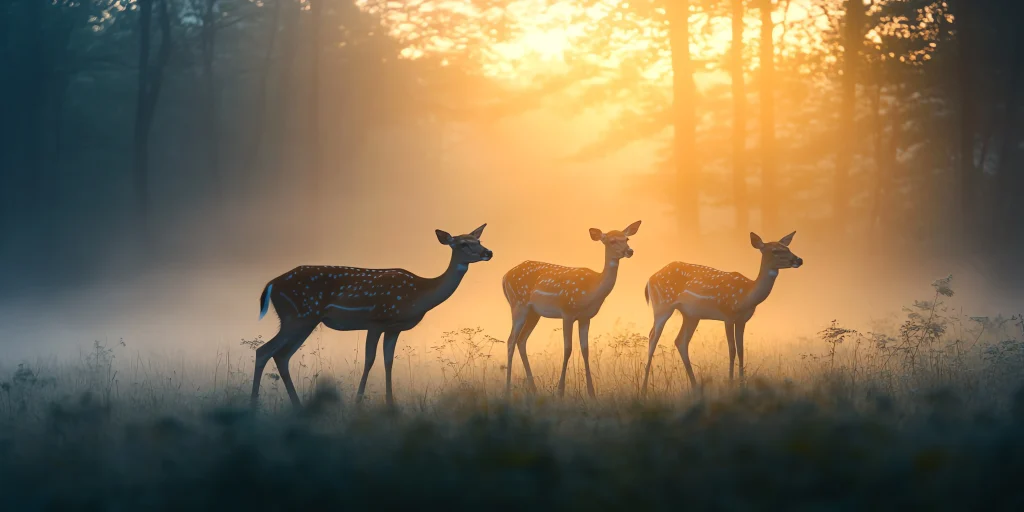
While we admire herds from a distance, their presence on the ground functions like a slow-moving natural disaster for rural businesses and drivers. The romantic image of a stag in the mist clashes violently with the financial and physical reality of living alongside them.
The Cost of Crop Destruction
Farmers and estate managers bear the brunt of this population boom. At the Elveden Estate in Suffolk, managers report an annual loss of £100,000 purely due to deer damage. The feeding habits vary by species, making protection difficult. Smaller species target root vegetables, while larger species possess the strength to unearth potatoes. This relentlessness destroys profit margins and threatens food security.
Road Safety Emergencies
The danger spills out of the woods and onto the tarmac. Data cited by Countryside Jobs attributes up to 74,000 collisions every year to deer running onto roads. The same report indicates these accidents result in associated injuries and between 10 to 20 human fatalities annually. The deer management plan aims to reduce these collisions by thinning the herds that congregate near major transport routes.
Timber Valuation
Forestry suffers alongside agriculture. When deer browse on young trees, they stunt growth and deform the timber. This damage reduces the final crop value by up to 50%. For a timber industry that relies on decades of growth for a single harvest, these losses are devastating.
The Ecological Void
Protecting one photogenic species often condemns darker, quieter parts of the environment to a quiet extinction. The focus on deer welfare has inadvertently caused a massacre of other wildlife.
The Nightingale Collapse
Overgrazing clears the undergrowth where many birds nest and feed. The nightingale population provides a tragic example of this cause-and-effect relationship. Since the 1960s, nightingale numbers have plummeted by 90%. Researchers link this decline directly to habitat loss caused by deer overgrazing. The deer eat the scrub layer that these birds need to survive.
Habitat Destruction
Specific, rare habitats face existential threats. In the Norfolk Broads, deer have damaged over 10% of the rare fen habitat. These areas host unique plants and insects that cannot survive elsewhere. When deer trample these zones, they destroy thousands of years of ecological development in a single season.
Climate and Survival
The problem compounds because winters no longer kill off the weak. Warmer winters lead to higher survival rates and increased breeding success. Without the cold to thin the herd, populations grow exponentially.
Why is the deer population increasing?
Warmer winters combined with a lack of natural predators like wolves or bears create ideal conditions for rapid breeding and high survival rates.
The Core Strategy: Licensing and Culling
Bureaucracy usually slows things down, but the new rules specifically remove the red tape that kept hunters from pulling the trigger. The government acknowledges that previous methods failed and requires a more aggressive approach.
Streamlined Permissions
The new deer management plan introduces significant legal shifts. Landowners and tenants now hold new rights to shoot deer to protect their crops and property. The government has streamlined culling licensing to allow for night shooting and operations during previously closed seasons. This change aims to make culling faster and responsive to immediate threats.
The Cull Deficit
Current efforts fall short of the mathematical necessity. Hunters currently cull about 350,000 deer annually. However, experts estimate that maintaining a stable population requires culling between 500,000 and 750,000 animals every year. The new strategy attempts to close this massive gap.
Incentivizing the Hunt
The government has changed how it funds these activities. Previously, grants paid for shooting only inside woodland boundaries. New grants now pay for shooting outside woodlands. This shift targets deer as they move across the terrain, intercepting them before they can cause damage.
The "Eat Your Way Out" Strategy
Waste defines most environmental problems, yet this crisis offers a solution that belongs on a dinner plate rather than in a landfill. The government wants to turn a pest problem into a food solution.
Promoting Wild Venison
A major pillar of the strategy involves boosting the wild venison market. The plan encourages supplying this meat to schools, hospitals, and prisons. Food banks are also using venison to support those in need. This approach treats the culled animals as a resource rather than refuse.
Health and Sustainability
Advocates highlight the nutritional profile of the meat. Venison is high in protein and significantly lower in cholesterol compared to farmed meats. The Forestry Commission CEO describes consuming wild meat as a climate-friendly action. It utilizes a natural resource that damages the environment if left unchecked.
Market Barriers
Despite the potential, economic barriers exist. A carcass sells to a dealer for just £30, whereas a self-butchered deer can fetch £150. However, most stalkers lack the facilities to process the meat themselves. This gap discourages new people from entering the industry as a business.
Is wild venison good for you?
Yes, wild venison offers a sustainable protein source that is significantly lower in cholesterol than traditional farmed meats.
Opposition and Counter-Arguments
Simply subtracting numbers cannot solve a biological surplus if the survivors respond by breeding faster than before. Not everyone agrees that a mass cull will solve the problem permanently.
The Bounce-Back Effect
PETA argues that lethal reduction fails in the long term. A spokeswoman stated that populations simply bounce back after a cull. With fewer animals competing for food, the survivors enjoy more resources per head. This abundance accelerates survivor breeding rates. They argue that killing deer starts a biological response that results in even more deer.
Ethical Concerns
Opponents view the cull as inhumane. They suggest that the motivation stems purely from financial interests regarding crops and timber, rather than genuine ecological concern. This creates a tension between animal welfare groups and land managers.
Workforce Issues
The strategy relies on a workforce that is aging out. The average stalker is between 57 and 63 years old. High startup costs and low carcass prices deter younger people from entering the trade. An attendee at ORFC25 noted that stalking is often viewed as a hobby rather than a viable business. Without new blood, the deer management plan may run out of executioners.
Technology and Future Management
Tradition meets tech as the solution shifts from guessing in the woods to precise aerial surveillance. The old ways of managing land are evolving to meet the scale of the threat.
Drone Surveillance
Land managers now use drones to survey large areas. This technology identifies density hotspots and allows for targeted interventions. Instead of wandering hoping to find a herd, stalkers can go exactly where the numbers are highest.
Area-Wide Action
The new approach emphasizes "wide-ranging active management." Natural England officers explain that interventions are now timed for maximum ecological benefit across wide areas, rather than just within specific property lines. This collaborative approach prevents deer from simply moving to the neighbor's land to escape the cull.
The Path Forward
We face a difficult truth: humans broke the food chain, and now humans must fix it. The removal of apex predators centuries ago left a vacancy that nature filled with an overwhelming surplus of deer. The resulting damage to woodlands, crops, and other wildlife species forces a harsh intervention.
The new deer management plan accepts this responsibility. With a combination of streamlined laws, advanced technology, and a push for venison consumption, it aims to restore balance to the British countryside. The success of this 10-year plan depends on whether the UK can mobilize enough people to do the difficult work required. If we fail to act, we risk losing the very woodlands we are trying to save.
Recently Added
Categories
- Arts And Humanities
- Blog
- Business And Management
- Criminology
- Education
- Environment And Conservation
- Farming And Animal Care
- Geopolitics
- Lifestyle And Beauty
- Medicine And Science
- Mental Health
- Nutrition And Diet
- Religion And Spirituality
- Social Care And Health
- Sport And Fitness
- Technology
- Uncategorized
- Videos

