
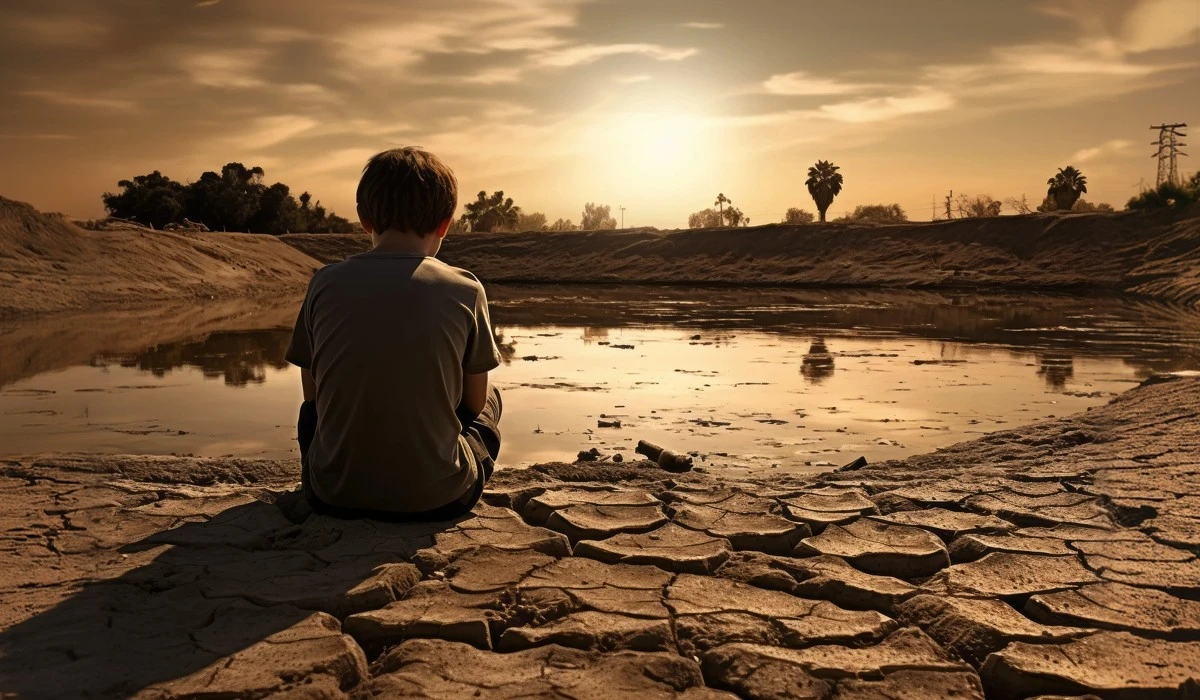
Iraq Water Crisis Turns the Tigris to Poison
Rivers usually die from a thousand cuts, but the Tigris is dying from a deliberate chokehold. When a river stops flowing, it does not just leave behind dry earth; it leaves behind a concentrated sludge that poisons everything it touches. The collapse of the Tigris and Euphrates represents more than an environmental disaster. It signifies the systemic dismantling of one of the world's oldest civilizations.
For the Mandaean community, this stagnation forces a choice between spiritual purity and physical health. Their rituals require flowing water, yet the river stands still. Infrastructure failures dating back to 1991 continue to pump raw waste into the waterways. Upstream dams in Turkey and Iran hold back the clean flow, leaving Iraq with a shrinking, toxic remnant.
The Iraq water crisis is a convergence of failing pipes, rising heat, and geopolitical power plays. Every drop of water that fails to reach Baghdad increases the toxicity for the 18 million people relying on the basin. The shortage transforms ancient marshlands into dust bowls and pushes distinct cultures toward extinction. This is the reality of a nation watching its lifeline evaporate.
The Lethal Math of Volume and Toxicity
Toxicity creates a lethal math problem where the less water you have, the deadlier every drop becomes. A full river can dilute pollutants, washing them away before they cause harm. A shrinking river turns into a stagnant pool where chemicals and waste gather in high concentrations.
Activist Salman Khairalla points out that toxicity levels link directly to volume. When the water quantity drops, the pollution concentration spikes. The Guardian reports that the Tigris has lost 33% of its volume reaching Baghdad over the last 30 years—a decline largely driven by upstream dam construction. This massive reduction means the river no longer has the power to clean itself.
The roots of this pollution stretch back to the 1991 Operation Desert Storm. The targeting of infrastructure during the war began a cycle of sewage treatment failure that Iraq has never fully repaired. Today, the numbers paint a grim picture of sanitation. Only 30% of urban households connect to sewage treatment systems. In rural areas, that number plummets to a staggering 1.7%. The rest of the waste flows directly into the waterways.
What causes water pollution in Iraq?
The primary causes include war-damaged infrastructure, raw sewage discharge from unconnected households, and reduced river volume that fails to dilute contaminants.
By 2018, this neglect triggered a massive health emergency in Basra; Human Rights Watch documented that at least 118,000 people were hospitalized due to symptoms related to water contamination. A 2022 study confirmed that water quality at Baghdad sites remains "poor" or "very poor." The Iraq water crisis persists because the infrastructure cannot handle the waste, and the river cannot handle the load.
The Urban disconnect
Cities aggravate the problem. With the majority of urban sewage entering the river untreated, the water meant for drinking and farming becomes a carrier of disease. The lack of modern treatment plants turns the river into a public health hazard rather than a resource.
A Faith Drowning in Stagnation
Spiritual extinction happens when the physical elements required for belief simply evaporate. For the Mandaean faith, water is not merely a utility; it is a divine requirement. Their religion demands flowing river water for baptism and drinking rituals. Stagnation equals spiritual impurity.
Sheikh Nidham, a Mandaean leader, places the necessity of water alongside air. He describes it as an elemental priority that existed before human creation. Without it, life and faith become impossible. The Iraq water crisis directly threatens the continuity of this ancient practice.
The Mandaean population in Iraq has dropped to fewer than 10,000. Migration decimated their numbers, but the environmental collapse accelerates their departure. When the river stops flowing, the rituals stop. When the rituals stop, the connection to their history severs.
Why is the Tigris important to Mandaeans?
Mandaeans believe flowing water is essential for spiritual purity, meaning the stagnation of the Tigris makes their central religious rituals impossible to perform.
The community faces an existential threat. They cannot substitute tap water or still water. The crisis forces them to choose between their health and their holy laws. The pollution makes the water dangerous to drink, yet their faith commands them to drink it. This dilemma pushes more families to leave the country, taking their culture with them.
The Upstream Chokehold
Geography creates a cruel hierarchy where the person holding the tap controls the fate of everyone downstream. Turkey and Iran sit upstream, and their engineering projects dictate how much water crosses the border into Iraq.
Turkey’s GAP Project stands as a massive alteration of the natural order. This network includes 22 dams designed to harvest energy and irrigate Turkish farmland. While a Turkish fisherman named Mahmoud celebrates the dams for creating a local industry boom and providing easy access to clean water, the downstream reality is catastrophic.
At the Atatürk Dam in Turkey, the water sits abundant and clear. In Southern Iraq, that same river system arrives as a trickle of sludge. Historical data shows a decline of approximately 60% in the combined flow of the Tigris and Euphrates since the 1960s.

Image by- By Chairman of the Joint Chiefs of Staff from Washington D.C, United States - 160731-D-PB383-021, CC BY 2.0,
How do dams affect Iraq's water supply?
As noted by Al-Monitor, upstream dams in Turkey and Iran trap water for their own use, significantly reducing the volume and quality of water that flows downstream into Iraq.
This imbalance creates a distinct form of hegemony. The upstream nations secure their water security at the expense of Iraq. Pollutants concentrate in the remaining low-volume water that eventually reaches Iraqi cities. The Iraq water crisis is largely a product of these external controls. Turkey claims the dams serve energy needs, yet evidence points to significant withdrawals for agricultural irrigation. This diversion leaves Iraq with a fraction of its historical share.
The Iraq Water Crisis and Marshland Extinction
Cultural erasure rarely happens all at once; it starts when the specific tools for survival become impossible to find. The Chibayish Marshes, once a sprawling aquatic paradise, are drying into a graveyard.
Data from Land Times shows the marshes covered 20,000 square kilometers in the 1990s. Political draining during the Saddam era began the destruction, but modern drought and dams have finished the job. Today, the surface area has shrunk to roughly 4,000 square kilometers.
Mustafa Hashim, a resident of the marshes, views his buffalo as family. The loss of water kills the buffalo, and with them, the unique Marsh Arab culture and dialect. In 2022 alone, more than 4,500 buffalo died in the Chibayish Marshes.
Hesab Abdulhassan gathers reeds for a living, but the economic viability of his labor has vanished. A bundle of reeds sells for 2,500 Dinars (£1.49), an amount that fails to cover basic fuel and food costs. The physical toll of gathering the reeds outweighs the financial return.
Layla Abdulhassan, another resident, connects human survival directly to the water. She states that the human fate is identical to the fish; when the water disappears, life ends. The drying marshes force families to abandon a lifestyle that has existed for millennia. The Iraq water crisis is swiftly turning a wetland civilization into climate refugees.
The Livestock Collapse
Kareema Saud, a cheesemaker, faces financial ruin as her livestock dies off. The death of the animals destroys her traditional livelihood. Without state intervention, her cultural identity faces total erasure. The marshes provided a buffer against heat and a source of food. Now, they provide dust and debt.
Climate Multipliers and Missing Rain
Heat doesn't just dry the ground; it accelerates the failure of broken infrastructure. The climate crisis acts as a force multiplier, making every bad management decision worse.
Precipitation in the region has declined by 30%. This drop coincides with extreme heat that evaporates what little water remains in the reservoirs and rivers. The supply and demand projection for 2035 shows a grim future where demand will officially exceed the available supply.
Islam Times reports that inefficient irrigation for agriculture consumes around 85% of Iraq's surface water. This immense usage rate clashes with the shrinking availability. The system relies on flood irrigation methods that waste water in a time of extreme scarcity. The combination of drought, high heat, and outdated farming techniques drains the rivers faster than nature can replenish them.
The Iraq water crisis is not a future prediction; it is a current mathematical certainty. The water budget no longer balances. The reduced rainfall means the rivers rely entirely on upstream release, which is also declining. The environment has turned hostile, compounding the damage caused by human error and political neglect.
Political Mirage and Paper Agreements
Signing a treaty looks like progress until you realize the water has no legal obligation to follow the ink. Politicians often use accords to signal action, even when the pipes remain dry.
In November 2025, Baghdad and Ankara signed an "Oil-for-Water" accord. The deal proposes that Iraq provides oil in exchange for guaranteed water releases from Turkey. However, critics view the agreement with deep skepticism.
Mohsen al-Shammari, a former minister, dismisses the recent agreement as illusory. He argues it lacks substance and serves primarily as election propaganda. The timing of the deal, appearing right before the election cycle, raises suspicions about its true intent.
Is the Iraq water deal effective?
Critics argue the "Oil-for-Water" deal is vague and non-binding, serving more as a political stunt than a concrete solution to the water shortage.
Opposition voices label the deal as non-binding. Without strict enforcement mechanisms, Turkey retains control over the flow. The Iraq water crisis requires concrete engineering solutions and binding international law, not vague promises. The political inefficacy leaves the population waiting for water that exists only on paper.
The Violence of Scarcity
Thirst changes the rules of society, turning neighbors into rivals and activists into targets. When a resource becomes rare, competition for it breeds violence.
Jassim Al-Asadi, a prominent activist, highlights how resource competition escalates into conflict. He notes that internal tensions are precursors to wider clashes. Advocacy for water rights has become a dangerous profession. Kidnapping and violence silence those who speak out against mismanagement and pollution.
The Pacific Institute database records over 1,900 water-related conflicts globally, and Iraq is becoming a hotspot. The shortage destabilizes regions, pitting farmers against city dwellers and provinces against each other.
Diplomats speak of "cooperation," but the ground reality points toward a "Water War." The scarcity creates a vacuum of power where strongmen control access to the remaining resources. Violence against activists proves that water is no longer just an environmental issue; it is a security issue. The Iraq water crisis threatens to tear the social fabric of the nation apart.
The End of the River
The Tigris is not simply drying up; it is being dismantled by a combination of upstream greed, downstream incompetence, and atmospheric hostility. The Iraq water crisis reveals a terrifying reality where infrastructure collapse and climate change work together to erase history.
From the Mandaean rituals to the Marsh Arab buffalo, the loss of water strips away the foundation of life. The 1991 bombing started a chain reaction of pollution that continues today. Turkey’s dams tighten the noose, while local leaders sign papers that yield no water.
Unless the flow returns, the cradle of civilization will become its grave. The water stops, and eventually, so does everything else.
Recently Added
Categories
- Arts And Humanities
- Blog
- Business And Management
- Criminology
- Education
- Environment And Conservation
- Farming And Animal Care
- Geopolitics
- Lifestyle And Beauty
- Medicine And Science
- Mental Health
- Nutrition And Diet
- Religion And Spirituality
- Social Care And Health
- Sport And Fitness
- Technology
- Uncategorized
- Videos

