
How Aquaculture and Fishery Management Aids Sea
When humans stop fishing a dying reef, we expect life to return. We assume that pulling back allows nature to heal itself. In reality, the reef often remains empty. The balance has already broken because of rising temperatures and shifted food chains. Passive protection often fails because we have already changed the water too much.
We must move beyond just leaving the ocean alone. We need active, intelligent intervention to bring these species back. Professional Aquaculture and Fishery Management provides the tools to steer these waters back to health. It allows us to feed millions of people while simultaneously rebuilding the wild populations we almost lost.
The Shift Toward Regenerative Aquaculture and Fishery Management
The old way of fishing meant taking as much as possible until the nets came up light. This extractive model nearly destroyed the very resources the world relies on for protein. Today, we use a different approach that prioritizes the health of the entire marine community over short-term harvests.
From Exploitation to Stewardship
Modern techniques now focus on habitat health. Managers use the Precautionary Approach, which means they act to protect species even when scientific data is still coming in. They do not wait for a population to collapse before they lower the catch limits. Instead, they manage the water as a whole system.
How does aquaculture help protect wild fish? According to insights from Seafood Watch, fish farming reduces the demand on wild populations. Providing a controlled alternative for seafood production significantly reduces the harvesting pressure on vulnerable wild groups, which allows them the "breathing room" to reproduce. This shift ensures that we meet the global demand for fish without emptying the sea.
Case Studies in Species Recovery
We see the success of this management in the Yangtze River. A 10-year fishing ban started in 2021 to save the finless porpoise and Chinese sturgeon. Early data show these species are finally returning.
In the United States, reports from NOAA Fisheries highlight that the Magnuson-Stevens Act has successfully rebuilt 47 formerly overfished stocks since 2000. The agency notes that Atlantic sea scallops and Mid-Atlantic bluefish are now thriving again. These examples prove that smart rules can reverse decades of damage.
Advanced Fish Stock Management Techniques
Good fish stock management starts with knowing exactly how many fish live in the dark. We no longer rely on guesswork or old tales from the docks. We use physics and math to count what we cannot see.
Precision Biomass Assessment
As detailed by the Food and Agriculture Organization (FAO), scientists use hydroacoustic tools to map fish school density. This research explains that they send sound waves through the water at specific frequencies, typically ranging from 38 kHz to 120 kHz, to bounce off the swim bladders of fish and return to the ship.
This data creates a real-time map of the biomass. Satellite imaging also helps track large-scale movements across the ocean. When we know the exact size of a population, we can set rules that actually work.
Implementing Science-Based Catch Limits
Data dictates how much we harvest. We use the concept of Balanced Exploitation (BE). This method suggests harvesting a wide range of species based on how fast they naturally reproduce.
We avoid focusing only on the big, high-value fish. This keeps the food chain in balance. If the data shows a population is shrinking, managers drop the catch limit instantly. This prevents the "race to fish" that usually leads to extinction.
Utilizing Technology in Aquaculture and Fishery Management
High-tech tools now act as a 24-hour security guard for marine life. We use sensors and computers to catch problems before they become disasters. This level of control keeps both farmed and wild species safe from sudden changes.
AI-Driven Monitoring and Early Warning Systems
Farmers use the Artificial Intelligence of Things (AIoT) to watch their pens. Sensors check dissolved oxygen, pH levels, and ammonia levels every second. If oxygen drops too low, the AI triggers an alarm or activates aeration systems.
What are the best methods for fish stock management? The most effective methods involve a combination of real-time acoustic monitoring and strict quota enforcement based on seasonal migration patterns. These systems ensure that we never take more water than the water can replace.
Genetic Mapping for Biodiversity Preservation
A report in Mongabay India explains that we now use Environmental DNA (eDNA) to track species. The publication mentions that a scientist can take a small quantity of water and detect the identity of every fish that swam through it simultaneously.
Genetic mapping also helps hatcheries. We profile the DNA of fish to make sure they stay diverse. This prevents "bottlenecking," which happens when fish become too genetically similar. Stronger genes mean the fish can survive disease and warmer water better.
Mitigating Bycatch and Habitat Destruction
Bycatch is the accidental capture of non-target species. It is a major threat to dolphins, turtles, and seabirds. Professional management uses a new gear to stop this waste.
Selective Gear Innovation
Shrimp fishers now use Turtle Excluder Devices (TEDs). These are metal grids inside the nets. Small shrimp pass through the grid, but large turtles hit it and swim out through an escape hatch.
Data from NOAA Fisheries indicates that in some fisheries, the use of these devices has been determined to be 97 percent effective in excluding turtles from shrimp trawls. The same agency describes how longline vessels also use "tori lines," which are also known as bird-scaring streamer lines that scare birds away from the hooks. This simple change has saved thousands of endangered albatrosses.
Marine Protected Areas (MPAs) as Breeding Grounds
Well-managed MPAs act as biological reservoirs. Inside these zones, fishing is banned or strictly limited. This allows fish to reach their full size and produce millions of eggs.
Eventually, these fish move outside the protected zone. This is the "spillover effect." It restocks the areas where fishing is allowed, ensuring the industry has a steady supply of fish for years to come.
The Socio-Economic Value of Protected Species
Protecting species represents a moral choice, and it also functions as a financial necessity. A healthy ocean produces more wealth and more food security than a depleted one.
Food Security and Long-Term Profitability
Restoring just 43 overfished stocks in Europe would add €3.2 billion to the economy every year. It would also create 100,000 new jobs. Healthy populations provide a stable source of protein for a growing global population.
Why is fisheries management important for biodiversity? This practice prevents the "tragedy of the commons" and ensures that no single species is over-harvested to the point of ecological collapse, thereby maintaining the balance of the entire food web. This stability protects the livelihoods of everyone from the boat captain to the grocery store owner.
Community-Led Conservation Initiatives
Local fishers often know the water better than anyone else. When we give them secure harvest shares, like Individual Transferable Quotas (ITQs), they become owners of the resource.
Ironically, when fishers "own" a piece of the stock, they fight harder to protect it. They stop catching juveniles and start following the rules. This community-led approach makes enforcement easier and more effective.
Overcoming Global Challenges in Aquaculture and Fishery Management
We face two major threats: illegal fishing and a changing climate. Both require global cooperation and fast action. Aquaculture and Fishery Management helps us fight back against these pressures.
Combatting Illegal, Unreported, and Unregulated (IUU) Fishing
IUU fishing steals 26 million tons of fish every year. This equals nearly 19% of the global catch. The Food and Agriculture Organization (FAO) notes that we use the Port State Measures Agreement (PSMA) to stop these illegal operations. The organization explains that this treaty allows countries to block suspicious ships from entering their ports to deter the use of such facilities by unauthorized vessels. Information from NOAA Fisheries confirms that we also use Vessel Monitoring Systems (VMS), which are satellite surveillance tools used to track the location and movement of ships 24/7.
Climate Adaptation for Aquatic Ecosystems
The water is getting warmer and more acidic. This makes it hard for shellfish to grow their shells. We are now breeding species that can handle these tougher conditions.
We also help species migrate. As fish move toward the poles to find cooler water, management rules must move with them. This prevents a "gap" where fish are unprotected because they crossed an unseen border.
The Future of Species Preservation
The future of seafood lies in circular systems that mimic nature. We are moving away from simple pens and toward multi-layered, high-performance farms.
Integrating Land-Based Systems with Open-Ocean Pens
Recirculating Aquaculture Systems (RAS) grow fish on land. These systems recycle 98% of their water. This keeps fish waste away from the coastline and protects wild habitats from pollution.
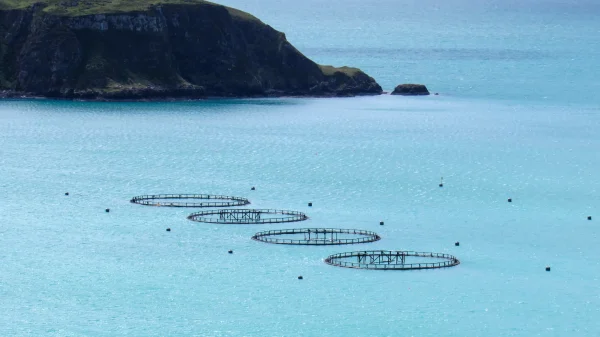
We also use Integrated Multi-Trophic Aquaculture (IMTA). According to research from CMFRI, we grow fish alongside seaweed and mussels in these farms. The study explains that these organisms act as a natural filter because mussels are excellent filter feeders that clean the surrounding water for their food.
The Role of Global Policy in Universal Standards
Research published by the LSE Grantham Institute suggests the Blue Economy is expected to be worth $3 trillion by 2030. To reach that goal, every nation must adopt Aquaculture and Fishery Management. Fish do not recognize national borders.
If one country protects a species but the neighbor does not, the species still dies. We need universal standards for gear, quotas, and monitoring. This global teamwork is the only way to ensure our children see a thriving ocean.
A New Chapter for Our Oceans
We once thought the ocean was too big to break. We were wrong. Now we know it is too important to leave to chance. Our past mistakes nearly emptied the seas, but our current tools can fill them again.
Through careful fish stock management, we can rebuild the biomass of the world’s most iconic species. We no longer have to choose between a healthy planet and a full plate. We can have both.
Professional Aquaculture and Fishery Management is the only path forward. It turns us from hunters into stewards. It ensures that the life beneath the waves continues to thrive, providing food, jobs, and beauty for generations to come.
Recently Added
Categories
- Arts And Humanities
- Blog
- Business And Management
- Criminology
- Education
- Environment And Conservation
- Farming And Animal Care
- Geopolitics
- Lifestyle And Beauty
- Medicine And Science
- Mental Health
- Nutrition And Diet
- Religion And Spirituality
- Social Care And Health
- Sport And Fitness
- Technology
- Uncategorized
- Videos

