
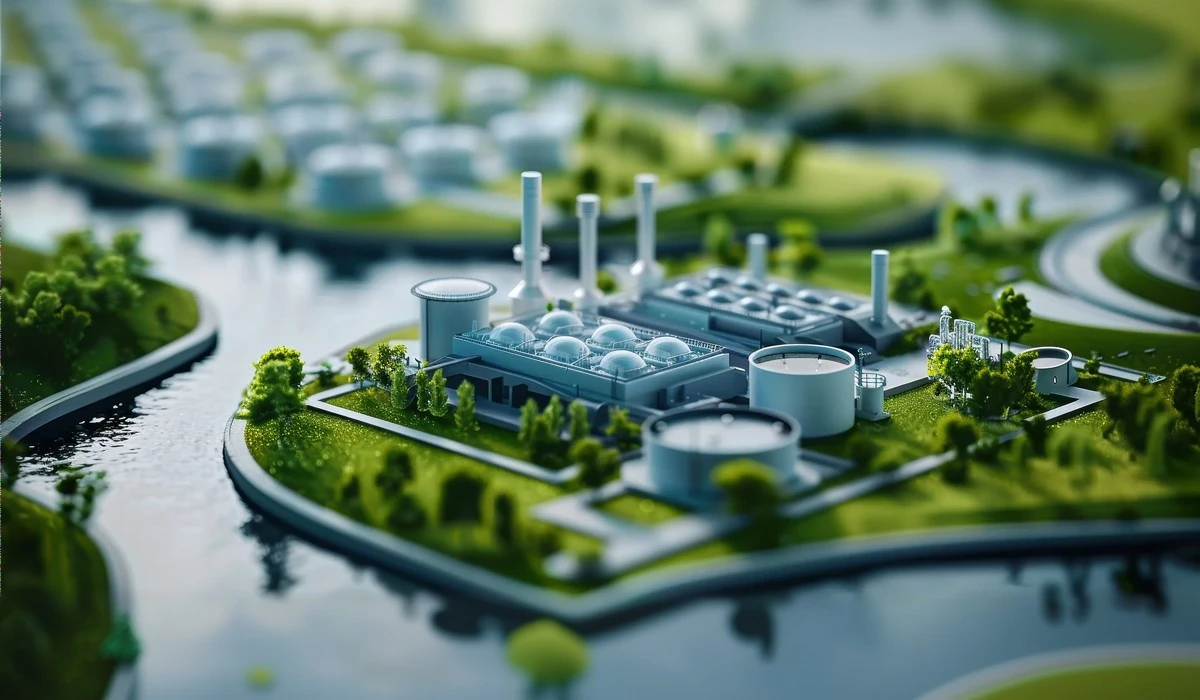
Germany Hydrogen May 2025 Freeze Halted Projects
Market momentum frequently stalls when supply chains outpace the actual need for the product. A quiet disconnect currently disrupts the ambitious narrative surrounding the Germany green hydrogen transition. While political leaders broadcast bold targets for climate neutrality by 2045, the internal gears of the industry grind against a stark economic reality. A surplus of manufacturing capacity now sits idle, waiting for purchase orders that fail to materialize. This silence in the order books reveals a critical flaw in the initial strategy. The industry focused heavily on building the machines to make hydrogen, assuming the market would instantly consume the fuel.
The reality proves far more complex. High operational costs and missing infrastructure create a bottleneck that slows adoption. Companies pause development, and major players review their investments. The narrative shifts from rapid expansion to a calculated recalibration. Germany now faces the difficult task of aligning its massive industrial goals with the slow, methodical pace of infrastructure development and global market forces. This unseen friction between political timelines and economic viability defines the current phase of the energy transition.
The Mechanism of Supply and Demand
Markets stagnate when producers build capacity for a demand that exists only on paper. The current state of the Germany green hydrogen sector illustrates this precise imbalance. Nima Pegemanyfar identifies demand as the primary obstacle, noting that the market struggles to pick up speed organically. Manufacturers ramped up production capabilities, anticipating a rush of orders from heavy industry. Instead, they face a hesitation driven by uncertain economics. Quest One, a major electrolyser manufacturer, confronts this reality directly. Their factory capacity far exceeds the current volume of low orders.
This gap forces difficult decisions. According to statkraft.com, the company recently decided to cease the development of new green hydrogen projects as of May 2025 due to rising market uncertainty. This move signals a retreat from speculative development. Companies require certainty before committing billions to new energy systems. The delay triggers a chain reaction. What is holding back hydrogen demand? The price of green hydrogen remains significantly higher than fossil fuel alternatives, causing industrial buyers to hesitate. Without guaranteed buyers, producers cannot justify the operating costs of running their new electrolysers at full power. The industry now waits for the demand curve to catch up with the supply potential.
Manufacturing Adjustments
The lack of immediate buyers impacts the workforce and corporate structures. Quest One recently announced layoffs affecting 20% of its staff. This reduction contradicts earlier national forecasts that projected massive green job creation. Corporate parents also reassess their positions. The Volkswagen Group currently reviews strategic options for Everllence, the owner of Quest One. Even a Volkswagen spokesperson confirmed they are reviewing options. These shifts suggest a consolidation phase where only the most financially resilient projects survive the initial market test.
Global Market Forces and Competition
Global dominance in manufacturing often relies on scale and cost rather than just technological innovation. Germany holds a strong position in intellectual property, ranking second globally with 12% of hydrogen patents. However, patents alone do not guarantee market control. China currently commands approximately 60% of the global electrolyser manufacturing capacity. This massive volume allows Chinese manufacturers to dictate prices and flood emerging markets. German industries fear this disparity could lead to a loss of their competitive edge.
The German government recognizes this external pressure. Robert Habeck emphasizes that Germany expects large and stable domestic demand. This statement sends a signal to international partners that the country remains a serious contender. However, the internal manufacturing struggle persists. The initial rush to build factories clashes with the slow arrival of signed contracts. German companies must navigate a landscape where their technology is superior, but their competitors offer significantly lower prices.
The Cost Challenge
Price gaps create a vacuum that only massive capital or regulation can fill. The Germany green hydrogen sector aims for a production cost of €4 per kilogram. Achieving this target would reduce the price to approximately 50% of the current German rate. Quest One sets this specific price point as a benchmark for competitiveness. Until production costs fall, or carbon pricing rises, the math works against rapid adoption. The government attempts to bridge this gap through subsidies, but the market requires organic cost reductions to thrive long-term.
Infrastructure Gaps and Physical Reality
Energy transitions rely on the invisible network of pipes and caverns beneath the ground. Without a physical method to move and store the gas, production capacity remains useless. A publication by the Economic Affairs Ministry states that Germany’s strategy includes a pipeline grid target of 1,800 kilometers of new and repurposed lines to start up the network by 2027 or 2028. This network combines repurposed natural gas lines with new builds to connect industrial clients and ports. However, the timeline for these projects remains tight. Delays in permitting or construction could push the operational date further back, leaving producers with nowhere to send their gas.
Storage presents another geological challenge. Reliable energy systems require a buffer for times of low production. Germany plans to use salt caverns located more than 1,000 meters deep for this purpose. How is hydrogen stored underground? Engineers pump the gas into massive, sealed geological salt formations that trap the hydrogen under high pressure. Information from storengy.de indicates that Storengy Deutschland plans to build a facility at the Harsefeld site in Lower Saxony to develop this technology. However, large-scale storage operations will likely start in the 2030s at the earliest. This lag creates a vulnerability for the remainder of this decade, as the grid lacks the capacity to balance supply fluctuations effectively.
The Acceleration Act
Legislative tools attempt to force physical progress. The Hydrogen Acceleration Act, approved in May 2024, grants legal priority to these infrastructure projects. This law fast-tracks permitting, theoretically cutting through the red tape that stalls construction. The government hopes this legal framework will synchronize the completion of pipelines with the ramp-up of electrolyser capacity.

The Gravity of Import Dependence
Economic gravity pulls resources from the cheapest source, regardless of political borders. The German Ministry (BMWK) forecasts an import dependence of 50% to 70% of hydrogen demand by 2030. This statistic reveals a crucial shift in strategy. The vision of domestic energy self-sufficiency gives way to a pragmatic approach focused on securing volume. Hanna Schumacher notes that the current government focuses on imports perhaps even more than the previous administration because of cost-effectiveness.
Geography dictates the logistics of these imports. A split emerges between pipeline imports from Europe and North Africa versus ship-based imports from the Global South. Pipelines offer higher efficiency. Shipping hydrogen requires converting it into derivatives like ammonia or methanol. This conversion process incurs energy losses, making it less efficient than direct pipeline transport. Despite the losses, ship imports remain necessary to access global markets. Does Germany import green hydrogen? Yes, Germany actively secures international partnerships to import hydrogen and its derivatives to meet future industrial demand. The strategy prioritizes the lowest overall system cost, even if it means relying on foreign producers.
The LNG Transition
Existing fossil fuel infrastructure plays a transitional role. Chancellor Olaf Scholz argues that LNG terminals receiving gas today can serve as import hubs for green hydrogen tomorrow. This dual-use logic attempts to justify current fossil fuel investments by tying them to a green future. However, the technical challenge of converting these terminals remains a significant engineering hurdle.
Financial Mechanics and Subsidy Flows
Market adoption halts when the price of a solution exceeds the cost of the problem it solves. The Germany green hydrogen market currently operates on a lifeline of public funding. AP News reports that the government employs Carbon Contracts for Difference (CCfD) to bridge the cost gap for heavy industries. This mechanism allows companies to bid for subsidies that cover the difference between their production costs and the market price. The same source notes that the first round allocates €4 billion, with an upcoming round potentially worth €19 billion. These funds aim to de-risk the transition for heavy industry.
Investment also flows into converting existing power structures. The government earmarked €16 billion in subsidies for gas-to-hydrogen power plant conversions by 2040. This capital injection seeks to ensure that the power sector stands ready to switch fuels when the supply becomes available. Despite these massive sums, the industry demands even more support. Some sectors call for feed-in tariffs, similar to those used for solar and wind, but the government rejected this approach in favor of competitive bidding.
Recent Cancellations
Financial caution leads to project attrition. The Hydrogen Compass 2025 report reveals that in the last 18 months, developers publicly cancelled 52 commercial-scale low-carbon and renewable hydrogen projects. This wave of cancellations signals a market correction. Investors scrutinize the viability of every proposal. Ivana Jemelkova describes this as individual trees falling while the forest continues to grow. She insists the sector moves past hype into a phase of realistic, albeit difficult, growth.
The Physics of Efficiency and Application
Physics dictates that energy loses potency every time it changes form or travels distance. This scientific principle shapes the debate over where the Germany green hydrogen market serves the best purpose. Experts like Professor Stöcker critique the use of hydrogen in heating and cars. They argue that direct electrification via heat pumps and electric vehicles offers far superior efficiency. Burning hydrogen for heat or torque wastes energy compared to using electricity directly.
Consequently, the official strategy narrows its focus. The government prioritizes hydrogen for sectors that cannot easily run on batteries, such as heavy industry and aviation. Steel manufacturing and chemical production require the high-intensity heat and chemical properties that hydrogen provides. Robert Habeck’s team directs subsidies toward these hard-to-abate sectors. Despite this, chatter continues regarding the use of hydrogen for residential heating and passenger cars. This persistence highlights the disconnect between scientific efficiency and certain political or industrial interests.
Type Controversies
Debates also persist regarding the "color" of the hydrogen. While Agora Industry advocates for a strict focus on Green Hydrogen (renewable), the government accepts Blue or Low-Carbon hydrogen to speed up the ramp-up. This acceptance acknowledges that renewable generation capacity cannot yet meet the total demand. Integrating low-carbon options allows the infrastructure to develop before 100% green supplies become available.
Political Strategy and Future Timelines
Long-term goals often act as anchors for short-term recalibrations. The German government maintains its Climate Neutrality Target for 2045. Within this timeline, specific milestones guide the Germany green hydrogen trajectory. The National Hydrogen Strategy, launched in mid-2020 under the Angela Merkel administration, received a significant update in July 2023. This update increased the 2030 domestic electrolyser capacity target from 5 GW to 10 GW.
Demand forecasts create the boundaries for these targets. Estimates for 2030 predict a demand of 95 to 130 TWh. By 2050, this figure jumps to a broad range of 400 to 800 TWh. These numbers emphasize the scale of the challenge. To meet these goals, the government relies on the Project IPCEI (Important Projects of Common European Interest). In July 2024, the EU approved €4.6 billion in funding for 23 German infrastructure projects. This funding aims to cement Germany’s position as a central hub in the European hydrogen network.
Navigating Contradictions
The path forward involves navigating inherent contradictions. The government pushes for a "recalibration" focused on lower system costs. Meanwhile, industries demand protectionist measures to secure domestic production. The balance between importing cheap energy and building a sovereign industry defines the political struggle. Success depends on maintaining the 2045 goal while adjusting the tactical approach every few years.
The Realignment of Ambition
The Germany green hydrogen sector currently undergoes a necessary, albeit painful, transformation. The initial phase of unbridled optimism encounters the friction of real-world economics. A hidden mechanism of supply-demand mismatch drives this reset. Manufacturers built factories before buyers signed contracts, leading to idle capacity and layoffs. Infrastructure projects lag behind production goals, creating physical bottlenecks that no amount of funding can instantly resolve.
However, this pause does not signify failure. It represents a maturation of the market. The shift toward imports, the focus on heavy industry, and the implementation of specific subsidies like CCfDs demonstrate a move toward pragmatism. The government prioritizes the 10GW target and the 2045 neutrality goal, using the Hydrogen Acceleration Act to clear the path. The "forest" continues to grow, even as weaker projects fall away. Germany’s strategy now relies on aligning the speed of construction with the speed of demand, ensuring that when the pipelines finally open, the economy stands ready to use them.
Recently Added
Categories
- Arts And Humanities
- Blog
- Business And Management
- Criminology
- Education
- Environment And Conservation
- Farming And Animal Care
- Geopolitics
- Lifestyle And Beauty
- Medicine And Science
- Mental Health
- Nutrition And Diet
- Religion And Spirituality
- Social Care And Health
- Sport And Fitness
- Technology
- Uncategorized
- Videos

