
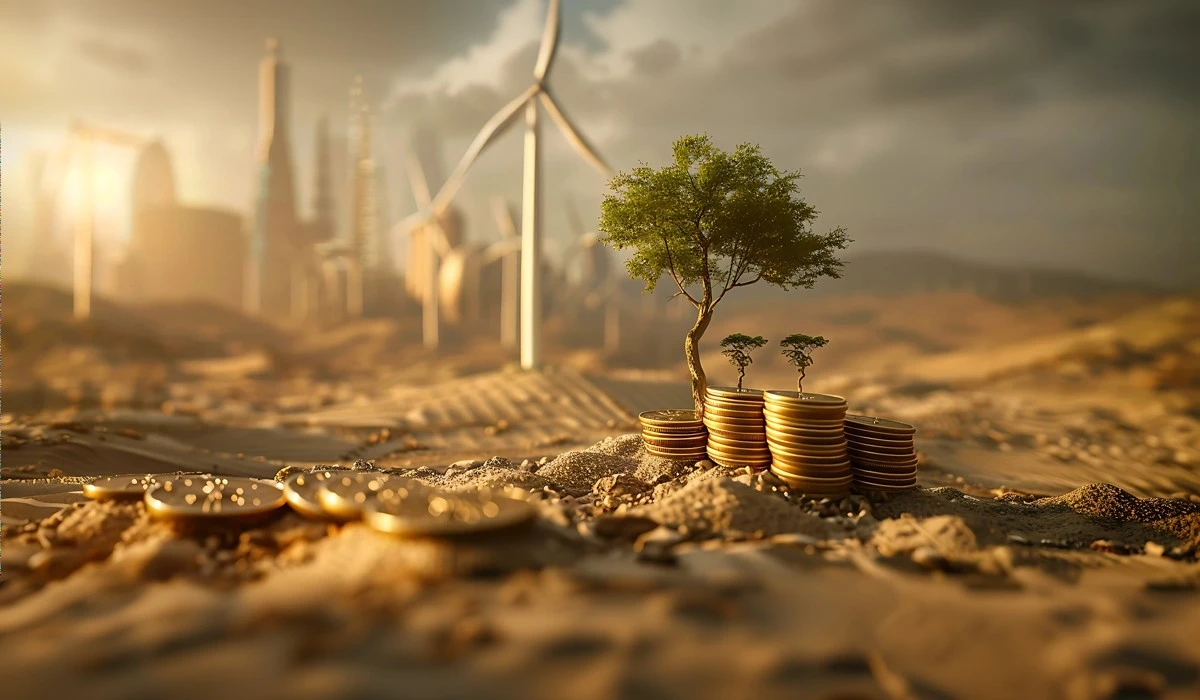
Environmental Damage Cost Hits $5bn per Hr
When you buy a burger or fill your gas tank, the price on the receipt is a lie. You pay the remaining balance later through hospital visits, flood repairs, and rising insurance premiums. The global economy currently runs on a system that hides these expenses, allowing industries to rack up a massive tab that society eventually covers. Right now, according to a report highlighted by The Guardian, this accounting error drains billions from world economy every sixty minutes.
A massive 1,100-page GEO document produced by 200 researchers for the UNEP exposes this financial reality. The current environmental damage cost is $5 billion per hour. This figure represents the destruction of nature and the pollution of our natural resources. We face a systemic failure where governance and economics clash with planetary limits. The threats are no longer isolated events; climate change, nature loss, and pollution undermine health and national security simultaneously. Professor Robert Watson warns that these crises now threaten the very stability of nations. We are not just losing trees; we are losing the foundation of our economy.
The Real Price of Production – The Hourly Bill
We treat nature like an infinite credit card, but the interest rates are compounding faster than the economy grows. The data is staggering. Every hour, the world loses $5 billion to environmental degradation. This is not a rough estimate; it is a calculated burden stemming from our daily activities.
The bulk of this cost comes from two specific sectors: food production and fossil fuel energy. Industrial agriculture generates an economic burden of $20 trillion per year. We destroy forests, drain aquifers, and pollute soil to grow food, yet we rarely see these costs on the grocery shelf. Similarly, the energy sector adds another $12 trillion annually in negative externalities. These are costs that companies ignore, forcing governments and citizens to pick up the tab. How much does environmental damage cost per hour? An UN report indicates the world economy suffers a loss of $5 billion every hour due to unpriced environmental impacts.
The Subsidy Trap
Governments actively pay industries to destroy the systems that keep their citizens alive. While politicians speak about sustainability, their checkbooks tell a different story. Data from the International Institute for Sustainable Development (IISD) reveals that taxpayers currently fund environmentally harmful subsidies valued at $1.5 trillion. These payments go directly to fossil fuel companies, industrial agriculture, and mining operations.
The International Monetary Fund (IMF) provides an even grimmer picture. When they account for unpaid externalities—the damage these industries cause for free—the total support for fossil fuels hits $1.9 trillion. This financial support distorts the market. It makes polluting cheap and being responsible expensive. The UN report notes that if governments simply removed these subsidies, global emissions could drop by 33%. We are effectively paying for our own destruction.
Broken Food Systems – The Monoculture Risk
Modern agriculture prioritizes volume over value, creating a cycle where we produce more calories but get less nutrition. We rely dangerously on a handful of crops. Wheat, maize and rice now provide over half of all global plant-based calories. This lack of diversity leaves the world vulnerable. If a disease or climate event hits any of these crops, the global food supply faces immediate peril.
Production is also heavily concentrated. A few key nations, including the US, Ukraine, Russia, and Brazil dominate the market. This creates geopolitical choke points. When conflict or drought strikes these specific regions, the entire world feels the hunger. We have built a system designed for efficiency, yet it remains incredibly fragile.
Waste and Inefficiency
We pour resources into a bucket full of holes. Despite the massive environmental footprint of farming, we waste a shocking amount of what we grow. Reports from the FAO estimates that the supply chain loses 24% of all food calories before they even reach a human mouth. This waste happens during harvest, transport, or simply in our own kitchens.
Meat production drives this inefficiency even further. When we feed crops to animals to produce meat, we lose 87% of the original calories. This process demands large amounts of water and land to produce a fraction of the food energy. A Chatham House report describes this as a destructive loop: production rises, the environment degrades, and health costs soar. What are the health costs of air pollution? Chatham House research highlights that in the US alone, air pollution resulting from export-oriented agriculture creates $35 billion in annual health damages.

Health and Economic Consequences – The Health Crisis
Cheap energy and processed food create expensive patients. The global diet is converging toward a calorie-rich, nutrient-poor standard. This shift drives a global rise in obesity and chronic disease. We see the impact in national budgets. In the US, the health impact of air pollution from export-agriculture alone costs $35 billion.
Professor Robert Watson emphasizes that environmental crises are no longer just about nature; they are about human survival. Pollution and poor nutrition undermine the workforce and strain healthcare systems. The economy cannot thrive when the population is sick. The current model sacrifices long-term public health for short-term corporate profit.
The Job Market Contradiction
Old industries fight to keep their position, even though new industries offer more opportunity. There is a persistent myth that protecting the environment kills jobs. The data proves the opposite. Green technologies like wind and solar are labor-intensive. They require more workers per dollar invested than fossil fuels.
Oil and gas sectors are capital intensive. They spend money on expensive equipment rather than on large workforces. Transitioning to a green economy does not just save the planet; it puts more people to work. The Green Growth Group confirms that sustainability and economic growth are compatible. Decarbonization actually boosts competitiveness in the long run.
Geopolitics vs. Science – The Wall of Opposition
National borders often act as barriers to scientific reality. During international negotiations, specific countries frequently obstruct progress. The US, Saudi Arabia, Russia, Argentina and Turkey have all pushed back against necessary climate actions. These nations prioritize their immediate economic interests over long-term global stability.
The UK Delegation observed attempts by some nations to undermine the scientific process itself. They argued that while national interests demand respect, science is non-negotiable. Physics does not care about borders or treaties. Delaying action because of political disagreements only increases the final cost of the disaster.
The Cost of Delay
Waiting to act acts like a high-interest loan that eventually bankrupts the borrower. The IEA provides clear numbers on this risk. Every $1 saved by skipping clean tech investment before 2020 results in a $4.30 cost after 2020. We are saving pennies now to lose dollars later.
The Tyndall Centre warns that without radical fossil fuel reduction, we face a high-end warming scenario of 4–6°C. This level of warming brings catastrophic changes. Prof Edgar Gutiérrez-Espeleta states that urgent transformation is required to prevent systemic collapse. The science is solid, and solutions exist. The missing piece is the courage to implement them rapidly.
Banking on the Past
Banks bet on the past while promising to fund the future. Financial institutions send mixed signals. In 2013, the World Bank lent 42% of its energy funds to projects of fossil fuel, compared to only 29% for renewables. This happens despite their public support for green initiatives.
Private investors also face a dilemma. An Investor Group warns that policy uncertainty creates an investment cliff-edge. Without a clear long-term framework, capital costs rise. Investors need certainty to move money into sustainable projects. Currently, the lack of firm government commitment keeps money flowing into the wrong places.
Lobbying Power
Money talks, and right now it screams for the status quo. The fossil fuel industry spends massive amounts to keep their subsidies and favorable regulations. In the US and EU alone, the industry spends $213 million per year lobbying decision-makers.
This spending creates a "toxic triangle" identified by an Oxfam report. Political inertia, financial short-termism, and vested interests block the transition. This influence maintains the system that generates the $5 billion per hour environmental damage cost. Professor Watson notes that governments generally respond to pressure. Public demand is essential to break this deadlock.

Defining the Solution
Fixing the price tag fixes the behavior. The core solution to this crisis is a concept called "True Pricing." We must ensure that the price of energy and food includes their externalities. If a product harms the environment or public health, its price should reflect that damage.
This approach forces the market to value sustainability. If polluting goods become expensive, consumers and companies will shift to cleaner alternatives. This is not about punishment; it is about honesty in economics. What is true pricing in economics? True pricing is a system where the market price of goods includes the hidden costs of environmental damage and health impacts.
Safety Nets and Future Gains
We protect the vulnerable while fixing the system. Implementing True Pricing requires social safety nets to prevent hurting the poor. Mitigation strategies include Universal Basic Income, meat taxes, and subsidies for healthy food. These measures ensure that the transition is fair.
The long-term benefits of this shift are astronomical. If we take climate action now, the benefits will reach $20 trillion per year by 2070. By 2100, those benefits climb to $100 trillion annually. The initial investment pays off exponentially.
Conclusion: The Choice
The current economic model operates on a delusion that environmental debt never comes due. We pay the environmental damage cost of $5 billion every hour for this mistake. The path forward demands we stop subsidizing our own demise and start pricing goods honestly. Visionary leadership and the private sector must align profit with sustainability.
We face a clear contradiction. Yields in key regions like India and China are stagnating while demand is set to rise 60% by 2050. Continuing on the current path guarantees a collision between human need and planetary limits. However, the data shows that action leads to immense wealth and stability. We can accept the discomfort of change now, or we can pay the impossible price of collapse later.
Recently Added
Categories
- Arts And Humanities
- Blog
- Business And Management
- Criminology
- Education
- Environment And Conservation
- Farming And Animal Care
- Geopolitics
- Lifestyle And Beauty
- Medicine And Science
- Mental Health
- Nutrition And Diet
- Religion And Spirituality
- Social Care And Health
- Sport And Fitness
- Technology
- Uncategorized
- Videos

