
Ecology and Wildlife Conservation: Link Gaps
A patch of forest looks like a sanctuary, but for a trapped lynx, it is a cage with no exit. Humans see green trees and tall grass. The lynx sees a hard limit where the woods end and a six-lane highway begins. This animal lives in a biological prison because it cannot reach a mate or find new hunting grounds.
Conservationists once thought that simply fencing off a park saved species. We now know that isolated patches of land lead to local extinctions. When a population cannot move, it withers. True Ecology and Wildlife Conservation requires us to think about the spaces between the parks. We must build bridges and paths that allow life to flow across the environment.
Linking these forest gaps changes the fate of entire species. Movement keeps the natural world healthy. Focusing on connectivity turns scattered islands of green into a massive, living network.
The Crisis of Fragmentation in Modern Environments
Roads and cities act as walls for most animals. Parks Canada notes that these structures create barrier effects that can take several generations to develop within a population. According to research in Frontiers in Plant Science, the development of new paths splits the wild into smaller, isolated fragments. This fragmentation forces animals into small groups. A study in PMC explains that such isolation leads to a drop in gene flow and a resulting loss of genetic variety within the population.
In Southern California, pumas face a grim future because of the 101 Freeway. As highlighted by Parks Canada, these cats face difficulty reaching new territory because of the barrier effects of the road. Experts in Ecology and Wildlife Conservation say these cats could vanish within 50 years without a way out. They suffer from heart defects and physical issues because they only breed with close relatives.
Meanwhile, road mortality kills millions of animals every year. A report by the Pew Charitable Trusts states that motorists collide with between one and two million large animals every year in the United States. The report adds that these incidents result in approximately 200 human fatalities and cost billions of dollars. We have turned our travel routes into death zones for migrating herds.
Foundational Pillars of Ecology and Wildlife Conservation
Modern science shifted its focus from stationary land to moving populations. We used to believe that a line on a map kept animals safe. In reality, animals do not respect human borders. They follow ancient migration paths that span hundreds of miles.
Effective Ecology and wildlife conservation rely on the theory of island biogeography. According to a study in PMC, this model suggests that species richness on an island is determined by the balance of immigration and extinction, showing that small, isolated habitats lose species faster than large, connected ones. If an island of forest is too far from the mainland, new animals cannot arrive to replace the ones that die.
Conservationists now work to turn these islands back into a continent. We study how species move, eat, and hide. This change in thinking allows us to plan for the long-term survival of wide-ranging animals like wolves and bears.
The Anatomy of Productive Wildlife Corridor Design
Building a path for animals needs more than tree planting; it involves a specific process known as wildlife corridor design. Engineers and biologists must collaborate to ensure the path feels safe for a nervous animal. If a corridor is too narrow, predators like coyotes wait at the edges to pick off smaller prey.
Many people wonder, what is a wildlife corridor? As defined by the Australian Government Department of Climate Change, Energy, the Environment and Water, it is a designated strip of natural habitat that links populations separated by human activities or structures like roads and development. These paths must offer cover, food, and water. They must also steer clear of bright lights and loud noises that scare animals away.
Selecting Target Species for Connectivity
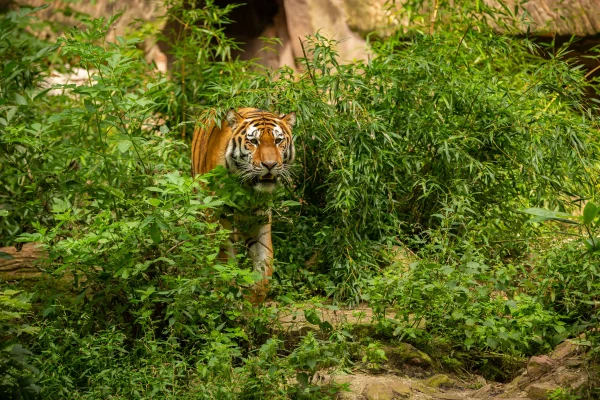
Every project starts by choosing an "umbrella species." Research published in Frontiers in Conservation Science defines these as animals whose protection provides a safety net for many other species in the same community, such as cougars or elk. When we satisfy the needs of a cougar, we automatically protect the smaller animals that share its habitat. A cougar needs a wide path with plenty of brush for stalking. If the design works for a big cat, it also works for squirrels, snakes, and birds.
Width and Length: The Golden Ratios
Size determines the success of a project. The organization Ecological Landscaping suggests a standard where a width of two kilometers is used to connect areas up to 80 kilometers apart. This ratio prevents the "edge effect." This consequence happens when sunlight, wind, and noise from the outside world ruin the deep-forest feel of the corridor. Animals need a core area that feels like the deep woods to feel safe enough to travel.
Strengthening Genetic Flow via Ecology and Wildlife Conservation
The most significant benefit of these paths is "genetic rescue." According to research in PMC, this occurs when new immigrants improve the fitness of a population through their genetic contributions. Bringing in new individuals through a corridor refreshes the gene pool. This makes the entire population stronger and more resistant to disease.
In 1995, the Florida panther almost disappeared. Research published in PMC notes that by 1995, the population had dwindled to a point where only a few cats remained. To address this, the study describes how eight female pumas were moved from Texas to Southern Florida as part of a genetic rescue plan. As reported by Discover Wildlife, the population has since grown to roughly 200 individuals because of that genetic boost.
A common concern is, do wildlife corridors actually work? Research shows they significantly reduce animal-vehicle collisions and increase the genetic diversity of isolated species by allowing them to find new mates. They also help plants. Connected forests have 20% more plant species because animals carry seeds from one patch to another as they travel.
Structural Engineering: Overpasses vs. Underpasses
We cannot always remove a road, so we must go over or under it. These structures are the physical stars of Ecology and Wildlife Conservation. A green bridge looks like a regular overpass but is covered in soil and native plants. These structures allow heavy animals to cross highways without ever seeing a car.
Grizzly bears and wolves prefer these wide, open overpasses. They like to see the horizon and feel the wind. Meanwhile, cougars and black bears often prefer underpasses. They like the shade and the feeling of being tucked away. Engineers use these preferences to build the right structure for the local wildlife.
Banff National Park in Canada serves as a global example. According to Parks Canada, the park features 44 specific crossing points, including six overpasses and 38 underpasses. The agency reports that since these structures and fencing were built, animal-vehicle collisions have decreased by over 80%. This success shows that animals will use human-made paths if we build them correctly.
Mapping the Future with GIS and Tracking Data
Data drives modern Ecology and Wildlife Conservation. We no longer guess where animals go. We use GPS collars to track their every move. As noted by Parks Canada, tracking information allows experts to pinpoint specific high-risk locations for future crossing structures.
One might ask, how do animals find wildlife corridors? Species often find these paths through natural scent marking, topographic features, or by following the cover of vegetation designed specifically to attract them. They follow the "path of least resistance." Planting the right trees and providing the right terrain naturally funnels the animals into the safe zone.
Research in PMC highlights that modern software utilizes circuit theory to identify critical "pinch points" that limit the movement of animals. This allows us to protect the most important forest gaps before they vanish under concrete.
Overcoming the Human Element in Wildlife Corridor Design
Science is only half the battle. The rest involves policy, money, and land rights. According to a report by Iracambi, establishing these routes often requires reaching a consensus among various landowners when a path spans multiple properties. We cannot force every landowner to stop building. Instead, we must offer incentives to keep the land wild. This is a vital part of wildlife corridor design.
The Economic Benefit of Reduced Roadkill
Protecting wildlife saves money. A single animal-vehicle collision can cost thousands of dollars in repairs and medical bills. As observed by the Center for Transportation Studies, while an expensive crossing can cost around $5 million, it can pay for its initial investment quickly through the prevention of accidents. Taxpayers benefit when we keep animals off the road and in the forest.
Collaborative Conservation with Private Landowners
Florida recently passed a law to protect 18 million acres of land. This law uses conservation easements. The state pays landowners to keep their forest gaps open instead of selling the land to developers. This strategy ensures that Ecology and Wildlife Conservation goals align with the needs of the local economy.
Linking the World Through Ecology and Wildlife Conservation
We are moving toward a future where the wild and the developed world coexist. We do not have to choose between roads and panthers. With smart planning, we can have both. Filling in the gaps in our forests gives nature a chance to breathe.
Careful wildlife corridor design changes broken terrain into thriving networks. It protects the genetic health of our most iconic species and keeps our roads safer for everyone. We must continue to support these large-scale projects to ensure that no animal is ever trapped in a green cage again. Ecology and Wildlife Conservation remains our best tool for building a reconnected, resilient planet.
Recently Added
Categories
- Arts And Humanities
- Blog
- Business And Management
- Criminology
- Education
- Environment And Conservation
- Farming And Animal Care
- Geopolitics
- Lifestyle And Beauty
- Medicine And Science
- Mental Health
- Nutrition And Diet
- Religion And Spirituality
- Social Care And Health
- Sport And Fitness
- Technology
- Uncategorized
- Videos

