
Conservation Biology Ways To Link Broken Lands
Imagine a young male wolf wandering through a thick forest. He needs to find a mate to start a new pack. Suddenly, he hits a six-lane highway. He smells the woods on the other side, but the rushing cars create a wall of death. He turns back. To his left, a new housing development blocks his path. To his right, a massive soy field offers no cover from hunters. This wolf lives in a beautiful patch of wilderness, yet he stays trapped in a cage made of asphalt and fences.
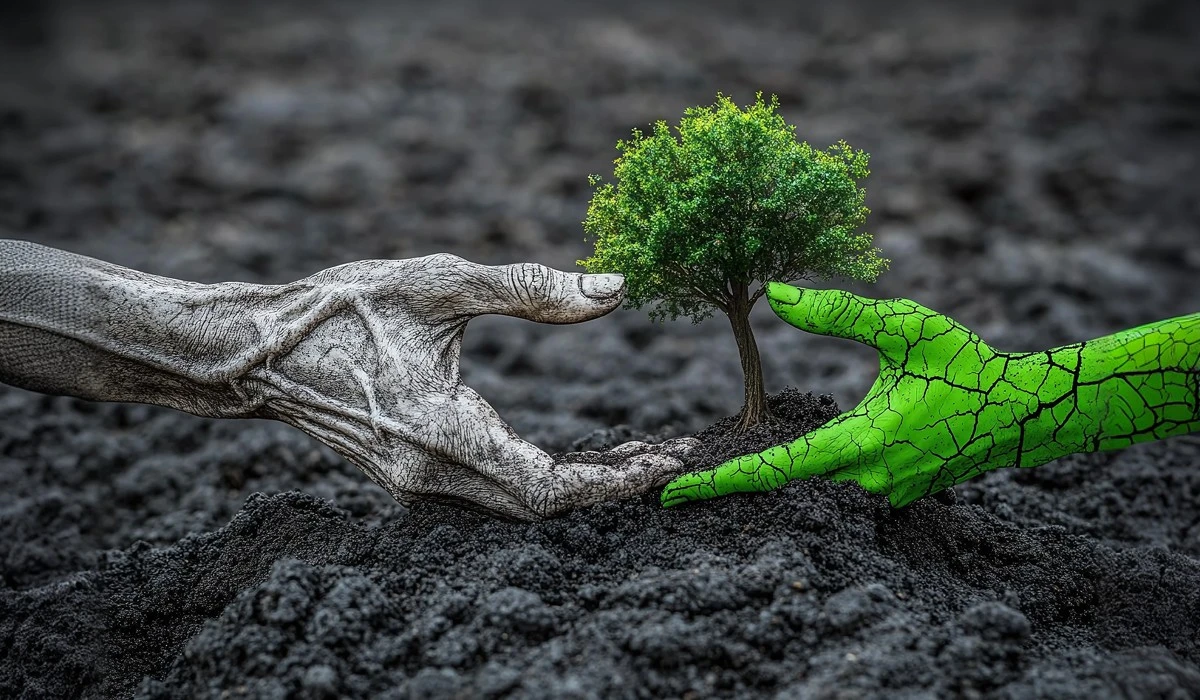
We often view nature as a massive, continuous blanket of green. In reality, humans have chopped the wild into thousands of tiny, isolated pieces. These pieces look healthy from the sky, but they are dying from the inside. Without the ability to move, animals cannot find food, mates, or new homes. This crisis of isolation forms the core challenge of modern Conservation Biology. Experts no longer focus only on saving a single park. They now work to sew these pieces back together. Recent habitat fragmentation research shows that even a small gap, like a road or a farm, can cause a whole species to vanish. We must build bridges between these lonely islands to keep nature alive.
Beyond the Bounds of Protected Areas
For decades, we thought that putting a fence around a forest was enough. We created national parks and hoped for the best. Ironically, these parks often become biological traps. If a fire or disease hits a fenced-in park, the animals have nowhere to run. They cannot escape to a neighboring forest. Modern Conservation Biology teaches us that "protected areas" fail when they stand alone. A small, perfect park cannot support a large population of predators like tigers or bears over time. These animals need vast ranges to survive and maintain their health.
The High Cost of Biological Isolation
According to a study in PubMed Central (PMC2871172), when we cut a forest in half, we don't just lose trees; we lose the movement of life, leading to what scientists call "extinction debt." The research explains that while a species might still live in a small woods today, it may eventually face extinction because it lacks the numbers to survive for the next fifty years. Findings published in PMC4643828 further indicate that this process restricts animal movement, which leads to inbreeding and a 13% to 75% reduction in biodiversity over time. Small groups of animals begin to breed with their own relatives. This weakens their immune systems and makes them less likely to survive changes in the weather or new pests. Eventually, the population simply blinks out.
Moving Past the SLOSS Debate
As noted in PubMed (20152842), in the 1970s, scientists argued over a big question: Is it better to have one giant park or several small ones? They called this the SLOSS debate. For years, people couldn't agree. However, 2025 habitat fragmentation research published in Nature finally provided a clear answer. While large parks are great, the connection between them matters even more. Even a series of small parks can thrive if animals can safely travel between them. Without these links, even a large park eventually loses its variety of life. We now know that interconnected land is a non-negotiable requirement for survival.
Defining Structural vs. Functional Connectivity
We must look at the land through the eyes of the animals. Structural connectivity refers to the physical links we can see, like a line of trees connecting two forests. Research from Springer explains that functional connectivity is more multi-layered. It describes how an animal actually behaves and its ability to disperse effectively between habitat patches. Habitat fragmentation research helps us understand these differences. We might build a beautiful green bridge, but if it has too many bright lights, a shy mountain lion will never use it. We must design links that work for the specific species we want to save.
Riparian Buffers as Natural Highways
According to research in PMC6235256, rivers and streams provide the best natural paths for movement, as riparian habitats act as corridors for species shifting their ranges. These "riparian buffers" offer water, food, and thick cover. Many different animals, from insects to deer, follow riverbanks to travel across the terrain. Protecting the trees and bushes along a river creates a ready-made highway for wildlife. Conservation Biology emphasizes that these buffers must be wide enough to keep animals safe from nearby noise and pets. A thin line of trees isn't enough; we need wide, wild edges along our waterways to truly link broken lands.
Overpasses and Ecoducts
As noted by Parks Canada, engineering now plays a massive role in saving nature. The agency reports that in places like Banff National Park, green bridges or "ecoducts" have saved thousands of animals. Their network includes a total of 44 wildlife crossing structures—six overpasses and 38 underpasses—which have helped reduce wildlife-vehicle collisions by more than 80%. These structures use soil and native plants to look just like the surrounding forest. Empirical studies show that corridors increase the movement of organisms between patches by approximately 50%, significantly boosting long-term population stability. These bridges do more than stop roadkill. They allow different groups of animals to meet and share their DNA, which keeps the entire species strong.
Small Patches with Big Effects

Sometimes, we cannot build a long, continuous bridge. In these cases, we use "stepping stones." These are small patches of habitat, like a tiny urban forest or a backyard pond. For a migrating bird or a butterfly, these small spots act as refueling stations. They stop for a meal and a rest before moving to the next big forest. Conservation Biology shows that even a small garden with native flowers can help a bee travel across a city. These small efforts add up to a big difference for mobile species.
Making Human Environments Permeable
We must stop thinking of cities and farms as "dead zones" for nature. We can make these areas "permeable," meaning animals can pass through them safely. As suggested in ScienceDirect, farmers can plant hedgerows instead of putting up wire fences to provide better habitat conditions for woodland species. People in cities can plant green roofs. This turns a hostile environment into a welcoming one. Instead of a hard wall, the human environment becomes a filter that allows life to flow through. Softening the edges of our world helps wildlife navigate the gaps between their wild homes.
GIS and Satellite Telemetry
Technology is changing how we conduct habitat fragmentation research. According to the National Oceanic and Atmospheric Administration (NOAA), we now use Geographic Information Systems (GIS) to create digital maps of the Earth by capturing and storing information related to positions on the surface. Attaching tracking collars to animals allows us to see exactly where they get stuck. These "heat maps" reveal pinch points where a single fence or building blocks an entire migration route. This data tells us exactly where to focus our money and effort. We no longer have to guess where a corridor should go; the animals show us the way.
AI-Driven Restoration Modeling
Artificial intelligence now helps us plan for the future. Researchers use algorithms to predict how a forest will grow over the next fifty years. These models show us the cheapest and most effective places to plant new trees to link two areas. Scanning thousands of maps simultaneously enables AI to find the "least-cost path" for a specific animal. This technology allows habitat fragmentation research to move faster than ever before. We can now design restoration projects that provide the biggest boost to biodiversity for every dollar spent.
Citizen Science in Corridor Monitoring
Regular people are now part of the scientific team. Through smartphone apps, hikers and gardeners can record the animals they see. This "citizen science" provides a massive amount of data for Conservation Biology projects. If a hundred people report seeing a specific fox in a suburban neighborhood, researchers know that area serves as a functional link. This involvement helps people feel connected to nature in their own backyards. It turns every citizen into a guardian of the surroundings.
Traditional Land Management as a Linkage Tool
Indigenous people have managed land for thousands of years. Their methods, such as using small, controlled fires, often create the perfect conditions for movement. These fires clear out thick brush and allow grasses to grow, which helps many species travel. A common question is, can habitat fragmentation be reversed through human intervention? While total restoration is difficult, focused reforestation and the removal of physical barriers like fences can effectively re-link isolated ecosystems. Merging ancient wisdom with modern science creates better ways to mend the earth.
Trans-Boundary Conservation Areas
Nature does not care about human borders. An elephant might spend its morning in one country and its afternoon in another. To save these animals, nations must work together. Projects like the "Room to Roam" initiative link parks across different countries in Africa. This requires leaders to talk and share resources. Conservation Biology is now a tool for diplomacy. When we create transboundary parks, we protect the long-distance migrations that many large animals must take to survive.
Legislating Connectivity
Laws are finally catching up to the science. In some places, new rules require "connectivity impact assessments" before anyone can build a road or a pipeline. This means builders must prove that their project won't block wildlife movement. If it does, they must pay for a bridge or a tunnel to fix the problem. Incorporating these needs into law makes connectivity a part of everyday planning. Writing these requirements into legislation ensures that the progress of humans does not come at the total cost of the natural world.
A Future Without Boundaries
The old way of protecting nature was to build walls and keep people out. We now know that this approach leads to a slow decline. The core mission of Conservation Biology has changed. We are now the weavers of the wild. Our job is to repair the bonds that we have cut over the last century. We are learning to see the land as a single, living body that needs to breathe and move, rather than a collection of separate parts.
While habitat fragmentation research highlights the damage we have done, it also offers a clear path forward. Every bridge we build, and every tree we plant, helps heal the divide. We can create a world where a wolf can find a mate without fearing a highway. This future requires us to look past our own fences. We must view every backyard, every farm, and every city park as a vital link in a global chain of life. Together, we can turn a world of lonely islands back into a thriving, connected home for all species.
Recently Added
Categories
- Arts And Humanities
- Blog
- Business And Management
- Criminology
- Education
- Environment And Conservation
- Farming And Animal Care
- Geopolitics
- Lifestyle And Beauty
- Medicine And Science
- Mental Health
- Nutrition And Diet
- Religion And Spirituality
- Social Care And Health
- Sport And Fitness
- Technology
- Uncategorized
- Videos

