
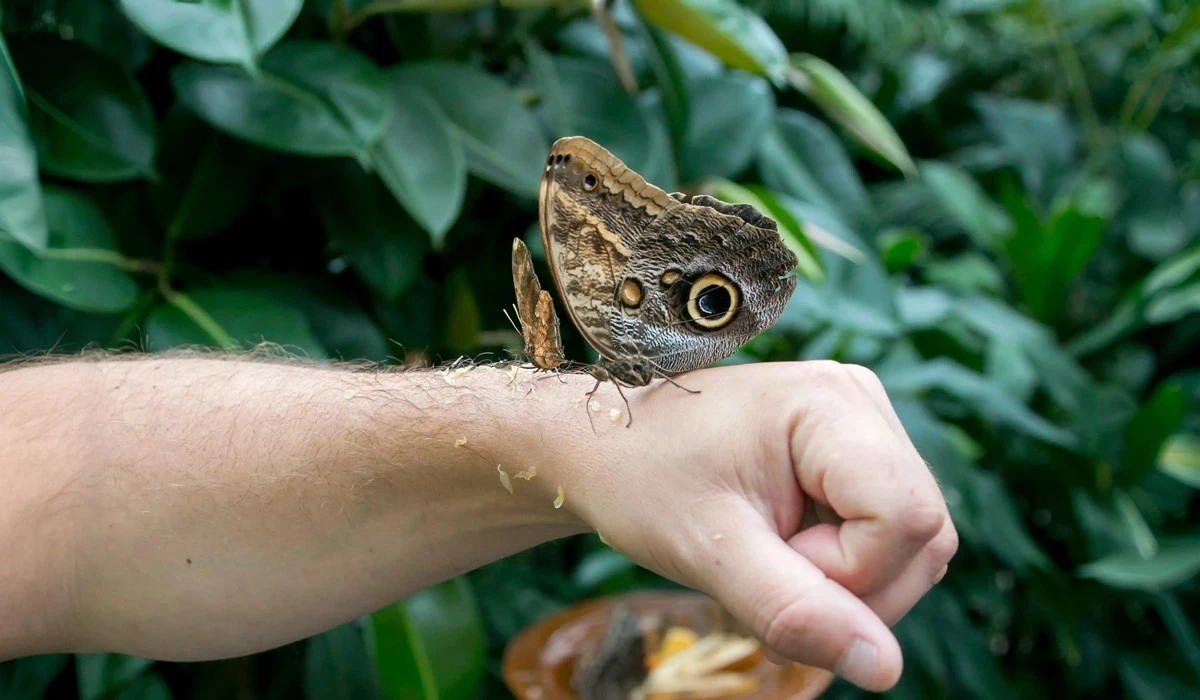
Conservation Biology: Saving The Butterfly Gap
The sight of a thriving home may lead to the assumption that a species is safe when seeing dozens of orange wings fluttering over milkweed in a sunny meadow. However, many butterflies live on borrowed time. They exist in a bubble. If they cannot fly to the next field, their small group eventually fails. They need neighbors to survive.
Modern Conservation Biology predicts these collapses before the last wing stops beating. Scientists now look past the single field to examine how groups of populations interact across a fragmented environment. As described in research by Braak, Hanski, and Verboom, this concept is known as a "metapopulation" or a "population of populations," where various local groups interact through individuals moving between habitat fragments. The study suggests that when one group dies out, a neighboring group must send explorers to take its place. This constant flow keeps the species alive. Without these explorers, even a beautiful meadow becomes a trap.
Why Butterfly Conservation Biology Requires an Environmental Perspective
Butterflies live fast and die young. They rely on specific plants and perfect weather. If a storm hits one field, it might kill every butterfly there. Within connected systems, new butterflies fly in from the next field over a few weeks later. Within fragmented systems, that field stays empty forever.
Understanding Habitat Fragmentation
Urbanization and farming turn wide-open plains into tiny islands of grass. Roads and parking lots act like walls for small insects. A report in PMC identifies habitat loss and fragmentation as primary drivers of biodiversity loss, which explains why this process is so problematic for butterflies. Fragmentation isolates small groups, making them highly vulnerable to local disasters or genetic inbreeding that leads to a "death spiral." When butterflies cannot move, they eventually breed with close relatives. Their health declines, and their eggs stop hatching.
The Limitations of Single-Patch Monitoring
Counting butterflies in one park gives us a false sense of security. While butterflies are present now, they lack a future because they are cut off from the rest of their kind; this is often referred to as "extinction debt," where a habitat is already too small to support the group long-term. Conservation Biology teaches us to look at the network, rather than the individual dots on a map.
The Primary Pillars of Metapopulation Dynamics Modelling
To save these insects, scientists use metapopulation dynamics modelling. This approach treats the entire regional area as a living grid. We track which patches have butterflies and which stay empty. We measure how often a group goes extinct and how fast new ones arrive.
The Balance of Extinction and Recolonization
Richard Levins first described this idea in 1969. He viewed the regional network as a collection of flickering lights. Each light is a population. Sometimes a light goes out. If the "colonization rate" is high, a nearby light sparks it back to life. A species survives only when the rate of new arrivals stays higher than the rate of local deaths.
Stochasticity and Small Population Risks
Randomness plays a huge role in nature. A cold spring or a wandering predator can wipe out a small colony in days. We call this "stochasticity." Large, connected networks handle these random hits well. Small, isolated patches do not. If a random event kills a lone colony, no one remains to restart it. Metapopulation dynamics modelling helps us calculate these risks using math.
Mapping the "Source and Sink" Effect in Fragmented Habitats
Not all habitats offer equal value. Some fields produce thousands of butterflies. Others act like black holes that swallow them up. Scientists must tell the difference to spend their money wisely.
Identifying High-Quality Source Sites

"Source" patches are the engines of a species. They have the best food and the best weather. In these spots, butterflies have many babies. The population grows so large that individuals must leave to find space. These emigrants travel across the regional terrain to find new homes. Protecting a source patch is the most important job in Conservation Biology.
The Rescue Effect in Sink Habitats
"Sink" patches are low-quality areas. Here, more butterflies die than are born. Without help, the population would vanish. However, constant arrivals from a nearby source patch can keep the sink population going. What is a simple example of a metapopulation in nature? According to a long-term study published via ResearchGate, the Glanville fritillary butterfly in Finland is a classic example; since 1991, researchers have tracked a network of 4,000 habitat patches connected by individuals flying between them to maintain regional stability.
How Predictive Modelling Prevents Local Extinction Events
We no longer wait for a species to disappear before we act. Using data allows us to see the future. Conservation Biology uses computers to simulate what happens if we build a road or cut down a forest.
Using the Incidence Function Model (IFM)
As noted in a biography of Ilkka Hanski published by the Royal Society, he developed the Incidence Function Model to predict occupancy. This approach allows scientists to build models using presence and absence data to determine how patch size and proximity to neighbors affect survival. Larger patches hold more butterflies and go extinct less often. Closer patches receive more visitors. The model tells us exactly which patches are likely to stay occupied over the next fifty years.
Setting Survival Thresholds
Research by Bulman et al. notes that scientists can calculate the “minimum viable metapopulation” size to estimate survival needs. The study found that for many butterflies, this number is around 15 to 20 patches; if a network drops below this threshold, extinction rates may exceed colonization rates. Metapopulation dynamics modelling is used to set these red lines.
Designing Resilient Corridors Through Conservation Biology
While knowing the location of butterflies is important, we must also facilitate their movement. We design regional habitats that act like highways for wings.
The Science of Stepping-Stone Habitats
Butterflies cannot fly five miles in one go. They need "rest stops." A study in PMC explains that because habitat loss is causing worldwide butterfly declines, small patches of flowers between large reserves act as stepping stones. The research indicates these links maintain genetic exchange and prevent the total isolation of a species. These spots might be too small for a permanent colony, but they allow a traveling butterfly to drink nectar and rest before moving to the next big meadow.
Optimizing Connectivity for Genetic Health
Movement facilitates the mixing of genes in addition to filling empty patches. Research published in ESA Journals highlights that connectivity through corridors increases gene flow. This process, known as "genetic rescue," lowers the risk of harmful mutations and keeps the species resilient by reducing the dangers of isolation. We use metapopulation dynamics modelling to find the best places for these links. Sometimes planting a small garden in a specific spot connects two massive populations.
Real-World Wins: Lessons from the Glanville Fritillary
The best evidence for these models comes from the Åland Islands in Finland. For decades, researchers have tracked thousands of meadow patches. This project turned theory into hard science.
The Åland Islands Project
Scientists mapped every single meadow where the Glanville fritillary lives. They saw populations "wink out" and "wink on" exactly as the models predicted. The study, as detailed on ResearchGate, provides the basis for modern Conservation Biology efforts worldwide and proves that a butterfly's survival depends more on its neighbors than on its own patch.
Translating Mathematical Data into Policy
As findings in MDPI suggest, these models now change how governments protect land by helping managers prioritize the specific "hub" patches most essential for keeping the entire network alive. This research indicates that focusing on patch size and connectivity levels saves more species with less money. Instead of protecting one large forest, they might protect a chain of small meadows.
The Role of Climate Change in Modern Conservation Biology
Climate change creates a moving target for scientists. As the world warms, the "perfect" home for a butterfly shifts. Some species must move hundreds of miles to stay in their comfort zone.
Shifting Niche Spaces
As noted in ScienceDirect, climate change can cause butterfly species to shift their ranges, with some species moving their upper and lower occurrence limits by more than 300 meters uphill to find cooler temperatures. Their old source patches are becoming too hot or too dry. Metapopulation dynamics modelling helps us see where they will need to go next. We can identify "micro-refugia," which are small spots that stay cool even when the surrounding area gets hot.
Adaptive Management and Assisted Migration
Sometimes butterflies cannot move fast enough on their own. Cities and highways block their path to the North. In these cases, Conservation Biology experts might move the butterflies themselves. We use models to find the perfect new home and manually release larvae there. This "assisted migration" ensures that a species doesn't go extinct just because it got stuck behind a suburb.
Strengthening Conservation Biology for Future Generations
We have moved past the time of simple observation. We now have the tools to see the unseen lines connecting our wild places. Conservation Biology provides the framework to understand these links. The application of metapopulation dynamics modelling allows for the conversion of a fragmented habitat back into a functional home.
The survival of the butterfly depends on our ability to see the whole picture. We must protect the hubs, build the bridges, and watch the flickering lights of our natural world. Data gives us the power to turn a story of loss into a story of persistence. If we act on what the models tell us, those orange wings will continue to flutter across our meadows for centuries to come.
Recently Added
Categories
- Arts And Humanities
- Blog
- Business And Management
- Criminology
- Education
- Environment And Conservation
- Farming And Animal Care
- Geopolitics
- Lifestyle And Beauty
- Medicine And Science
- Mental Health
- Nutrition And Diet
- Religion And Spirituality
- Social Care And Health
- Sport And Fitness
- Technology
- Uncategorized
- Videos

