
Aviation Emissions: Empty Seats and First Class
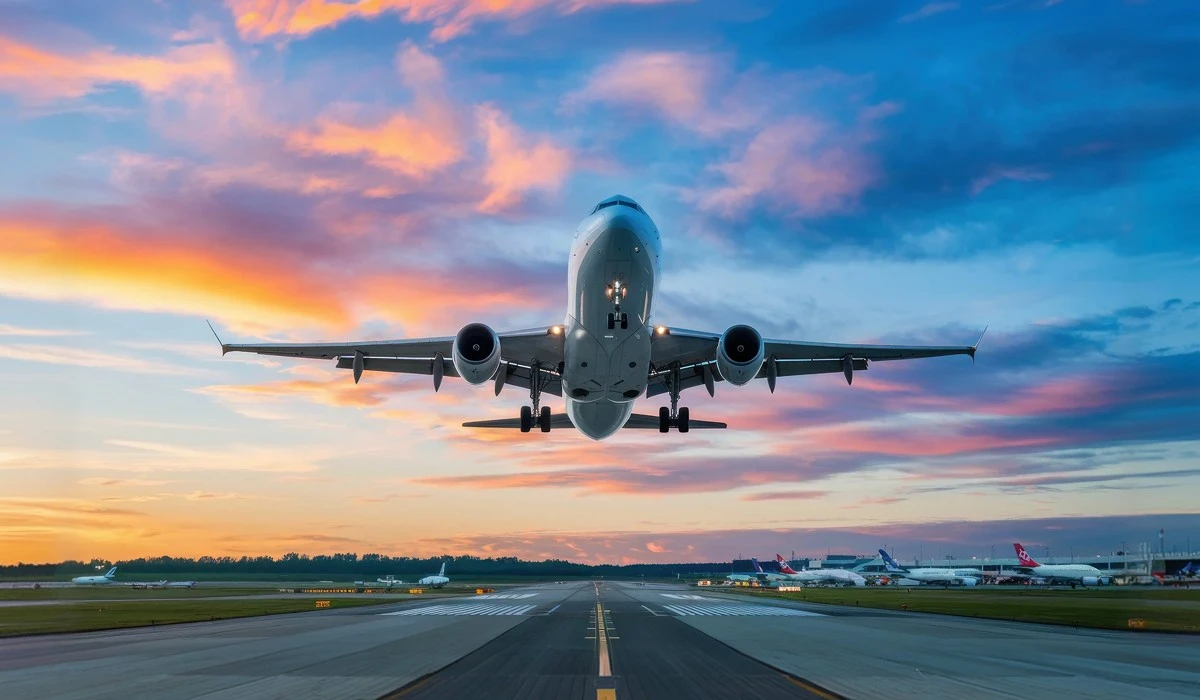
Airlines sell tickets based on destination and speed. However, the industry operates on a foundation of volume and space management. When a plane takes off with empty seats, it burns fuel to transport air rather than people. This operational gap creates a massive carbon debt that no amount of new technology can currently pay off. While the world waits for sustainable fuels to save the day, the real solution sits ignored in the seating chart. We treat fuel economy as an engineering problem. The math proves it is actually a logistics failure.
The Volume Trap
We often confuse newer technology with cleaner skies. A modern aircraft engine runs cleaner than one from the 1990s. However, the sheer number of flights cancels out those engineering gains.
In 2023, researchers writing in Nature Communications Earth & Environment analyzed 27 million commercial flights. These trips covered 6.8 trillion kilometers—enough distance to fly to the sun and back 145 times. This massive movement of metal produced 577 million tonnes of CO2. That number matches the entire annual output of Germany.
New planes cannot keep up with this growth. The volume of flights rises faster than engineers can shave grams off fuel consumption. We fly more people more often, and the total pollution climbs regardless of how sleek the wings look.
What is the main cause of aviation emissions?
Aviation emissions primarily come from burning jet fuel, driven by the frequency of flights and the number of empty seats or premium cabins that reduce passenger capacity.
The industry currently averages an 80% load factor. That means one in every five seats flies empty. To reach maximum utility, airlines need to hit 95% occupancy. Every empty seat represents wasted fuel. Operational changes alone could cut emissions by 50% to 75%, yet the focus remains on building more planes rather than filling the ones we have.
The Luxury Multiplier
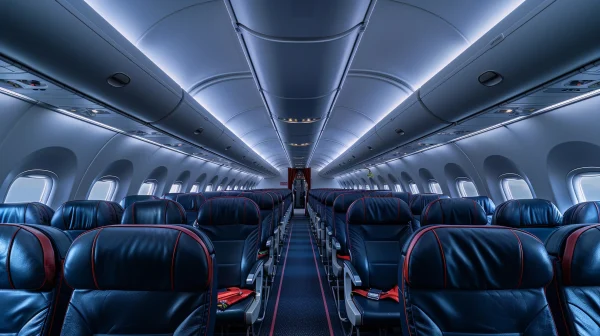
The front of the plane dictates the carbon footprint of the back. A business class seat costs more money because it demands more floor space. That extra legroom forces the airline to carry fewer passengers per flight. A plane filled entirely with economy seats carries more people for the same fuel burn. When an airline installs lie-flat beds and private suites, the emissions per passenger skyrocket.
Lead researcher Stefan Gössling highlights a stark reality: premium seats generate between three and thirteen times more emissions than economy seats. The physical space required for luxury displaces potential travelers, forcing airlines to fly additional planes to move the same number of people.
Inequality drives this pollution spike. Only 1% of the world’s population causes 50% of all aviation emissions. Meanwhile, just 10% of people fly at all in a given year. The wealthy minority in the front cabin creates a disproportionate amount of the damage, while the conservation burden falls on the general public.
Why is first class bad for the environment?
First and business class seats take up significantly more space than economy, reducing the total passenger count and increasing the amount of fuel burned per person.
This disparity shows up in national data. Flights originating in the United States and Australia rank among the most polluting because they rely heavily on premium cabins and lower occupancy. In contrast, flights from India, Brazil, and Southeast Asia operate with far greater economy. These regions pack planes with dense seating and sell more tickets per flight, naturally lowering the carbon cost per person.
The Physics Wall
Engineers have squeezed nearly every drop of performance out of the current airplane shape. The standard "tube and wing" design has dominated the skies for decades, and physics now prevents further major improvements.
Aviation consultant Richard Aboulafia notes that conventional design limits have been reached. Minor tweaks, like the winglets added to planes since 2014, only offer about 2% fuel savings. That small gain vanishes quickly as flight numbers increase.
To break this stalemate, manufacturers must abandon the tube.
- Blended Wing Body: Companies like JetZero are testing designs where the cabin merges into the wing. This could cut fuel burn by 50%.
- Transonic Truss-Braced Wing: Boeing and NASA are developing long, slender wings supported by trusses to reduce drag.
- Open Fan Engines: Removing the casing around engine blades could improve mileage by 20%.
These concepts remain years away. Airbus executive Sue Partridge emphasizes the need for longer, slender wings to increase lift and reduce drag. However, the industry faces a 5,000-plane backlog due to supply chain failures. Airlines are stuck flying older, heavier models while waiting for these radical new designs to leave the drawing board.
The Short-Haul Paradox
Taking a plane for a trip shorter than a movie run-time destroys the math of conservation. The takeoff and landing cycles burn the most fuel, making short trips exceptionally wasteful per kilometer.
Almost half of all global flights cover less than 230 miles. On these routes, the plane barely reaches cruising altitude before descending. Data from Nature Communications Earth & Environment reveals the worst offender in the 2023 study was the route between Ironwood, Michigan, and Minneapolis. This short hop produced 805g of CO2 per passenger kilometer. Compare that to the cleanest route found—Milan to Incheon—which generated only 31.6g of CO2 per passenger kilometer.
As reported by The Guardian, France has attempted to curb this by banning domestic flights where a train trip of under 2.5 hours exists. Critics call the measure symbolic because it only affects a tiny fraction of flights. However, consumer group UFC-Que Choisir notes that plane emissions on these banned routes were 77 times higher than trains. The time loss for passengers was often less than 40 minutes.
How do short flights affect the environment?
Short flights burn a large amount of fuel during takeoff and landing relative to the distance traveled, making them much less efficient than long-haul trips or ground transport.
Long-haul flights generally achieve better performance numbers because they spend more time at cruising altitude. However, the sheer distance means the total fuel burn is still massive. The industry faces a conflict: short flights are wasteful but convenient, while long flights are economical per mile but devastating in total volume.
The Policy Hammer
When technology stalls and corporations prioritize profit, money becomes the only tool left to force behavior changes. Voluntary offsets and sustainability promises have failed to curb the rise in aviation emissions.
Policy experts now propose a Frequent Flyer Levy (FFL). This system scraps the current flat tax model. Instead, every citizen gets one tax-free flight per year. The tax rate then escalates for every subsequent flight taken.
This approach targets the heavy users—that 1% of the population driving 50% of the emissions. A study suggests this levy could reduce overall emissions by 21%. It would also generate €63.6bn in revenue, six times more than current aviation taxes.
The corporate travel sector opposes this, with 46% of companies fighting the idea. They rely on cheap, frequent travel to maintain business connections. However, researchers argue that the funds raised could finance renewable energy projects and public transport improvements, filling the massive gap in climate finance.
The Airship Renaissance
The future of speed might actually look like slowing down. As jet engines hit their physical limits, older ideas are returning with modern materials.
Companies like Hybrid Air Vehicles (HAV) are developing the Airlander 10. This craft combines helium lift with aerodynamic shapes. It generates 90% less CO2 than a standard jet.
Airships excel where jets fail: short inter-city routes. Because they do not need long runways, they can operate closer to city centers. HAV CEO Tom Grundy argues that the "luxury" of high-carbon short-haul travel is no longer sustainable.
These vessels travel slower than jets but offer a practical alternative for trips under 230 miles. They remove the carbon penalty of short hops. By shifting regional travel to airships and trains, the aviation industry could save its liquid fuel for the long-haul routes where no other option exists.
The Business Model Conflict
Airlines are trapped between their need for profit and the planet's need for lower aviation emissions. Their current business model relies on two things: continuous growth in flight volume and high margins from premium seats.
Both of these revenue drivers directly hurt the environment.
- Volume: More flights mean more pollution, regardless of optimization.
- Premium Seats: Bigger seats mean fewer passengers and higher emissions per person.
Lead researcher Stefan Gössling states the current global situation is hopeless under the status quo. He argues that the industry narrative regarding fuel economy is false. The Nature study indicates that the drivers of waste—old planes, premium seating, and empty seats—are baked into the system.
Airlines prioritize the revenue from a business class ticket over the utility of a dense economy cabin. They prioritize adding new routes over ensuring current planes fly full. Until operational discipline becomes more profitable than luxury and volume, the emissions curve will continue to climb.
The Real Lever
The aviation industry pins its hopes on sustainable fuels and futuristic wings, yet these solutions remain distant. The 2030 target for just 6% sustainable fuel usage proves how slow the technological shift really is. Meanwhile, projections show aviation emissions doubling or tripling by 2050.
According to scenarios modeled in Nature Communications Earth & Environment, we already possess the tools to cut emissions by nearly 75%. The answer lies in operational changes: filling every seat, removing business class to increase density, and cancelling inefficient short-haul routes. These choices require no new physics, only a shift in priorities. The barrier is not technology. It is the business of selling empty space and luxury.
Recently Added
Categories
- Arts And Humanities
- Blog
- Business And Management
- Criminology
- Education
- Environment And Conservation
- Farming And Animal Care
- Geopolitics
- Lifestyle And Beauty
- Medicine And Science
- Mental Health
- Nutrition And Diet
- Religion And Spirituality
- Social Care And Health
- Sport And Fitness
- Technology
- Uncategorized
- Videos

