
A Career Shift to Paleontology at Age 62
A Career Shift to Paleontology at Age 62
A plastic T-rex sitting on an office desk patiently counts down the days between a safe corporate routine and a radical life overhaul. Craig Munns stared at his model dinosaur for two decades while running a computer sales consultancy in Canberra. He eventually left his glowing monitors behind to break open ancient rocks. A career shift to paleontology breaks standard professional rules. Society trains workers to seek stability and guard their retirement funds. Munns chased scientific curiosity instead. He traded twelve years of private technology sales for a public library job and part-time university classes. He proved that humans can rewrite their professional timelines at any age. His path exposes the friction between traditional academic tracks and the raw drive to dig up the deep past.
The Illusion of Traditional Retirement
Cultural norms treat age sixty-five as an absolute finish line, training aging professionals to shut dow exactly when their intellectual freedom peaks. Craig Munns views the concept of standard retirement as completely nonsensical. He actively rejects the societal pressure demanding a complete cessation of work. After running his specialized computer business until age fifty-two, he sold the company entirely. He entered an in-between life phase, taking a job at a local public library. This new environment exposed him to diverse populations. He realized he possessed a universal capability to assist others with advanced information. This library role funded his next major step. He enrolled in part-time university classes to chase a childhood fascination.
Munns began his independent business launch at age forty. He poured his energy into building his computer sales consultancy in Canberra. He spent the next twelve years navigating the fast-paced technology sector. This demanding environment required constant adaptation to modern electronics. At age fifty-two, he executed his massive late-stage career shift. He stepped off the corporate treadmill for good. The quieter library setting provided the mental space needed to plan his ultimate move. He balanced his daily library duties with rigorous scientific study. He embraced the heavy workload.
Reinventing Life After Sixty
As detailed in The Guardian, Munns completed his academic milestone at age sixty-two. The publication notes he graduated with honors in paleontology from the University of New England in Armidale, New South Wales. According to the university's Palaeoscience Research Centre records, he earned this degree under the supervision of John Paterson. Today, at age sixty-five, he works at Geoscience Australia. He actively monitors mineral deposits across the continent. He views life as an ongoing adventure requiring constant learning. A late-stage career shift demands an immense willingness to experiment. He completely dismisses standard financial concerns regarding his delayed timeline. He proves that an ongoing intellectual pursuit holds far more value than a predictable, stagnant pension. He treats his sixties as an entirely new beginning.
Deciphering Biostratigraphy and Deep Time
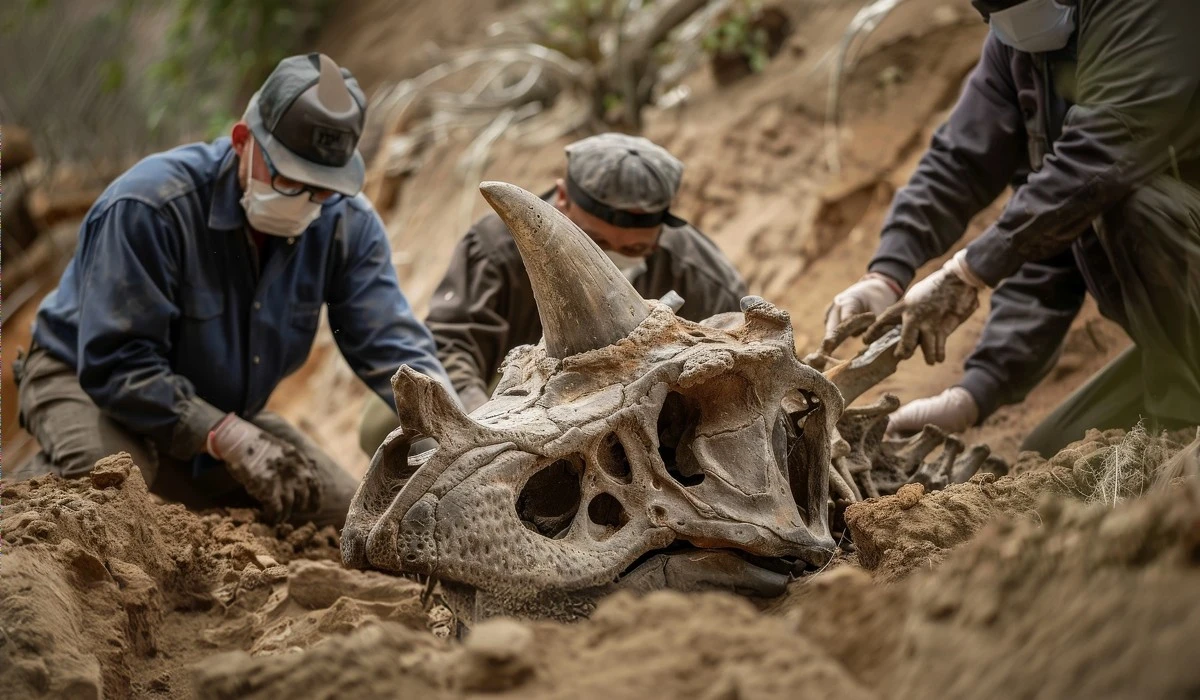
Earth buries its biological history in stacked stone, forcing researchers to read fractured rock like sequential pages in a physical timeline. Munns focuses heavily on biostratigraphy. This paleontology career path relies on specific index fossils to correlate the ages of various rock layers. He studies the biological progression that Earth traps inside these vertical formations. His methodology involves examining long geological core samples pulled straight from the ground. He splits the rock precisely along potential fossil lines to expose the prehistoric fauna hiding within the dark sediment.
Understanding this detailed geological method requires basic scientific definitions. What is biostratigraphy? Biostratigraphy involves dating and matching rock layers using the distinct index fossils buried inside them. Researchers use these specific biological markers to build an accurate historical timeline of planetary evolution. Munns loves this direct, physical observation. He watches evolutionary changes appear right before his eyes in the split rock. He traces how ancient creatures adapted to shifting environmental pressures over millions of years. He maps out entire long-dead worlds using nothing but fractured stone and shell fragments.
The Allure of Spineless Survivors
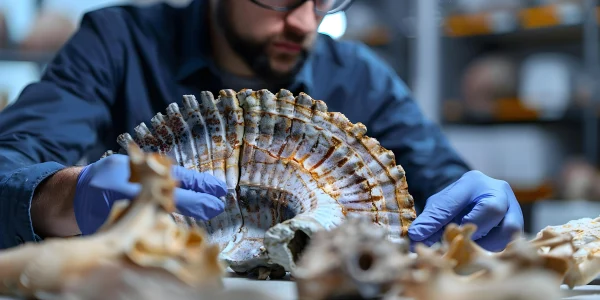
Vertebrate dinosaurs dominate mass media, leaving the actual story of radical physical adaptation to segmented, bottom-dwelling scavengers. Pop culture focuses heavily on massive terrestrial predators. Munns completely ignores the famous giant reptiles. He prefers studying tiny spineless creatures. He gravitates toward prehistoric worms, insects, and lobsters. These organisms demonstrate highly flexible body styles. Their physical forms adapted remarkably well to extreme environmental pressures that wiped out larger animals. He finds ancient trilobites particularly interesting. These marine arthropods feature roughly thirty legs and date back over 500 million years.
The Cultural Obsession with Giant Predators
The public obsession with massive dinosaurs creates a skewed perception of prehistoric life. The Crystal Palace Dinosaurs established this cultural fascination in the nineteenth century. According to an EBSCO historical summary, the infamous Bone Wars further fueled public interest through cutthroat academic competition. Mass media attention heavily favors high-profile science featuring massive teeth and terrifying claws. Munns deliberately steps away from this theatrical spotlight. He finds the real story of survival buried in the dirt. He studies organisms that weathered global catastrophes without massive size or terrifying weaponry. His focus on thirty-legged trilobites highlights the resilience of the ancient ocean floor. These segmented survivors outlived countless giant predators.
This specific field holds its own unique focus. What is invertebrate paleontology? According to the Florida Museum, it is the study of fossil animals that lack a backbone, tracing their detailed evolution through deep geological time. Munns prefers this active evolutionary observation over traditional vertebrate studies. He firmly rejects static museum cellar work. He refuses to spend his days merely protecting stagnant specimens from dust. He wants to see the raw evidence of ancient biological progression out in the light.
Executing a Career Shift to Paleontology
Academic hierarchies prioritize lifelong, unbroken dedication, raising steep barriers against professionals entering the field decades behind schedule. A successful career shift to paleontology requires massive personal persistence. Munns demonstrates a highly unusual trajectory. He entered the field late and completed his undergraduate degree part-time while working. Traditional scientific experts follow a radically different route. Susannah Maidment made her paleontology decision during childhood and followed an unbroken academic progression. She earned an MSci and immediately pursued her doctorate. Maidment studies vertebrates, specializing specifically in dinosaurs like stegosaurs. She stresses that a PhD remains an essential requirement for leading any investigative research roles.
Bypassing Traditional Academic Hierarchies
Universities expect a strong bachelor's prerequisite before accepting any doctoral candidates. Advisors traditionally recommend a broad initial skillset. They push students toward general geology, zoology, or biology degrees rather than early paleontology specialization. The traditional advice favors an early STEM focus and structured programs like the Duke of Edinburgh Award. Munns bypassed these conventional steps entirely. He brought an extensive background in IT, electronics, and sales into the laboratory. His late entry challenges the assumption that earth sciences strictly belong to scientists who committed to the field during grade school. He proves that a career shift to paleontology remains possible for highly dedicated adults.
The educational path for earth sciences demands intense foundational knowledge. Advisors warn against hyper-focusing too early in an academic career. They argue that a broad skillset serves researchers better than immediate specialization. A student must grasp general biology and geology before they can accurately analyze a fossilized environment. Maidment advocates strongly for this comprehensive academic foundation. She believes scientists need a wide lens to understand advanced prehistoric interactions. Munns absorbed this broad knowledge decades after his peers. He applied the analytical thinking from his IT background directly to hard geological problems. He proved that unconventional experience provides a unique analytical edge.
The Tension Between Fieldwork and Museum Curation
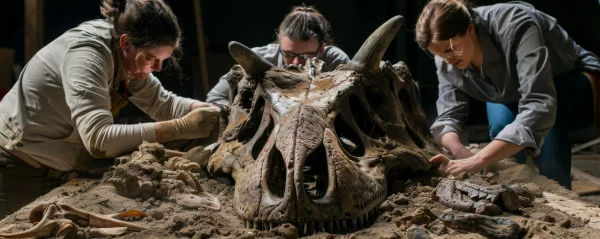
Public science relies heavily on dusty archives, trapping active historical timelines inside strictly controlled storage facilities. A career shift to paleontology forces a choice between active field research and archive management. The profession presents a stark duality between the remote researcher and the facility curator. Munns desires active evolutionary observation out in the field. He specifically avoids dark museum basements. Maidment currently works directly in these archival environments. She serves as a museum curator managing delicate specimen loans and ensuring public database accessibility. Paleontology broadly encompasses all fossilized past life. Researchers study ancient plants, corals, shellfish, and mammals.
Managing the Global Specimen Database
The scope of modern paleontology requires vast organizational networks. Researchers unearth thousands of new specimens every year. Museums must catalog, store, and protect these delicate pieces of history. The curator acts as the gatekeeper for this invaluable data. They manage extensive public databases that allow global scientists to access remote findings. They coordinate involved specimen loans between international institutions. This administrative burden keeps many brilliant scientists trapped indoors. Munns recognized this trap early in his studies. He actively sought a paleontology career path that kept him connected to the physical earth.
Scientists travel to diverse geological exposure sites to find these specimens. Maidment explained to the Natural History Museum that modern active fieldwork locations include deep outcroppings in Morocco and the rugged UK coast, alongside sites like the Morrison Formation in the United States. This constant travel demands a massive educational time commitment. How long does a paleontology degree take? A paleontology degree generally requires four years for a bachelor's, followed by five to seven intensive years to complete a doctorate. The required education dictates the final job title. Those with basic degrees often assist with tedious lab work. Doctoral graduates manage the massive collections or lead the remote field expeditions across the globe.
Reconstructing Climates to Predict the Future
Ancient, ice-free poles hold direct answers for modern global warming trends, linking long-dead environments to upcoming planetary shifts. Paleontology extends far beyond simple bone collection. Historical science builds a predictive framework for the future. Maidment heavily studies historical climate data. She uses the Jurassic ice-free poles as a stark reference point to understand extreme planetary conditions. She uses this ancient data to predict future global biodiversity outcomes. Her career features massive scientific breakthroughs. As she recounted to the Natural History Museum, she achieved a huge career peak in 2015 when she found prehistoric blood cells inside ancient fossils.
The Historical Foundation of Deep Time
The historical foundation of earth sciences creates the framework for every modern discovery. Georges Cuvier shocked the world in 1796 when he proved that entire species could vanish forever. This establishment of the extinction concept permanently changed human perspective. Charles Darwin synthesized this grim reality with his theory of ongoing evolution. Maidment stands on these historical pillars to execute her modern research. According to press coverage from Imperial College, her 2015 prehistoric blood cell finding redefined the limits of fossil preservation. The institution notes her team proved that organic material can survive millions of years of extreme geological pressure.
Munns aims for a slightly different type of daily result. He finds immense satisfaction in monitoring modern mineral deposits for Geoscience Australia. His daily work applies ancient geological data directly to modern industrial needs. This industrial application highlights the broad utility of an earth sciences education. Both scientists read the earth to solve problems. Maidment applies ancient weather data to modern global warming predictions. Munns applies biological stratification data to locate valuable mineral deposits. They demonstrate the massive versatility of a geological background.
The Financial Reality of a Career Shift to Paleontology
Prioritizing intellectual adventure requires a deliberate pay cut, trading immediate financial security for access to half-billion-year-old environments. Shifting from private sector sales to earth sciences guarantees a significant income drop. Munns ran his computer consultancy successfully for twelve years. He understood the high profit margins of the technology industry perfectly. He still accepted the steep salary drop to study ancient earth. He explicitly prioritizes bold adventure over high income. His career shift to paleontology required immense financial experimentation. He spent years carefully contemplating his future path.
Choosing Passion Over Profit in a Late-Life Career Shift
Financial experimentation requires a complete shift in personal priorities. Society equates career success with a constantly rising salary. Munns directly challenged this standard metric. He weighed his computer sales revenue against the thrill of geological finding. He decided that observing biological progression through deep rock layers held infinitely more value. His realization at the public library reinforced this mindset. He learned that assisting people and pursuing knowledge offered deeper satisfaction than chasing corporate profit margins. He structured his late-stage career shift around passion rather than financial accumulation.
He deeply analyzed his next life stage before making the academic leap. He completely dismisses standard financial concerns. He values the direct exposure to raw biological history. A career shift to paleontology offers mental rewards that a corporate bank account simply cannot match. Every newly split rock core reveals biological secrets older than human existence. Munns traded a lucrative technology business for the privilege of reading the earth's oldest records. He embraced the financial reality of starting over. He found true wealth in the fossilized legs of extinct trilobites rather than in computer sales quarters.
The Reality of Unearthing a New Life
The modern workforce trains people to specialize early and cling tightly to their chosen ladders. Craig Munns completely shattered that expectation. He looked at the plastic T-rex on his desk and decided to change his entire reality. He left his computer sales behind to study the deep time of invertebrate paleontology. His story reveals the immense friction between standard societal expectations and genuine scientific curiosity. Munns proves that human intellect never truly expires.
A career shift to paleontology demands deep personal sacrifice. You trade high corporate salaries for dusty rocks, dense biostratigraphy, and constant academic hurdles. You gain direct access to a 500-million-year-old story. Munns shows the world that an adventurous mind always outlasts a safe, predictable routine. He replaced his glowing computer monitors with ancient fractured stone. He continues to monitor mineral deposits today, living completely on his own terms. His timeline proves that an individual can conquer deep time and rewrite their own future simultaneously.
Recently Added
Categories
- Arts And Humanities
- Blog
- Business And Management
- Criminology
- Education
- Environment And Conservation
- Farming And Animal Care
- Geopolitics
- Lifestyle And Beauty
- Medicine And Science
- Mental Health
- Nutrition And Diet
- Religion And Spirituality
- Social Care And Health
- Sport And Fitness
- Technology
- Uncategorized
- Videos

