
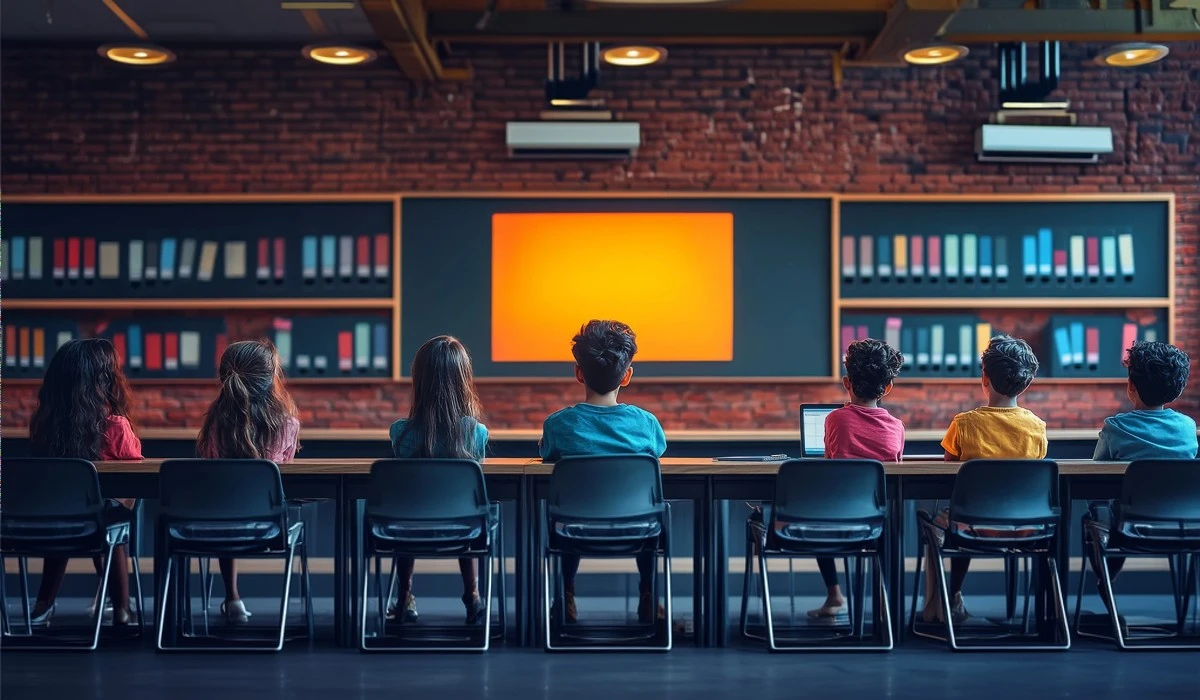
Why Average Class Size Matters For Your Child
When you pack a room too tight, you lose the ability to see the individuals inside it. Most educational debates focus on budget sheets or square footage. However, the true shift happens in the split-second decisions a teacher makes every morning. A quiet student becomes background noise. A struggling reader masks their confusion with silence. The system forces a trade-off between keeping order and actually teaching. According to the Economic Times, this reality explains why private institutions cap their intake at fewer than 20 pupils while state schools constantly expand theirs.
The difference lies in treating a child as a distinct person versus treating them as another unit to manage. Studies archived by the National Center for Biotechnology Information (NCBI) suggest that smaller classes give teachers more time to provide the individual attention students need, whereas high numbers force teachers to prioritize crowd control over connection. The official average class size statistic often masks the reality of students slipping through the cracks. This article examines the tension between numerical efficiency and human potential.
History of Average Class Size
History shows us that we accepted crowding long before we understood the true cost to learning. Photographs from 1961 published by The Guardian reveal the reality of the past, capturing a Class 4A with 43 pupils packed into a single room. The late 1960s were even more severe. One author recalls a class of 48 children, aged nine to ten, crammed together. These historical highs set a precedent for what schools considered acceptable. Records from Richards and Goodwin highlight classes of 48 and 43 pupils respectively. While the 2024 editorial statistic places the average class size at 26.6, this number fluctuates. The definition of a "normal" classroom shifts depending on the era. We often look back at these large groups as a necessity of the time. However, they established a standard that makes today's numbers seem manageable by comparison.
When Average Class Size Dropped
It took a global shutdown to reveal what actually happens when the noise stops and the numbers fall. During the spring 2021 lockdown, a report by the Institute for Government notes that schools reduced capacity significantly, often operating with "bubbles" of no more than 15 pupils to accommodate key worker and SEND children. This accidental experiment provided a rare glimpse into a different way of learning. Teachers immediately noticed a change in the atmosphere. A primary teacher from Liverpool described this period as an unprecedented opportunity. One-on-one math support became possible.
Deep reading discussions replaced surface-level skimming. Even science experiments, usually difficult due to space, became viable. However, this relief was temporary. By March 2021, schools returned to normal capacity. The average class size swelled back up, and the brief window of personalized attention closed. Do smaller classes improve grades? Research from IZA World of Labor shows that reducing the group by just one student predicts achievement gains of approximately 0.048 standard deviations for the entire group. The lockdown proved that lower numbers directly alter the quality of interaction.
The Reality of Teaching Crowds
Experience exposes the gap between policy goals and the physical reality of a classroom. Veteran educators know that managing a mob differs entirely from instructing a class. Kendall, with 42 years of experience, and Manley, with 25 years, have seen this shift firsthand. A former inspector noted that for groups of 48 pupils, the word "teaching" belongs in quotes. True instruction becomes impossible. The teacher acts as a broadcaster rather than a guide. In these environments, special needs often go unrecognized simply due to the volume of students. Why is class size important? Smaller groups allow teachers to spend five minutes per child resolving difficulties instead of just managing the room. Large classes force teachers to scan the room for behavioral issues rather than learning gaps. Students with subtle needs slip past the teacher's radar because the sheer number of bodies demands all available attention.
Space and Resource Limits
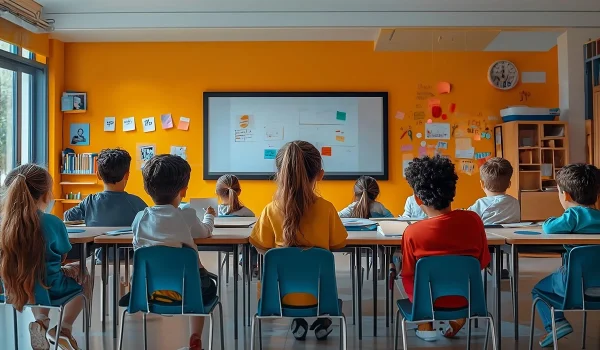
Learning demands space. However, we expect focus in environments designed for containment. The physical constraints of a full classroom dictate what a teacher can and cannot do. Guidance from the National Education Union indicates that physical constraints limit the "free" space available for effective supervision; when a room reaches full capacity, elbow room for writing disappears. Students physically compress against their colleagues, creating a stressful environment. Resources also become scarce. In some crowded settings, six kids must share a single item. This scarcity limits the types of lessons a teacher can plan. Space-dependent science investigations vanish because there is no room to move safely. The environment itself sets a ceiling on performance. Teachers face the expectation of high results despite poor physical conditions. The lack of personal space increases friction between students. It turns the classroom into a pressure cooker instead of a sanctuary for learning.
Why Officials Resist Change
Decisions often prioritize the bottom line over the actual quality of the product. Cost remains the primary barrier to reducing class sizes. Officials often refuse to admit the benefits of smaller groups because acknowledging the truth would require a massive financial commitment. A distinct divide exists between state and private education. Private schools typically cap class sizes at fewer than 20 pupils. An education veteran from Hertfordshire points out that this cap creates a distinct difference in outcomes.
Policymakers deny the superiority of small groups while the private sector uses low numbers as a selling point. What is a good class size? Early years data suggests that groups under 17 students show significant benefits for reading and math development. Despite this, state schools face the obligation to fill their catchment areas. They must prioritize intake volume over the ideal learning environment. This financial burden keeps the average class size high despite the clear advantages of reduction.
No Place to Hide
A smaller room removes the safety of anonymity and forces engagement. While we often assume smaller is always better, it creates a specific pressure for shy students. In a large class, an introvert can find a safe harbor. They can blend into the background and observe without the threat of immediate exposure. The Education Endowment Foundation notes that a smaller room removes the safety of anonymity and allows for higher quality interactions; consequently, mandatory participation increases. "Hands up" moments happen more frequently. The teacher can monitor every student constantly. This intensity benefits academic progress but challenges the student socially. Assessment cycles speed up. Teachers observe students more frequently and communicate deeper progress updates to families. The student loses the ability to coast. For some, this attention fuels growth. For others, the loss of anonymity induces anxiety.
The Introvert's Challenge
Introverts often rely on the crowd to shield them. In a small group, the teacher engages them directly. They must speak, answer, and participate. This pressure forces social development but removes the comfort of silence. The average class size debate rarely considers this psychological pressure.
Unexpected Upsides of Crowds
Sometimes a larger crowd offers a wider window into the world. While personalized attention matters, a larger group provides a broader range of perspectives. A private school blog suggests that larger groups can be superior for capturing a diversity of views. Students in larger classes encounter more peers. This exposure helps build empathy as they navigate a wider sample of personalities. The social environment mimics the reality of the outside world. Resource quality also plays a role. A large class with excellent resources often outperforms a small class with poor tools. We cannot look at the number in isolation. The value of average class size depends on what happens inside the room.
Metric Validity
We tend to trust the number "18" over "30" blindly. However, success drives from personalized conditions rather than the static numerical label. Personalization becomes easier with fewer bodies. However, the number itself does not guarantee learning. The active process of teaching matters more than the raw count.
The Real Impact of Average Class Size
The number on the register dictates the culture of the room. We often treat average class size as a bureaucratic detail. However, it defines the daily experience of every child. A lower number buys time. It buys space. It allows a teacher to identify a specific need before it becomes a permanent failure. While large classes offer social variety, they often sacrifice the individual for the sake of the group. Evidence summarized by the Education Endowment Foundation suggests that reducing class size by 10 pupils accelerates learning by approximately one month. The resistance to change remains financial rather than pedagogical. Until we value the student's experience over the budget sheet, the crowd will continue to obscure the potential of the child.
Recently Added
Categories
- Arts And Humanities
- Blog
- Business And Management
- Criminology
- Education
- Environment And Conservation
- Farming And Animal Care
- Geopolitics
- Lifestyle And Beauty
- Medicine And Science
- Mental Health
- Nutrition And Diet
- Religion And Spirituality
- Social Care And Health
- Sport And Fitness
- Technology
- Uncategorized
- Videos

