
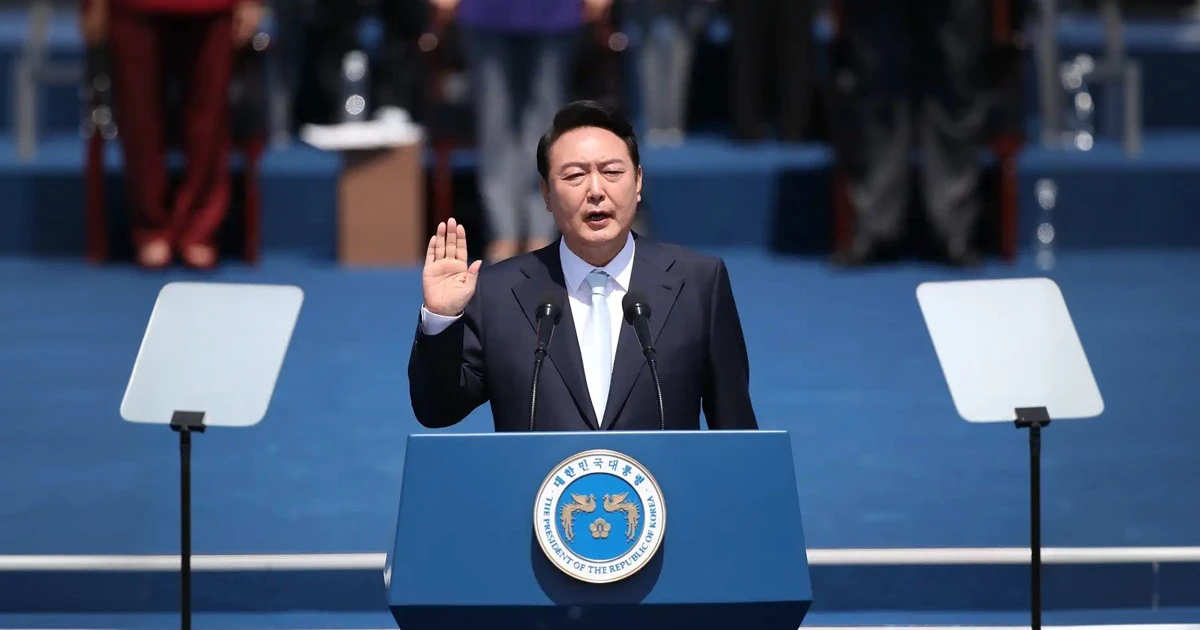
Yoon Suk Yeol Gets 5 Year Prison Sentence
When a leader equates their own survival with national security, they stop serving the public and start warring against it. This shift turns a presidency into a bunker. Yoon Suk Yeol discovered this when his attempt to secure absolute order ended in a cell. The previous president now faces a hard reality after the court delivered the first major verdict.
According to Reuters, the Seoul Central District Court handed down a Yoon Suk Yeol prison sentence of five years, marking a historic fall from grace. This ruling did not happen in a vacuum. It followed a chaotic sequence of martial law declarations, barricades, and a massive police operation. The judiciary sent a clear message that loyalty to the constitution outweighs loyalty to any single individual. Yoon now sits in the Seoul Detention Center, a stark contrast to the executive power he wielded just months ago. His actions, originally framed as a defense of the nation, have been legally redefined as an misuse of power. The country now watches to see if this sentence marks the end or merely the start of a harsher judgment.
The Verdict and Judicial Reasoning
Courts often forgive mistakes, but they punish arrogance when it pretends to be the law. The presiding judge made this clear when delivering the verdict on January 16, 2026. As Reuters reported, the court found that the defendant misused his massive influence to avert the implementation of valid warrants. This went beyond a procedural error. The judge stated that the Security Service had been diverted from its public duty. Instead of protecting the state, it was used for personal protection.
The Yoon Suk Yeol prison sentence serves as a legal correction to this behavior. The Guardian noted that the judge emphasized how security officials affirmed to aid the Republic were effectively privatized, replacing loyalty to the state with loyalty to an individual. Constitutional obligations were ignored. The rule of law was abandoned by the accused. These harsh words accompanied the five-year term. While AP News reported that the prosecution originally requested 10 years for the obstruction charges, the court settled on five. This decision reflects the severity of the obstruction without adopting the maximum penalty. However, the refusal to admit guilt played a significant role. Leniency is usually reserved for those who show remorse. Yoon’s continued defense of his actions likely prevented a lighter punishment.
The Martial Law Decree
Emergency powers usually protect a nation, but sometimes they are weaponized to protect one man’s job. In December 2024, the citizens of South Korea woke up to a declaration of martial law. This drastic move threw the country into immediate turmoil. The justification provided by the president was the need to eradicate "anti-state" forces. He claimed these elements, along with North Korean sympathizers, had paralyzed the government.
The parliament did not agree. Within approximately six hours, lawmakers overturned the decree. This rapid response highlighted the disconnect between the executive branch and the legislature. Yoon argued that his executive powers were exercised within legal bounds. He believed he was sounding an alarm against government obstruction. The courts and parliament viewed it differently. They saw an insurrection. This event started the legal avalanche that ultimately led to the former president’s prison sentence. The clash was total. One side saw a necessary purge of dangerous elements. The other side saw a coup attempt by a sitting president.
The Barricade and Arrest
Physical walls reveal psychological fears when a leader barricades himself against his own police force. In January 2025, the situation had escalated from political maneuvering to physical confrontation. Yoon retreated into the presidential compound. This went beyond a standard security measure; it became a standoff. The nation watched as the symbol of their government became a fortress against justice.
Breaking this deadlock required massive force. Police deployment exceeded 3,000 officers to execute the arrest warrant. This sheer number highlights the intensity of the crisis. It was the first-ever arrest of a sitting South Korean president. The image of thousands of officers facing down their commander-in-chief is now part of history. People often ask about the specifics of this moment. How was Yoon Suk Yeol arrested? Police deployed over 3,000 officers to breach the presidential compound where he barricaded himself. This overwhelmed the personal protection forces inside. The successful breach signaled the end of his active presidency. It paved the way for the legal proceedings that would result in the Yoon Suk Yeol prison sentence.
Inside the Legal Arguments
Legal defenses crumble when a leader claims they consulted advisors who actually knew nothing about the plan. A major part of the prosecution's case rested on the falsification of documents. Yoon was accused of claiming that the Prime Minister and Defense Minister endorsed the martial law decree. Evidence suggested otherwise. The prosecution argued that he failed to consult the full cabinet. This bypassed the checks and balances required by law.
The defense team, led by lawyer Yoo Jung-hwa, pushed back. They argued that the arrest warrant was invalid. They also claimed that cabinet consultation was optional under the law. Their stance was that the martial law declaration was procedurally valid. Yoo Jung-hwa expressed deep regret over the trial's outcome. She characterized the ruling as being driven by political motives rather than justice. Despite these arguments, the court focused on the destruction of evidence. Orders had been given to delete phone data. This attempt to hide information damaged the defense’s credibility. It reinforced the necessity of the Yoon Suk Yeol prison sentence in the eyes of the judge.
The "Anti-State" Narrative
Labeling opponents as enemies of the state is the fastest way to justify breaking the constitution. Yoon’s entire defense hinged on a specific worldview. He believed the government was infested with "anti-state" forces. In his view, these forces were obstructing official duties and threatening the nation. He viewed his actions as a rescue mission rather than a crime.
This perspective creates a dangerous situation. If a leader believes the opposition is illegitimate, they feel justified in bypassing the law. Yoon’s supporters echoed this sentiment. Banners and chants framed the president as a victim. They viewed the judicial process as a witch hunt. To them, his actions were a "Make Korea Great Again" effort. This creates a split reality. In one reality, a criminal broke the law. In the other, a patriot was silenced. The Yoon Suk Yeol prison sentence officially validates the first reality. However, the 30% of the public who believe martial law was not insurrection still live in the second reality. This division remains deep.
Public Sentiment and Political Fallout
A leader can lose an election by a landslide and still believe the history books will vindicate them. The political consequences hit faster than the legal ones. Following the arrest and the Constitutional Court ruling in April 2025, Yoon was officially removed from office. This left a power vacuum that needed to be filled immediately. The country moved to a presidential election in June 2025.
The results were decisive. The opposition party swept into power. Many citizens wonder about the political change. Who replaced Yoon Suk Yeol? Opposition leader Lee Jae Myung won the presidential election in June 2025. This victory for Lee Jae Myung signaled a total rejection of Yoon’s methods by the majority of the voting public. Yet, a hardcore support base remains. Placards held by supporters claim that history will provide the final verdict. They insist his presidency is still valid in their eyes. This sentiment persists despite the Yoon Suk Yeol prison sentence. The country is moving forward under new leadership, but the scar of the martial law decree remains visible in the political scene.
The Ongoing Trials
Resolving one crime often exposes a network of other offenses that demand separate judgments. The five-year sentence is only the first chapter. There are a total of 4 trials associated to the martial law decree. The current verdict covers misuse of power and obstruction. However, more serious charges are looming. The legal system is systematically working through every aspect of the December 2024 event.
The next verdict is scheduled for February 2026. This upcoming decision concerns the insurrection charge. The stakes here are significantly higher. As reported by SCMP, the prosecution is on the lookout for the death penalty for insurrection-related charges. This casts a long shadow over the current Yoon Suk Yeol prison sentence. While five years is a significant amount of time, an insurrection conviction would change the conversation entirely. The defense continues to argue that the actions were taken to eliminate threats. The prosecution argues it was a rebellion against the state. The difference between these two interpretations will decide Yoon’s ultimate fate.
Conditions and Precedent
History rhymes when former leaders trade the executive mansion for a detention cell. Yoon is currently held at the Seoul Detention Center. Observations note that he appears noticeably slimmer. His hair is now streaked with grey. These physical changes reflect the stress of the past year. He is 65 years old, and the environment of the detention center is a far cry from the presidential palace.
He joins other South Korean presidents who have faced this. Park Geun-hye was jailed in 2021 before being pardoned. Chun Doo-hwan was sentenced to death in 1996, though that was later commuted and pardoned. This historical context raises questions. Will Yoon serve the full term? People are curious about the reasons behind the punishment. Why was Yoon Suk Yeol sentenced? He received a 5-year term for misuse of power and obstruction of justice regarding the martial law decree. The Yoon Suk Yeol prison sentence fits into a long pattern of South Korean politics where leaders often face legal reckoning after leaving office. However, the specific charge of insurrection distinguishes this case from simple corruption.

Economic and Security Context
Domestic chaos ripples outward until it threatens the stability of international alliances. South Korea is Asia’s fourth-largest economy. It is also a key U.S. security ally. The instability caused by the martial law decree worried global partners. A stable Korea is essential for regional security. The swift overturning of martial law by Parliament helped calm these fears. It showed that the system worked.
The arrest and trial proved that the rule of law remains strong. Investors and allies watched closely. The Yoon Suk Yeol prison sentence demonstrated that no one is above the law, even the commander-in-chief. This predictability is vital for economic trust. If the president could suspend laws at will, business would suffer. The courts restored order. Now, the country focuses on rebuilding its reputation. The election of Lee Jae Myung provided a clear path forward. The economy requires stability, and the conclusion of the trial helps provide that.
Evidence and Obstruction
Guilt often hides not in the original act, but in the frantic attempt to cover it up. According to the Korea JoongAng Daily, the court placed heavy emphasis on the destruction of proofs, noting that the order to delete phone data was a critical point. It suggested a consciousness of guilt. If the martial law verdict was legal and necessary, the records should have been preserved. Destroying them implied there was something to hide.
This act of obstruction weighed heavily against Yoon. The prosecution requested ten years specifically for these obstruction charges. The judge settled on five, but the message was clear. Tampering with the record is a serious crime. It undermined the defense's claim of transparency. The Yoon Suk Yeol prison sentence was driven as much by the cover-up as by the misuse of power itself. The falsification of documents claiming support from ministers who had not been consulted further damaged his case. It painted a picture of a leader acting alone, outside the bounds of his office.
The Conflict of Loyalties
Systems break down when public servants are forced to choose between the law and their boss. The judge’s statement highlighted a critical failure in the Security Service. These agents were diverted from their public duty. They were used for personal protection instead of national security. This misuse of resources is a hallmark of authoritarian overreach.
The court ruled that loyalty to the Republic must come first. When Yoon demanded loyalty to himself, he broke the compact between leader and state. This philosophical point was central to the verdict. The Yoon Suk Yeol prison sentence reinforces the idea that the presidency is an office, not a person. When the person tries to own the office, the law steps in. The security services are paid by the public to protect the public. Using them to barricade a leader against the police is a violation of that trust. This ruling sets a precedent for future leaders. It draws a hard line between official duty and personal survival.
The Cost of Absolute Power
A president who forgets they are an employee of the people inevitably gets fired by the constitution. Yoon Suk Yeol attempted to use the machinery of the state to secure his position, but that same machinery turned against him to restore order. The Yoon Suk Yeol prison sentence goes beyond a punishment for one man; it reasserts that the law governs the leader, not the other way around.
The five-year term is a heavy price, yet the looming insurrection verdict could demand even more. Yoon sits in his cell, lighter in weight and greyer in hair, a living example of political hubris. South Korea has moved on, electing a new leader and reaffirming its democratic resilience. The courts have spoken, and while the echoes of the martial law chaos still linger, the message is permanent: power without restraint ceases to be power and becomes a crime.
Recently Added
Categories
- Arts And Humanities
- Blog
- Business And Management
- Criminology
- Education
- Environment And Conservation
- Farming And Animal Care
- Geopolitics
- Lifestyle And Beauty
- Medicine And Science
- Mental Health
- Nutrition And Diet
- Religion And Spirituality
- Social Care And Health
- Sport And Fitness
- Technology
- Uncategorized
- Videos

