
The Mind Games Defining Modern Jury Psychology
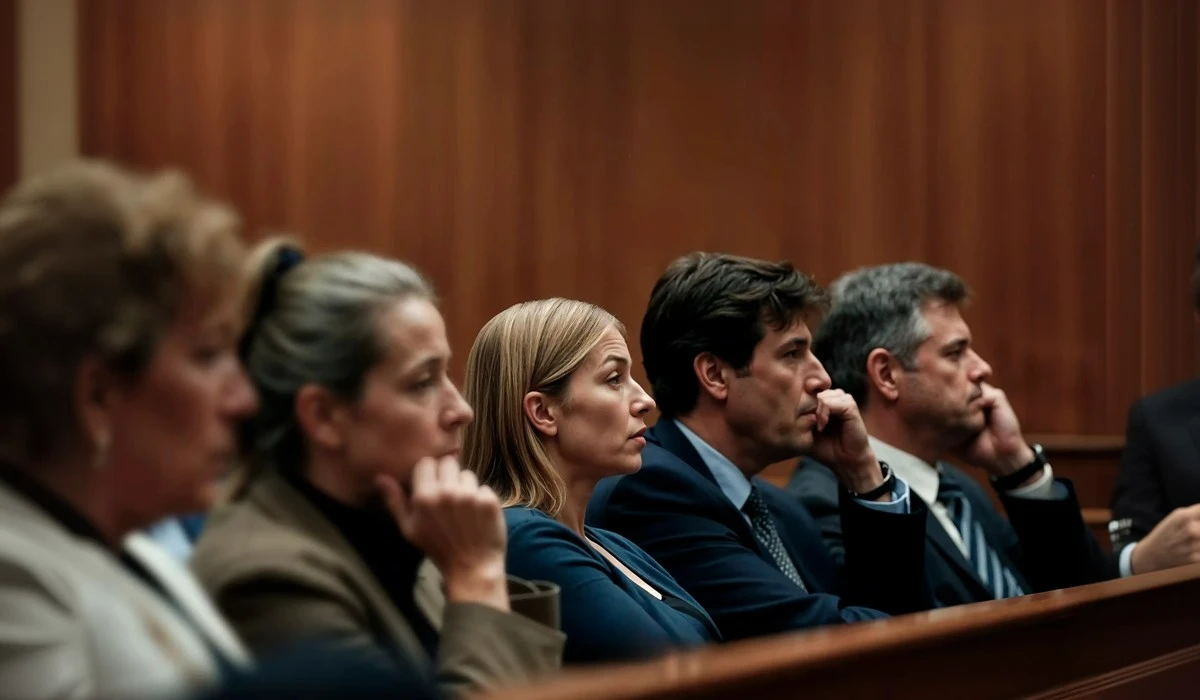
Twelve strangers sit in a wood-paneled room, staring at a defendant they have never met. Most legal teams believe these jurors act like empty vessels, waiting for facts to fill their minds. They assume that if the evidence is clear, the verdict is certain. However, human brains do not function like video recorders or accounting spreadsheets. Jurors bring a lifetime of personal baggage, half-remembered news stories, and deep-seated worldviews into the courtroom. They rewrite the facts rather than simply recording them.
Research published by Taylor & Francis Online suggests that every piece of evidence goes through a personal filter, as pre-trial bias serves as a significant indicator of both the final verdict and the belief in a defendant's guilt. Through research into how people actually process information, you can identify the verdict bias factors that pull a jury toward a specific conclusion before the trial even finishes. Through comprehension of this internal struggle, you can ensure that the truth actually reaches the people making the final decision.
Understanding the Basics of Jury Psychology
Jurors do not simply sit back and wait for the "whole truth." They are active participants who try to make sense of the world the moment they sit down. In the 1950s, the Chicago Jury Project studied thousands of cases. They found that judges and juries agree on verdicts about 80% of the time. The other 20% reveals a significant gap where Jury Psychology takes over. In these instances, jurors allow their personal feelings and social values to override the strict letter of the law.
The Story Model of Decision Making
Nancy Pennington and Reid Hastie introduced the "Story Model" in 1986. They discovered that jurors organize evidence into a narrative. Rather than merely remembering the speed of the vehicle after hearing about a car accident, a juror imagines a story about a distracted parent or a reckless teenager. They create a beginning, a middle, and an end. If your evidence doesn't fit the story they are building in their heads, they will likely ignore it or forget it.
Cognitive Load and Information Processing
Trials often involve hundreds of documents and hours of expert testimony. This creates a massive "cognitive load." According to a study indexed in PubMed, when a human brain feels overwhelmed by such a load, it stops thinking logically and increases its reliance on mental shortcuts or heuristics. People often wonder, how does bias affect a jury's decision? Essentially, bias acts as a cognitive filter that leads jurors to emphasize evidence that fits their existing worldview while ignoring contradictory facts. These mental shortcuts help the brain save energy, but they often lead to incorrect conclusions based on verdict bias factors.
Identifying Primary Verdict Bias Factors
Several specific biases can derail a trial. These are not random errors; they are predictable patterns of human thought. Recognizing them allows you to address them before they harden into a final verdict.
Confirmation Bias and the "Anchor" Effect
Confirmation bias causes people to look for proof that they are already right. If a juror decides they dislike a defendant during the opening statement, they will only listen to evidence that confirms that dislike. This often pairs with "anchoring." In 1997, researchers Mussweiler and Strack showed that the first number mentioned in a courtroom, like a serious damages request, serves as a psychological anchor. Even if the jury thinks the number is too high, the final award often stays close to that first-mentioned figure.
The Halo Effect and Witness Credibility
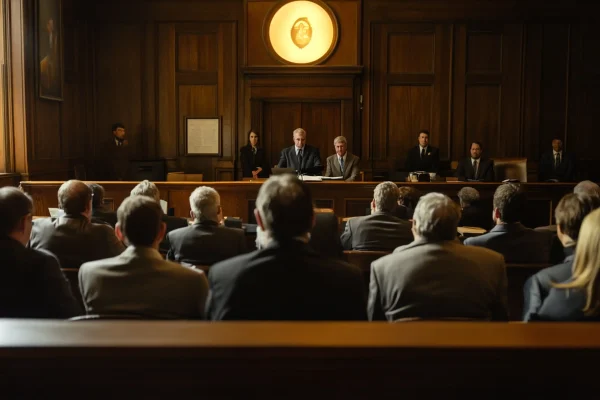
The Halo Effect is a bias where we assume that because a person has one good quality, they have others. Sigall and Ostrove demonstrated in 1975 that jurors give "attractive" defendants shorter sentences for crimes like burglary, though these same defendants receive harsher treatment if the crime involves "swindling." This data suggests that appearance is a major part of verdict bias factors.
Cultural and Socioeconomic Prejudices
An article in PMC highlights that unconscious associations play a significant role in the courtroom, with social cognition acting as a central element in juror decisions. The Implicit Association Test (IAT), developed in 1998, shows that most people carry deep-seated biases regarding race, gender, and wealth. These associations often predict how a juror views "guilt" before a single witness speaks. Furthermore, a study in Silverchair indicates that rape myth beliefs and sexist attitudes can act as verdict bias factors that shape juror decisions and the ratings of a complainant’s believability. Evidence from ScienceDirect indicates that in high-stakes litigation, these cultural lenses act as factors that can change the outcome of a case regardless of the evidence, as jurors are often influenced by pre-existing attitudes rather than objective reasoning.
The Social Dynamics of Jury Psychology
A jury functions as a small, temporary society rather than a mere collection of twelve individuals. Once the door to the deliberation room closes, the group behavior takes over. Individual opinions often melt away when faced with the pressure of the group.
Groupthink and the Pressure to Conform
Solomon Asch’s famous 1951 experiments showed that people will often say something they know is wrong just to fit in with a group. As noted in research from MIT, this "Groupthink" can lead to a fast, but biased, decision because group pressure causes a decline in mental effectiveness and moral judgment. In a jury setting, a lone person who disagrees with the other eleven has less than a 5% chance of changing the final verdict. Unless they find at least one ally, they will likely give up and join the majority to avoid conflict.
The Influence of the "Power Juror"
Not all jurors are equal. Research by Devine in 2012 shows that the jury foreperson often does 30% of the talking. These "power jurors" are usually people with high-status jobs or dominant personalities. Many legal professionals ask, why is jury psychology important in law? It is vital because it provides the tools to predict how individual prejudices will interact and evolve within the collective environment of the deliberation room. Identifying these leaders early is key to understanding the final verdict.
Using Voir Dire to Screen for Verdict Bias Factors
Jury selection is the only time you can actively remove bias from the room. However, most traditional methods of selection fail because they focus on the wrong things.
Beyond Demographics: Psychographic Profiling
Many lawyers pick jurors based on age, race, or job. This is often a mistake. Modern Jury Psychology focuses on "psychographics", a person’s values, lifestyle, and personality. A 30-year-old teacher and a 60-year-old engineer might share the same view on corporate responsibility. Values are three times more likely to predict a verdict than simple demographics. Identifying these shared values helps you spot concealed verdict bias factors.
The Art of the Open-Ended Question
Standard "yes or no" questions allow jurors to hide their biases. According to a journal published by Duke Law, to find the truth during selection, you must use open-ended questions rather than closed questions. Ask jurors about their life experiences or their opinions on fairness. In the 1972 Harrisburg Seven trial, social scientists used these techniques to pick a jury that would be open to the defense’s story. This approach allowed the team to win an acquittal in a case the government expected to win easily.
Strategic Communication and Jury Psychology
Once the trial begins, your job is to feed the jury’s "Story Model." You must present your case in a way that respects how the brain retains information.
Primacy and Recency: The Importance of Timing
The brain remembers the first and last things it hears better than anything in the middle. This is known as the Murdock effect (1962). Jurors are 40% more likely to recall details from the opening and closing statements. If you bury your best evidence in the middle of a long Tuesday afternoon, the jury will likely forget it. You must place your strongest points at the very beginning or the very end of your presentation.
Visual Persuasion and Brain Retention
People process images 60,000 times faster than text. Using charts, videos, and physical evidence helps reduce the "cognitive load" on the jury. Inquisitive minds often ask, can a lawyer influence jury behavior? While a lawyer cannot control a juror, they can utilize psychological framing and emotional cues to make their narrative the most relatable and logical path for the jury to follow. Visuals help anchor your story, making it the most memorable version of events.
The Role of Modern Technology in Analyzing Jury Psychology
Technology has moved trial preparation away from "gut feelings" toward hard data. We can now test a case before it ever reaches a courtroom.
Big Data and Pre-Trial Mock Juries
Mock trials allow legal teams to see which verdict bias factors might pop up in a specific city or county. Through the presentation of a case to a simulated jury, you can see where people get confused or where they stop believing your witness. This data-driven approach removes the guesswork from trial strategy.
Shadow Juries and Real-Time Feedback
In the 1970s, Donald Vinson pioneered the use of "shadow juries," which the American Bar Association describes as a method to improve trial strategy. The Association explains that these participants observe the live trial to provide feedback on juror-style reactions to counsel. This real-time feedback allows an attorney to change their strategy the very next morning based on the actual psychological reactions of the observers.
Ethical Considerations in Psychological Persuasion
Understanding Jury Psychology is a heavy responsibility. This work serves to clear the path for justice rather than to trick people or manipulate the innocent. Every juror enters the court with a lens that distorts the facts. If you do not account for these biases, the "truth" may never actually be heard.
Under the ABA Model Rules of Professional Conduct, lawyers have an ethical duty not to improperly influence jurors or prospective jurors. When you identify verdict bias factors, you are protecting your client from unfair prejudice. You are making sure that the verdict is based on the merits of the case rather than the subconscious whims of twelve strangers. Proficiency in this field is about creating clarity in a room full of noise.
Governing the Future of Jury Psychology
The law exists in books, but people decide it in a room. You can have the best evidence in the world, but if you don't understand the people listening to it, you are leaving the outcome to chance. Every trial is a battle of stories, and the story that wins is the one that best fits the jury’s internal world.
Identifying verdict bias factors requires qualities beyond a law degree; it necessitates a deep sense of empathy and observation. You must look past the surface and see the human being sitting in the juror's chair. When you become proficient in Jury Psychology, you stop shouting at a wall of strangers. Instead, you begin to guide them toward a conclusion that is both logical and fair. In the end, the most successful lawyers are those who understand that the human mind is the most important courtroom of all.
Recently Added
Categories
- Arts And Humanities
- Blog
- Business And Management
- Criminology
- Education
- Environment And Conservation
- Farming And Animal Care
- Geopolitics
- Lifestyle And Beauty
- Medicine And Science
- Mental Health
- Nutrition And Diet
- Religion And Spirituality
- Social Care And Health
- Sport And Fitness
- Technology
- Uncategorized
- Videos

