
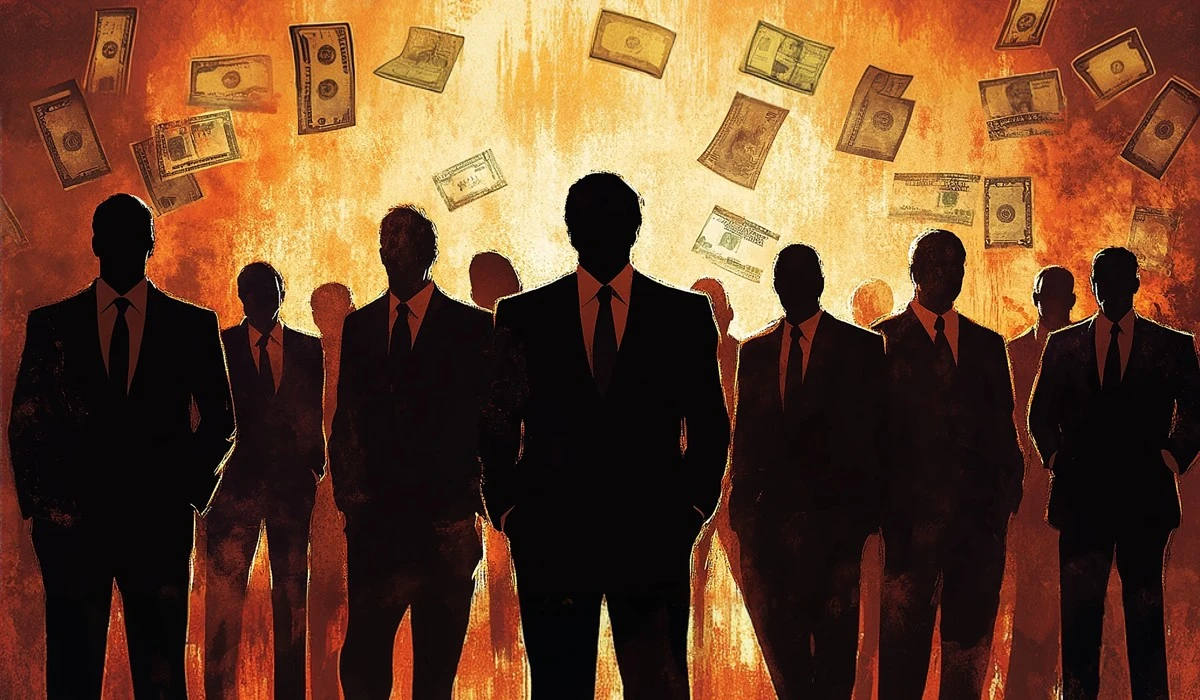
The Massive Gap In US Corporate Crime Records
When you let agencies choose what to count, you inadvertently tell them what they are allowed to ignore. You can find the exact number of car thefts in your neighborhood down to the hour, but if you look for a centralized record of companies fixing prices or poisoning local water sources, you will find a blank page. This absence of information represents a structural choice rather than an accident or technical error. As noted in a press release by Representative Mary Gay Scanlon regarding data gaps, because the government does not mandate the collection of corporate crime data, these offenses effectively do not exist in the public record. We are left with a justice system that tracks street crime with obsession while allowing industrial offenses to dissolve into the ether.
The Ghost of Research Past
Knowledge sometimes moves backward, becoming foggier even as technology advances. In the 1970s, a researcher named Peter Yeager proved that tracking corporate offenses was possible, provided you had enough patience. According to a retrospective by Knowable Magazine and original DOJ reports, Yeager spent 16 months visiting 24 different federal agencies to manually collect records on the 582 largest corporations in the United States.
Yeager did not have the internet or cloud storage. He stored his findings on 80-column computer cards, eventually producing a stack of paper output that stood ten feet tall. His work in 1979 resulted in a comprehensive report on white-collar crime. That stack of paper remains one of the last times anyone saw the full picture. For nearly 50 years, the government has relied on Yeager’s half-century-old hypotheses because no one has attempted to replicate the scale of his work. The corporate crime data available today is actually less comprehensive than what one man collected by hand five decades ago.
A Tale of Two Justice Systems
The way we label an offense determines whether the perpetrator gets handcuffs or a meeting. Data from the Bureau of Justice Statistics indicates that the National Crime Victimization Survey conducts roughly 240,000 interviews with citizens every year to measure street crime. This massive effort ensures that violent crime and property theft are heavily documented, analyzed, and broadcast to the public.
Corporate offenses receive the opposite treatment. Alexis Piquero, the former head of the BJS, points out that experts cannot cite the annual number of arrests for price-fixing because that number is not aggregated anywhere. While the FBI focuses strictly on individual offenses, crimes like book-cooking and industrial negligence are excluded from primary crime indices. How is corporate crime measured? It is currently measured through scattered reports across different agencies rather than a single database. This disparity creates a reality where street crime is treated as a public crisis, while corporate malfeasance is treated as a private administrative issue.
The Maze of Scattered Records
Bureaucracy protects secrets simply by being boring and disorganized. The government possesses records, but they remain trapped in silos. Representative Mary Gay Scanlon describes the current state of affairs as a "total information void." One agency might track environmental violations, while another tracks financial fraud, and a third tracks labor abuses.
These agencies do not talk to each other. They use inconsistent formatting and unique record-keeping styles that make merging the data nearly impossible. A company could be fined by the SEC on Monday and the EPA on Tuesday, and no single regulator would see the pattern. This fragmentation prevents researchers and the public from understanding the true scope of corporate crime data. Without a central repository, there is no way to cross-validate claims from victims or verify if interventions are actually working.
Defining the Uncountable
Laws built for humans break down when you apply them to ink-and-paper entities. As preserved in the headnotes of United States Reports regarding Santa Clara County v. Southern Pacific Railroad, the 1886 Supreme Court case established corporations as "legal persons." This gave companies rights, but it made punishing them difficult. To secure a criminal conviction in countries like the UK, prosecutors often have to prove the "identification principle." This means they must show that the "directing mind and will" of the company—usually senior management—specifically intended to break the law.
This is a high bar to clear. In Germany, criminal liability for corporations does not even exist; companies only face administrative fines. In the US, the theory of "organi-cultural deviance" suggests that group behaviors and economic strain drive crime, yet the law insists on finding a single guilty human. Why is corporate crime hard to prosecute? Prosecutors struggle to prove that specific executives intended to break the law within complicated corporate structures. This legal friction encourages regulators to settle for fines rather than pursuing criminal charges that would require robust corporate crime data to substantiate.

The Price of Looking Away
When punishment becomes a line item in a budget, it stops acting as a deterrent. The modern tool for handling corporate offenses is the Deferred Prosecution Agreement (DPA). This arrangement allows a company to suspend prosecution if they agree to pay fines and meet certain conditions. Critics argue this creates a two-tier system. Individuals go to prison for minor offenses, while corporations pay cash to make felonies disappear.
History suggests this leniency leads to repeat offenses. A 1949 study by Edwin Sutherland found that corporations averaged eight adverse decisions each. Today, companies often treat these fines as the cost of doing business. The stakes are high. The International Labour Organization estimates there are 2.93 million work-related deaths annually worldwide. These fatalities far exceed typical street crime homicide rates, yet they are rarely framed as criminal acts. Without centralized corporate crime data, the economic and physical toll of these recidivist companies remains unmeasured.
The Fight for Transparency
Solutions often fail because the problem benefits powerful people rather than because the task is impossible. The solution to this data gap has been written and ready for years. According to a July 2025 press release from the Senate Judiciary Committee, Representative Scanlon has championed the Corporate Crime Database Act, a bill that has been introduced in eight different years. What is the Corporate Crime Database Act? This legislation would require federal agencies to report corporate offenses to the Bureau of Justice Statistics for public tracking.
The bill aims to mandate reporting to the BJS for aggregation, finally bringing corporate statistics up to par with street crime numbers. However, obstacles remain strong. Industry lobbyists and institutional inertia have kept the bill from passing. Additionally, regulatory rollbacks during the Trump administration weakened the oversight needed to gather this information. There was a small victory in June 2024 when the CFPB launched a registry for nonbank financial companies, but a comprehensive system remains out of reach.
Technology vs. Willpower
We have the tools to solve the puzzle, but the pieces are being held by people who prefer the picture to remain incomplete. Alexis Piquero asserts that there are no technical barriers to creating a national database. We live in a time where consumer behavior is tracked down to the micro-second. The failure to track corporate crime data results from a lack of leadership rather than engineering limitations.
The Department of Justice launched a corporate case resolution website in 2023, but it captures only a fraction of the necessary information. As of 2025, the sector remains opaque. Rep. Scanlon notes that the sector is ready for scrutiny, yet the expert consensus is that we are operating in total ignorance. Until the government decides to turn the lights on, the modern enforcement environment will remain blind to the realities that Peter Yeager saw clearly on his computer cards fifty years ago.
Measuring the Shadows
A justice system that only counts the crimes of the poor while ignoring the crimes of the powerful functions as a management tool rather than a provider of justice. The absence of corporate crime data deprives the public of the ability to assess risk, hold leaders accountable, and understand the true cost of commerce. We have the technology to track these offenses and the legal frameworks to define them. The only missing element is the political will to treat a poisoned river with the same seriousness as a stolen wallet. Until the numbers are counted, the true scale of corporate delinquency will remain a ghost in the machine of American justice.
Recently Added
Categories
- Arts And Humanities
- Blog
- Business And Management
- Criminology
- Education
- Environment And Conservation
- Farming And Animal Care
- Geopolitics
- Lifestyle And Beauty
- Medicine And Science
- Mental Health
- Nutrition And Diet
- Religion And Spirituality
- Social Care And Health
- Sport And Fitness
- Technology
- Uncategorized
- Videos

