
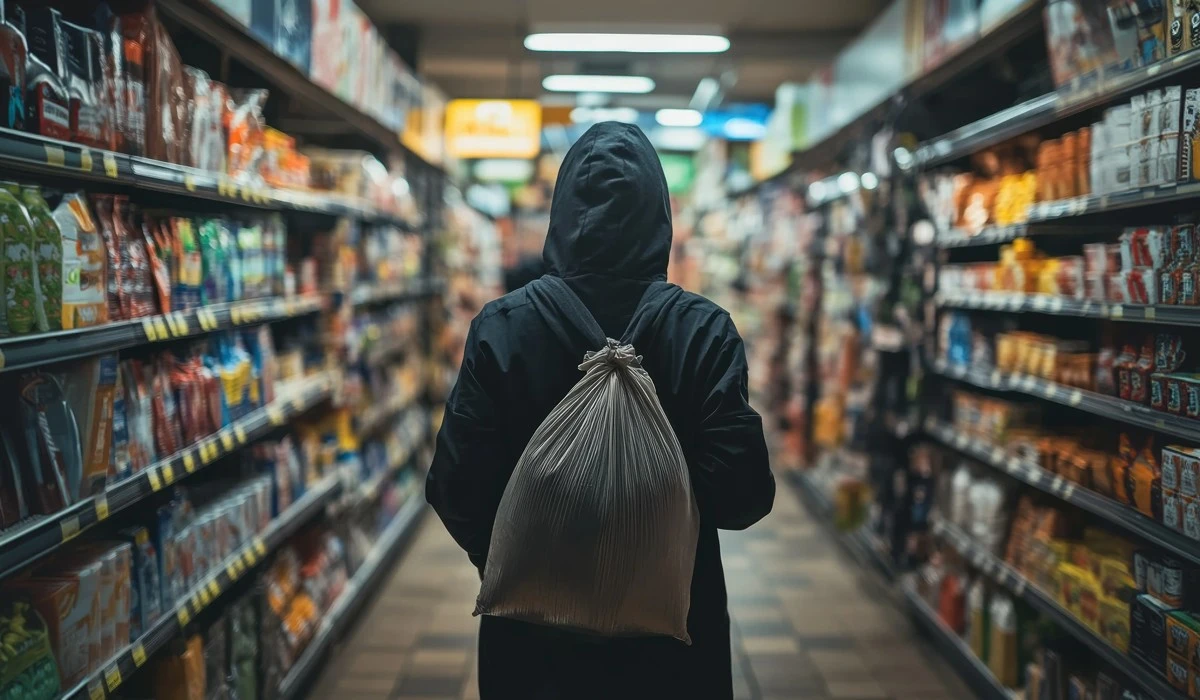
Shoplifting Incidents Hit 20 Million
When you make a crime easier to commit than to report, you don't just get more crime; you accidentally create a thriving, unregulated marketplace. Most people assume theft happens because someone is desperate or hungry, but that old narrative hides a much sharper reality. The current rise in retail crime isn't a random spike in disorder; it is the logical result of a system that prioritizes fast processing over actual consequences. By setting specific financial limits on what counts as a "serious" offense, the law has essentially handed thieves a calculator and a business plan. They now operate with the precision of a logistics company, knowing exactly how much they can take before the handcuffs come out.
This creates a strange world where the police statistics you see on the news have almost no relationship to what happens on the street. Official numbers suggest a manageable problem, but store owners live in a different reality where theft is a daily routine, not an emergency. The primary keyword here is shoplifting, but even that word feels too small for what is actually happening. We are watching the industrialization of theft, where gangs fulfill specific orders for high-value goods and local businesses bleed money just to keep the doors open.
The Rise of Shoplifting Entrepreneurs
Modern theft has progressed from a crime of desperation into a calculated career path with profit margins and supply chains. The classic image of a teenager sneaking a candy bar has been replaced by adults who treat stealing like a 9-to-5 job.
These offenders are not random; they are "shoplifting entrepreneurs." They do not steal what they want; they steal what they can sell. Criminologists like Professor Taylor point out that spikes in theft, especially around Christmas, are driven by specific market demands for black market goods. If a local pub needs cheap meat or parents need expensive toys, these thieves fulfill that order. It is a business transaction where the inventory just happens to be stolen.
This shift changes everything for store owners. Abigail Donaldson, a retailer facing this daily, notes that organized middle-aged men now target her high-end stock. They are not nervous kids. They are professionals who know the layout of the store better than some employees. They target specific items like designer wear or viral trends like Jellycats because they know these items hold value online. The theft is not impulsive; it is inventory acquisition for a secondary market.
The Gap Between Reports and Reality
Official crime statistics do not measure the actual crime rate; they only measure the public’s remaining faith in the police. When trust drops, the numbers go down, creating a false sense of security while the streets get wilder.
The official records from the Office for National Statistics (ONS) show a 13% hike in shoplifting, totaling 529,994 offenses in the year leading up to June 2025. That sounds like a lot, but it is barely a fraction of the truth. The British Retail Consortium (BRC) estimates the real number of incidents sits closer to 20 million annually. That is a staggering difference. It means less than 3% of these crimes ever make it onto a police computer.
Tom Ironside from the BRC explains that official data minimizes the true scale of the problem. Retailers have simply stopped calling the police because they do not believe anyone will come. In a recent survey conducted for the BRC's 2025 Crime and Shrink Benchmark, 61% of respondents described the police response to incidents as "poor" or "very poor." If you run a business and you know the police won't arrive, you stop wasting time on the phone. This silence warps the data. It looks like crime is under control, but in reality, it has just gone off the grid.
Many people wonder why is shoplifting increasing so rapidly in specific areas? The answer lies in this lack of deterrence; when thieves realize reporting is low and police presence is scarce, they strike the same targets repeatedly without fear of arrest.
The Legal Loophole That Encourages Theft
A law meant to streamline paperwork often accidentally creates a "free pass" zone where stealing carries less risk than a parking ticket. The intent was efficiency, but the outcome was a green light for petty crime.
The turning point was the Anti-Social Behaviour, Crime and Policing Act of 2014. This legislation introduced a threshold of £200. If the price of the stolen goods falls below this amount, the law treats it as a summary offense. The goal was to speed up the justice system, but critics argue it effectively "decriminalized" low-level theft.
Thieves are smart. They know the math. They can walk into a store, calculate the worth of the items in their basket, and ensure they stay under the £200 limit. If they get caught, the consequences are minimal—often just a fine they will never pay. David Spencer from a leading think tank argues that this rule trivializes the crime. It sends a message that stealing small amounts is not a "real" crime. But for a small business, losing £190 of stock every day is a disaster. It threatens the economic viability of small towns, turning high streets into ghost towns because shops simply cannot afford to stay open.
Organized Crime Takes Over
While police focus on local nuisances, international syndicates are running retail theft with the precision of a corporate logistics department. This is not just about local addicts needing a fix; it is about global networks moving money and goods.
Data tracks 63 specific organized criminal gangs currently operating in this space. While 26 of these groups originated in the UK or Ireland, the remainder have ties to Eastern Europe. They are mobile, efficient, and ruthless. Over a five-year period, these 63 groups alone stole £2.4m worth of goods. They travel across the country, hitting multiple stores in a day, often targeting affluent areas where high-value stock is readily available.
They operate like a business. They have leadership, drivers, and foot soldiers. The items they steal—champagne, beauty products, high-end cuts of meat—are moved quickly through established networks. This is why a report by the House of Lords Committee recently advised phasing out the term "shoplifting" in favor of "shop theft," explicitly recommending that the Home Office and police adopt the new terminology in all cases to reflect the severity of the crime. The word "shoplifting" sounds trivial and small. What these gangs do is large-scale organized crime.
A common question is do organized gangs commit shoplifting regularly? Yes, they treat it as a low-risk, high-reward revenue stream, often using the proceeds to fund other serious criminal activities like drug trafficking.

The Cost of Justice
Catching a thief is only the first step in a bureaucratic marathon that usually ends before it even reaches the finish line. The justice system moves so slowly that the punishment loses all connection to the crime.
Between 2014 and 2024, the time it takes to process a case from offense to completion in a Magistrates' court nearly doubled. It went from 32 days to 59 days. In the world of crime prevention, speed matters. swift consequences deter behavior. Delayed consequences are ignored.
Even when cases are solved, the outcomes are weak. Keeley, an ex-shoplifter, explains that prison sentences are often short and ineffective. They do not address the root causes, such as addiction, so the offender is released and immediately returns to the same store to steal again. It is a revolving door.
Furthermore, a massive number of cases are closed with no suspect at all. In the 2024-25 period, around 290,000 cases were shut because the police could not find the perpetrator. This low detection rate emboldens thieves. They know the odds are heavily in their favor.
Violence on the Frontline
The cash register is no longer just a point of sale; it has become a dangerous friction point where financial loss turns into physical assault. The cost of theft isn't just lost inventory; it's the blood and bruises of the people trying to do their jobs.
According to the BRC, violence against retail staff has reached terrifying levels, increasing by over 50% to more than 2,000 incidents reported everyday in the 2023/24 period. This includes verbal abuse, threats, and physical attacks. Paddy Lillis, a union leader, highlights that these persistent offenses trigger severe anxiety. The impact extends far beyond the financial loss of a few bottles of wine. It damages the mental health of workers who go to work every day fearing for their security.
Muhammed Rabani, a store owner in Stockton-on-Tees, deals with this daily. For him, shoplifting is a confrontation that risks his family's safety. He has been physically assaulted just for trying to stop someone from taking his livelihood. When 47% of retail staff say they fear for their security, the shop floor starts to feel more like a battleground than a place of business.
The High Cost of Prevention
Businesses are forced to build private police forces because the public one has retreated. The burden of security has shifted entirely onto the shoulders of the shopkeeper.
Retailers spent a record £1.8bn on crime prevention recently. This money goes into security guards, CCTV systems, tagging technology, and reinforced doors. That is £1.8bn that could have been spent on wages, lower prices, or expansion. Instead, it is a "crime tax" that every business pays just to survive.
Paul Cheema, a store owner, states that stock losses are becoming unsustainable. When you combine the loss of goods with the cost of trying to prevent the theft, the margins disappear. For a small family business like Rabani’s, the losses amount to roughly £900 a month. That is £10,000 a year stripped directly from a family's income. It is the difference between profit and loss, or between staying open and closing down.
Customers often ask how much do businesses lose to shoplifting annually? The BRC notes that losses from customer theft reached a record £2.2 billion in 2023/24, and beyond this direct stock loss, the hidden costs of security upgrades and higher insurance premiums push the total economic effect into the billions.
A Geographic Lottery
Your risk of being robbed depends less on your security system and more on which side of the regional border your shop sits. Crime is not evenly distributed; it clusters where the system is weakest.
Cleveland has earned the unwanted title of "shoplifting capital," with a rate of 13.6 offenses per 1,000 people. The North East of England is a high-risk region overall, facing 11.5 offenses per 1,000 people. In contrast, Dyfed-Powys in Wales is the safest region, with only 3.9 offenses per 1,000.
These disparities show that policing strategies and local economic conditions matter. While Northern Ireland saw a 3.9% decrease in recorded offenses, Scotland saw a 15% increase, and England and Wales saw a 13% jump. The Retail Crime Action Plan launched in October 2023 promised a focus on prolific offenders, and the government has promised 3,000 additional neighborhood officers by Spring 2026. However, for a shop owner in Cleveland watching their shelves get cleared out today, 2026 feels a lifetime away.
The Shoplifting Reality Check
The crisis we see on our high streets is not an accident; it is the predictable outcome of a system that lost its balance. When you lower the stakes for theft, you raise the stakes for everyone else. We have created a marketplace where shoplifting is a viable business strategy for gangs and a daily nightmare for workers.
The numbers—20 million incidents, £1.8 billion in prevention costs, 2,000 attacks a day—tell a clear story. The current approach of slow justice and high thresholds is failing. Until the system treats the theft of a £100 item with the same seriousness as the assault that often accompanies it, the shelves will continue to empty, and the doors of small businesses will continue to close. We do not just need more police; we need a system that remembers that every theft is a violation of someone's safety and livelihood.
Recently Added
Categories
- Arts And Humanities
- Blog
- Business And Management
- Criminology
- Education
- Environment And Conservation
- Farming And Animal Care
- Geopolitics
- Lifestyle And Beauty
- Medicine And Science
- Mental Health
- Nutrition And Diet
- Religion And Spirituality
- Social Care And Health
- Sport And Fitness
- Technology
- Uncategorized
- Videos

