
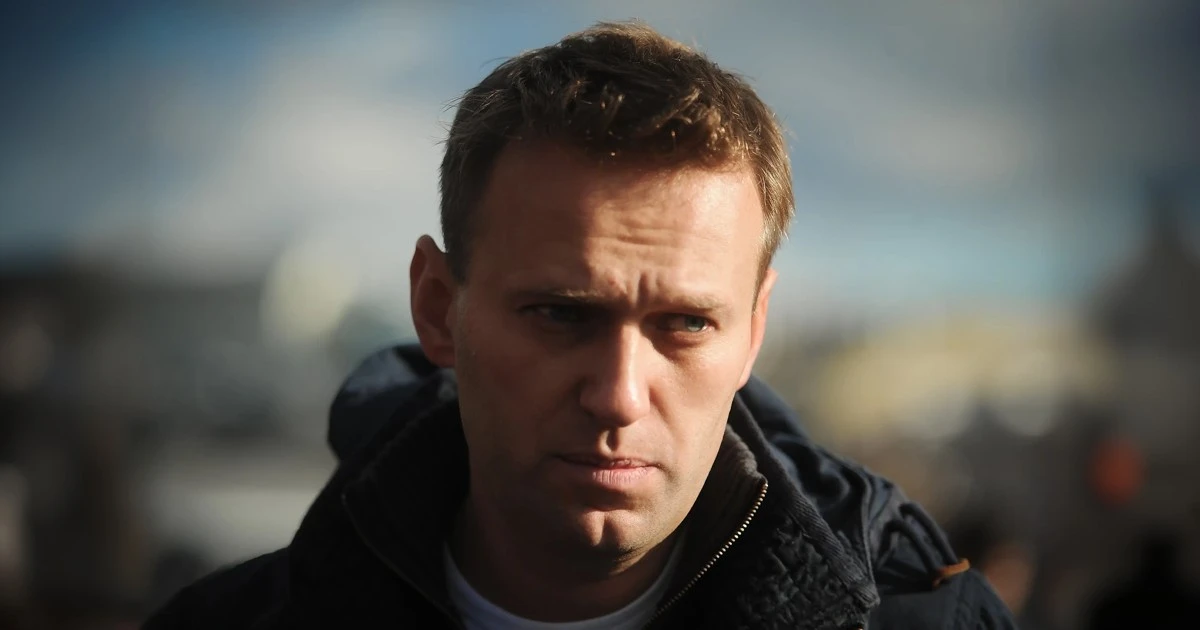
Image Credit - By Mitya Aleshkovskiy, Wikimedia Commons
New Evidence Links Frog Toxin To Navalny Death
A tropical frog serves no purpose in the Arctic Circle unless someone brings it there to kill. When Alexei Navalny collapsed in the "Polar Wolf" penal colony on February 16, 2024, Reuters reported that his team was told the official Russian cause was "Sudden Death Syndrome," and his body would be withheld pending investigation. The vagueness of that diagnosis acted as a shield. It bought time for the chemical traces to degrade and for the world to move on. But biology keeps a more accurate record than bureaucracy. Two years later, that record has opened.
Forensic teams from five nations have now identified the specific agent that stopped the opposition leader's heart. It was not a natural event. The culprit is a substance rarely seen outside the rainforests of Ecuador or high-security laboratories. This discovery shifts the narrative from a tragic prison death to a calculated bio-chemical assassination. The confirmation of Navalny Epibatidine poisoning rewrites the history of his final moments and exposes a sophisticated method of elimination that almost went undetected.
The Munich Revelation
Political timing often reveals more about an investigation than the forensic report itself. The Munich Security Conference in February 2026 became the stage for a coordinated disclosure that shattered the silence surrounding the case. Representatives from the UK, France, Germany, Sweden, and the Netherlands stood together to deliver a unified conclusion. Their intelligence services and toxicology experts had spent two years analyzing bio-samples smuggled out of Russia. The consensus was absolute.
The findings ruled out natural causes entirely. The data pointed to a deliberate introduction of a high-potency neurotoxin. Instead of random heart failure induced by the harsh conditions of the IK-3 colony, it represents a targeted strike. The allies explicitly identified the Russian state as the only actor with the means, motive, and opportunity to acquire and deploy such a rare agent within a maximum-security prison.
What caused Navalny's death?
New forensic evidence, cited in a joint statement by the UK, Sweden, France, Germany, and The Netherlands, indicates he died from Epibatidine poisoning, a potent neurotoxin originally derived from poison dart frogs.
The announcement named a cause while simultaneously challenging the Kremlin's sovereignty over the truth. Waiting until the evidence was irrefutable allowed Western allies to strip Moscow of the ability to claim ambiguity. The presence of Epibatidine residues in the body samples serves as a chemical fingerprint. It links the death directly to advanced bioweapons development rather than simple neglect or natural decline.
The Toxin Profile: Nature’s Blueprint
Nature creates poisons to protect small creatures, but labs refine them to eliminate specific targets. The substance in question, Epibatidine, traces its lineage to Epipedobates anthonyi, commonly known as Anthony’s poison arrow frog. In the wild, these amphibians secrete the toxin through their skin as a defense against predators. They inhabit the rainforests of Ecuador and Peru, thousands of miles from the frozen isolation of the Russian Arctic.
The Navalny Epibatidine poisoning case highlights a disturbing shift from biology to weaponry. While the frog produces this alkaloid naturally, it cannot do so in captivity. The toxin comes from the frog’s diet of specific ants and mites. A frog raised in a zoo is harmless. This biological fact proves that the poison used against Navalny did not come from a smuggled pet. It came from a test tube.
Sky News analysis and expert testimony suggest the substance was almost certainly synthesized in a laboratory. State-run facilities possess the equipment to replicate the molecular structure of the toxin without needing the frog itself. This synthetic production allows for a purer, more concentrated form of the poison. It turns a defensive biological quirk into a stable, deployable weapon.

Image Credit - By Ltshears, Wikimedia Commons
How the Poison Kills
The body’s communication system becomes its own worst enemy when the wrong signal gets locked in the "on" position. Epibatidine acts as a master key for the nervous system, but it refuses to open the door. It targets nicotinic acetylcholine receptors, the tiny switches that tell muscles to move and the brain to feel pain. When the toxin hits these receptors, it floods them with stimulation.
This overstimulation creates a chaotic chain reaction. At first, the victim might feel a surge of alertness or intense sensation. Quickly, however, the muscles seize up. The diaphragm, responsible for drawing breath, contracts and stays tight. It cannot relax to exhale or inhale. The victim remains fully conscious as their body turns into a rigid cage.
Is Epibatidine stronger than morphine?
Yes, a 2018 PMC review article estimates that Epibatidine is between 100 and 200 times more potent than morphine. The lethality is terrifyingly efficient. Professor Alastair Hay, a toxicology expert, explained that the victim suffers respiratory blockage. The lungs fail to inflate. The heart struggles against the immense pressure of systemic paralysis. Death arrives via asphyxiation. The person effectively suffocates while surrounded by air. This aligns with the "Sudden Death Syndrome" label initially used, as the final collapse resembles a massive cardiac or respiratory event to the untrained eye.
The Numbers Game
Precision matters when discussing lethality. The potency of this toxin makes it an ideal choice for covert operations. According to the BBC and toxicologist Jill Johnson, Epibatidine is 200 times stronger than morphine. The Guardian, citing other sources, places the figure at 100 times the strength of morphine. Even at the lower estimate, the substance is incredibly dangerous. A microscopic amount is sufficient to kill an adult male.
Reuters noted that Navalny was 47 years old at the time of his death, and reports from The Guardian document that he had survived three years of harsh conditions including solitary confinement. His physical resilience was already compromised. A dose that might only hospitalize a healthy person could easily prove fatal to him. The Navalny Epibatidine poisoning theory relies on this extreme potency. An assassin would not need to administer a large volume of liquid. A touch, a contaminated piece of clothing, or a tainted meal would carry enough of the synthetic agent to end his life.
Geopolitical Denial
Denials work best when you accuse the accuser of creating a distraction. The Kremlin’s response to the allegations was swift and dismissive. According to The Guardian, the Russian embassy in London branded the report as "necro-propaganda" and dismissed the findings as Western fables. The strategy is to frame the investigation as a Western information campaign designed to divert attention from domestic problems in Europe and the UK.
Moscow insists that Navalny died of natural causes. They portray the detailed forensic reports as fiction fabricated by enemies of the state. However, the international community views this dismissal through the lens of history. Hamish de Bretton-Gordon, a chemical weapons expert, noted that Kremlin denials have a track record of untrustworthiness. The strength of the scientific data makes it difficult for neutral observers to accept the "natural causes" defense.
The accusation carries serious legal weight. If Russia used a synthetic neurotoxin to kill a political prisoner, it stands in violation of the 1972 Biological and Toxin Weapons Convention (BTWC) and the 1993 Chemical Weapons Convention (CWC). These are not just diplomatic agreements; they are the foundation of global biological safety. The Navalny Epibatidine poisoning thus becomes a crime of international magnitude, suggesting a state actor operating outside the boundaries of warfare and law.
The Forensic Challenge
Standard drug tests look for common mistakes, not state-sponsored assassinations. One reason the truth took two years to surface is the difficulty of detection. Routine toxicology screens in hospitals check for opioids, amphetamines, and common poisons. They do not look for rare alkaloids found in South American frogs.
Toxicologist Eric Franssen explains that exotic agents remain invisible to standard screens. To find them, you must know exactly what you are looking for. The investigators needed advanced forensic tools, such as gas chromatography and mass spectrometry. These machines separate chemical mixtures at a molecular level. They look for specific metabolites—the chemical leftovers produced when the body tries to break down the poison.
Where does Epibatidine come from?
The toxin is naturally secreted by the Phantasmal poison frog in Ecuador, but it is likely synthesized in labs for weaponization. Traces of these metabolites lingered in the lung, heart, and urine samples preserved from Navalny’s body. The chemical signature of Epibatidine is distinct. Once the labs tuned their equipment to search for this specific structure, the evidence appeared. This confirms that the delay in the announcement resulted from the time required to perform deep-level forensic analysis rather than a lack of evidence.
Synthetic vs. Organic
A poison dependent on a specific diet of ants becomes a consistent weapon only when a chemist intervenes. The "poison dart frog" narrative creates a mental image of a primitive weapon, yet the reality is high-tech. Obtaining enough wild frogs to extract a lethal dose for a targeted hit is logistically absurd. It introduces too many variables.
The Soviet Union and its successor state have a long history of biological research. Institutes like GosNIIOKhT have documented capabilities in synthesizing organic compounds for military and intelligence use. Epibatidine was once investigated by Western pharmaceutical companies as a potential non-opioid painkiller under the name ABT-594. Research stopped because the gap between a pain-relieving dose and a lethal dose was too small.
That narrow "therapeutic index" renders it a failure as a medicine while proving a success as a poison. The Navalny Epibatidine poisoning likely utilized a synthesized version of this failed drug. A lab-made variant ensures consistent potency. It degrades in a predictable way. It removes the need for smuggling live animals. The use of a synthetic agent points to a structured, well-funded program rather than a rogue operator.
The Pattern of Elimination
One instance of poisoning is a tragedy, but a repeated methodology suggests a standard operating procedure. This was not the first time Alexei Navalny faced a chemical threat. In 2020, he nearly died after being exposed to Novichok, a military-grade nerve agent. He survived only because he received emergency medical treatment in Berlin.
The shift from Novichok to Epibatidine suggests an adaptation in strategy. Novichok is a known signature of Russian intelligence; its use screams "state involvement." Epibatidine is more obscure. It confuses the initial diagnosis. It mimics heart failure. If the body had been buried immediately without independent autopsies, the cause of death would have remained "Sudden Death Syndrome" forever.
Yulia Navalnaya, Alexei’s widow, stated that the independent labs have finally provided the proof of murder. She emphasized that this represented a final act of elimination rather than a mere death in custody. The prison administration at IK-3 had total control over Navalny’s food, water, and environment. The introduction of a neurotoxin required access that only the staff or intelligence officers possessed.
Medical Nuance and Interaction
Poisons rarely work in isolation when the human body is involved. Professor Alastair Hay suggested that the lethality of Epibatidine could be boosted by combining it with other drugs. This compound effect occurs when two substances interact to produce an effect greater than the sum of their parts. A sedative mixed with a paralytic, for example, would incapacitate the victim faster while masking the initial symptoms of respiratory distress.
This medical nuance complicates the picture for defenders of the official Russian narrative. If Navalny had simply died of a blood clot, the toxicology report would be clean. The presence of a neurotoxin allows for no innocent explanation. There is no reason for an inmate in the Arctic to have frog poison in his blood.
The Navalny Epibatidine poisoning investigation also revealed that the toxin acts quickly but leaves a window of suffering. The paralysis of the respiratory muscles does not cause immediate unconsciousness. The victim is aware they cannot breathe. This details adds a layer of cruelty to the assassination. Far from a painless exit, it was a violent physiological shutdown.
International Repercussions
Discovering the weapon changes the diplomatic arena. The UK Foreign Secretary, Yvette Cooper, asserted that the sole capability and motivation for this act lie with the Russian government. This statement moves the issue from criminal justice to international security. It implies that Russia is willing to deploy chemical weapons against individuals, regardless of treaties or borders.
The European allies—France, Germany, Sweden, and the Netherlands—have backed this assessment. They view the use of Epibatidine as a breach of the "red line" regarding chemical weapons. If a state can synthesize and use obscure toxins to silence critics, no dissident is safe. The method bypasses radiation detectors and standard security screenings.
The Munich announcement serves as a warning. It signals that Western intelligence has developed the capacity to identify even the most obscure biological agents. The message to Moscow is clear: you can hide the method for a while, but you cannot hide it forever. The science will eventually catch up.
The Significance of the Location
Geography enforces control. The "Polar Wolf" colony is located in the Arctic Circle, one of the most remote inhabited places on Earth. Isolation is the primary security feature. This isolation allowed the perpetrators to control the timeline of the body's release. It allowed them to control the initial medical response.
However, the isolation also implicates the state. No random visitor could slip into IK-3. No package enters without screening. The delivery of the toxin required official channels. Whether it was in his tea, on his clothes, or on a door handle, the poison traveled through the prison's security filter. This fact dismantles the idea of a rogue guard or inmate action. Access to Navalny was strictly monitored.
The Navalny epibatidine poisoning required a clear chain of command. An order had to be issued for the compound to be synthesised, the vial then moved through controlled hands, and the dose ultimately delivered. In a facility built to monitor every movement an inmate makes, such a sequence could not unfold without senior authorisation.
The Chemical Legacy
The identification of Epibatidine closes the gap between suspicion and fact. For two years, the world suspected foul play but lacked the smoking gun. Now, the gun has been found, and it is a microscopic molecule synthesized to mimic a rainforest predator. The Navalny Epibatidine poisoning stands as a testament to the lengths a regime will go to silence a voice it fears.
This discovery does not bring Alexei Navalny back. It does, however, strip away the veil of natural causes. It confirms that his death was a complex, coordinated execution using a chemical weapon banned by international law. The frog may be from the tropics, but the hand that used its poison was cold, calculated, and unmistakably human. The science has spoken, and the silence of the Arctic can no longer hide the truth.
Recently Added
Categories
- Arts And Humanities
- Blog
- Business And Management
- Criminology
- Education
- Environment And Conservation
- Farming And Animal Care
- Geopolitics
- Lifestyle And Beauty
- Medicine And Science
- Mental Health
- Nutrition And Diet
- Religion And Spirituality
- Social Care And Health
- Sport And Fitness
- Technology
- Uncategorized
- Videos

