
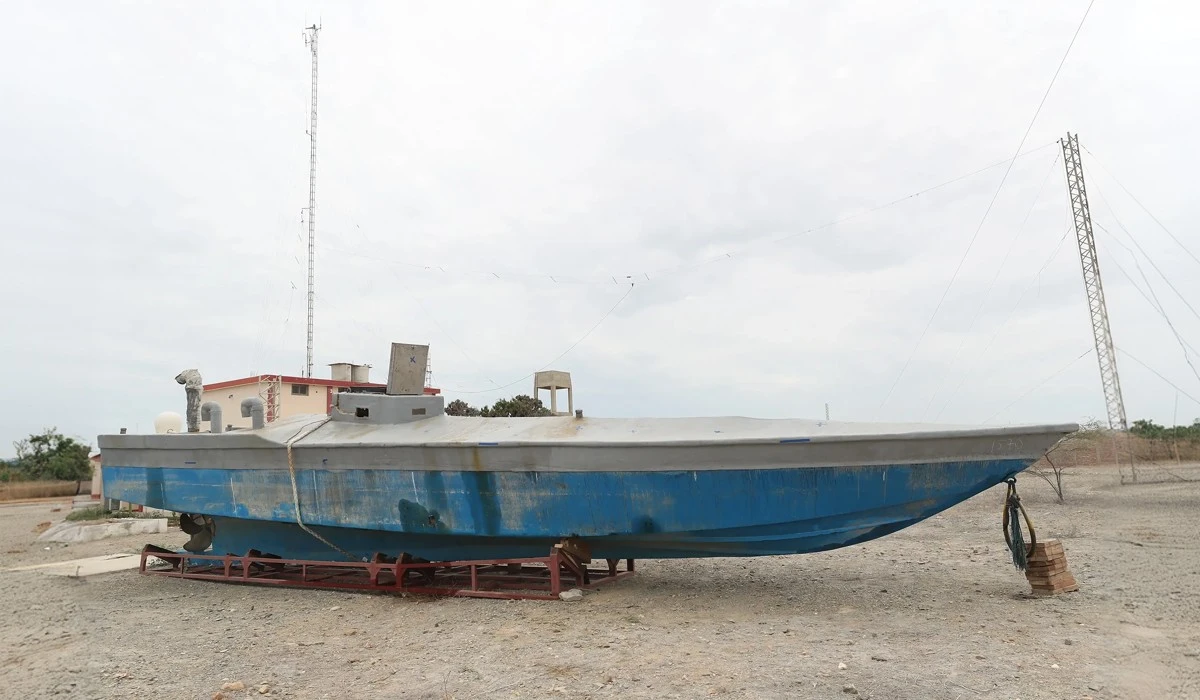
Image Credit - by Ministerio de Defensa del Perú, CC BY 2.0, via Wikimedia Commons
Narco Subs: Economy Shifts to Reusable Fleets
Criminal empires operate exactly like multinational corporations when profit margins bleed. For decades, smugglers treated their vessels as disposable packaging, sinking them the moment the job was done. That era ended when the wholesale price of the product crashed. Now, the ocean is filling with a new class of logistical ghosts that deliver cargo and return home.
The Atlantic Ocean hides a massive logistical pivot driven by simple accounting rather than military strategy. Cartels once viewed their semi-submersible vessels as single-use "throwaways." Newser notes that instead of sinking their custom-built ‘narco-submarines’ after a single run, smuggling groups are increasingly refueling them. A crew would navigate from South America to Europe, offload the cargo, and scuttle the ship to the bottom of the sea. This model worked when cocaine prices remained sky-high.
But in 2025, the math changed. A saturated market forced prices down, making the destruction of million-dollar assets financial suicide. Smugglers now run these vessels like commercial freighters, requiring return trips, open-ocean refueling, and durable construction. The graveyard of ships on the ocean floor has stopped growing, but the traffic above it has never been busier.
The Price Crash Triggering the Shift
A market saturated with product turns a valuable shipping asset into an unbearable expense. The wholesale price of cocaine recently plummeted to around €15,000 per kilogram. This represents a fifty percent drop in recent years. In the past, a single successful trip covered the loss of the vessel multiple times over. Alberto Morales, Head of Narcotics for the Policía Nacional, notes that high cargo value previously justified the vessel loss. The profit margins easily absorbed the cost of a sunk ship.
Today, that calculation fails. With merchandise values hitting historic lows, the cost of the boat matters immensely. Olive Press News Spain reports that these vessels cost around €600,000 to build, though other estimates reach nearly €2 million depending on the technical requirements. Throwing away a two-million-euro asset after one trip destroys the bottom line when the cargo brings in half the revenue it used to.
Why are narco subs reusable now?
Cartels reuse these vessels because the drop in cocaine prices makes scuttling them too expensive. To maintain profitability, they must amortize the construction cost over multiple voyages.
This financial pressure forces a strategic rethink. Morales confirms that reuse is now mandatory for profitability. The cartels cannot simply ramp up volume to cover costs; they must cut operational expenses. The result is a fleet designed to survive the journey home.
The Logistics of the Round Trip
A return voyage requires an infrastructure that strictly one-way missions never needed. For nearly two decades, the operational model was simple: launch, arrive, sink. The shift to round-trip logistics introduces massive difficulty. Olive Press News Spain describes this as a major operational change where traffickers can no longer afford to sink their own boats, prompting an operational shift toward cargo offload and refueling at sea. The objective is now maximum rotations per vessel.
Authorities see evidence of this change in the seizure patterns. According to The Guardian, Spain seized 123 tonnes of cocaine in 2025, an increase from 118 tonnes in 2023. The volume increases, yet the number of intercepted vessels remains low. This suggests a fleet that enters and leaves European waters repeatedly.
How do drug subs refuel at sea?
These vessels meet larger "mother ships" or dedicated refueling platforms in international waters to take on diesel and supplies. This mid-ocean pit stop allows them to return to South America without entering a port.
The crews face a terrifying journey. They travel thousands of miles in cramped, claustrophobic tubes holding 20,000 liters of fuel. Sanitation often consists of plastic bags, and fresh air is scarce. Yet, the command to return to the origin point is now standard.
Engineering the New Narco-Subs
Survival relies on looking like nothing on radar rather than being truly invisible. Builders construct these vessels primarily from fiberglass. This material barely reflects radar waves, allowing the boats to blend into the background noise of the ocean surface. As reported by Euronews, the vessels sit low in the water and can hardly be seen as they skim the ocean, with only a small hatch and exhaust pipes above the waves. This low profile makes visual detection nearly impossible from a distance.
The latest models show clear signs of long-term planning. Investigators recently found zinc bars attached to the hulls of seized vessels. These sacrificial anodes prevent saltwater corrosion on metal parts. You do not rust-proof a boat you plan to sink in two weeks. The presence of zinc proves the intent for long-term durability.
Technological camouflage goes further. Engineers install water-cooled exhaust systems to lower the vessel's infrared signature. Thermal cameras struggle to pick up the heat against the cold ocean water. These are stealth platforms built to last rather than crude boats.
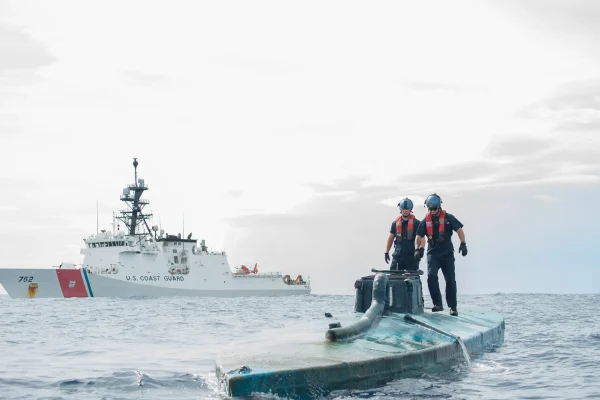
Design Features of the 2025 Fleet
- Fiberglass Hulls: Reduces radar cross-section significantly.
- Water-Cooled Exhaust: Hides heat signatures from thermal surveillance.
- Zinc Anodes: Protects against rust for repeated use.
- Massive Fuel Tanks: enables trans-Atlantic range.
The Shift to European Shipyards
Outsourcing production closer to the customer cuts the risk of the most dangerous leg of the journey.
Traditionally, laborers built these vessels in the remote jungles of Guyana or Suriname. They would then travel the full distance to Europe or West Africa. A new pattern disrupts this flow. Police now find evidence of domestic European construction, specifically in coastal areas like Malaga, Spain, and Portugal.
Building the vessels in Europe changes the game. It allows gangs to launch short-range missions to meet mother ships arriving from South America or to transport hashish between North Africa and Europe. This reduces the wear and tear on the fleet and limits the exposure of the crew to weeks-long Atlantic crossings.
This localization also complicates the supply chain investigation. Authorities can no longer look solely at imports from South America. They must now monitor local boatyards and fiberglass suppliers within the European Union.
The Synthetic Diversification
When one product loses value, smart businesses diversify the portfolio to protect revenue. The cocaine market crash pushed cartels to expand into synthetic drugs. The production of these substances is migrating from traditional hubs like the Netherlands to rural locations in Spain, France, and Germany. The isolation of rural land offers security benefits.
How many drug labs get raided?
Police activity shows a sharp increase, with raids on synthetic labs jumping from two in 2023 to six in 2024. However, 2025 shows a slight dip with three labs raided so far, suggesting producers are hiding better.
A Synthetic Drugs Officer notes that surveillance in these areas is difficult. Criminals use drones and local lookouts to spot police long before a raid can happen. This shift to synthetics provides a revenue stream that does not rely on the difficult maritime logistics of cocaine. It serves as a hedge against the risks of the Atlantic crossing.
The Impossible Coastline Challenge
You cannot patrol a line that stretches longer than the resources available to watch it. Spain alone possesses 8,000 kilometers of coastline. Monitoring every meter of this distance for a low-profile fiberglass boat is a physical impossibility. The detected vessels represent a fraction of the total traffic. Since 2006, Spanish police have logged only 10 narco-subs.
Compare this to the estimates. Experts believe hundreds of these vessels have launched over the years. A port official in Antwerp estimates the interception rate at only 10%. Robert J. Bunker, a security analyst, describes finding these semi-submersibles as looking for needles in haystacks.
The vast majority of these voyages go unnoticed. Smugglers exploit the gaps in radar coverage and the sheer size of the ocean. A vessel that sits one foot above the water line disappears behind any wave larger than two feet.
The Corporate Takeover of Crime
Local gangs are just franchisees for global conglomerates. The operation of a reusable narco-sub fleet requires massive capital and international coordination. Chief Commissioner Antonio Martinez Duarte confirms solidified links between Colombian and Mexican cartels and Spanish gangs. These are not loose partnerships; they are trans-Atlantic criminal alliances.
Michel Claise, a Belgian judge, warns that the wealth of these gangs now surpasses state justice resources. They have "unlimited funds" to corrupt dockers, police, and officials. This financial power allows them to absorb the cost of a seized boat or a raided lab without slowing down.
The new era involves layered logistics that mirror legal trade. Organized crime groups manage supply chains, fuel logistics, and fleet maintenance. They have professionalized the smuggling industry to a point where law enforcement struggles to compete.
The New Normal
The ocean has transformed from a graveyard for disposable ships into a highway for a permanent, rotating fleet. The economic reality of 2025 forced the narco-subs to evolve from single-use ammunition into durable assets. This shift proves that the drug trade responds to inflation and market saturation with the same agility as any legitimate industry.
Smugglers now prioritize economy over secrecy. They build boats to last, equip them to return, and manage them like a commercial line. Authorities face a sophisticated, well-funded adversary that has adapted perfectly to the collapsing price of cocaine. The "ghost fleet" has already arrived and plans to stay.
Recently Added
Categories
- Arts And Humanities
- Blog
- Business And Management
- Criminology
- Education
- Environment And Conservation
- Farming And Animal Care
- Geopolitics
- Lifestyle And Beauty
- Medicine And Science
- Mental Health
- Nutrition And Diet
- Religion And Spirituality
- Social Care And Health
- Sport And Fitness
- Technology
- Uncategorized
- Videos

