
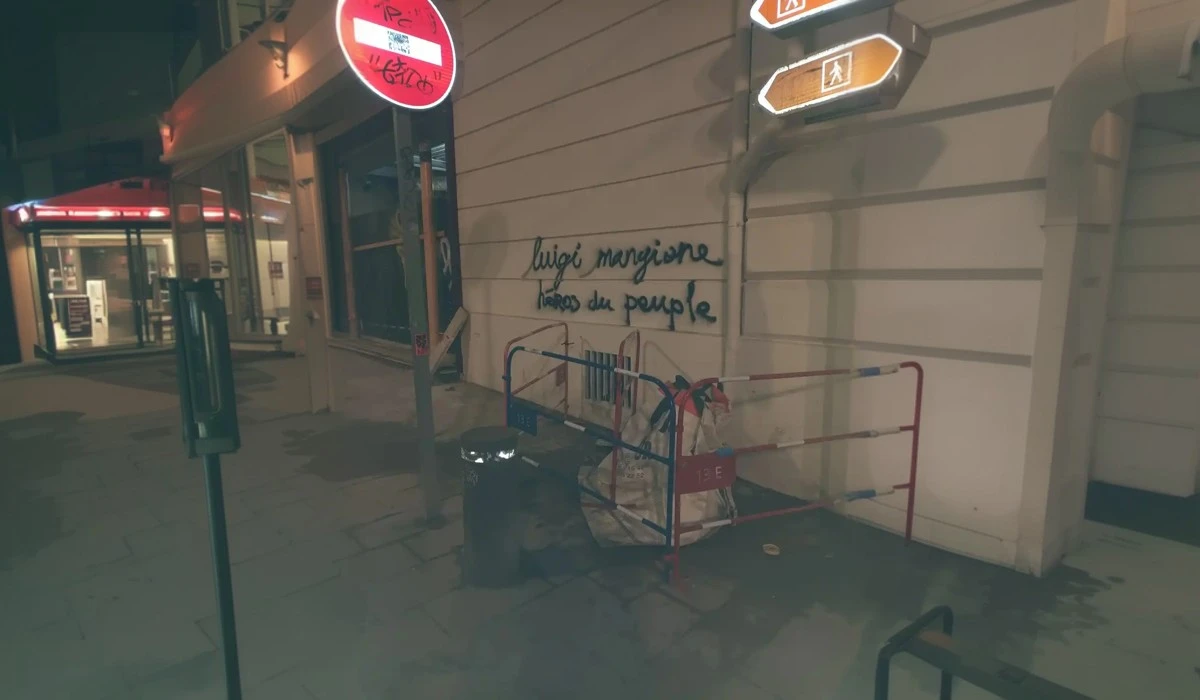
Image by- insignificunt1312, CC BY-SA 4.0, via Wikimedia Commons
Luigi Mangione Case: How One Mistake Risks All
You assume a smoking gun guarantees a prison sentence, but the strict rules of evidence can actually make a murder weapon disappear from the eyes of the law. A conviction rarely depends on what happened at the crime scene. It often depends on what happened during the arrest. If an officer opens a backpack two seconds too early or reads a rights script two seconds too fast, the entire case can crumble.
This reality is currently playing out in a New York courtroom. According to AP News, it has been exactly one year since the arrest of Luigi Mangione in Altoona, Pennsylvania. The former Ivy League student sits in custody, facing charges for the shooting of United Healthcare CEO Brian Thompson. Yet, the legal conversation has shifted away from the shooting itself.
Defense attorneys are not arguing that he didn't do it. They are arguing that the police cheated to catch him. They claim the search of his bag was illegal and his confession was forced. If the judge agrees, the 3D-printed gun, the silencer, and the handwritten manifesto could be banned from the trial. This would leave prosecutors with a famous suspect but no proof. The fate of Luigi Mangione now rests on technicalities, not just the truth.
The Legal Battle Over a Breakfast Search
Police safety protocols often clash directly with the strict privacy laws designed to protect citizens, creating a legal gray zone where cases go to die. The arrest in Altoona was chaotic, and that chaos is now the defense's best weapon.
On December 9, 2024, officers entered a McDonald's. They were looking for a man who resembled the shooter. They found a customer eating a hash brown while "Winter Wonderland" played over the speakers. The situation escalated quickly. Officers approached the table and demanded the man lower his mask. He refused at first, then complied.
The critical moment happened regarding a backpack. Police searched the bag and found a 3D-printed pistol and a silencer. However, Officer Fox later admitted in court that he did not request a warrant before searching, a concession highlighted by ABC News. The prosecution argues this was a safety priority. They claim the search was "incident to arrest" because they had probable cause to believe he was dangerous. They also argue that some items were found in the trash, which counts as abandoned property.
Why was Luigi Mangione arrested?
He was detained as a person of interest in the Brian Thompson shooting after a McDonald's customer noticed he strongly resembled the suspect.
The defense sees it differently. They argue this was a "fishing expedition." They claim the officers had no right to unzip that bag without a judge's permission. If the court decides the search broke the Fourth Amendment, the gun found inside becomes "fruit of the poisonous tree." That means the jury would never see it.
A Fifteen-Second Warning Could End the Case
Speed often signals efficiency, but in constitutional law, rushing through a script can silence a suspect's words forever. The way police handled the Miranda warning has become a central pillar of the defense strategy.
When officers arrest someone, they must read them their rights. This ensures the suspect knows they can remain silent. In this case, the defense claims the warning was a blur. They argue the officer rattled off the Miranda rights at a breakneck pace. Specifically, the defense says the officer spoke 98 words in just 15 seconds.
This speed matters. A suspect cannot waive rights they do not understand. If the warning was too fast to comprehend, anything said afterward might be inadmissible. The defense also points out that questioning began before these warnings were fully issued.
During the interaction, Jurist reports that Luigi Mangione allegedly made several damaging statements, specifically admitting to lying about his name after using a fake ID. He expressed regret for the deception. Prosecutors want to use these words to show consciousness of guilt. The defense wants them thrown out. They argue that their client was questioned while shackled and under duress, without a proper chance to ask for a lawyer.
Inside the Manifesto and the Motive
Anger at a specific corporate system can curdle into a violent ideology that mirrors the very coldness it claims to fight. The evidence taken from the suspect paints a picture of deep resentment toward the insurance industry.
Investigators found a notebook that functioned as a manifesto. It was short, only 262 words, but it was specific. The text criticized "parasitic" insurance companies. It highlighted the disparity between the massive profits of the healthcare system and the declining life expectancy of average Americans.
What did Luigi Mangione write on the shell casings?
He wrote "Delay," "Deny," and "Depose" on the casings, referencing a common criticism of how insurance companies handle patient claims.
The motive appears rooted in these "three Ds of insurance." The suspect seemingly viewed his actions as a necessary strike against a broken system. In a written note, he even apologized for the trauma his actions caused to witnesses but insisted the violence was required. He compared the corporate power structure to an abusive force that values cost-cutting over human life.
This intellectual framing contrasts with the raw violence of the act. The suspect was an Ivy League graduate. He knew how to articulate complex ideas. Yet, he chose a method of protest that involved a silenced pistol on a city street. This mixture of high-minded rhetoric and brutal execution has complicated the public's reaction to the crime.
The Physical Pain Behind the Actions
Chronic suffering can warp a person's worldview until extreme solutions start to look like the only logical exit. To understand the anger driving Luigi Mangione, you have to look at his medical history.
He was not just a disgruntled customer; he was a patient in pain. Reports show he suffered from severe back pain due to a condition called spondylolisthesis. This condition causes vertebrae to slip out of place. It is agonizing. He underwent spinal fusion surgery to fix it, but the recovery was difficult.
He also spoke of "brain fog" and other lingering health issues. His writing suggests he felt abandoned by the medical system. When a person lives in constant pain and feels that insurers are blocking their relief, that frustration can turn toxic. The defense may use this history to explain his mental state. They might argue that his actions were not those of a cold-blooded killer, but of a desperate man broken by physical suffering.
The prosecution, however, sees this as a clear motive for revenge. They argue he targeted Brian Thompson specifically because he represented the industry that caused his misery. The pain explains the target, but for the state, it does not excuse the murder.
From Ivy League to Most Wanted
A resume filled with academic honors sometimes hides a deep fracture where potential collapses into destruction. The background of Luigi Mangione does not fit the typical profile of a violent criminal.
As detailed by Reuters, he comes from a prominent Maryland family and attended the University of Pennsylvania, an Ivy League school, where he was a valedictorian who had grown critical of social media and artificial intelligence. He had every advantage that education and status could provide. Yet, by the time of his arrest, he was using a fake alias, "Mark Rosario," and claiming to be homeless.
This drastic shift creates a puzzle for investigators. How does a top-tier student end up eating hash browns in Altoona while running from a murder charge? He told officers he was only at the McDonald's for the Wi-Fi. He had a fake New Jersey driver's license. He had lists in his notebook reminding him to "pluck eyebrows" to change his appearance.
The "Mark Rosario" persona was a complete fabrication. He tried to distance himself from his true identity as soon as police approached. He even asked the officers why there was such a large press gathering at his arraignment, calling the situation "wild." This disconnect suggests a man who had separated his past success from his current reality.
Public Perception and the Folk Hero Myth
When systems fail people long enough, they sometimes project their own frustrations onto a violent figure, ignoring the reality of the crime. The public reaction to the Brian Thompson shooting has been deeply divided.
On one side, law enforcement and officials like AG Pam Bondi label the act a "cold-blooded assassination." They see a dangerous man who killed a father and CEO. They want the maximum punishment. Bondi and the Trump administration are pushing for the death penalty, framing the case as a necessary defense of law and order.
On the other side, the internet has turned Luigi Mangione into a "folk hero." A viral trend even emerged around the "Mangione Merino" sweater he wore. Supporters online have launched a "#FreeLuigi" movement. They compare him to Robin Hood. They see his attack on an insurance CEO as a strike against a greedy system that hurts everyone.
Is Luigi Mangione facing the death penalty?
Yes, federal prosecutors are actively seeking the death penalty, calling the crime a calculated political attack on the healthcare industry.
He is aware of this tension; Fortune reports that a Goodreads account bearing his name and photo reviewed the manifesto of the Unabomber, Ted Kaczynski, acknowledging the context of the violence. He criticized Kaczynski's violence but acknowledged the context. Now, he finds himself in a similar position: a man who committed a violent act that some people are interpreting as political revolution.
The Timeline of Suppression Hearings
A trial often happens in empty courtrooms long before a jury is seated, deciding which truths are allowed to exist on the record. The current phase of the case is less about drama and more about procedure.
According to the Hindustan Times, the suppression hearings began in earnest on December 1, 2025, in the NY Supreme Criminal Court, where lawyers disputed the Miranda rights procedure. These hearings are the battlefield where the defense tries to dismantle the prosecution's case. They are attacking every piece of evidence.
The defense argues the 3D-printed gun found in the backpack must be excluded because of the warrantless search. They argue the statements made to police must be excluded because of the faulty Miranda warning. They are even challenging the initial stop, suggesting the officers had no valid reason to approach him in the first place.
Prosecutors are fighting back. They maintain that the officer's safety concerns justified the immediate search. They argue that the "plain view" doctrine and the suspect's behavior gave them probable cause. This legal tug-of-war will determine what the jury is allowed to know. If the judge suppresses the gun, the state's case against Luigi Mangione loses its primary physical link to the crime.
The Contrast of the Arrest Scene
Panic and calm often exist side-by-side in a crisis, creating a surreal atmosphere that is hard to reconcile later in court. The details of the arrest scene highlight the strange nature of the case.
The McDonald's manager was actually reluctant to call 911. It was the customers who insisted. They saw a man who looked like the photo on the news. They noticed his eyebrows. The manager eventually made the call, but described it as a non-emergency.
Inside, the suspect sat calmly. Video footage shows him eating a breakfast sandwich without any sign of panic. Yet, police testimony describes him as "nervous" and "shaking" when they approached. This contradiction is key. Was he a cold, calculated operative, or a terrified young man?
The suspect even showed concern for the employee who called the police. He asked officers about her safety and inquired if her name would be released to the press. This moment of empathy clashes with the image of a ruthless killer. It adds another layer of complexity to a defendant who seems to embody opposites: violent yet polite, educated yet homeless, calm yet shaking.
The Fragile State of Justice
The fate of Luigi Mangione does not rest solely on his guilt. It rests on the integrity of the process used to catch him. The justice system is designed to punish the guilty, but it is also designed to restrain the state. When those two goals collide, the results are unpredictable.
If the court decides the search was illegal, a confessed motive and a backpack full of evidence could vanish from the trial. The prosecutors would be left with a theory but no weapon. The defense is betting everything on these procedural errors. They know that in the American legal system, a technical mistake by a police officer can be just as powerful as a verdict.
As the hearings continue through December 2025, the world watches. The outcome will decide if Luigi Mangione answers for the death of Brian Thompson, or if the errors of the arrest set him free. The line between a conviction and a dismissal is often thinner than the paper a warrant is printed on.
Recently Added
Categories
- Arts And Humanities
- Blog
- Business And Management
- Criminology
- Education
- Environment And Conservation
- Farming And Animal Care
- Geopolitics
- Lifestyle And Beauty
- Medicine And Science
- Mental Health
- Nutrition And Diet
- Religion And Spirituality
- Social Care And Health
- Sport And Fitness
- Technology
- Uncategorized
- Videos

