

JKIA Arrest Exposes Global Ant Trafficking Ring
Luggage scanners routinely flag metal weapons and liquid drugs while allowing thousands of live organisms to pass through undetected. According to a recent Reuters report, police at Nairobi's main airport arrested a man carrying more than 2,200 live garden ants stashed inside his luggage, reflecting an uptick in insect smuggling across Kenya. Law enforcement officials believe this individual operates a major global ant-trafficking syndicate. As highlighted by The Guardian, smugglers exploit commercial passenger flights to move live ants out of natural habitats and supply exotic pet markets across Europe and Asia.
Criminals treat these tiny creatures as high-value, low-risk cargo. They pack them into tight containers, bury them under clothing, and slip them past border guards. The authorities intercepted this latest shipment on Tuesday during a standard inspection. According to The Kenya Times, a magistrate granted investigators a five-day detention period on Wednesday to detain suspect Zhang Keng Kun and extract vital data from his phone and laptop. This single arrest highlights a highly organized network moving massive quantities of wildlife across continents. The illegal pet trade constantly drains local environments of their most core workers.
The Baggage Scan That Exposed a Global Ant-Trafficking Syndicate
Smugglers hide contraband in plain sight; they turn mundane household items into high-density transport containers. On Tuesday, a routine bag check at JKIA Nairobi stopped a suspected wildlife smuggler dead in his tracks. Baggage screeners found roughly 2,000 live ants packed tightly into the suspect's luggage. The smuggler used a highly specific concealment method to bypass airport security. He packed exactly 1,948 ants inside specialized glass test tubes. He then crammed an additional 300 ants inside ordinary tissue paper rolls.
You might wonder, why do people smuggle live ants? People smuggle live ants to supply the exotic pet market across Europe and Asia. Collectors pay high prices for rare species, creating a massive incentive for organized criminal networks. The sheer volume of insects pointed directly to a large-scale commercial operation. KWS officers seized the cargo immediately upon finding it. Prosecutor Allan Mulama later detailed the exact findings in court. He noted the baggage inspection turned up almost two thousand insects inside custom vials, plus the extra three hundred stashed inside toilet paper cylinders. The precise packing method demonstrated careful planning. The smuggler understood exactly how to ensure insect survival during a high-altitude, low-oxygen commercial flight. Packing 1,948 glass tubes requires significant time, dedicated workspace, and an organized supply chain. Authorities realized immediately they had caught a core member of a global ant-trafficking syndicate.
Tactical Shifts Inside the Global Ant-Trafficking Syndicate
Criminal groups adapt their packaging methods immediately after border control learns to spot their previous containers. Prosecutor Mulama presented the physical evidence of this tactical shift directly to the court. A report from The Guardian notes that in 2025, smugglers relied heavily on standard medical syringes stuffed with cotton wool, alongside test tubes, to keep the insects alive for weeks during transport. Law enforcement caught onto that trick quickly. As detailed by Reuters, the global ant-trafficking syndicate moved away from medical injectors entirely by 2026, switching to specialized glass cylinders to evade detection; investigators found 1,948 ants packed in test tubes and the rest in soft tissue paper rolls. The 2026 test tubes represent a deliberate logistical upgrade. Glass tubes offer better air circulation, temperature control, and moisture retention for the insects during multi-day trips.
The 2025 Baseline Arrests
This pattern of adaptation stems directly from major law enforcement wins last year. According to court documents reviewed by Reuters, authorities arrested Belgians Lornoy David and Seppe Lodewijckx in Naivasha on April 5, 2025, after intercepting their attempt to move roughly 5,000 queen ants packed tightly into 2,244 containers. KWS officials hit them with a landmark legal penalty in May 2025. The court handed down a Ksh1 million fine per individual, setting a strict financial benchmark of roughly $7,700 or £5,800.
The Kenya Times outlines another related incident where officers caught Vietnamese national Duh Hung Nguyen and Kenyan Dennis Nganga in possession of 140 cotton-packed syringes full of ants, plus two additional containers. Different records present slight contradictions regarding these historical arrests. Some reports describe a single penalty event for four suspects wrapped into one court case. Other documents divide the arrests into two distinct legal events involving the Belgian duo separately from the Vietnamese and Kenyan pair. Regardless of the paperwork discrepancies, the 2025 arrests forced the smugglers to completely change their tactics. They abandoned the syringes and sourced custom glass tubes to avoid future seizures.
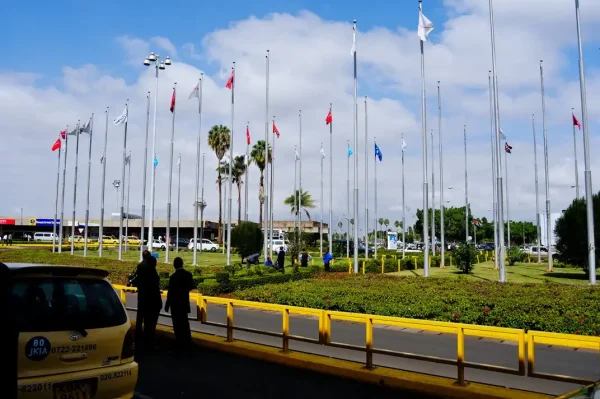
Image Credit - by li yong, CC BY-SA 2.0, via Wikimedia Commons
The Court Battle Over a Global Ant-Trafficking Syndicate
Suspects minimize organized wildlife crime; they frame large-scale commercial extraction as an innocent personal hobby. The suspect stood before a judge on Wednesday for an important preliminary court hearing. Defense lawyers immediately argued their client simply collected exotic pets for personal enjoyment. They claimed the suspect acted out of total ignorance of local laws regarding insect preservation. Prosecutor Mulama rejected this excuse entirely. He positioned the suspect as the primary mastermind behind a massive global ant-trafficking syndicate. Moving over 2,000 insects requires buyers, shipping routes, and financial infrastructure.
The prosecution pointed to a highly concerning historical context from the previous year. In 2025, after authorities dismantled a previous smuggling network, a key suspect escaped the country entirely. That individual evaded capture; he used a secondary passport to slip through border control. The court took this flight risk very seriously. The judge approved a strict five-day detention period. This window gives investigators the necessary time to complete detailed device forensics on the suspect's electronics. The prosecution hopes to find direct digital links to international buyers, offshore bank accounts, and dark web insect forums. The state needs hard data to prove the suspect organized the entire commercial operation.
The Target Species and the Underground Pet Market
Collectors pay top dollar for a single insect capable of birthing an entire colony over decades. The illegal pet market specifically targets Messor cephalotes and Queen garden ants. Buyers in Europe and Asia want these specific species for their unique biological traits, aggressive foraging behaviors, and impressive sizes. The Messor cephalotes species, commonly known as harvester ants, cut and transport massive quantities of seeds to sustain their colonies. A thriving black market exists entirely to supply these specific insects to private terrarium owners.
Biology of the Queen
Queen ants, formally known as gynes, serve as the reproductive engines of any colony. A single queen guarantees a buyer a lifelong pet. A Lasius niger queen can live up to 28.75 years in captivity. The Pogonomyrmex owyheei species survives up to 30 years in the wild. Their reproduction process presents massive value to hobbyists. Queens typically reproduce via a nuptial flight. They mate with males mid-air before shedding their wings and burrowing underground to start a new colony.
However, some specific species bypass male fertilization completely through a process called asexual parthenogenesis. This interesting biological trait allows a solo female to clone herself entirely without ever encountering a male. Ants also use a highly specific haplodiploidy sex determination system. Fertilized eggs develop into females. These females become the worker ants or the future queens of the colony. Unfertilized eggs become males. The males exist for the sole purpose of reproduction and die shortly after mating. These unique biological traits drive the extreme global demand. Collectors want to watch these social structures develop inside glass enclosures in their living rooms.
KWS Intelligence and Insect Preservation Priorities
Conservation teams protect the smallest insects because the collapse of tiny organisms eventually starves apex predators. The Kenya Wildlife Service treats bug smuggling with the exact same urgency as rhino or elephant poaching. They prioritize insect preservation to ensure long-term soil health and biodiversity protection across the country. Do wildlife laws protect ants? Ants fall under national wildlife protection acts in many countries to prevent environmental damage. Agencies like the KWS actively prosecute unauthorized collection and export to preserve local biodiversity.
The KWS uses covert intelligence to track down these global smuggling routes. Their synchronized strategy led directly to the successful 2025 arrests. Officials consider those prior penalties an unprecedented judicial milestone. They established a firm legal precedent for heavily fining insect smugglers. The agency wants to send a clear message to any future collectors operating within their borders. They monitor online forums, track suspicious international shipments, and profile frequent travelers who fit the smuggler profile. The KWS refuses to let poachers strip the environment of its primary species.
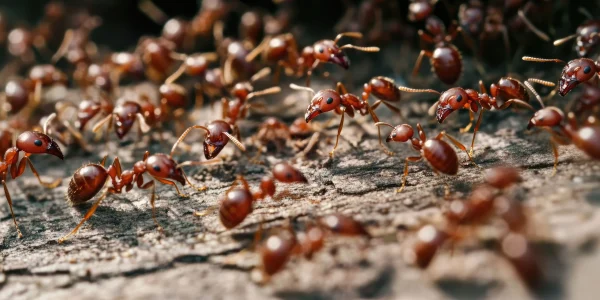
The True Value of 10 Quadrillion Ants
The global environment relies on ground-dwelling insects to process waste and prepare the earth for new plant life. Research published in PNAS conservatively estimates the Earth holds around 20 quadrillion ants, while National Geographic confirms these populations span more than 12,000 distinct species. They function as the essential digestive system of the forest floor. Ants drive necessary organic decomposition. They break down dead plant matter, animal carcasses, and decaying wood. This process returns vital nutrients directly back into the ground. They also practice myrmecochory, a highly specialized form of seed dispersal. Plants grow nutritious attachments called elaiosomes on their seeds.
Ants carry these seeds underground, eat the elaiosomes, and leave the actual seeds planted in nutrient-rich soil. This interaction guarantees the next generation of forest growth. What happens to soil when poachers remove ants? Removing ants from an area halts natural soil aeration and traps organic waste on the surface. Without these insects digging tunnels, the ground quickly compacts and chokes plant roots. Ants constantly churn the dirt, allowing water and oxygen to reach deep into the earth. This churning action functions exactly like a farmer plowing a field. They also regulate severe agricultural pest populations; they hunt smaller destructive insects. Finally, scientists use specific ant colonies as highly accurate bio-indicators to track the local effects of climate change. A healthy ant population indicates a stable environment.
Extracting Digital Trails of a Global Ant-Trafficking Syndicate
A confiscated smartphone often holds more dangerous smuggling data than a suitcase full of live contraband. Investigators now face an intense race against the clock. The suspect's seized digital devices currently sit in a secure forensics lab. Law enforcement has exactly five days to extract chat logs, buyer lists, GPS locations, and offshore banking details. Document variations across different reporting agencies slightly cloud the suspect's true identity. Some news reports list the alias Zhang Keng Kun. Other official files name him Zhang Kequn.
Authorities must verify his exact legal identity before the upcoming court date. Smugglers frequently use aliases to obscure their criminal histories and maintain access to international visas. The judge scheduled a compliance confirmation hearing for March 17, 2026. The mobile phone data will ultimately determine if this suspect truly runs the global ant-trafficking syndicate. If the data shows organized international sales, the hobbyist defense will fall apart completely. The prosecution will use the phone records to map the entire network.
Dismantling the Supply Chain
The interception at JKIA Nairobi proves the illegal wildlife trade includes tiny insects alongside ivory and rhino horns. Traffickers extract massive financial value from these easily concealed bugs. The destruction of this global ant-trafficking syndicate relies entirely on rigorous baggage screening and strict device forensics. Law enforcement tracks the digital footprints, strips away the innocent hobbyist disguise, and exposes the commercial operation beneath. The KWS demonstrates that a zero-tolerance policy for insect smuggling yields real results. The landmark fines from 2025 set the stage, and the current investigation will likely push those penalties even higher. Protecting the soil begins with protecting the insects that dig through it. The global ant-trafficking syndicate thrives in the shadows, but thorough border control and digital forensics leave criminals with nowhere to hide.
Recently Added
Categories
- Arts And Humanities
- Blog
- Business And Management
- Criminology
- Education
- Environment And Conservation
- Farming And Animal Care
- Geopolitics
- Lifestyle And Beauty
- Medicine And Science
- Mental Health
- Nutrition And Diet
- Religion And Spirituality
- Social Care And Health
- Sport And Fitness
- Technology
- Uncategorized
- Videos

