
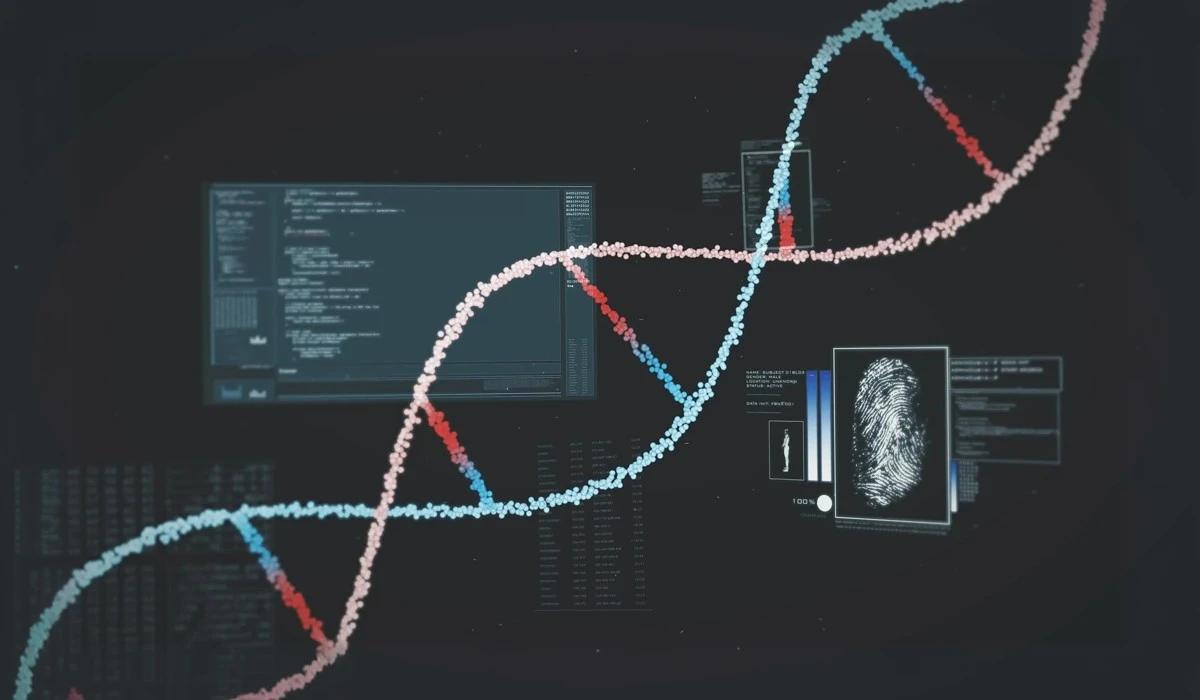
Forensic Nursing: Securing DNA in Trauma Cases
A clock starts ticking the moment a violent act occurs. Biological evidence begins to vanish as soon as it touches the air. Sweat evaporates. Blood dries. Skin cells fall away. While many assume police detectives find the best clues at a crime scene, the most reliable proof often walks into an emergency room on a patient’s body. This is where Forensic Nursing bridges the gap between medicine and the law. These nurses turn a patient’s trauma into a source of truth. They ensure that science speaks for those who cannot. Forensic nursing practice turns a clinical exam into a legal shield. This work protects the innocent and holds the guilty accountable. Every swab and every photo taken in the exam room serves a higher purpose. The nurse acts as the first line of defense for the judicial system.
The Intersection of Healthcare and Forensic Nursing
Forensic nurses hold two jobs at once. They provide life-saving medical care and act as criminal investigators. This role requires a specific mindset. A nurse must stop a bleed while also spotting a microscopic fiber on the patient’s clothing. This balance keeps the legal system moving. What exactly does a forensic nurse do? These professionals provide specialized medical care to victims of violence while expertly collecting biological samples, such as DNA, that are admissible in court. As stated in an article from PMC8544144, these professionals apply Locard’s Exchange Principle to every interaction, based on the scientific tenet that every contact leaves a trace. A forensic nurse assumes that the perpetrator left something behind. They find it.
Virginia Lynch established this field in 1990. Her master’s thesis provided the first roadmap for merging healthcare with the courts. Before her work, medical professionals often accidentally washed away evidence while treating wounds. Today, nurses integrate evidence collection into the healing process. They recognize that a thorough exam provides the best chance for a conviction later.
The Evolution of the SANE (Sexual Assault Nurse Examiner)
The Sexual Assault Nurse Examiner represents the most recognizable branch of this field. These nurses receive intensive training to handle the most sensitive cases. They learn to collect DNA in a way that respects the patient’s body. Research from the Indiana Coalition to End Sexual Assault and Human Trafficking emphasizes the "one-chance" nature of these exams, as specimen collection must be complete and accurate the first time. According to a report by the Texas Attorney General, the officer should explain to the patient that evidence can be inadvertently destroyed by activities such as washing, showering, or brushing teeth, which means it often disappears once time passes. SANE professionals ensure that the first exam is also the most thorough.
How Forensic Nursing Practice Protects the Chain of Custody
The "Chain of Custody" remains the most common point of failure in criminal cases. A defense attorney only needs to prove that one person handled a DNA kit improperly to get the evidence thrown out. Forensic nursing practice prevents these legal disasters. The nurse creates a chronological paper trail for every item. Is a forensic nurse a real nurse? Yes, they are Registered Nurses who have completed additional, intensive training in forensic sciences and legal testimony to handle medical-legal cases. They understand the law as well as they understand anatomy.
Based on information from the National Center for Biotechnology Information, every person who handles a DNA swab must sign a log including the date and time of the transfer. This log proves that nobody tampered with the evidence. The same source notes that nurses also use tamper-evident seals on every bag to prevent damage during transport. They store these kits in locked, temperature-controlled environments. These steps ensure that the DNA remains pure from the exam room to the crime lab. Without this rigor, the most incriminating DNA evidence becomes useless in court.
Detailed Documentation and Lab Labeling
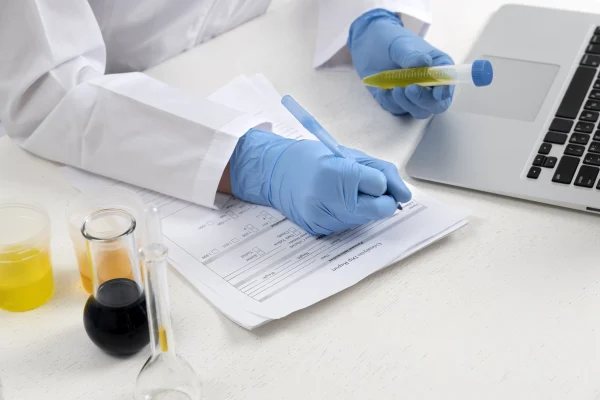
Precision in the lab starts with precision in the hospital. Nurses label every swab with the date, time, and specific body location. They describe injuries with clinical accuracy. A nurse might note the exact diameter of a bruise or the depth of a laceration. This documentation supports the DNA evidence. It tells the story of how the DNA got there. Defense attorneys struggle to challenge evidence when the nurse provides such detailed records.
The Power of Trauma-Informed Forensic Nursing
Empathy actually improves scientific outcomes. A patient who feels safe and respected provides better information. Department of Justice guidelines note that forensic nursing practice uses a trauma-informed approach to lower a patient's stress levels, because high stress can impair the patient's ability to recall and sequence details.
This human connection serves a practical purpose. Research in a meta-analysis published in PMC7879075 indicates that when nurses create a calm environment, they help the patient recall vital details about the assault, as acute stress prior to retrieval can significantly impair memory. These details guide the nurse to specific areas on the body where the perpetrator likely left DNA. A calm patient allows for a more thorough swabbing process. They feel comfortable during invasive procedures, such as the collection of reference samples. The nurse explains every step before it happens. This transparency builds trust. Trust leads to a complete evidence kit. In this way, kindness directly supports the search for irrefutable DNA.
Technical Precision in DNA Swabbing and Storage
DNA collection involves more than a standard cotton swab. A study in ScienceDirect describes how nurses use the "Double Swab Technique" to maximize their yield by first using a wet swab followed by a dry one. This method captures more epithelial cells than a single dry swab. It ensures the lab has enough material to create a full genetic profile.
Environmental factors pose a constant threat to DNA. Heat and moisture encourage mold growth. Mold destroys genetic material. Forensic nurses mitigate this risk by air-drying all swabs before packaging them. They never use plastic bags for wet evidence. Instead, they use breathable paper envelopes. These protocols keep the DNA stable for months or even years.
Utilizing Alternate Light Sources (ALS)
Technology gives nurses "superhuman" vision in the exam room. They use Alternate Light Sources to find fluids that the human eye cannot see. These lights use specific wavelengths, usually between 365nm and 535nm. Under this light, semen and saliva fluoresce brightly against the skin. This tells the nurse exactly where to swab. It eliminates guesswork and ensures that no DNA goes uncollected.
Securing Admissibility Through Forensic Nursing Practice
A DNA kit only matters if a judge allows it into evidence. Cornell Law School’s Legal Information Institute notes that forensic nursing practice adheres to strict legal standards like the Daubert Standard, which requires scientific evidence to come from peer-reviewed methods. Nurses stay updated on the latest research to meet this requirement. The institute also points out that they follow the Federal Rule of Evidence 702, which allows qualified professionals to testify as expert witnesses.
Can DNA evidence be used if it was collected days later? A report from the National Institute of Justice explains that while immediate collection is ideal, specialized techniques can recover viable touch DNA even seven days after an incident. They target "touch DNA" found in skin cells. These cells can linger on a victim’s skin or clothing for an extended period. The nurse’s expertise allows them to find these traces long after the crime. Their testimony explains the science behind this late-stage collection to the jury.
Beyond the Exam Room: Global Influence of Forensic Nursing
The influence of Forensic Nursing reaches far beyond local hospitals. These professionals play a massive role in mass disaster identification. As stated in PMC8746669, when a natural disaster or plane crash occurs, nurses collect reference DNA from first-degree relatives such as parents or siblings. They compare these samples to human remains to provide a positive ID. This work brings closure to families and helps settle legal estates. It turns a chaotic situation into an organized search for truth.
Forensic nurses also fight human trafficking. They recognize "branding" tattoos or specific injury patterns that others might miss. They collect DNA from victims to link them to specific traffickers or locations. This global reach proves that the specialty is a vital part of international human rights. It provides a voice to the most vulnerable populations on earth.
Effect on Prosecution and Conviction Rates
The data support the effectiveness of this work. Cases involving a forensic nurse show significantly higher conviction rates. A study conducted by the University of Illinois Social Work department shows that the presence of a nurse speeds up the legal process because their documentation often leads suspects to accept plea deals, noting that 75% of cases with a DNA match result in a guilty plea or trial. Without a lab report, that number drops to 14%. When the evidence is irrefutable, the defense has nowhere to hide.
The Future of Forensic Nursing and Genetic Technology
Innovation continues to change how nurses work. A study published in PubMed indicates that rapid DNA testing now allows for a profile in about 90 minutes. In the future, nurses might identify a suspect before the patient even leaves the hospital. This real-time identification could prevent further crimes. Forensic Nursing must evolve alongside this technology. Nurses attend ongoing training to learn new tools like Next-Generation Sequencing.
This new sequencing allows nurses to analyze complicated DNA mixtures. In the past, a sample with DNA from three different people was often too "noisy" to use. Modern technology can pull those profiles apart. Forensic nurses ensure they collect enough material to make this advanced analysis possible. They remain the gatekeepers of the genetic truth.
The Guardians of Genetic Truth
DNA technology is a marvel of modern science, but it remains a dormant tool without a skilled professional. Forensic nursing practice ensures that every swab contains a clear, uncontestable story. These nurses bridge the gap between a victim's trauma and the courtroom's requirement for proof. They protect the chain of custody and use trauma-informed care to secure the best evidence possible. Because of their work, a person's biology becomes their strongest witness. Forensic Nursing provides the irrefutable evidence that our justice system demands. It ensures that science, not just memory, decides the outcome of a case.
Recently Added
Categories
- Arts And Humanities
- Blog
- Business And Management
- Criminology
- Education
- Environment And Conservation
- Farming And Animal Care
- Geopolitics
- Lifestyle And Beauty
- Medicine And Science
- Mental Health
- Nutrition And Diet
- Religion And Spirituality
- Social Care And Health
- Sport And Fitness
- Technology
- Uncategorized
- Videos

