
Forensic Architecture Helps Catch Visual Liars
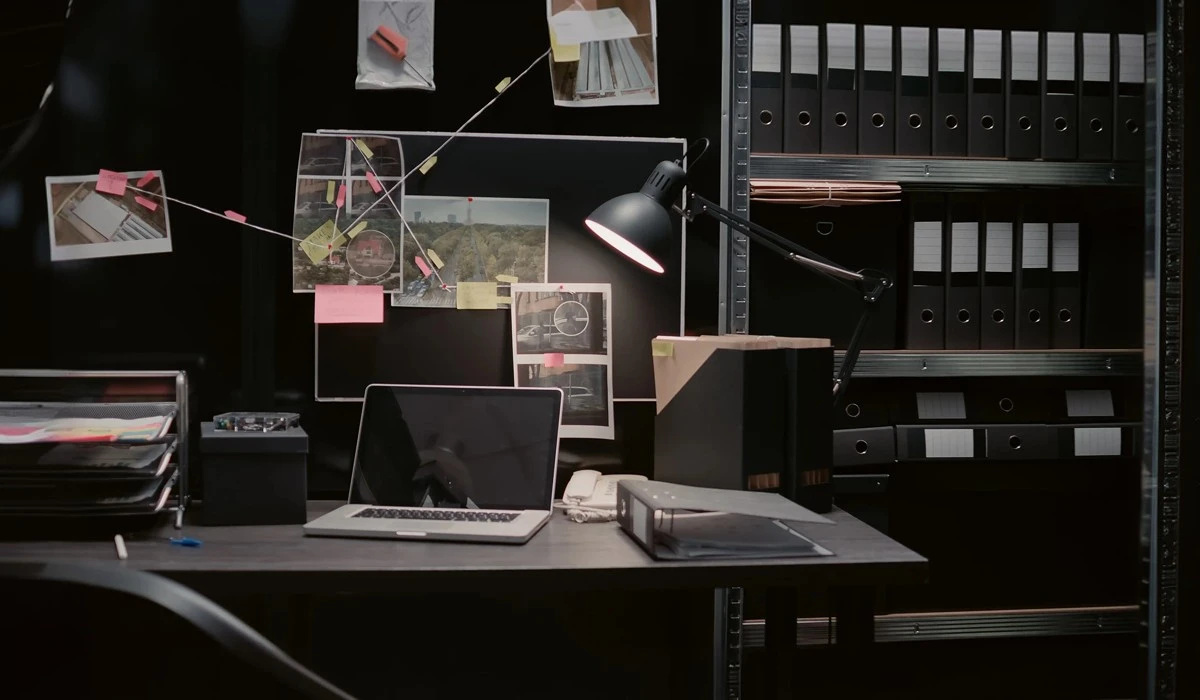
People lie. Governments spin stories. Witness memories fade over time. Yet, the brick and mortar of a city stay put. Every bullet hole, every shattered pane of glass, and every scorch mark tells a specific story. You just need to know how to read the language of the physical world. Forensic Architecture enters the fray by treating the environment as a primary witness. It uses the very buildings around us to catch visual liars in the act. The mapping of data points in three dimensions allows researchers to turn vague arguments into hard facts. This field provides the tools to hold powerful entities accountable when their words fail to match the reality on the ground.

Shifting from Witness Word to Spatial Data
Traditional investigations rely heavily on what people remember. Unfortunately, trauma and time degrade the human memory. Forensic Architecture shifts the focus from the fallible mind to the resilient physical environment. Eyal Weizman founded this multidisciplinary research agency at Goldsmiths, University of London, in 2010. According to the Institute of Architecture, the team is composed of architects, filmmakers, and software developers alongside scientists, lawyers, and various collaborators who view the world through a different lens. They apply Locard’s Exchange Principle, which suggests that every contact leaves a trace. While a person might forget a detail, a wall preserves the angle of a bullet strike or the residue of a chemical agent. This methodology uses spatial analysis to turn buildings into data storage units.
The Intersection of Design and Detective Work
Architects possess a unique set of skills that translate perfectly to investigative work. They understand structural logic and how light interacts with surfaces. These professionals use 3D modeling to solve legal puzzles that stump traditional detectives. Rather than seeing a city as a simple collection of houses, they view it as an elaborate grid of potential evidence. A report from Architectural Record notes that these experts use specialized rendering software to recreate incidents with exact detail. This work often appears in "public forums" like art galleries or digital media to gain political influence. They call this practice forensic aesthetics. It moves the evidence out of the closed courtroom and into the eyes of the global public.
Deconstructing Fabricated Narratives
State and corporate entities often release edited footage to support their version of an event. Investigators spot the lies by searching for "glitches" in these stories. Officials' claims are tested against the laws of physics. If a government claims a missile hit a specific target, researchers check the blast radius and the heat signatures. The Architectural Record explains that the group analyzes sources like satellite images, phone records, and mobile footage to build 3D maps of sites. Researchers build digital 3D models of a site and then layer in videos, photos, and satellite data to find where different pieces of evidence overlap. The process of testing stories against the physical limits of the space reveals contradictions in official stories. When the math doesn't add up, the lie falls apart.
Why Architectural Logic Beats Traditional Investigation
Standard investigations often treat photos as flat, 2D objects. Architectural logic treats them as windows into a 3D container of events. This perspective allows researchers to see what sits behind the camera or off to the side. They calculate the volume of a room to determine if it could hold the number of people claimed in a report. They study the material of a door to see if it could withstand the force of a specific explosive. This depth of field provides a level of certainty that a single photo cannot offer. It turns a static image into a living, navigable environment.
Building 3D Environments from Low-Res Footage
Most evidence comes from grainy CCTV or shaky cell phone videos. These files often lack clear detail. As detailed in the Forensic Architecture methodology, investigators utilize photogrammetry to address low-quality visuals. This process combines large numbers of still photos taken from various perspectives to generate precise, navigable 3D models. These models often have a margin of error under 0.25 centimeters. Even a low-quality video contains enough data to build a metric reconstruction of a room. This allows investigators to measure distances and heights with total confidence.
Testing Physical Feasibility in Virtual Space
Once the model exists, investigators run simulations to test reality. Computational fluid dynamics allows them to track how a gas cloud moves through a neighborhood. They map bullet trajectories to see if a shooter stood where the police claimed. In the 2019 investigation into the death of Mark Duggan, crime scene reconstruction proved a vital point. The team showed it was physically impossible for a handgun to fly seven meters across a fence based on the police narrative. The virtual space provides a laboratory where investigators prove or disprove the "facts" of a case without ever touching the physical site.
Mapping Points of Origin and Impact
The technical side of spatial analysis involves pinpointing exact coordinates. In cases of missile strikes or shelling, researchers map the craters and the shrapnel patterns. This data reveals the direction of the fire. Tracing these lines back to their source allows for the identification of the specific military unit responsible. They don't guess; they use geometry to prove the origin. This mapping debunks claims that a strike came from a "rebel" position when the math points directly to a state-controlled base.
Geolocation and Shadow Analysis Techniques
Shadows act as a natural clock and compass. Investigators use a method called shadow analysis to verify when a video was filmed. What is spatial analysis in a crime scene? This method studies the physical relationship between objects, people, and events within a specific area over time. It allows investigators to prove exactly where a person stood or where a shot originated based on the geometry of the room. Through tools like SunCalc, they calculate the sun’s position at any given moment in history. If the shadows in a video don't match the sun's path for the claimed date, the investigator knows the footage is a plant.
Walking Witnesses Through Digital Replicas
Witnesses often struggle to recall details under pressure. To solve this, investigators employ Forensic Architecture models to improve their Interview Skills. Forensic Architecture defines this approach as "Situated Testimony," a process where people recount events while interacting with digital models. As the witness "walks" through the virtual hallways, the visual cues stimulate deep memories. They might see a specific window and suddenly remember the sound of a footstep. This technique turns the interview from an interrogation into a spatial path.
Recovering Trauma-Impacted Memories via Space
Trauma blocks narrative memory but often leaves spatial memory intact. In the Saydnaya Prison investigation, survivors could not see their surroundings because they were blindfolded. However, they remembered the sounds and the feel of the walls. Researchers used earwitness testimony and echo-profiling to build a model of the prison. The simulation of sound bouncing off concrete helped survivors reconstruct the floor plan. This spatial anchor provides more reliable data than a simple verbal Q&A session. It bypasses the confusion of trauma and focuses on the physical reality of the survivor's experience.
The "Metadata of the Masses" Strategy
In a crisis, hundreds of people film the same event from different angles. Forensic Architecture stitches these clips together. They call this the "metadata of the masses." Each video provides a new perspective. One might show the smoke, while another shows the clock on a wall. The combination of these viewpoints helps researchers create a 360-degree view of the incident. This prevents any single party from controlling the narrative. Can digital models be used as evidence? International courts and human rights tribunals now accept 3D spatial recreations as valid forensic proof. These models provide a centralized platform where judges can verify the timing and location of events with mathematical precision.
Verifying Video Timelines with Precision
Synchronizing these videos requires "chronolocation." Investigators look for anchor points, like the flash of an explosion or a specific siren sound. They align the audio tracks to the millisecond. This creates a unified timeline that no one can refute. In an investigation of the 2020 Beirut Port explosion, Forensic Architecture combined open-source footage and geolocation to monitor the fire's spread before the blast. The synchronization of citizen clips tracked the fire's progress frame by frame. This scientific proof exposes the negligence of officials who tried to hide the truth.
Presenting Immersive Evidence to Juries
A photo shows a moment, but a crime scene reconstruction shows the truth. When a jury enters a 3D model, they experience the scale and the perspective of the event. They see what the witness saw. They feel the distance between the victim and the shooter. This immersive experience has a much higher psychological effect than static documents. It removes the guesswork for the jury. They no longer have to imagine the scene; they can see the physical evidence laid out in a logical, three-dimensional world.
Setting New Standards for Forensic Testimony
The success of Forensic Architecture is forcing legal systems to change. Eyal Weizman and his team now serve on the Technology Advisory Board for the International Criminal Court (ICC). They are helping set the rules for how digital and spatial data enter the record. They produce "operative models" that serve as a central hub for all evidence. These models allow lawyers to cross-reference ballistics, testimony, and satellite imagery all at once. This new standard ensures that justice relies on verifiable physics rather than just persuasive speeches.
The Future of Truth with Forensic Architecture
The world has become a place where "truth" feels flexible. Power players use sophisticated media to cloud the facts and hide their actions. However, the physical environment remains a stubborn witness. The combination of spatial analysis and 3D modeling ensures that every wall and every shadow has a voice. This field transforms the way we investigate human rights abuses and state crimes. While people can lie, the evidence shows that the space they inhabit cannot. As we move forward, these architectural tools will remain a vital pillar of accountability, forcing the world to face the cold, hard facts of the built environment.
Recently Added
Categories
- Arts And Humanities
- Blog
- Business And Management
- Criminology
- Education
- Environment And Conservation
- Farming And Animal Care
- Geopolitics
- Lifestyle And Beauty
- Medicine And Science
- Mental Health
- Nutrition And Diet
- Religion And Spirituality
- Social Care And Health
- Sport And Fitness
- Technology
- Uncategorized
- Videos

