
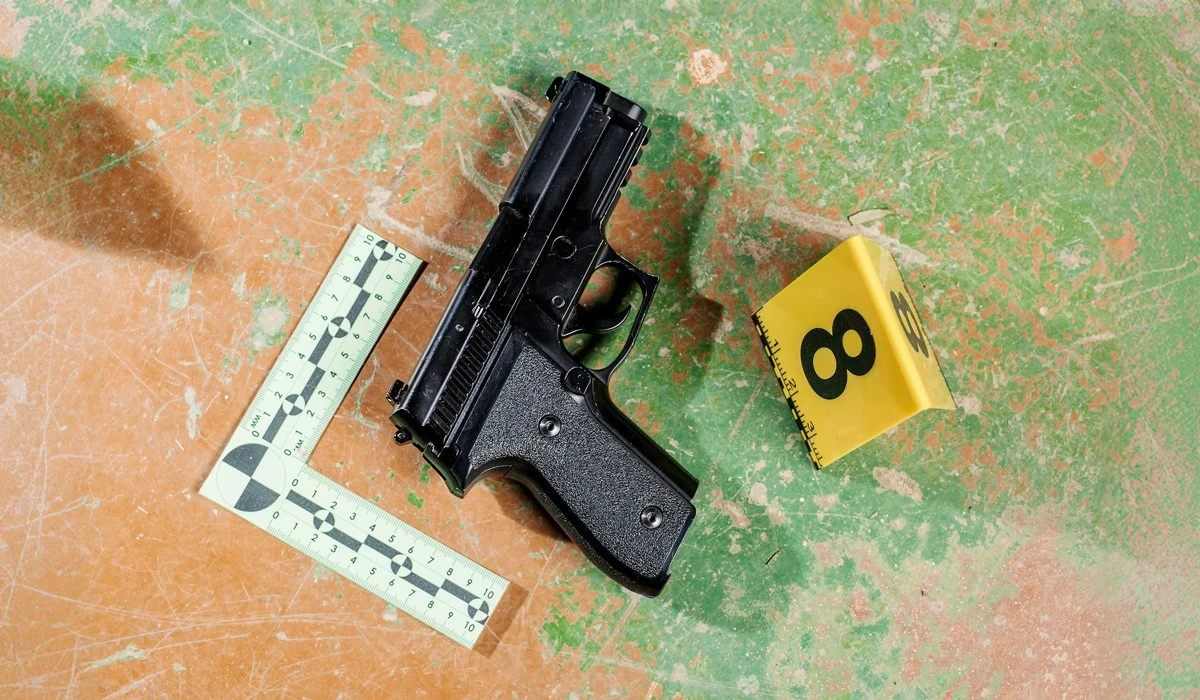
Firearm and Toolmark Identification: Wins More Trials
When a detective pulls a copper-jacketed bullet from a drywall panel, they hold a physical record of a specific machine. Most people see a spent projectile as a dead end. In reality, that lead carries a specific story of the gun that spat it out. Every firearm leaves a mark that no other weapon can copy. This reality turns a pile of metal scraps into a courtroom conviction.
Firearm and Toolmark Identification bridges the gap between a mysterious crime scene and a definitive trial verdict. DNA matches people, but these marks match the tool. They provide the narrative clarity a jury needs to reach a guilty verdict. Forensic science transforms "gut feelings" into empirical proof. While DNA is powerful, the mechanical signature of a weapon often provides the final piece of the puzzle.
The Scientific Foundation of Firearm And Toolmark Identification
Everything starts at the factory. Even when a company makes a thousand guns in a single day, no two come out exactly the same. The tools that cut the metal wear down slightly with every pass. They chip, dull, and scrape in ways that change from one minute to the next.
Manufacturing Imperfections as Unique Identifiers
The drills and cutters used to create gun barrels and firing pins leave microscopic "chatter marks." These tiny ridges and valleys remain unique to each individual firearm. You can think of them as the "DNA" of the metal. No two barrels, even those made consecutively, share the same microscopic surface.
The Principle of Transfer
Forensic science relies on the physical law of hardness. The harder steel of a firearm always wins when it hits softer metals like brass or lead. How are guns linked to bullets? According to an article by the National Institute of Justice, firing a weapon causes the toolmarks of the gun to transfer onto the discharged bullets and spent cartridge casings, allowing Firearm And Toolmark Identification experts to match the distinct scratches on a projectile to the specific barrel that fired it. This transfer happens instantly during the explosion of the gunpowder.
Decoding Bullet Casing Striations to Link Weapons
The bullet tells part of the story, but the brass casing holds the rest. When the gunpowder ignites, it creates an immense amount of pressure. This force drives the bullet forward and slams the casing backward against the internal parts of the gun.
Breech Face and Firing Pin Impressions
As detailed in a video published by the National Institute of Standards and Technology (NIST), the back of the gun, called the breech face, acts like a stamp that creates an impression on the rear of the case when expanding gas propels the bullet out. The pressure of the shot presses the soft primer of the cartridge into the hard steel of the gun. This stamps the gun's identity onto the primer. The NIST resource also explains that the firing pin strikes the primer to ignite the gunpowder, which leaves a hemispherical mark featuring its own individual ridges and craters.
Extracting Narrative from Ejection Marks
The same NIST video outlines how semi-automatic weapons use an extractor to grip and pull the casing, while an ejector flips it up and out of the slide. According to a National Institute of Justice training module, these parts leave bullet casing striations on or near the rim of the brass as a result of the operation of the extractor and ejector. Experts use these marks to prove that a specific gun cycled the ammunition. This remains true even if the bullet itself is lost or destroyed.
Reconstructing Crime Scenes via Ballistic Trajectory Analysis
The objects themselves tell us "who," but the environment tells us "how." Investigators look at where bullets landed to understand the movement of the shooter. This work turns a static room into an active map of a past event.
Calculating the Shooter’s Position
Investigators perform a ballistic trajectory analysis through the measurement of entry and exit points. Based on documentation standards from the Organization of Scientific Area Committees (OSAC) for Forensic Science, investigators use the "Angle of Incidence" alongside the horizontal plane angle known as the "Azimuth" to create a reverse-vector path. Measuring the minor and major axes of an elliptical bullet hole allows them to pinpoint the exact height and location of the shooter.
Stringing the Scene and Laser Scanning
Old-school methods involved physical strings to show the path of a shot. Today, labs use LIDAR and laser technology to create a digital twin of the scene. Can ballistics tell where a shooter was standing? Yes, performing a ballistic trajectory analysis enables investigators to calculate the exact angle and height of the weapon at the moment of discharge.
Why Firearm And Toolmark Identification Persuades Juries
Jurors often struggle with abstract math or complicated DNA charts. They prefer evidence they can see with their own eyes. Research published by the National Institute of Justice regarding how laypeople and professionals interpret mock scenes indicates that visual forensic evidence carries a psychological weight that testimony alone cannot match.
The Power of the Comparison Microscope
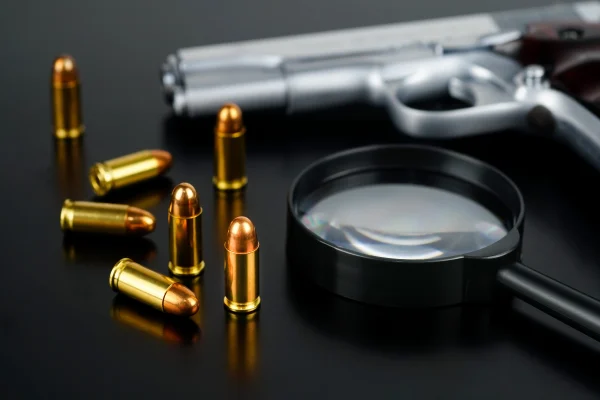
The comparison microscope is the most important tool in the lab. It allows an examiner to view a "test fire" and a "crime scene" sample side-by-side. When a jury sees two sets of bullet casing striations line up perfectly on a giant screen, the case often ends right there. Firearm and Toolmark Identification makes the expert’s conclusion feel tangible.
Overcoming Reasonable Doubt
Defense attorneys often claim their client was simply "at the wrong place." Empirical data counters these narratives. When the toolmarks match, it moves the conversation from "coincidence" to "physical certainty." The marks on the brass act as a mute witness that cannot be cross-examined into changing its story.
Modern Technology Enhancing Firearm And Toolmark Identification
According to the Bureau of Alcohol, Tobacco, Firearms, and Explosives (ATF), digital evolution is making forensic matches faster and more accurate than ever before, turning a labor-intensive manual inspection process into an automated system that produces results in hours or days. We no longer rely solely on the human eye and a magnifying glass. Computers now handle the heavy lifting of initial pattern matching.
NIBIN and Digital Ballistic Databases
The National Integrated Ballistic Information Network (NIBIN) acts like a massive library of crime. Investigators upload images of casings into this system. It can link a shooting in one city to a weapon used in another state three years prior. This helps catch repeat offenders who move between jurisdictions.
3D Surface Topography and Virtual Comparison
As noted by the National Institute of Standards and Technology (NIST), modern labs are shifting from traditional microscopes to the acquisition of 3D surface topography images, utilizing 3D scanning to eliminate the bias caused by shadows and lighting. They create topographic maps of the metal surfaces. Is forensic ballistics always 100% accurate? Another NIST publication explains that no scientific method has a zero error rate, but when Firearm and Toolmark Identification follows standardized peer-reviewed protocols, it provides an exceptionally high degree of certainty that holds up in court.
Navigating Legal Challenges and Daubert Standards
Defense teams frequently challenge the validity of toolmark science. They argue that the comparison process is currently a subjective procedure that relies heavily on the skill and expertise of the individual examiner, an observation also formally noted by NIST’s forensic science program. To win a trial, the evidence must meet strict legal requirements known as the Daubert Standard.
Quantifying Error Rates and Subjectivity
Recent landmark reports have pushed the community toward more objective models. According to a National Institute of Justice training guide, examiners now use the evolving concept of "Consecutive Matching Striae" as a quantitative method to describe a pattern match and count the specific number of lines that align. This quantitative approach moves the field toward a more statistical, data-driven foundation. Firearm And Toolmark Identification experts now rely on "black-box" studies to prove their accuracy rates to the court.
The Role of Peer Review in Forensic Validation
Standards drafted by the American Academy of Forensic Sciences (AAFS) ensure that no match goes to court based on one person's opinion, requiring that all of a primary examiner's source conclusions undergo a verification process by a second, independent examiner. This "blind" verification ensures that the results are reproducible. If two experts independently reach the same conclusion, the evidence becomes much harder to challenge.
The Future of Firearm And Toolmark Identification in Forensics
The world of firearms is changing, and forensics must change with it. New materials and manufacturing methods create new challenges for investigators.
Artificial Intelligence and Pattern Recognition
A report from NIST highlights that machine learning and artificial intelligence-based algorithms now help humans sort through thousands of potential matches in seconds by comparing patterns in the evidence. AI does not make the final call, but it highlights the most likely candidates. This allows human experts to focus their time on the most critical evidence.
3D Printed Firearms and New Forensic Frontiers
"Ghost guns" and 3D-printed weapons present a unique hurdle. Plastic parts wear down much faster than steel. This means the marks on the first shot might look different from the marks on the tenth shot. Firearm And Toolmark Identification researchers are currently developing new ways to track these non-traditional materials.
Securing Justice Through Firearm And Toolmark Identification
Successful trials depend on the marriage of hard data and clear storytelling. Forensic science provides the data, and the trial provides the story. The combination of ballistic trajectory analysis and the study of bullet casing striations gives prosecutors a level of detail that few other fields can provide.
These techniques link a gun to a bullet and place a specific weapon in a specific hand at a specific moment. Firearm And Toolmark Identification remains the gold standard for turning complicated violent crime investigations into successful outcomes. When the microscopic marks line up, the truth becomes impossible to ignore.
Recently Added
Categories
- Arts And Humanities
- Blog
- Business And Management
- Criminology
- Education
- Environment And Conservation
- Farming And Animal Care
- Geopolitics
- Lifestyle And Beauty
- Medicine And Science
- Mental Health
- Nutrition And Diet
- Religion And Spirituality
- Social Care And Health
- Sport And Fitness
- Technology
- Uncategorized
- Videos

