
Dezi Freeman Manhunt: Ending the $1M Fugitive Search
A man who rejects the legal authority of the state eventually forces that state to use its most permanent tool of enforcement. For seven months, the Dezi Freeman manhunt gripped Victoria as a suspected killer vanished into the rugged bushland of Mount Buffalo. Investigators initially believed the fugitive had taken his own life, yet he managed to survive in total isolation while 450 officers searched the terrain. This hunt reached a violent conclusion in March 2026, revealing how a single individual with extremist beliefs can paralyze an entire region. The end of the case settled the bounty and quieted public anxiety. The community now grapples with the results of sovereign citizen radicalization.
The Final Stand-off During the Dezi Freeman Manhunt
The choice to surround a shipping container at dawn reflects a total collapse of negotiation between a fugitive and the law. Reports by ABC News state that tactical officers converged on a property on Murray River Road in Thologolong at 05:30 local time on March 31, 2026. As noted by Victoria Police, officers found 56-year-old Desmond Filby, known to many as Dezi Freeman, hiding in a structure that combined a caravan and a shipping container. Police had monitored the site since the previous evening, hoping for a peaceful surrender that never came. For three hours, negotiators attempted to convince Filby to walk out.
How did Dezi Freeman die? The Guardian reports that Filby died during the three-hour negotiation when he stepped from his hideout draped in a blanket. He revealed a weapon and pointed it at police, prompting tactical officers to use lethal force. Police shot the suspect at 08:30, ending the immediate threat to the public. Mike Bush, representing the police operation, noted that Filby’s own actions removed any tactical discretion from the officers on the scene. The suspect chose to present a lethal threat rather than face the legal consequences of his prior actions.

The Porepunkah Ambush: A Fatal Miscalculation
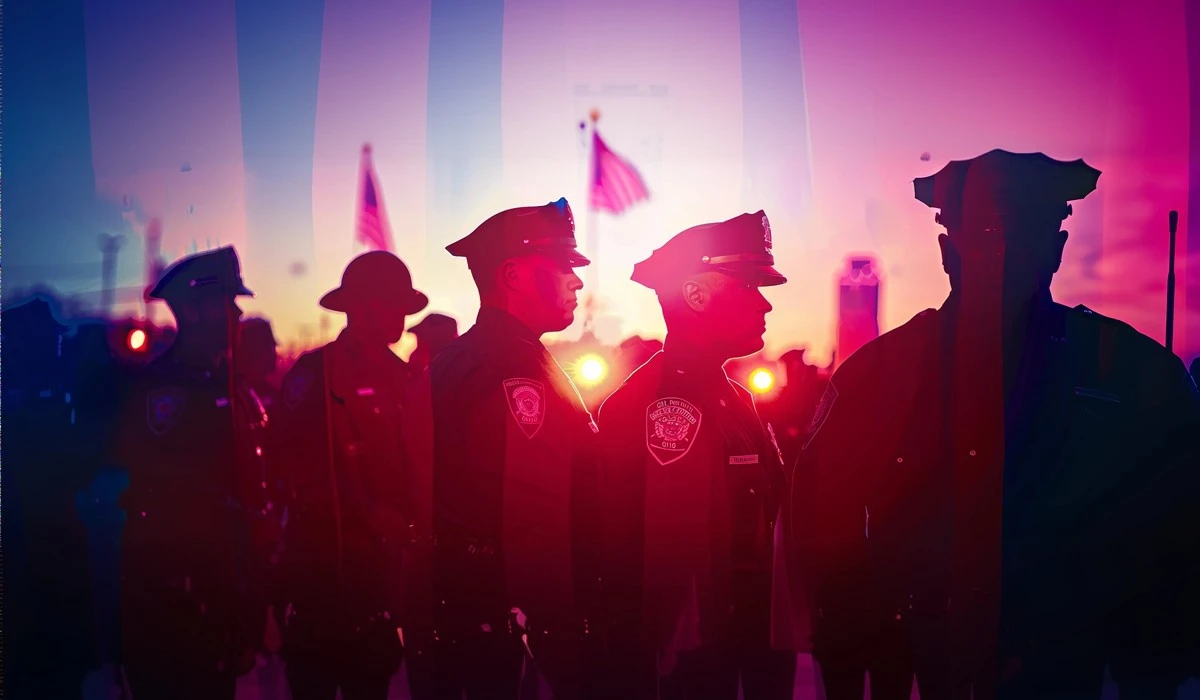
A routine warrant execution turns into a massacre when a suspect decides the state has no authority to arrest him. The manhunt began on August 26 of the previous year at a property in Porepunkah. On that day, a team of ten officers, including local detectives and members of the sexual offenses squad, arrived to serve a warrant. They did not request specialist backup because they viewed the situation as a low-risk encounter. The suspect opened fire, killing two veteran officers and wounding a third.
Detective Neal Thompson, age 59, was just months away from his planned retirement. Colleagues chose him for the task because he had an established rapport with Filby and believed he could manage the interaction calmly. Alongside him was Vadim De Waart-Hottart, a 35-year-old Belgian native known for his humor and positive attitude. Who were the officers killed in the Freeman manhunt? Detective Neal Thompson and Officer Vadim De Waart-Hottart lost their lives during the initial August ambush. Their deaths turned a local warrant service into the largest manhunt in the state’s recent history.
Sovereign Citizen Extremism: The Internal Shift
A person who creates their own legal reality eventually collides with the physical reality of a tactical response unit. According to a report by ABC News, the sovereign citizen movement uses false legal theories to claim they stand above the law. Research published by the National Center for Biotechnology Information adds that these individuals believe the government lacks legitimacy and they ignore legal authorities. His views hardened significantly during the COVID-19 pandemic when Victoria implemented strict mandates.
Filby saw these rules as a violation of his personal sovereignty and began a campaign of anti-authority harassment. Before the murders, Filby attempted to perform a "citizen’s arrest" on a magistrate. He also leveled accusations of treason against former Premier Daniel Andrews. These actions signaled a total rejection of the social contract rather than simple eccentric behavior. His history of traffic offense convictions and legal skirmishes demonstrated a growing hostility toward any person wearing a uniform. This ideology provided the justification he needed to fire the weapon in Porepunkah, as he no longer viewed police officers as human beings but as illegitimate agents of a "corrupt" system.
The Radicalization Driver
Filby’s change from a disgruntled citizen to a violent extremist occurred over several years. The pandemic acted as a pressure cooker for his existing grievances. He viewed every government interaction as a battle for his freedom. When the state attempted to enforce its laws, he responded with the violence he felt was necessary to protect his perceived rights.
Rejection of Legal Authority
The suspect’s son, Koah, acknowledged the wrongfulness of his father’s deeds while mourning the man he once knew. This shows the divide between the person and the ideology. While the family struggled with the public celebration of Filby's death, the broader community saw the shooting as a necessary end to a reign of terror. Filby’s commitment to pseudo-law meant he could never surrender, as doing so would validate the very system he claimed did not exist.
Surviving the Wilds of Mount Buffalo
Command of the terrain allows a fugitive to turn a mountain into a fortress against hundreds of pursuers. Following the August shootings, Filby fled into the bushland of Mount Buffalo. ABC News reports that the search for Filby involved interstate cooperation and specialized help from New Zealand officers. They checked various caves and abandoned mine shafts during the operation. The news agency also notes that the manhunt covered 200 kilometers between the original murder site and the location of the final confrontation. The Guardian reports that police doubt Filby survived this period without help. They state that traveling such distances and surviving for seven months in the bush without assistance presents extreme difficulty.
Investigators are now shifting their focus toward prosecuting those who provided him with food, shelter, or information. Survival in this terrain requires skill and a loyal support network that ignores a million-dollar bounty. The 1 million reward remained active and generated over 2,000 leads from the public. While many tips led to dead ends, the volume of information kept the pressure on Filby’s potential supporters. Ironically, the man the police presumed dead was actually hiding in a shipping container just a few hours away. This discrepancy shows that investigative persistence often outweighs initial forensic assumptions. The "malignant individual," as Premier Jacinta Allan described him, remained a threat long after the experts thought he was gone.
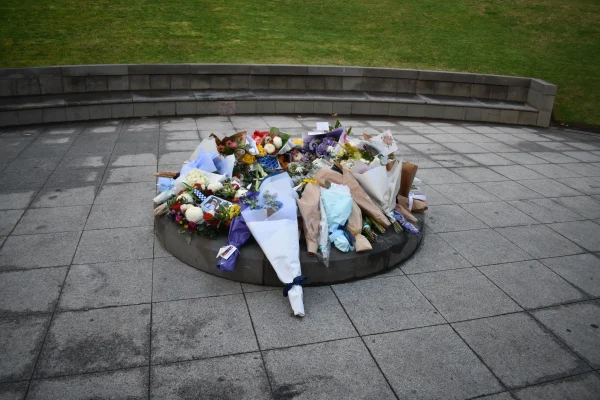
Image Credit - by Alison Newman, CC BY-SA 4.0, via Wikimedia Commons
The Psychological Toll on the Victoria Community
A manhunt does not just occupy the police; it exhausts the spirit of every resident living in the shadow of the mountain. The Alpine region suffered significant economic losses during the seven-month search. Tourism declined as families avoided the area, fearing a run-in with an armed and desperate fugitive. Residents like Richard, a former neighbor of Filby, reported months of sleepless nights. Marcus Warner, a local community member, described a sensation of unburdening following the news of the shooting. However, he also noted a deep sadness within the tight-knit community. The financial and psychological restoration required for the region will take years. The Police Association pointed out that while the threat is gone, the "theft" of safety and the loss of two officers remains uncompensated. The end of the manhunt helps the people of Porepunkah and Thologolong recover, though full resolution remains out of reach.
Economic Effect on Tourism
The Alpine tourism industry relies on the perception of safety and natural beauty. The presence of tactical teams and helicopters shattered that image. Small business owners faced dwindling bookings as the manhunt dragged into the 2026 season.
Resident Anxiety and Media Saturation
Media saturation kept the tragedy at the forefront of the public mind. Every update served as a reminder that a double murderer was still at large. Peter D’Mello described the resolution as "bittersweet," noting the parallel fates of the perpetrator and the victims who died in the line of duty.
Evaluating the Success of the Freeman Manhunt
The conclusion of a high-stakes search often reveals the limitations of modern policing when faced with an extremist who does not fear death. Premier Jacinta Allan declared the situation "over," but the Police Association offered a more tempered view. They see the death of the suspect as a move toward justice, yet they acknowledge that the community still feels the weight of the tragedy. The manhunt proved that investigative persistence eventually yields results, even when the trail goes cold.
The Victoria Police forced Filby into a corner when they followed over 2,000 leads and maintained a presence in the region. His death ensures he can never harm another officer, but it also prevents a trial that might have provided more answers about his support network. The focus now turns to the "logistical support" theory, as police seek to hold everyone accountable who helped a killer evade justice for over half a year.
A Resolution Without Peace
The Dezi Freeman manhunt ended precisely as it began: with gunfire and the rejection of authority. Desmond Filby spent his final months living in the same defiance that led him to kill two police officers in August. While the state successfully neutralized the threat, the event exposed the dangerous reality of sovereign citizen radicalization in rural Victoria. The A$1 million bounty and the 2,000 leads highlight a public eager to see justice, yet the seven-month delay in finding him suggests that a determined fugitive can still exploit the cracks in a massive search operation. Ultimately, the deaths of Neal Thompson and Vadim De Waart-Hottart remain the core of this tragedy, serving as a reminder of the price paid when ideology replaces the law.
Recently Added
Categories
- Arts And Humanities
- Blog
- Business And Management
- Criminology
- Education
- Environment And Conservation
- Farming And Animal Care
- Geopolitics
- Lifestyle And Beauty
- Medicine And Science
- Mental Health
- Nutrition And Diet
- Religion And Spirituality
- Social Care And Health
- Sport And Fitness
- Technology
- Uncategorized
- Videos

