
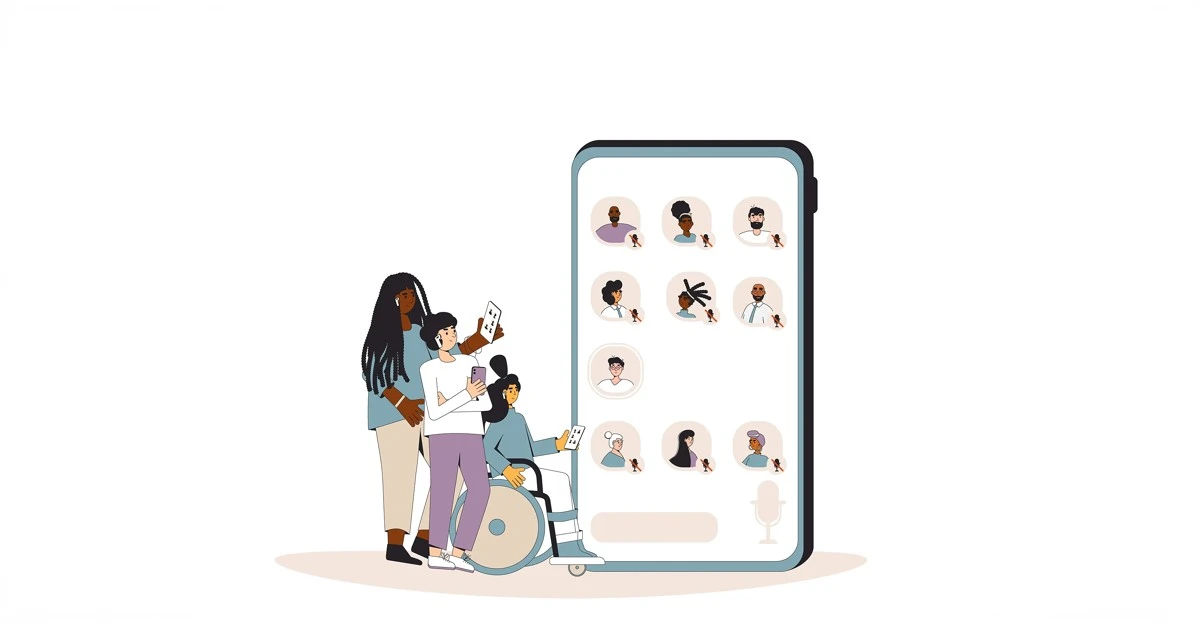
AI Helps Scammers Use Fake Disabled Profiles
When you build a social media algorithm to maximize engagement, it quickly learns that manufacturing vulnerability gets cheaper clicks than highlighting real human struggles.
By December 2025, a newly created account featuring supposedly conjoined twins gathered 400,000 followers. The people in those videos do not exist. According to an analysis by CBS News Confirmed, scammers now use artificial intelligence to churn out AI-generated disabled profiles at scale. These synthetic accounts drain attention, steal donations, and direct massive audiences toward entirely unrelated internet schemes. The base code simply follows the path of least resistance to your wallet.
We are witnessing a massive transfer of digital influence. Authentic advocates spend years building trust. Code-driven fakes bypass that entire timeline, taking over feeds and manipulating public perception for massive profit. The digital environment actively rewards this exploitation.
The Code Behind AI-Generated Disabled Profiles
The algorithms rewarding genuine inspiration cannot tell when that inspiration is entirely forged. Social media platforms prioritize high-retention content. They push videos that make viewers stop, stare, and comment. Scammers understand this programming perfectly. They deploy AI-generated disabled profiles to exploit that exact digital reflex across the internet.
How do fake AI profiles gain followers so quickly? Fake AI profiles gain followers quickly because they post shocking or highly emotional content that tricks platform algorithms into promoting them virally. These accounts mimic the appearance of real people to harvest hundreds of thousands of followers in mere months.
One creator, operating under the pseudonym "Sara," openly admitted to making substantial financial profit from these artificial personas. The operation requires zero real-world filming. A computer generates the visuals, drafts the captions, and schedules the uploads. Genuine existence turns into a digital cartoon designed exclusively for outsider amusement.
Kamran Mallick, a prominent disability advocate, describes this exact process as purely dreadful. Creators exploit marginalized identities for financial gain without ever interacting with a disabled person.
Erasing Human Autonomy
As reported by Yahoo News and Simfin UK, the BBC recently flagged dozens of these AI-generated disabled profiles, exposing a massive network of digital exploitation. Scammers weaponize modern technology to remove human autonomy entirely. They extract the visual identity of a disability while discarding the actual human being. This process strips real people of their agency. The internet absorbs their likeness and turns it into a highly profitable digital asset.
The Speed of Synthetic Clout Versus Real Advocacy
Trust takes years to build in the real world, but a server farm generates it in days. A massive follower discrepancy reveals the true scale of this issue. Real advocates spend over a decade sharing their actual lives online. Many of them celebrate reaching a modest milestone of 24,000 followers after years of hard work.
As noted by SEPE.gr regarding warnings from disability charities, accounts pretending to have conditions like Down’s Syndrome have amassed thousands of followers, with some synthetic accounts accumulating over 100,000 almost instantly. They skip the struggle and go straight to the financial reward.
Stealing Authentic Narratives
People with genuine lived experiences lose their voice in the digital crowd. Advocates like Alex Bolden point out that stealing authentic narratives for internet clout remains entirely unjustifiable. Real storytelling requires vulnerability, honesty, and time.
Artificial intelligence removes all those requirements. A spokesperson from Gemini Untwined highlighted that portraying conditions like conjoined twins purely for entertainment crosses strict ethical lines. Yet, these accounts continue to thrive.
CBS News confirmed this is a multi-platform issue spreading rapidly across TikTok, YouTube, and Instagram. According to Digital Market Reports, Meta is investigating a wave of AI-generated Instagram accounts that depict disabled women in sexualized ways, leading some analysts to claim the problem exists exclusively on Instagram. Other researchers track significant cross-platform presence. Regardless of the exact origin, the outcome remains the same. Artificial accounts drown out authentic human voices.
The Prejudice Baked into the Code
Software scrapes our worst habits from the internet and amplifies them. The technology relies on vast datasets pulled from the open internet. Because the internet contains massive amounts of biased material, the resulting artificial intelligence outputs reflect those exact flaws.
Why do AI models produce biased or offensive images? AI models produce biased or offensive images because developers train them on unfiltered internet data that already contains human prejudices and harmful stereotypes. Dr. Amy Gaeta notes that unprompted generations often produce overly sexualized or stereotyped depictions. The system assumes these offensive portrayals are normal because the training data says so.
Academic Verification of Flaws
A study from the Penn State College of IST confirms this inherent disability bias within natural language processing models. The code essentially defaults to bigotry disguised as media. Alison Kerry warns that these synthetic visuals borrow from actual disabled individuals without permission. The AI scrapes real photos to build fake personas.
Unchecked comment sections then amplify the harassment. Viewers leave cruel remarks on videos of non-existent people, creating a hostile environment for real people who read those comments. The AI-generated disabled profiles act as a magnet for the worst impulses of the internet.
Profiting From AI-Generated Disabled Profiles
Pity and curiosity are highly convertible currencies on the modern internet. Fraudsters build AI-generated disabled profiles to extract cash directly from unsuspecting users. One prominent tactic involves brazen charity fraud.
The Charity Scam Playbook
A fake profile boasting 100,000 followers recently pushed illicit fundraising claims. The account pretended to collect money for the National Down Syndrome Society. Well-meaning donors handed over their cash, believing they supported a genuine cause. The funds actually went straight into the scammer’s pocket.
Real medical realities involve serious, everyday challenges. Approximately 5,700 children are born with Down syndrome yearly in the U.S. alone, according to the CDC. These individuals often face serious comorbidities, including:
- Heart defects requiring early surgery.
- Severe sleep apnea.
- Increased risk of leukemia.
Fake accounts ignore these harsh realities entirely. They wear the diagnosis like a costume to manipulate public generosity. The scammers focus heavily on financial scams and fake charity fundraising, exploiting the emotional weight of a real medical condition to commit digital robbery.
The Pipeline to Adult Content
What looks like a wholesome family update often serves as a disguise for illicit web traffic. The digital exploitation exceeds simple donation scams. Fraudsters use high-engagement accounts to quietly redirect users elsewhere.
How do scammers monetize fake social media accounts? Scammers monetize fake accounts through building a large audience with emotional content and then redirecting those followers to paid adult websites, affiliate links, or fake charity portals. One specific fake Down syndrome account gathered 130,000 followers after posting seemingly innocent daily updates.
Once the account secured a massive audience, the bio link changed entirely. The profile acted as a massive traffic funnel for an adults-only website. Viewers expecting advocacy updates clicked the link and faced explicit content. This tactic merges the fetishization of disabled identities with aggressive financial extraction. Some reports emphasize the fetishization aspect of these accounts. Others highlight the pure financial mechanics of adult site funnels. Both realities exist simultaneously. The scammers exploit the algorithm to gather an audience, then sell that audience to the highest bidder.
Regulating AI-Generated Disabled Profiles
Writing rules for technology means chasing a target that changes shape every time you blink. Government agencies face immense pressure to stop AI-generated disabled profiles from flooding the internet. The Online Safety Act requires consistent terms of service application across all major apps. This legislation specifically prohibits mockery based on protected characteristics. Yet, online safety enforcement remains highly inconsistent.
The Regulatory Gap
Sturdy digital regulations are essential for shielding individuals from danger, according to the Equality and Human Rights Commission. However, determined users easily circumvent current protective measures.
An Ofcom spokesperson confirmed the agency actively surveils artificial intelligence evolution to deploy requisite countermeasures. Big tech companies face intense demands for tech accountability parallel to anti-ableism efforts.
The response from these platforms varies wildly. Sometimes platform executives claim they are only in a vague investigation phase regarding synthetic accounts. Other reports show active removal of CBS-flagged accounts and the implementation of advanced machine learning metadata analysis. This regulatory gap leaves users vulnerable while massive tech companies decide how much effort they want to spend policing their own networks.
Reclaiming Authentic Human Voices
The fight for representation now requires proving you actually exist. Real advocates face a strange new burden on the modern internet. They must convince their audience they are human before they can even share their message. Fake disabled AI accounts flood the zone, making genuine connection incredibly difficult.
Kandi Pickard emphasizes that individuals with Down syndrome hold exclusive rights regarding the authentic storytelling of their condition. No machine and no anonymous scammer has the right to manufacture those stories.
Fighting the Digital Flood
The internet desperately needs real stories instead of synthetic engagement bait. Real people experience the medical and social realities of chromosome 21 trisomy. They navigate the physical world, build lasting communities, and fiercely advocate for their rights.
Artificial intelligence simply mimics their appearance to harvest clicks. Society must prioritize genuine human experiences over fabricated drama. Tech companies must shut down the digital sweatshops churning out these exploitative profiles. We cannot allow synthetic accounts to rewrite the reality of human existence just to generate a few extra advertising dollars. Real life deserves protection from artificial imitation.
The Future of Digital Authenticity
The race for engagement strips away basic human decency. Code designed to maximize watch time blindly rewards the theft of real human struggles. Social media platforms must decide whether they want to host genuine human connection or serve as a dumping ground for profitable hallucinations.
Eradicating AI-generated disabled profiles requires aggressive metadata tracking and strict financial penalties for the creators. Users hold massive power when they question the origin of highly viral, highly emotional content.
Refusing to engage with synthetic accounts starves the creators of their required metrics. True representation belongs exclusively to the people actually living the experience. The internet must protect their right to exist without treating their identities as raw material for an algorithm.
Recently Added
Categories
- Arts And Humanities
- Blog
- Business And Management
- Criminology
- Education
- Environment And Conservation
- Farming And Animal Care
- Geopolitics
- Lifestyle And Beauty
- Medicine And Science
- Mental Health
- Nutrition And Diet
- Religion And Spirituality
- Social Care And Health
- Sport And Fitness
- Technology
- Uncategorized
- Videos

