

Zero-Based Budgeting to Maximize Every Dollar
When a company grows, it starts collecting "ghost costs." These are recurring fees for software nobody uses, memberships for former employees, and vendor contracts signed a decade ago. Most managers just take last year’s budget and add a small percentage to cover inflation. This habit keeps dead projects alive and drains cash away from things that actually grow the business. Spending money in this way fossilizes waste.
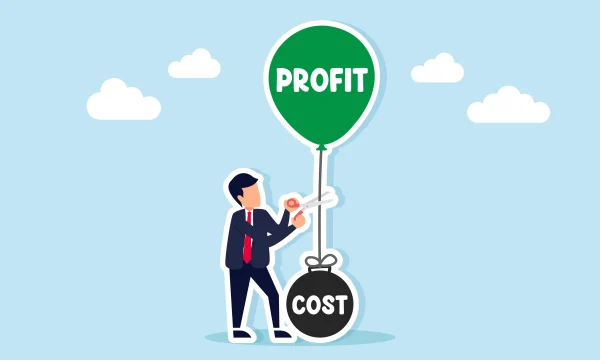
Zero-Based Budgeting changes this by forcing every dollar to earn its way back into the plan. The budget becomes a strategic choice instead of a math problem. Demanding organizational cost justification for every single line item ensures that you stop funding the past and start fueling the future. This approach ensures that your capital stays fluid and moves where it can do the most work. It removes the safety net for wasteful spending and forces leadership to look at the business with fresh eyes every single year.
The Core Philosophy of Zero-Based Budgeting
The traditional way of budgeting relies on history. If you spent a million dollars last year, you assume you need a million plus a little more this year. This "incremental" thinking is how companies become bloated and slow. Peter Pyhrr developed a different way at Texas Instruments in 1969. As reported by Reuters regarding corporate strategy, he argued that every expense should be justified from scratch every single year.
The Blank Slate Advantage
Starting at zero means you don't care what you spent last year. You treat the company like a brand-new startup every time you plan your finances. This forces every department head to look at their operations and ask if their current spending actually helps the company win today. How does zero-based budgeting work? According to a paper from Rutgers University, this method functions as every department builds its budget from the ground up each period, starting from a "zero base" rather than relying on previous budgets. This ensures that no expense stays in the plan without a fresh evaluation of its current utility.
Shifting from Spending to Investing
Most people view a budget as a list of bills they have to pay. In this new model, you view every dollar as a seed. If a "seed" isn't going to grow into a "tree" of profit or productivity, you don't plant it. This mindset shift changes the internal conversation from "how much can I get?" to "how much can I generate?"
Perfecting the Art of Organizational Cost Justification
Every request for money must come with a reason. You cannot simply say, "We’ve always had this department." You must prove that the department provides a specific value that outweighs its cost. This is the heart of organizational cost justification. It creates a high bar for spending that protects the company’s profit margins.
The Decision Package Framework
A "Decision Package" is the tool used to justify spending. The same Rutgers publication notes that a Decision Package is a document covering a specific activity and its cost, while highlighting the consequences of failing to perform that activity. It also includes the specific goals that the activity will achieve. For example, a customer service team might create a package for a new chatbot. They must show how many hours it saves and how much customer satisfaction will improve. What is the main goal of zero-based budgeting? The primary objective is to improve resource use by directing funds toward activities that generate the highest value. This action eliminates operational waste and aligns spending with the company’s most important strategic goals.
Aligning Expenses with Strategic Pillars
Every dollar you spend should point toward your company’s main goals. If your goal is to be the fastest delivery service, your budget should show massive spending on logistics and very little on fancy office furniture. Using organizational cost justification ensures that your money follows your mission rather than drifting into random side projects.
Driving Operational Productivity
When you stop assuming that last year's budget was correct, you find a lot of "shadow spend." These are the costs that hide in the corners of a large organization. Zero-Based Budgeting shines a bright light on these costs and moves that money to where it can actually help the company grow.
Identifying and Cutting the "Shadow Spend"
Large companies often have multiple departments paying for the same thing. Two different teams might have separate subscriptions to the same data service. Or, a department might be paying a consultant for a project that ended six months ago. These leaks happen because nobody is looking at the "zero" level. Rebuilding the budget makes these redundancies obvious. You can then cancel the extras and keep the savings.
Reinvesting Savings into Growth Levers
Productivity involves saving money and moving it to better areas. Money saved from a redundant software license can be moved into a marketing campaign that brings in new customers. This creates a "flow" where capital is always moving toward the highest ROI. Is zero-based budgeting good for companies? It is highly beneficial for organizations looking to gain a competitive edge through lean operations and disciplined spending. While it requires more effort than traditional methods, the resulting clarity and capital productivity often lead to significantly higher profit margins.
The Human Element of Financial Accountability
This model changes the culture of a company. It moves the responsibility of saving money away from just the CFO and puts it into the hands of every manager. This creates a sense of ownership. When a manager has to provide an organizational cost justification for their team’s travel budget, they think twice about whether a trip is truly necessary.
Empowering Department Heads as Business Owners
Research from the National Bureau of Economic Research indicates that managers often try to spend their entire budget to avoid losing it, leading to an end-of-year increase in costs or a decline in work standards. The study found that IT projects procured in the last week of the fiscal year were two to six times more likely to result in inferior quality. In a zero-based environment, managers are rewarded for finding savings. They act like owners of a small business, carefully watching every cent. They start to look for ways to do more with less because they know their performance is tied to the value they create, not the size of their budget.
Encouraging Radical Transparency Across Silos
When everyone has to justify their costs, the "secrets" of different departments disappear. Marketing can see why IT needs a specific server upgrade. HR can see why Sales needs a new CRM. This transparency reduces internal politics. People stop fighting over a "pot of money" and start working together to fund the most important company-wide projects.
Step-by-Step Implementation of the Zero-Based Budgeting Flow
Implementing this change requires a clear plan. You cannot just tell everyone "start at zero" and expect it to work overnight. It requires a structured process that guides managers through the transition.
Setting the Boundary and Scope
You don't have to do the whole company at once. Many firms start with one department, like Marketing or General Administration. This allows you to learn how to do organizational cost justification properly before scaling it. Setting clear boundaries prevents the process from becoming overwhelming for the leadership team.
Establishing Data-Driven Benchmarks
You need good data to make this work. You cannot justify a cost if you don't know the "driver" behind it. For a warehouse, the driver might be the number of packages shipped. For a call center, it might be the number of minutes spent on the phone. Once you know these numbers, you can accurately predict how much money is actually needed to hit your targets.
Overcoming Common Implementation Friction
As noted by IBM, the primary complaint about this method is that it is a process that requires a significant amount of time. Rebuilding a budget from scratch is harder than just copying a spreadsheet. However, the long-term benefits far outweigh the initial effort.
Managing the Time and Resource Investment
It is true that ZBB can take 40% to 60% more time than traditional budgeting in the first year. According to McKinsey, companies manage this with specialized software for data entry, noting that such budgeting historically necessitated the use of thousands of manual tables. Automation can categorize thousands of receipts and bills instantly. This allows managers to spend their time on the "justification" part rather than the "counting" part.
Combatting "Budgeting Fatigue"
To keep the team from burning out, some companies use a "rolling" model. They might only do a full zero-based review every two or three years. In the years in between, they use a lighter version of the process. This keeps the discipline of organizational cost justification alive without making the workload too heavy every single year.
Future-Proofing the Bottom Line with Zero-Based Budgeting
The economy changes fast. A budget that made sense in January might be useless by July. Because this model is based on current needs rather than past habits, it makes a company much more agile.
Agility in a Fluctuating Market
The same McKinsey research also suggests that Zero-Based Budgeting allows a company to quickly shift funds to defend its territory through a focus on obtaining the most productive results from its expenditures. They aren't locked into "legacy" spending. They can look at their ranked list of decision packages and immediately cut the lowest-priority items to fund a new emergency project.
Building a Culture of Ongoing Improvement
ZBB isn't a one-time project. It is a way of thinking. It teaches everyone in the company to look for waste every day. Over time, this becomes part of the company's DNA. Employees at all levels begin to suggest ways to save money or improve processes because they know that every dollar saved is a dollar that can be used to build a better future.
Achieving Financial Fluidity
True financial health does not come from cutting costs until the business cannot function. It comes from ensuring that every dollar spent is doing the most work possible. Many companies fail because they let their expenses grow like weeds until they choke out all the profit. Using organizational cost justification pulls those weeds out by the roots every year.
You create a system where cash flows toward opportunity and away from waste. This keeps your business lean, fast, and ready for whatever the market throws at it. When you commit to Zero-Based Budgeting, you stop being a victim of your past spending habits. You take total control of your financial future and ensure that your company has the resources it needs to win.
Recently Added
Categories
- Arts And Humanities
- Blog
- Business And Management
- Criminology
- Education
- Environment And Conservation
- Farming And Animal Care
- Geopolitics
- Lifestyle And Beauty
- Medicine And Science
- Mental Health
- Nutrition And Diet
- Religion And Spirituality
- Social Care And Health
- Sport And Fitness
- Technology
- Uncategorized
- Videos

