
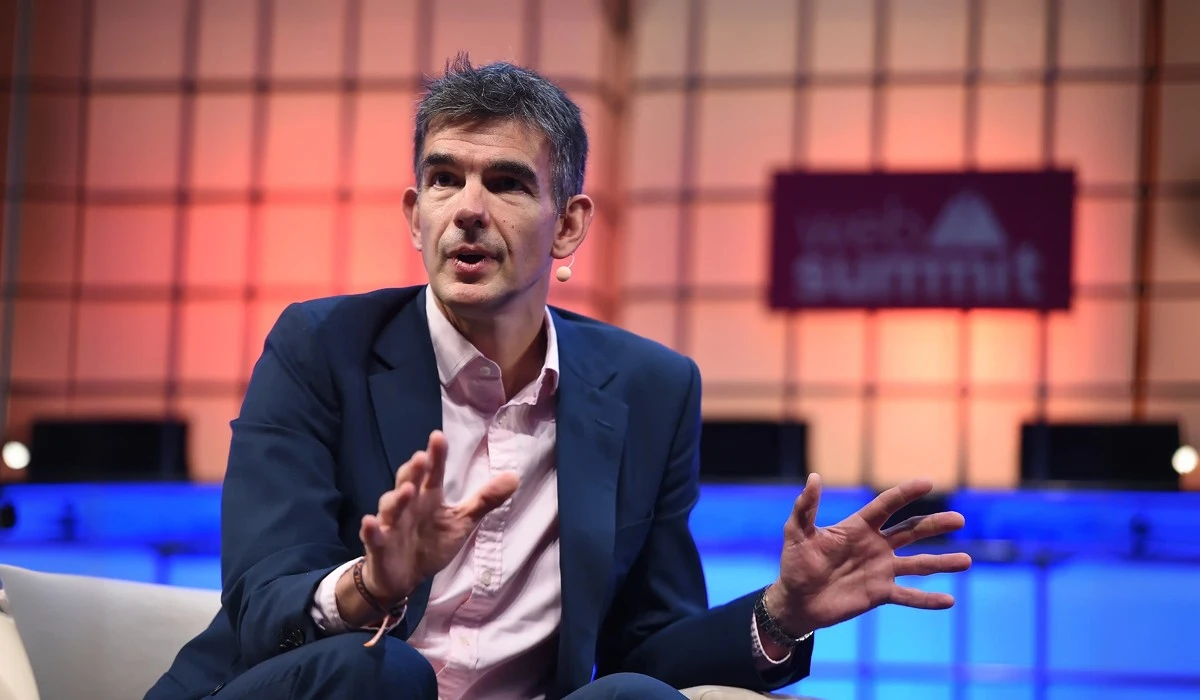
Image Credit - by Web Summit, CC BY 2.0, via Wikimedia Commons
Why Matt Brittin Changes Broadcasting Forever
Putting a tech executive in charge of a 100-year-old public broadcaster forces two completely incompatible business models to crash together.
For nearly twenty years, Matt Brittin climbed the ranks at Google to become President of the Europe, Middle East, and Africa region. He perfected profit generation, navigated intense global restructuring, and drove rapid digital expansion across multiple continents. Now, he faces an entirely different corporate beast. According to a report by The Times cited by Reuters, former Google executive and now BBC Director-General Matt Brittin steps into an organization dealing with severe budget shrinkage, political polarization, and endless institutional bias allegations. The former leader walked away after a defamation lawsuit involving a heavily edited Donald Trump speech. This massive leadership change permanently shifts the core strategy of the entire network. A man who built his career optimizing search engine profits must now protect the universal access of public service broadcasting.
The Corporate Reality Behind BBC Director-General Matt Brittin
Hiring an internet executive to run a legacy media brand shifts the entire organization toward aggressive commercialization.
This appointment brings a ruthless analytical approach to an institution famously known for slow mistake-correction. Colleagues from his private sector days describe Brittin as a highly intelligent consensus-builder and a highly effective delegator. He operates with a massive overarching vision while pushing tough commercial decisions without hesitation. Who is the new head of the BBC? Matt Brittin is a former Google executive and Olympic rower stepping in to lead the broadcaster through its digital shift. His history includes steering a tech giant through extreme corporate challenges, such as a major YouTube advertiser crisis. During that specific crisis, he orchestrated rapid apologies and solved massive structural problems fast. The broadcaster desperately needs this kind of swift crisis management right now.
A Background Built on Intense Competition
Brittin brings a deeply competitive edge to the corporate boardroom. As noted by The Independent, he was born in Walton-on-Thames, Surrey in September 1968, and he pursued higher education at Robinson College, Cambridge, studying Land Economy and Geography. The Times of India reports that he later earned a Master of Business Administration with distinction from the prestigious London Business School. His competitive drive stems directly from an intense athletic background.
- He rowed in the famous Cambridge Boat Race from 1987 to 1989.
- According to the Google company blog, he represented the U.K. men's rowing team at the 1988 Olympics.
- He secured a World Championship bronze medal in 1989.
After leaving the water, he started his professional life as a surveyor at Connell Wilson before transitioning into a high-pressure role as a McKinsey consultant. This early training forged a highly analytical brain that approaches creative media purely as a structural business challenge.
How a Tech Giant Takes Over a Historic Broadcaster
A leader trained to maximize shareholder returns faces immediate internal resistance when forced to prioritize universal public access.
Research published in The Guardian notes that Brittin recently stepped down after eighteen years at Google, spending roughly two decades turning digital attention into billions of dollars. He started there in January 2007, quickly rising to UK Managing Director by 2009. He eventually became Vice President for North and Central Europe by 2011, and EMEA President from 2014 until late 2024. During this exact period, local newspapers collapsed entirely, closing around 300 outlets as digital advertising dominated the market. This creates immediate tension with traditional journalists. A man tied to the decline of regional publishing now commands the biggest newsroom in the country. What did Matt Brittin do at Google? He managed the Europe, Middle East, and Africa operations, overseeing digital ad revenue, corporate strategy, and regional tech expansion. This tech background provides digital acceleration expertise, yet it severely lacks traditional editorial experience.
The Post-Google Sabbatical and Media Re-entry
Before taking on this massive public role, Brittin took a deliberate pause. In late 2024, he announced his departure from Google to initiate a self-described "mini gap year." He shared his plans openly on LinkedIn, outlining a desire to learn underwater breathing, purchase a solo rowing vessel, and grow facial hair. He stepped back from the corporate grind to participate in a sabbatical as a part-time sports enthusiast. However, he also secured a spot on the Guardian Media Group board in 2025, keeping one foot firmly planted in the media sector. He holds other non-executive roles with the Climate Group, Media Trust, and Sainsbury's. This brief period of reflection prepared him for the brutal reality of running a hyper-scrutinized public institution.
Trimming the Fat vs. Protecting the Core
Massive corporate restructures rely strictly on data points, leaving absolutely no room for sentimentality about long-standing television traditions.
In January 2023, Google slashed 12,000 jobs globally in a sweeping post-Covid adjustment. This 6% workforce reduction demonstrated a willingness to trim massive operations quickly and effectively. The broadcaster currently employs over 21,000 people. Many internal staff members now scrutinize this new leadership heavily, fearing similar aggressive cuts. Brittin has always focused heavily on business success, profit generation, and eventual job creation through aggressive digital innovation. However, applying a Silicon Valley profit model to a public service entity creates severe friction. Public service broadcasting requires universal access, regardless of profitability. Tech companies focus on scraping AI content and driving speed, while media creators demand strict protection and fair compensation. This clash of priorities completely defines the new administration.
Passing Over Traditional Media Talent
The board clearly wanted an outsider to shake up the existing hierarchy. They actively passed over highly experienced media figures like Jay Hunt, Alex Mahon, and Charlotte Moore to secure Brittin as the official Tim Davie successor. His specific digital skill set outweighed their decades of traditional programming experience. His appointment also continues a long-standing demographic trend at the top of the organization. The network has seen 16 previous male leaders hold the primary position. Throughout its history, it only appointed a single female deputy, Anne Bulford, back in 2016. The board chose to prioritize digital tech experience over traditional broadcasting backgrounds, actively skipping over strong female candidates. The board clearly viewed Brittin as a necessary talent magnet capable of completely rewiring the stagnant corporate culture.

Image Credit - by Alexander Svensson, CC BY 2.0 , via Wikimedia Commons
The 2016 Tax Scrutiny That Tested His Grip
Mastering corporate defense tactics provides the exact training required to survive incredibly hostile government hearings.
The British government heavily scrutinized Brittin during his time in the private sector. In 2013 and 2016, the Public Accounts Committee hammered Google over its complicated tax strategies. Margaret Hodge, the committee chair at the time, openly attacked the company for using artificial tactics to avoid tax obligations. She labeled the approach highly unethical and completely immoral. Brittin publicly stated the UK operation generated zero sales, though former staff members directly contradicted this claim by pointing to local sales commissions and active job advertisements. Ultimately, the tech giant settled for £130 million in back taxes. This brutal experience perfectly prepared BBC Director-General Matt Brittin for the intense political pressure of his new job. He already understands how to field aggressive questions from hostile politicians.
Early Media Experience at Trinity Mirror
Despite his massive tech background, Brittin does possess early foundational experience in traditional British media. Before joining Google, he worked as a commercial director and later a strategy and digital director at Trinity Mirror between 2004 and 2006. This early role gave him a deep understanding of the structural challenges facing legacy publishers. He watched the print industry struggle to adapt to the internet long before he joined the company that ultimately dominated the digital ad space. This dual perspective gives him a unique vantage point. He understands both the desperate needs of traditional journalists and the relentless exactness of modern digital platforms.
Why BBC Director-General Matt Brittin Must Clean Up Tim Davie's Mess
A massive leadership vacuum forces an incoming executive to immediately play defense rather than pushing new creative innovations.
The previous boss left behind a severely fractured organization. Tim Davie dealt with immense culture war pressures and constant institutional bias allegations. The breaking point arrived during a high-profile defamation lawsuit involving a heavily edited speech from Donald Trump. Why did Tim Davie resign from the BBC? He stepped down amid immense political backlash and a defamation lawsuit following the controversial editing of a political broadcast. Davie often complained about the extreme brutality of public life and the constant personal attacks on his character. He felt trapped between political factions, labeled both a radical leftist and a rightwing conservative plant. He openly struggled to maintain impartial coverage. Brittin steps right into this exact crossfire. He must instantly restore public trust and fix a severely damaged public image.
Securing the Royal Charter
Beyond simply repairing the public image, the new BBC leadership faces a massive structural deadline. The broadcaster desperately needs to push for a permanent royal charter. The constant threat of defunding creates a highly unstable working environment. Brittin must negotiate with politicians who actively want to dismantle the network. He brings an energetic office approach to a building famous for its heavy bureaucracy. He must navigate the exact political polarization difficulties that ultimately destroyed his predecessor. His ability to build consensus and project authority will determine whether the network secures its long-term future or faces total dismantling by hostile lawmakers.
Navigating the iPlayer Era and Commercial Expansion
Transforming a traditional network into a digital powerhouse demands treating streaming platforms exactly like aggressive tech startups.
The broadcaster wants to aggressively commercialize BBC Media Tech to secure new revenue streams. Brittin holds the exact digital acceleration expertise required to drive iPlayer innovation and secure lucrative tech partnerships. He views television evolution as a clear shift toward new video storytelling formats rather than a slow death. His tech industry connections provide a massive strategic advantage. He actively advocates for positive tech partnerships over predatory competition. During a 2022 Media Show appearance, Brittin emphasized the necessity of positive tech potential and mindful management. He believes deeply in the importance of British involvement in building universal tech products. He plans to use his Silicon Valley connections to expand the digital footprint of the network globally while monetizing its vast historical archives.
The Salary Reality and Personal Interests
The financial realities of this role highlight the massive gap between private tech and public service. Tim Davie earned roughly £550,000 annually, with previous official figures placing the base salary around £541,000. This Matt Brittin salary figure sits lightyears away from standard executive compensation at a massive tech giant. Brittin accepts a massive pay cut to take on this cultural challenge. He balances his corporate intensity with genuine pop culture appreciation. As a fellow of the Royal Television Society, he openly admires the television industry. He identifies as a massive sci-fi enthusiast and a Doctor Who fan, even keeping a Tardis teapot in his office, as highlighted by The Telegraph. In 2011, he proved his endurance by cycling from Land's End to John o' Groats. He married Katherine Betts in 1995 and raised two sons, maintaining a private family life alongside his highly public career.
The Final Verdict on a Silicon Valley Executive in London
Applying a relentless analytical framework to creative pursuits forces artists to constantly justify their existence on a financial spreadsheet.
The culture clash between a tech mindset and a public broadcaster remains the biggest internal hurdle. The creatives inside the network deeply worry about AI content scraping completely replacing human talent. They fear a leader who views television purely as an engagement metric to optimize. BBC Director-General Matt Brittin must quickly prove he values universal broadcasting just as much as digital speed. He brings a corporate ruthlessness to a creative environment. The staff must adapt to a leader who prioritizes rapid iteration over endless committee meetings. His history as a tough commercial decision-maker indicates he will make highly unpopular choices to balance the shrinking books. The organization chose a big-picture visionary to solve an existential crisis.
Forging a New Financial Path
The success of this entire tenure depends entirely on finding new money. The traditional budget continues to shrink under immense government pressure, exacerbating massive BBC funding challenges. Brittin must secure alternative funding sources without compromising the core mission of the network. He needs to aggressively negotiate with international streaming platforms while protecting local British programming. He already possesses the strategic value required to execute this shift. However, he must convince a highly skeptical public that a former tech titan genuinely cares about public service. He must reconcile the profit-driven instincts he honed over two decades with the strict public service mandate of his new employer.
The Future Under BBC Director-General Matt Brittin
Putting a former tech titan at the helm of a national institution forces an immediate and aggressive evolution. He steps into a severely fractured environment demanding rapid digital evolution and intense damage control simultaneously. The organization desperately requires a leader who can secure technical partnerships, overhaul streaming strategies, and withstand brutal political hearings without flinching. BBC Director-General Matt Brittin possesses the exact analytical brain needed to modernize the entire operation. He brings an aggressive corporate exactness to a network historically bogged down by incredibly slow decision-making. The coming years will reveal whether a man trained to extract maximum digital profit can successfully defend the concept of universal public broadcasting.
Recently Added
Categories
- Arts And Humanities
- Blog
- Business And Management
- Criminology
- Education
- Environment And Conservation
- Farming And Animal Care
- Geopolitics
- Lifestyle And Beauty
- Medicine And Science
- Mental Health
- Nutrition And Diet
- Religion And Spirituality
- Social Care And Health
- Sport And Fitness
- Technology
- Uncategorized
- Videos

