

Image Credit - by Tim Reckmann from Hamm, Deutschland, CC BY 2.0, via Wikimedia Commons
Starlink in Southern Africa: The Ownership Gridlock
Global tech monopolies operate on universal scaling models, expecting sovereign borders to yield automatically to overwhelming consumer demand. The push to deploy Starlink in Southern Africa reveals a hard collision between Silicon Valley’s absolute control mandate and post-colonial economic laws. As detailed by Rest of World, SpaceX initiated its rollout on the continent when Nigeria became the first African market Starlink entered in January 2023. Fast forward to early 2026, and the company boasts 10 million global subscribers. Yet, the expansion stalls abruptly across two neighboring borders.
Regulatory bodies demand local equity sharing to rectify decades of historical exclusion. According to Starlink’s official support documentation, the company absolutely refuses to dilute its corporate ownership because it enforces global shareholding restrictions and cannot accept local equity. This stalemate leaves users caught between strict national policies and a rigid corporate refusal to compromise. The dispute exposes exactly how modern digital infrastructure gets blocked by decades-old political directives.
The 51 Percent Wall in Windhoek
Sovereign nations use licensing requirements to force foreign companies into mandatory local wealth distribution. According to a Reuters report on March 23, Namibia published an official rejection notice turning down applications from Starlink Internet Services Namibia (Pty) Limited. The news outlet noted the company sought a telecom service license and access to radio spectrum. Namibia gained independence in 1990, moving away from a South African white-minority regime. To protect its domestic economy, the country enforces a strict telecommunications law today. This law demands a minimum 51% local or citizen ownership for all telecommunications operators. SpaceX enforces a strict global corporate policy. The company totally bans local equity dilution anywhere in the world.
Consequently, the Namibian subsidiary structure offered zero local ownership. The regulator looked at the paperwork, saw the zero percent local equity, and blocked the application entirely. People often ask, what is the current status of Starlink in Southern Africa? The company operates legally in approximately 25 African countries, but nations with strict local equity demands remain entirely blocked. SpaceX attempted to negotiate a different kind of deal. The company presented a strategy focused on local corporate partnerships and job creation as their primary value proposition.
Regulator Stands Firm Amid Corporate Push
They hoped this economic boost would satisfy the authorities. The Namibian regulator held firm to the exact letter of the law. Interestingly, the official public notice omitted the specific reasons for the rejection. Interested parties must directly request formal explanations from the authority to see the details. The clash perfectly illustrates the tension between global corporate standardization and localized legal requirements.
South Africa’s 30 Percent Equity Hurdle
Corporate leaders often frame standard domestic business regulations as targeted personal discrimination. Next door to Namibia, a similar legal blockade exists for Starlink in Southern Africa. South Africa requires telecommunications companies to maintain a minimum 30% historically disadvantaged equity mandate. This empowerment law roots back to the 1994 political shift and the termination of white-minority rule. The government designed these laws to force economic inclusion and redistribute corporate wealth. Elon Musk publicly criticized these specific ownership rules. He claims his South African market entry remains restricted solely due to his racial background.
Musk characterizes the empowerment policies as discriminatory and a massive barrier to foreign investment. He refuses to alter his company structure to meet the local equity demands. The South African government pushes back hard against this narrative. Officials state the market door remains entirely open to SpaceX. The strict prerequisite for entry is simply strict adherence to domestic law. Observers frequently wonder, does South Africa ban foreign companies? No, over 600 American businesses currently operate successfully in the country because they comply with standard local regulations.
The 600-Company Counterargument
The state points to a massive roster of foreign enterprises operating smoothly. The government uses these 600 compliant American businesses to debunk the barrier narrative entirely. These companies successfully navigated the 30% historically disadvantaged equity mandate. SpaceX remains a stark outlier in its absolute refusal to adapt its ownership structure to local legal expectations. The state positions SpaceX as an unwilling participant in standard corporate compliance, refusing to grant special exceptions for a single entity.
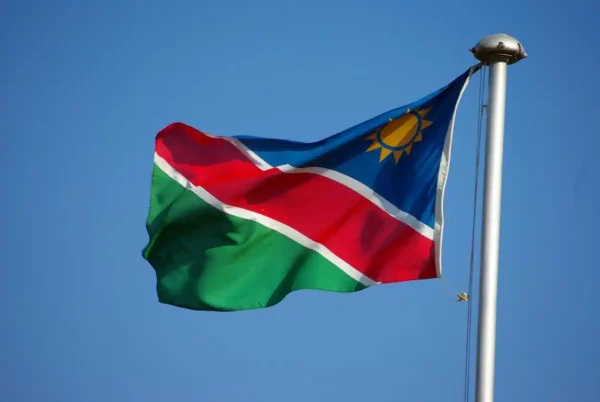
Image Credit - by Heineken85, CC BY-SA 3.0, via Wikimedia Commons
The Missing Application to ICASA
High-profile executive complaints regarding market entry restrictions frequently happen before any official legal paperwork actually gets filed. The rhetoric surrounding the market barrier contradicts the actual bureaucratic paper trail. While executives complain about ownership rules blocking their entry, official records tell a distinctly different story. As of the current data, SpaceX has submitted zero formal license applications to ICASA, the South African communications regulator. The lack of a formal filing drastically changes the context of the entire dispute. As pointed out by Snopes, regulators cannot approve or deny an application that does not legally exist, noting the satellite provider simply has not done the required paperwork to operate.
The company appears to protest the rules from the outside rather than formally challenging them through established legal channels. The lack of paperwork also shields the company from an official public rejection. Furthermore, ICT Lawyer Dominic Cull notes that the standard ICASA procedure timeline carries a potential two-year delay minimum. Even if SpaceX filed the necessary documents today, a massive waiting period lies ahead. The regulatory body moves slowly, ensuring strict compliance with all national communication acts before granting airwave access.
Equity Equivalent Investment Programmes Explained
Governments design alternative compliance routes when strict national equity laws threaten to block highly desired global services. Facing a total refusal from SpaceX to dilute share equity, South Africa explored workarounds. SpaceX proposed Equity Equivalent Investment Programmes (EEIPs). These programs allow multinational corporations to invest heavily in local development instead of surrendering company shares. According to AP News, these programs replace traditional share equity dilution with massive capital injections, allowing alternative methods like skills development or partnerships with local suppliers to meet empowerment goals. In late 2025, Communications Minister Solly Malatsi issued a policy directive. This directive pushed for the exploration of these EEIPs specifically for the telecommunications sector.
This move aimed to bypass the traditional share equity dilution while still satisfying the legal intent of the empowerment laws. SpaceX pledged a massive R500-million rural school connection initiative to offset the equity demands. The company also launched a public advocacy website to generate grassroots support for this alternative investment strategy. The company hopes public pressure will force the government to accept the capital investment over the strict equity transfer. The strategy relies heavily on the presentation of massive public utility to override the standard regulatory checklist.
Political Friction and Regulatory Backlash
Fast-tracking critical infrastructure causes intense political backlash when standard legal processes get bypassed for wealthy corporations. The EEIP directive sparked immediate political infighting within the South African government. ANC Members of Parliament heavily criticized the move. They threw accusations directly at the communications minister, claiming he was providing favorable fast-tracking specifically for Starlink. The politicians argued that altering standard procedures for one wealthy corporation undermines the entire empowerment framework. They view the 30% mandate as the foundational pillar of post-1994 economic justice.
Minister Malatsi defended the directive aggressively. He insisted the intent was entirely neutral. He stated the directive offered zero preferential treatment for specific entities, framing it as a necessary modernization of the telecom sector. The push to launch Starlink in Southern Africa hinges heavily on this political battle. If the ANC parliamentarians win the debate, the EEIP route dies entirely. SpaceX would then face the unyielding 30% equity mandate with zero alternative compliance options available.
The Roaming Loophole and Hardware Bans
Consumer demand routinely outpaces regulatory approval, leading citizens to import hardware and connect illegally across international borders. The total market absence in these countries exists only on paper. In reality, citizens actively bypassed the legal gridlock. Rampant illicit domestic usage occurred via global roaming features. Users imported the hardware from authorized neighboring countries and connected from within South Africa and Namibia. They paid subscription fees to foreign subsidiaries while using the service locally. This loophole severely undermined the authority of the national communications regulators.
Regulators eventually forced the company's hand to stop the unauthorized access. In 2024, CRAN took direct regulatory action. The Namibian authority issued a strict cease-and-desist directive to Starlink. Consumers frequently ask, can you use Starlink in blocked countries? No, local regulators actively block unauthorized access, and Starlink initiated massive account suspension rollouts in June 2025 to comply with these orders. A Bloomberg report highlights that CRAN also published public warnings against hardware purchases to deter consumers, explicitly advising citizens that acquiring the terminal equipment is illegal. The hardware bans demonstrate how aggressively local authorities will protect their regulatory authority. The clampdown forced users offline and escalated the tension between the global provider and the national governments.

Image Credit - by BugWarp, CC BY-SA 4.0, via Wikimedia Commons
The 90-Day Appeal Window for Starlink in Southern Africa
Strict legal deadlines create distinct windows of opportunity for rejected corporations to restructure their approach or launch formal appeals. The attempt to officially expand Starlink in Southern Africa relies heavily on strict bureaucratic timelines. Following the March 23 rejection notice in Namibia, a specific legal clock started ticking. The law provides a reconsideration period for aggrieved parties. This appeal window lasts exactly 90 days post-rejection. The company must act decisively within this tight timeframe to keep their Namibian aspirations alive.
A CRAN regulator confirmed that a re-evaluation remains entirely possible within these three months. This process requires a specific event to activate. The regulator needs either an internal motion or a formal external complaint to reopen the case. SpaceX now holds a extremely narrow timeframe to either appeal the decision, alter its local subsidiary structure, or walk away from the Namibian market entirely. If the 90-day window closes without action, the rejection becomes permanent. The company would then need to start the entire application process from scratch, facing the exact same 51% local ownership hurdle all over again.
The Continent-Wide Strategy Collision
Corporate expansion models eventually hit an unyielding bureaucratic reality check when encountering strict national sovereignty mandates. The SpaceX Africa rollout began with high momentum. The company rapidly expanded to establish a massive footprint across the continent. They found markets with flexible ownership laws or willing regulatory partners. The strategy worked flawlessly until it hit the southern tip of the continent. The 1990 Namibia independence and the 1994 South Africa political shift heavily shaped the rigid economic laws of these two nations. Both nations prioritize localized wealth distribution above rapid technological deployment.
SpaceX demands absolute corporate control. They fiercely protect their internal structure to maintain rapid decision-making and total profit retention. The clash highlights a deep incompatibility between standard global tech operations and localized economic empowerment laws. The global 10 million subscriber count means absolutely nothing to a domestic regulator enforcing a national sovereignty mandate. The company must ultimately decide if the revenue potential from these two nations justifies breaking their strict global rule against corporate equity dilution.
The Standoff Over Starlink in Southern Africa
Corporate policy and national law currently sit at a total standstill. Both sides hold massive leverage in this ongoing negotiation. SpaceX provides an unmatched rural connectivity solution capable of improving local economies. The governments of Namibia and South Africa hold the absolute legal authority to grant or deny access to their sovereign airwaves. The struggle over Starlink in Southern Africa reveals exactly how rigid historical empowerment laws interact with inflexible Silicon Valley monopolies.
Neither side shows any willingness to compromise their core operational principles. South Africa demands total adherence to its 30% mandate. Namibia strictly enforces its 51% citizen ownership requirement. SpaceX refuses to hand over a single share of its local corporate subsidiaries. Until one side breaks, the physical borders remain permanently closed to the satellite network. The situation forces millions of potential users to wait indefinitely while politicians, lawyers, and billionaires fight over corporate equity percentages.
Recently Added
Categories
- Arts And Humanities
- Blog
- Business And Management
- Criminology
- Education
- Environment And Conservation
- Farming And Animal Care
- Geopolitics
- Lifestyle And Beauty
- Medicine And Science
- Mental Health
- Nutrition And Diet
- Religion And Spirituality
- Social Care And Health
- Sport And Fitness
- Technology
- Uncategorized
- Videos

