
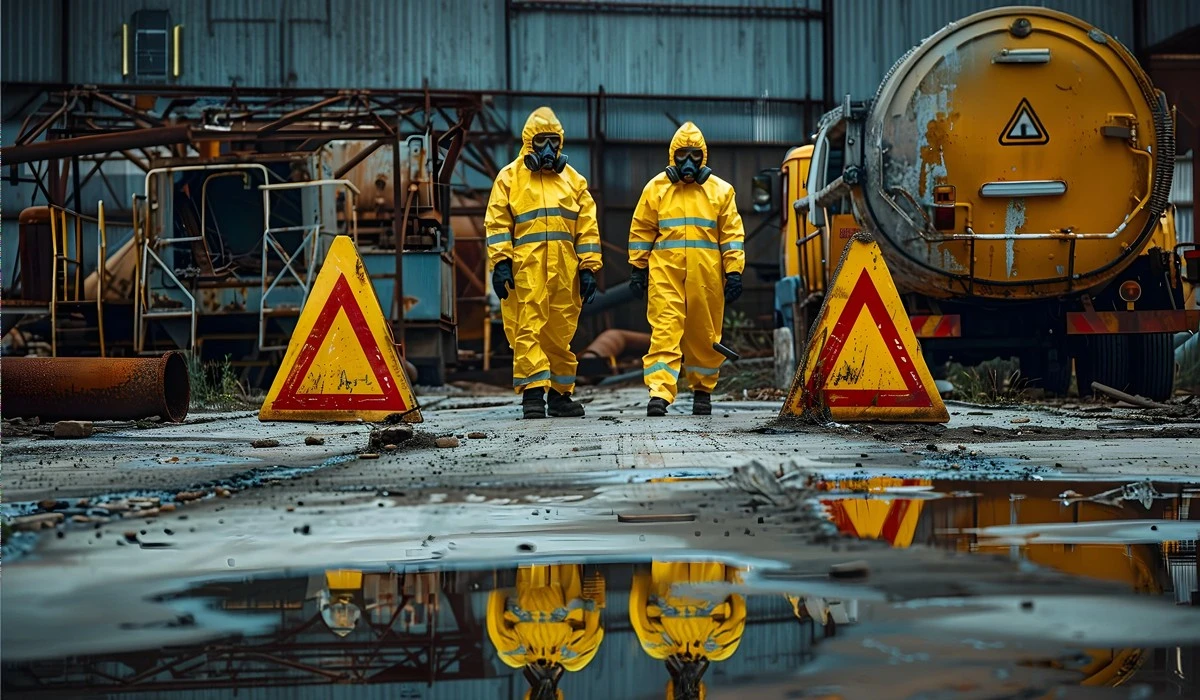
Root Causes In Workplace Accident Investigation
When a forklift tips over, companies often rush to test the driver. Leaders completely miss the severe warehouse scheduling demands forcing workers to take corners at extremely unsafe speeds. As noted by the Occupational Safety and Health Administration, a proper workplace accident investigation looks past immediate causes and crushed metal to find the harsh operational rules driving the danger. According to the Bureau of Labor Statistics, a worker died every 99 minutes from a work-related injury in 2023.
A statement from the National Safety Council notes that the United States recorded 5,283 fatal work injuries that year, proving that ending an inquiry at human error fails everyone. Teams must move from merely filing initial incident reports to executing thorough root cause analysis today. This essential process permanently eliminates hazards before another tragedy strikes the floor. Treating symptoms never cures the disease. Real safety demands looking at the exact pressures placed on frontline staff. Companies protect human lives only when they address severe structural flaws immediately.
Why every workplace accident investigation goes beyond the surface
Stopping an inquiry at "human error" creates a critical failure for safety teams everywhere. An effective workplace accident investigation separates visible symptoms from the actual systemic disease causing the harm. People often wonder where to actually begin this process. What is the first step in a safety investigation? The first step always involves securing the scene and providing immediate medical attention before collecting physical evidence or conducting interviews. Once emergency responders clear the area, actual investigative work commences with a strict focus on system-level vulnerabilities. Blaming individuals allows the dangerous conditions to remain perfectly intact. This reactive approach guarantees another worker will eventually face the exact same hazard down the line. Organizations build true resilience when they examine the structural failures pushing employees toward dangerous actions daily in their respective operational roles.
Shifting from blame to systemic solutions
Sidney Dekker developed the powerful concept of Just Culture to directly combat retributive models punishing individuals. Dekker advocates for a restorative model asking who suffered harm and how leadership can successfully repair the broken system. The old view of human error incorrectly attributes failures to bad personal decisions. Research published in the National Center for Biotechnology Information indicates a Just Culture balances an honest reporting environment with learning, investigating what went wrong systemically instead of merely punishing individuals. Workers only report near-misses when they feel entirely safe from sudden unfair termination or management retaliation. Organizations adopting this modern psychological framework find severe operational defects long before injuries happen. Cultivating trust allows floor staff to freely share essential safety insights. Open communication channels become the most reliable defense against catastrophic industrial accidents threatening the entire dedicated workforce operating on the floor today.
The financial costs of superficial checks
National Safety Council data reveals companies lost fifteen billion dollars in uninsured costs during 2023 alone. This massive financial drain includes unrecoverable administrative time spent investigating injuries, replacing skilled workers, and writing mandatory reports. The council calculates a single worker injury with zero lost time still costs a company roughly seven thousand dollars on average. Businesses operating at a strict three percent profit margin must generate almost two hundred thousand dollars in additional sales just to offset one minor accident. Applying superficial fixes drains corporate resources relentlessly over time. Failing to address root causes guarantees identical incidents will strike again soon. Comprehensive incident reports prevent this catastrophic financial bleeding by identifying hazards accurately. Prioritizing thorough investigations saves millions of dollars while successfully keeping hard-working employees entirely out of the dangerous local hospital wards every day.
The essential role of accurate incident reports
Comprehensive documentation acts as the basic roadmap for the entire investigative process. Accurate data collection at this initial stage dictates the absolute success of all later analytical phases. Companies frequently question the best personnel assignments for these essential administrative tasks. Who should write the incident report? The frontline supervisor on duty should ideally draft the report, gathering direct, unedited input from the affected workers and any eyewitnesses. Designing reporting forms that prompt users to record objective facts rather than subjective opinions remains vital. Properly structured questionnaires prevent emotional bias from polluting the official timeline of events. Establishing a clear narrative ensures analysts have reliable information moving forward. Gathering pristine data allows safety professionals to execute a flawless workplace accident investigation that exposes the real issues threatening the entire modern workforce operating safely today.
Capturing the immediate facts
Regulatory agencies maintain incredibly strict timelines for capturing initial emergency data. OSHA strictly mandates that employers report any workplace fatality within eight hours without exception. The agency also formally demands employers report any in-patient hospitalization, amputation, or eye loss within exactly 24 hours. Federal regulations designate OSHA Form 301 as the baseline reporting standard nationwide. Companies must complete this specific form within seven calendar days of learning about any recordable injury. Investigators prioritize capturing the vital who, what, when, and where elements immediately. Recording precise environmental conditions and securing time-stamped photos protects the integrity of the scene completely. Evidence degrades rapidly as operations resume and memories fade quickly. Locking down these initial details ensures no vital context vanishes before safety teams initiate the rigorous root cause analysis required to fix the broken system permanently.
Transforming raw data into investigative gold
Formatting and storing raw data correctly seamlessly feeds the analytical phases of the process. Investigators apply the Cognitive Interview technique developed by researchers Fisher and Geiselman to maximize accuracy. This psychological methodology increases factual recall from witnesses by twenty-five to one hundred percent compared to standard questioning. Witness-compatible questioning asks the eyewitness to recount the stressful event in reverse chronological order. This brilliant tactic actively prevents the human brain from filling in memory gaps with preconceived schemas. Properly structured databases organize these detailed testimonies alongside physical evidence logs effortlessly. Centralizing this essential information allows teams to spot subtle correlations impossible to see initially. Transforming scattered observations into structured datasets gives leaders the exact advantage needed to expose the deep systemic failures existing within the demanding daily operations of modern industrial work environments quite easily today.

Moving from what happened to why it happened
Moving from gathering basic facts to asking deeper questions about operational design demands complete honesty. A thorough workplace accident investigation requires safety leaders to look entirely past the immediate cause of the negative event. They must identify the severe organizational flaws that allowed the issue to exist freely in the first place. This vital pivot separates highly effective safety teams from companies trapped in an endless loop of reactive measures. Identifying what happened only sets the stage for finding exactly why the incident occurred. True progress begins when investigators challenge established procedures and long-held management assumptions courageously. Questioning operational norms often feels incredibly uncomfortable for established leadership teams. However, exposing these obscured vulnerabilities remains the only proven method to stop tragic history from repeating itself across busy factory floors and corporate worksites globally every day.
The limitations of treating symptoms
Mopping up a toxic chemical spill without fixing the leaking pipe simply guarantees another dangerous puddle tomorrow. British psychologist James Reason conceptualized the famous Swiss Cheese Model to explain this perfectly. Reason illustrates how accidents only occur when multiple layers of defense align their shifting vulnerabilities. He structurally separates active failures made by frontline personnel from latent conditions deeply embedded in the system. Poor equipment design or drastically inadequate training represent these severe latent conditions. Treating only the active failure acts as a temporary bandage on a massive wound. Ignoring the deep structural decay allows the precise hazard to quickly regenerate and strike a different employee. Forward-thinking companies actively hunt for these latent flaws to shut down the entire hazard pipeline long before the next major accident permanently alters a working professional's life today.
Preparing for deeper analysis
Preparing for structured problem-solving frameworks requires categorizing evidence carefully. Investigators sort data into physical, documentary, and human categories to maintain strict order. System-level frameworks like the Human Factors Analysis and Classification System successfully apply Reason's earlier concepts. This advanced methodology directly links preconditions for unsafe acts back to poor supervisory factors and severe organizational influences. Organizing information logically allows analysts to spot important behavioral patterns rapidly. Human testimony provides the necessary context, while documentary evidence supplies the indisputable facts. Physical evidence ultimately confirms or denies the established theories presented by the workforce. Combining these three distinct pillars creates a rock-solid foundation for the entire evaluation process. Properly categorized evidence prevents safety committees from chasing false leads and wasting valuable corporate resources during the most vital stages of the ongoing safety review process occurring internally today.
How to perform root cause analysis effectively
Executing highly dense, actionable steps turns theoretical problem-solving into a practical reality. This rigorous phase acts as a vital lesson in permanently neutralizing severe workplace threats. Readers frequently ask about the purpose behind these frameworks. What is the main goal of root cause analysis? The primary goal involves pinpointing the exact deep systemic failures—such as flawed policies or lack of training—that allowed an error to occur, ensuring the hazard can be permanently eliminated. Safety leaders apply this specific mindset to dissect severe operational disasters thoroughly. They reject simple excuses and push aggressively for absolute organizational clarity. Applying structured tools eliminates guesswork entirely from the safety evaluation. A proper workplace accident investigation relies entirely on these structured methodologies to protect the company workforce from experiencing identical painful tragedies ever again on the factory floor today.
The 5 Whys technique in action
Sakichi Toyoda invented the famous 5 Whys technique in the 1930s to expose basic manufacturing defects. Taiichi Ohno later integrated this brilliant concept into the Toyota Production System during the 1950s. This method drills down past superficial symptoms to operational root causes without relying on advanced statistical tools. For example, a worker slips on a puddle. Why? A machine leaked oil. Why? A seal broke unexpectedly. Why? The maintenance team skipped the scheduled replacement. Why? The department faced massive budget cuts. Why? Executive leadership slashed funding to meet quarterly goals. This simple progression shifts the blame from a clumsy worker directly to an executive financial decision. Asking why repeatedly forces management to confront their own direct contributions to workplace hazards. This technique remains incredibly powerful for driving absolute corporate accountability universally across the entire globe.
Fishbone diagrams and fault trees
According to academic research by Loredana Ecobici, Kaoru Ishikawa created causal diagrams in 1968 to group potential causes of a specific event visually. Analysts organize factors into Measurement, Material, Machine, Environment, Manpower, and Method categories. This visual layout allows teams to map interconnected failures beautifully. Meanwhile, Fault Tree Analysis offers a highly detailed top-down deductive logic tool using distinct Boolean gates. Developed originally by H.A. Watson at Bell Labs in 1962, this advanced system evaluated safety for the United States Air Force. Fault trees trace highly specific failure pathways through advanced engineering networks. Simple incidents require the accessible Fishbone method, while catastrophic engineering failures demand the rigorous Fault Tree logic. Matching the correct visual tool to the severity of the accident ensures investigators find the exact systemic failure existing deep inside the operational data successfully every single time they search today.
Assembling the workplace accident investigation team
Conducting a rigorous workplace accident investigation requires the perfect mix of highly trained personnel. Investigating these difficult issues in a total silo creates dangerous operational blind spots inevitably. Safety remains a collaborative effort requiring diverse perspectives and deep technical knowledge. A lone inspector routinely misses the practical nuances of operating heavy equipment daily. Creating a dedicated committee prevents single-perspective bias from completely derailing the entire process. Combining theoretical safety knowledge with practical floor experience builds a comprehensive understanding of the disaster. This cooperative approach ensures the final analysis reflects reality rather than just executive assumptions. Empowered teams ask better questions, demand stronger evidence, and ultimately deliver superior preventative strategies. Gathering the right group of professionals transforms a standard administrative chore into a life-saving mission that entirely protects the working class strongly every single working day.
Selecting cross-functional experts
Multi-disciplinary teams execute advanced methodologies like Failure Modes and Effects Analysis perfectly. According to the American Society for Quality, the United States military developed the Failure Modes and Effects Analysis in the 1940s, and Ford later adopted the technique in the 1970s. Navigating these highly analytical frameworks requires a diverse mix of unique corporate skills. A proper investigation team includes a certified safety officer, a frontline worker familiar with the exact equipment, and a completely neutral facilitator. The floor worker provides the vital operational reality check against theoretical safety protocols. The neutral facilitator keeps the group entirely focused on finding solutions rather than assigning blame. This deliberate combination of specialized expertise finds flaws fully concealed from management. Blending these distinct viewpoints guarantees the resulting incident reports accurately capture both the technical failures and the harsh environmental pressures driving the dangerous workplace incident entirely forward every single shift.
Building a culture of psychological safety
Interview facilitators heavily utilize the specialized PEACE framework developed for United Kingdom policing in 1992. This advanced structure stands for Preparation, Engage, Account, Closure, and Evaluate. The protocol structurally demands an open investigative mindset rather than a coercive interrogation style. Treating traumatized workers like criminal suspects immediately shuts down honest communication completely. Investigators must use open-ended questions and practice active listening to gather reliable witness statements. Creating psychological safety ensures witnesses feel entirely comfortable sharing controversial details about severe management failures. A frightened employee never reveals the vital truth about skipped safety checks. Establishing deep trust allows the true narrative of the traumatic event to emerge naturally. Protecting informants from severe corporate retaliation remains the absolute foundation of conducting a successful root cause analysis that actually saves lives across the demanding modern industrial environment today.
Translating findings into actionable safety protocols
Taking the deep insights generated from analytical frameworks and turning them into practical daily procedures saves lives. The absolute best investigative work remains entirely useless if it fails to entirely change risky behavior on the factory floor. Safety leaders must translate their theoretical discoveries into concrete operational rules immediately. An effective workplace accident investigation bridges the massive gap between finding historical errors and building future resilience. Companies successfully achieve this when they write exceptionally clear, actionable safety protocols for everyone. Vague suggestions about being careful never stop a rotating saw blade from severing a limb. Implementing rigid engineering controls completely removes the reliance on human perfection. Transforming abstract data into daily physical habits requires intense dedication and flawless communication from senior executives leading the ongoing safety charge relentlessly across the modern industrial corporate environment entirely today.

Developing realistic preventative measures
As outlined by the Centers for Disease Control and Prevention, the hierarchy of controls identifies a preferred order of actions to handle hazardous workplace exposures, ranking total hazard elimination, substitution, engineering controls, administrative controls, and personal protective equipment from most to least effective. This inverted triangle strictly structures mitigations for the National Institute for Occupational Safety and Health. This powerful concept serves as the bedrock of the Prevention through Design national initiative. This specific program aims to engineer out massive hazards during the initial facility design phase. Isolating workers from serious risk using local exhaust ventilation proves far superior to merely handing out cheap paper masks. Teams must prioritize these top-tier engineering solutions during their root cause analysis. Settling for personal protective equipment represents a severe failure of operational imagination and leaves workers entirely vulnerable to sudden catastrophic equipment malfunctions occurring across the modern factory floors everywhere today.
Training staff on the new standards
Administrative Controls strictly dictate exactly how people navigate the active worksite safely. Federal regulators define these important measures as instituting rigorous standard operating procedures universally. They include limiting worker hazard exposure times aggressively and deploying mandatory buddy systems for dangerous tasks. However, training staff effectively requires communicating the deep logical reasoning behind these new restrictive rules. Workers easily reject arbitrary mandates that seemingly slow down their production metrics unnecessarily. Explaining the thorough incident reports and the resulting analytical findings earns immediate team respect. When employees understand a new protocol directly prevents amputations, compliance skyrockets immediately. Securing true team buy-in transforms resistant rule-breakers into passionate safety advocates. Educational transparency guarantees the newly established safety standards survive the intense daily pressures of demanding modern manufacturing quotas effortlessly on the busy factory floor every single day everywhere today.
Measuring the long-term results of the changes
A highly successful workplace accident investigation never truly ends when leadership publishes the final administrative document. The process only concludes when subsequent operational data explicitly proves the severe risk remains neutralized. Auditing newly implemented safety measures ensures these essential solutions actually hold firm over time. Companies must constantly monitor the changing environment to prevent outdated protocols from causing fresh disasters. Ignoring the long-term results of an intervention guarantees the exact same dangerous variables will eventually return. Organizations must rigorously test their fresh hypotheses against harsh daily realities constantly. Tracking accurate performance metrics allows leadership to adjust their protective strategies proactively before workers suffer. Maintaining this intense vigilance proves a corporate commitment to protecting human lives extends far beyond simply satisfying the basic legal compliance requirements mandated by the strict federal government agencies governing safety today.
Tracking leading and lagging safety indicators
OSHA Form 300A serves as a primary lagging indicator of yearly safety performance federally. The Occupational Safety and Health Administration states that employers must post the annual summary of work-related injuries no later than February 1 and keep the posting in place until April 30. Lagging indicators effectively measure past tragic incidents that already inflicted terrible damage. Meanwhile, leading indicators measure proactive safety behaviors completely preventing injuries from occurring initially. Counting the number of deep hazard assessments completed monthly represents a incredibly powerful leading indicator. Organizations tracking only lagging metrics drive their entire safety program by looking exclusively in the rearview mirror. Blending both distinct data sets provides a perfectly comprehensive view of true corporate resilience. Shifting the primary focus toward leading indicators transforms a sluggish, reactive safety culture into an aggressively proactive operation capable of anticipating severe threats flawlessly across the entire modern industrial corporate environment entirely today.
Ongoing improvement cycles
Federal regulations demand strict adherence to ongoing safety auditing capabilities nationwide. Laws require companies to retain completed incident reports and the official log on-site for a strict minimum of five entire years. This legal retention period enforces safety as an endless, ongoing loop of rigorous evaluation. As production equipment ages or new personnel arrive, previously solved hazards rapidly mutate into entirely new operational threats. Regular reviews guarantee the initial root cause analysis remains completely relevant to the current demanding production environment. Companies treating safety as a static achievement quickly fall victim to dangerous operational complacency. Ongoing improvement cycles actively challenge the status quo and push organizations toward absolute perfection relentlessly. Unrelenting vigilance ensures hard-won safety victories survive the chaotic shifts of daily corporate manufacturing demands perfectly across the entire modern industrial corporate sector effortlessly today.
Safeguarding teams through a proper workplace accident investigation
Moving from hastily filing basic paperwork to executing advanced analytical frameworks redefines modern corporate responsibility. Committing to a thorough workplace accident investigation proves a company deeply values the fragile lives of its dedicated employees. Treating surface symptoms merely delays the next catastrophic failure and destroys workforce morale completely. Digging deep to expose severe systemic flaws permanently alters the future trajectory of an entire organization. Identifying harsh truths about poor equipment design or severe management pressure demands immense courage from corporate leadership. However, confronting these operational realities remains the only path toward achieving zero harm. Every deep inquiry honors the individuals who suffered by ensuring their specific pain never repeats. True safety eliminates the severe hazards entirely, ensuring every worker returns home completely uninjured at the exact end of their daily exhausting factory shift safely forever.
Recently Added
Categories
- Arts And Humanities
- Blog
- Business And Management
- Criminology
- Education
- Environment And Conservation
- Farming And Animal Care
- Geopolitics
- Lifestyle And Beauty
- Medicine And Science
- Mental Health
- Nutrition And Diet
- Religion And Spirituality
- Social Care And Health
- Sport And Fitness
- Technology
- Uncategorized
- Videos

