
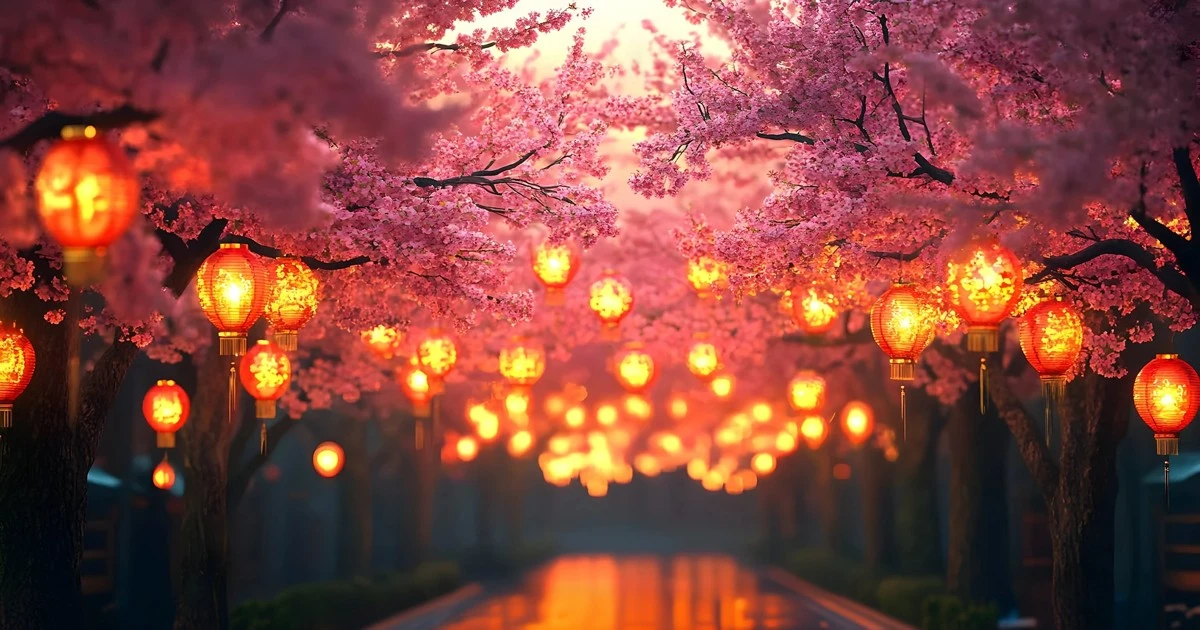
Overtourism Ends the Fujiyoshida Blossom Event
Deleting an event from an official calendar does not actually remove the thousands of people who already planned to attend it. According to a report by The Guardian, officials in Fujiyoshida announced they would no longer host the Arakurayama Sengen park cherry blossom festival, hoping to stop the chaos consuming their streets. But the Fujiyoshida Cherry Blossom Festival has evolved from a local celebration into a viral digital asset owned by the internet. Mayor Shigeru Horiuchi declared the situation an urgent crisis, prioritizing resident safety over tourism revenue. The same report notes that the decision brings the curtain down on the 10-year-old festival to protect the dignity and living environment of citizens, yet the iconic pagoda and the mountain remain exactly where they were.
The cancellation reveals a deep conflict between digital fame and physical reality. City officials removed the event status to discourage visitors, yet they know the crowds will arrive anyway. The administrative label "festival" is gone, but the infrastructure crisis remains. This situation forces a hard look at how small towns survive when they become global backgrounds for social media content.
A Victim of Its Own Picture-Perfect Success
A photograph acts as an invitation that the photographer never intended to send. The Fujiyoshida Cherry Blossom Festival became a casualty of this situation. Tokyo Weekender notes that the event was launched in 2016 to promote tourism, and since then, the image of the five-story Chureito Pagoda framed by cherry blossoms and Mount Fuji has circulated globally. This specific view drove an explosion in popularity.
As described by Hoshino Resorts, the area boasts around 650 Someiyoshino cherry trees, while the Kawaguchiko guide notes that visitors must climb 398 stone steps to reach the pagoda. What started as a local appreciation of nature turned into a logistical challenge. By 2024, the festival saw approximately 270,000 visitors, a 50 percent increase from the previous year. Peak days bring around 10,000 people to a location where, as The Hotel Washington points out, handling massive crowds is untenable for a town of fewer than 50,000 residents.
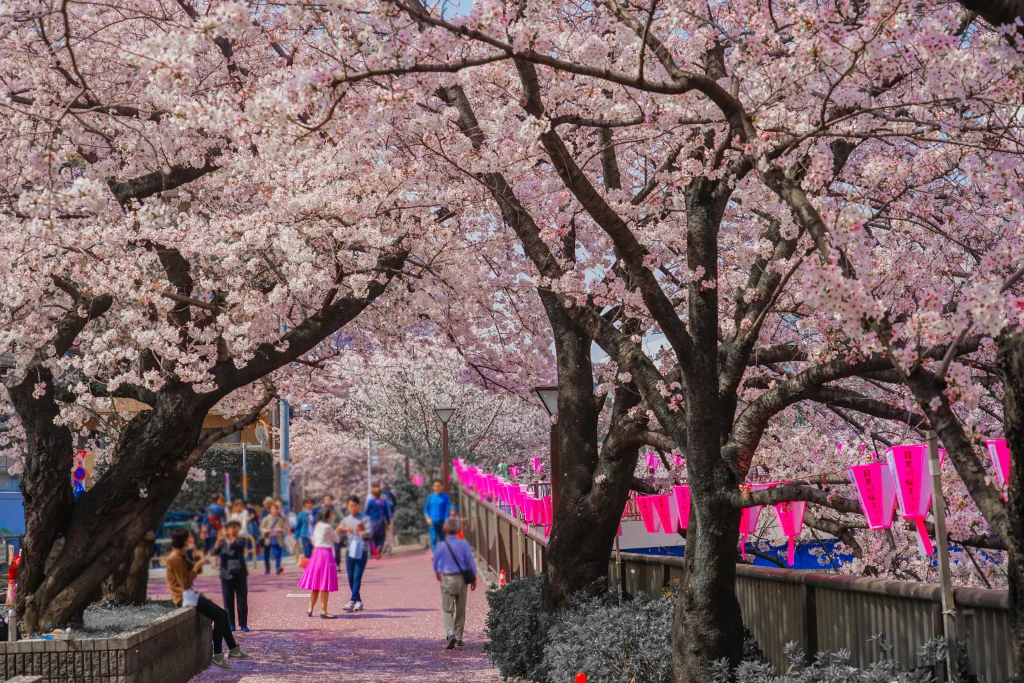
The sheer volume of foot traffic overwhelms the narrow streets. Queues for the photo spot can last up to three hours. Visitors block pavements, forcing others into the road. The town’s infrastructure simply cannot support this density. The visual appeal that put Fujiyoshida on the map ultimately rendered the festival impossible to sustain.
When Tourism Breaks the Local Grid
Weak currencies turn quiet neighborhoods into bargain theme parks for the global elite. The influx into Fujiyoshida coincides with a record-breaking surge in travel to Japan. Data published by Reuters indicates that for the entire year of 2025, Japan saw a record 42.7 million tourists, surpassing the 40 million mark for the first time. The weak yen makes Japan an affordable destination, fueling the numbers.
This macro-economic trend hits small towns the hardest. Unlike major cities with strong transit systems, Fujiyoshida relies on limited local roads. The traffic jams have become chronic. Local residents find themselves stuck in gridlock caused by rental cars and tour buses.
The data shows a clear trajectory. Visitor numbers rose from typical totals of 200,000 to nearly 300,000 in a single season. The city’s resources are static, but the demand is exponential. Removing the Fujiyoshida Cherry Blossom Festival designation is an attempt to break this cycle. Officials hope that without the official event promotion, the numbers might drop to a manageable level.
The Resident Experience: Living Inside a Queue
When public spaces overflow, strangers inevitably spill into private sanctuaries. The primary driver for the cancellation was the severe degradation of the quality of life for residents. Mayor Horiuchi emphasized that the scenic beauty of the area masks a harsh reality for those who live there.
Residents report extreme privacy violations. Tourists frequently trespass into gardens and climb onto rooftops to get better angles for photos. Some visitors have even opened the front doors of private homes, demanding to use the restrooms. The boundaries between public tourist zones and private property have dissolved.
Sanitation is another major grievance. With public facilities overwhelmed, litter accumulates in the streets. Reports indicate instances of public defecation and waste left in residential yards. Locals also face hostility when they confront trespassers. The situation has created deep anxiety regarding community safety.
What is the main reason for the complaints? The complaints stem from tourists blocking school routes, trespassing on private property, and leaving trash in residential areas. Children are physically pushed aside on their way to school. The daily peace of the town has evaporated. The administration concluded that they must prioritize the dignity and living standards of the community over the economic benefits of the festival.
The Failure of Standard Crowd Control
Typical security measures crumble when the crowd size exceeds the physical space available to hold it. The city tried various mitigation strategies before cancelling the Fujiyoshida Cherry Blossom Festival. They employed security guards and set up temporary facilities, but the volume of people rendered these efforts insufficient.
The cancellation creates a strange operational reality for the upcoming season in April and May. Although the festival is officially dead, the city must still deploy security measures. They know the visitors are coming. They will still provide temporary restrooms and parking to prevent total sanitation collapse.
This mirrors the situation in nearby Fujikawaguchiko. That town famously installed a black barrier to block a view of Mt. Fuji to stop dangerous jaywalking. These physical barriers and cancellations act as emergency brakes. Rather than functioning as solutions, they act as desperate responses to unmanageable pressure.
Does the cancellation mean the park is closed? No, Arakurayama Sengen Park remains open to visitors, but there will be no official festival events or food stalls. The city is removing the event name from tourism platforms. They hope this reduces the "virality" factor. However, the physical accessibility of the park remains unchanged. The decision highlights the limits of administrative power against global travel trends.
Global Solutions to a Universal Problem
High entry fees transform heritage sites into exclusive products instead of public resources. Fujiyoshida is not alone in this struggle. Cities across the world are implementing strict measures to control visitor numbers.
Venice now charges day-trippers a fee of €5 if booked in advance, rising to €10 for last-minute entries. Rome is considering a €2 fee for the Trevi Fountain to manage the crowds. These fees attempt to put a price on access, hoping to filter out casual visitors.
Japan is also exploring tiered pricing systems. The goal is to balance access with preservation. However, Fujiyoshida chose a different path. Rather than charging a fee to limit the crowd, officials removed the event entirely. This suggests that for some communities, no amount of revenue compensates for the loss of tranquility.
The global context shows a shift in tourism management. Authorities are moving from promotion to restriction. The Fujiyoshida Cherry Blossom Festival cancellation is part of this wider pattern where local governments reclaim their territory from the global tourism industry.
Cultural Erosion in the Age of Virality
Respect for history vanishes when a location is viewed solely as a background for content creation. The tradition of Hanami, or flower viewing, has a 1,200-year history in Japan. It dates back to the Heian period and originally served as a divination ritual for the rice harvest. It is a contemplative practice deeply rooted in Japanese culture.
Modern mass tourism often clashes with this tradition. The "Instagrammable" culture prioritizes the image over the experience. This leads to the disrespect of customs and the environment. The National Park Service in Washington DC emphasizes "Leave No Trace" principles for their cherry blossom events, but enforcement is difficult.
In Kyoto, similar issues plague the Gion district. Tourists harass Geisha for photos, treating them as theme park characters instead of cultural icons. This "photo frenzy" creates a hostile environment. The behavior in Fujiyoshida reflects this same disconnect. Visitors see the site as a backdrop, ignoring the community that sustains it.
When do the cherry blossoms usually bloom? The trees in Fujiyoshida typically reach peak bloom in early to mid-April. The cancellation serves as a statement. It declares that the community’s right to their lifestyle outweighs the desire of tourists to capture a viral image. It attempts to restore the dignity of the location.
The Future of the View
Canceling a name is a desperate attempt to demarket a product that sells itself. The upcoming spring season will test the effectiveness of this strategy. The Fujiyoshida Cherry Blossom Festival is gone, but the 650 someiyoshino trees will still bloom.
The city faces a difficult few weeks in April. They expect visitors to arrive despite the lack of an official event. The "paradox" is that the town must still manage the crowd it tried to uninvite. Security costs will remain high. Traffic jams will likely persist.
However, the removal of the festival status changes the narrative. It signals to the world that Fujiyoshida is near its breaking point. It warns potential visitors that they are entering a residential zone rather than a tourist playground.
Future management might require even stricter measures. If the crowds do not decrease, physical barriers or reservation-only systems might follow. The town is searching for a balance that allows them to share their beauty without destroying their home.
The Price of a Perfect View
The end of the Fujiyoshida Cherry Blossom Festival marks a turning point for tourism in Japan. It proves that economic gain is no longer the sole priority for local governments. Mayor Horiuchi and the residents of Fujiyoshida chose silence and safety over profit and popularity. They exposed the heavy cost of viral fame.
Travelers must now navigate a new reality where access is not guaranteed. The beauty of Arakurayama Sengen Park remains, but the welcome mat has been pulled away. This decision serves as a warning to other scenic destinations: when the crowd becomes a crisis, the only option left is to shut the door.
Recently Added
Categories
- Arts And Humanities
- Blog
- Business And Management
- Criminology
- Education
- Environment And Conservation
- Farming And Animal Care
- Geopolitics
- Lifestyle And Beauty
- Medicine And Science
- Mental Health
- Nutrition And Diet
- Religion And Spirituality
- Social Care And Health
- Sport And Fitness
- Technology
- Uncategorized
- Videos

