
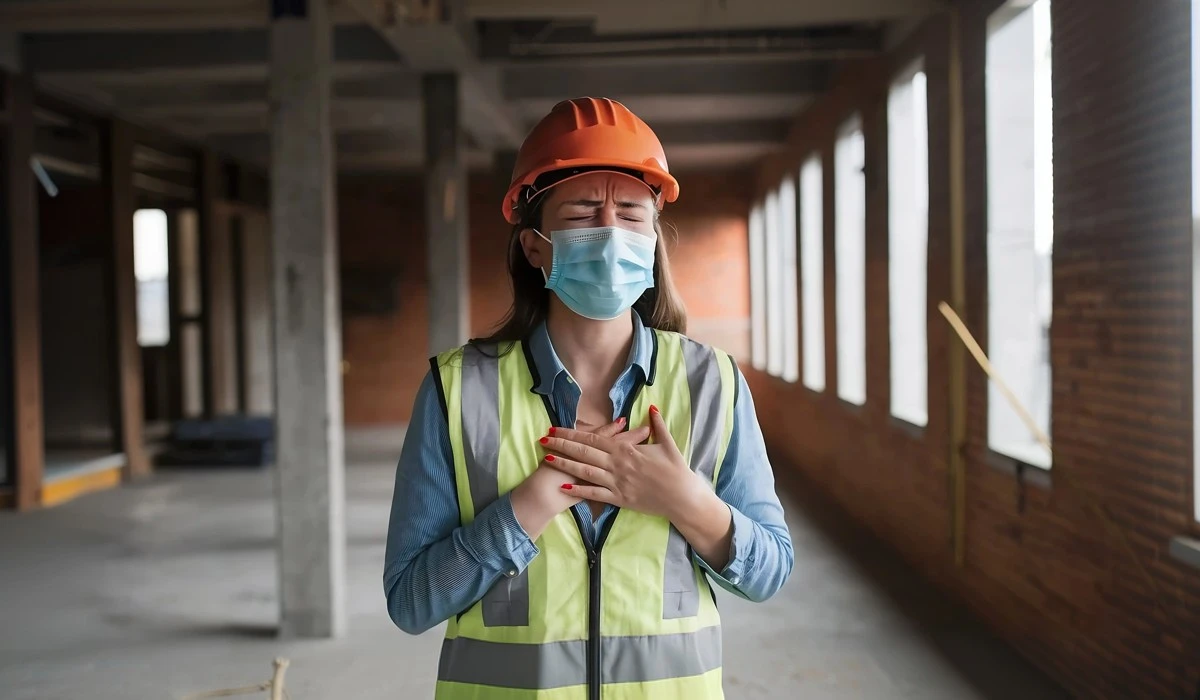
Occupational Exposure Limits Monitoring for Safety
Every time you take a breath at a job site, your lungs go to work as a high-speed sorting facility. They try to keep the oxygen while trapping the dust and fumes that shouldn’t be there. If those tiny particles get past the lungs, they enter the bloodstream and head straight for your liver and kidneys. According to a study published on PMC, the kidneys and liver are the primary organs for detoxifying the body, acting as natural filters that have a breaking point.
Your internal defenses are tough, but they aren't meant to handle heavy metals or chemical solvents for eight hours a day. Without proper Occupational Health and Safety protocols, these filters slowly wear down. The damage happens deep inside where you can't see it until a doctor delivers a painful diagnosis. Protecting your vital organs is the ultimate goal of workplace safety. Safety protocols safeguard biological survival while also utilizing physical protection like hard hats.
Why is it essential for Occupational Health and Safety to focus on vital organs?
The human body is an incredible machine, but it is not built for the industrial age. Your liver and kidneys process everything you touch, eat, or breathe. In a factory or lab, these organs become the last line of defense against toxins. When these filters are forced to work too hard, they begin to fail. A strong safety focus fulfills legal requirements while protecting the long-term health of workers.
Ironically, many workers think they are safe as long as they don't have an accident. In reality, the most dangerous threats are the ones you can’t see. Research released by the International Labour Organization (ILO) notes that roughly 2.9 million work-related deaths occur every year. The same study indicates that 31% of these deaths result from circulatory diseases, while 29% are caused by occupational cancer.
The systemic effect of chronic micro-exposures
Small doses of chemicals might not make you cough or itch today. However, these tiny amounts build up over time. The Agency for Toxic Substances and Disease Registry defines this process as toxicokinetics, which is the study of how contaminants are absorbed, distributed, metabolized, and excreted by the body. Information from the World Health Organization (WHO) highlights that some toxins can settle into fat cells or bones for years. Heavy metals, solvents, and silica dust are the most frequent culprits that bypass external defenses to damage internal systems.
Guidelines from the UK government warn that when you breathe in lead or mercury, these metals can reside in the kidneys and slowly destroy the tissue. Over a decade, a worker might lose significant organ function without ever feeling a single sharp pain. This is why Occupational Health and Safety must focus on the long game.
Guarding the respiratory system against airborne hazards
Your lungs are essentially two large sponges that pull life out of the air. When you work around crystalline silica or wood dust, the National Institute for Occupational Safety and Health (NIOSH) notes that the resulting grit causes inflammation and permanent lung scarring, known as fibrosis. The Mayo Clinic clarifies that once the lung tissue scars, it loses the ability to transfer oxygen effectively into the blood. Occupational Health and Safety standards are designed to keep these particles out of your breathing zone.
Preventing lung disease requires a tiered approach. We often think a simple paper mask is enough, but that is rarely the case. We need to look at the air quality of the entire room. If the air is thick with dust, the safety plan has already failed.
Beyond the mask: Engineering controls for clean air
The best way to protect a worker’s lungs is to remove the hazard entirely. NIOSH describes this as the "Hierarchy of Controls," which prioritizes the substitution of dangerous chemicals for safer ones before employing engineering solutions. As suggested by the World Health Organization, these ventilation systems pull the dust away before it ever reaches a worker’s face.
Modern filtration systems are much more effective than a rubber mask. They ensure that the concentration of dust stays below the legal limits. While masks are a helpful backup, they can leak or be worn incorrectly. Engineering controls take the "human error" out of the safety plan.
The critical role of occupational exposure limits monitoring
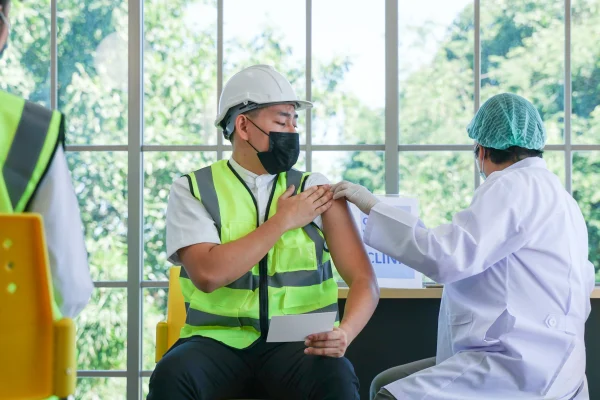
You cannot manage a danger that you cannot see or measure. This is where occupational exposure limits monitoring becomes the most important tool in the shed. NIOSH documentation specifies that these limits represent the maximum amount of a substance a person can breathe without getting sick, typically measured as a Time-Weighted Average (TWA) over an eight-hour shift.
Safety professionals use special tools such as photoionization detectors, which technical reports on PMC indicate can find volatile organic chemicals in seconds, to monitor air quality. How does occupational exposure limit monitoring protect workers? It provides a real-time early warning system that triggers safety protocols before chemical concentrations reach toxic levels for human organs. Monitoring these figures allows companies to stop an exposure before it becomes a tragedy.
Interpreting the data from air and biological sampling
Data is only useful if you know how to read it. Occupational exposure limits monitoring provides three main types of numbers. The first is the TWA for a normal day. According to NIOSH, the Short-Term Exposure Limit (STEL) regulates 15-minute intervals of high exposure, while the Ceiling Limit represents a concentration that must never be surpassed.
Sometimes, air monitoring isn't enough. Documentation from the American Conference of Governmental Industrial Hygienists (ACGIH) explains that biological monitoring of blood or urine helps assess the "total body burden" of a substance. ACGIH further notes that these tests determine how much of a chemical enters the body through the skin or digestive system in addition to inhalation. This data allows safety managers to adjust the workflow and keep everyone healthy.
Preventing renal and hepatic damage through Occupational Health and Safety
The liver is the body’s primary chemistry lab. It tries to break down industrial solvents into something safe. However, the National Academies describes carbon tetrachloride as a well-known agent that predictably damages the liver by creating unstable molecules that cause the organ to attack its own cells. Without a strict Occupational Health and Safety plan, workers in degreasing or dry-cleaning industries are at high risk.
The kidneys are equally vulnerable. According to research published in the Clinical Kidney Journal, the kidneys are especially vulnerable to environmental toxins because they filter all blood and concentrate substances during the excretory process. A study on PMC explains that cadmium exposure can cause irreversible decreases in kidney function, frequently resulting in chronic kidney disease that requires dialysis.
Hygiene protocols as a barrier to organ toxicity
Many toxins enter the body through the skin. NIOSH safety manuals include "skin notations" to identify chemicals that can be absorbed through the skin to cause systemic damage to internal organs. A strong Occupational Health and Safety program includes strict hygiene rules to stop this.
Decontamination zones are vital. NIOSH safety guidelines recommend that workers have access to places to wash their hands and change their clothes before returning home. If a worker wears their dusty uniform into their car, they are bringing those toxins home to their family. High-quality wash stations and "no-eating" zones in work areas provide a physical barrier between the chemical and the worker’s stomach.
Defending the nervous system from neurotoxic interference
Some chemicals are like keys that breach the "blood-brain barrier." This barrier is supposed to keep the brain safe from junk in the blood. NIOSH research shows that neurotoxins like manganese can cross this barrier, potentially killing nerve cells and leading to tremors or "manganism," a condition that resembles Parkinson’s disease.
Protecting the brain requires constant vigilance. Many of these chemicals are found in common items like paint thinners and welding fumes. Occupational Health and Safety professionals monitor these levels to ensure that no one is getting a dose of vapor that alters the brain.
Early warning signs of neurological occupational stress
Nerve damage often starts with small changes. According to a study on PMC, workers exposed to industrial solvents frequently report feeling "foggy" or unusually tired. They might notice a slight shake in their hands or a change in their mood. Can organ damage from workplace chemicals be reversed? NIOSH warns that while some tissue recovers, many forms of neurological damage and lung scarring are permanent, making prevention the only solution.
Identifying these signs early can save a life. Safety officers should encourage workers to report any strange symptoms. In a healthy culture, a worker isn't seen as "weak" for reporting a headache; they are seen as an early warning sensor for the whole team.
Implementing a proactive Occupational Health and Safety monitoring strategy
A great safety program doesn't just wait for something to go wrong. It uses occupational exposure limits monitoring to find problems before they start. This involves a clear roadmap. First, identify every chemical on the site. Second, determine how much of those chemicals is in the air. Third, compare those levels to the legal and recommended limits.
This strategy should be part of the daily routine. It isn’t a one-time checkup. As the weather changes or the production line speeds up, the air quality can change too. A proactive approach means testing often and being ready to change the plan if the numbers spike.
Training employees to value their own biological safety
Rules only work if people follow them. To protect vital organs, workers must understand why the rules exist. Safety training prioritizes the long-term health of the liver and lungs over the completion of paperwork. When a worker understands how a solvent affects their blood, they are much more likely to wear their gloves.
We need to move from a culture of "compliance" to a culture of "health." This means training everyone to respect the occupational exposure limits and monitoring data. When workers feel they are in charge of their own biological safety, they become the best safety officers on the floor.
The long-term ROI of investing in Occupational Health and Safety
Investing in health is also a smart business move. Safety programs offer financial benefits; OSHA reports cited by the Department of Energy suggest that for every $1 spent on a formal safety program, a company can save $4 to $6. These savings come from lower insurance costs, fewer medical bills, and less time lost to sick days.
Furthermore, a healthy workforce is a productive one. When workers aren't breathing in toxins that cause fatigue and brain fog, they work faster and make fewer mistakes. High safety standards also help with hiring. People want to work for a company that values their life and their long-term health.
Moving from reactive fixes to predictive health modeling
The future of safety is in the data. The application of occupational exposure limits monitoring allows companies to predict when a hazard might occur. If the sensors show that a certain machine always leaks a little gas on Tuesdays, the team can fix it before anyone gets exposed.
This shift toward predictive safety is the next big step in industrial health. We are moving away from fixing things after someone gets sick. Instead, we are using technology to ensure that the workplace is as safe as a home office.
Securing a Healthier Future Through Occupational Health and Safety
At the end of the day, a job should never cost you your health. Your lungs, liver, and kidneys are yours for life, and they deserve protection. Prioritizing Occupational Health and Safety ensures that every worker can retire with their body intact.
The secret lies in being proactive. Consistent occupational exposure limits monitoring removes the guesswork from the equation. It provides a clear, data-driven path to a safe environment. When we focus on the biological reality of work, we create a world where industry and health can finally exist together. Take the time to monitor your environment today, so your body can keep working for you tomorrow.
Recently Added
Categories
- Arts And Humanities
- Blog
- Business And Management
- Criminology
- Education
- Environment And Conservation
- Farming And Animal Care
- Geopolitics
- Lifestyle And Beauty
- Medicine And Science
- Mental Health
- Nutrition And Diet
- Religion And Spirituality
- Social Care And Health
- Sport And Fitness
- Technology
- Uncategorized
- Videos

