

NatWest Buys Evelyn: The £127bn Banking Giant
When a bank shifts billions of pounds into a new venture, it admits that its old way of making money is running out of steam. NatWest bought insurance against a changing economy instead of merely spending a fortune on a competitor. This week, the banking giant announced the acquisition of NatWest Evelyn Partners—a deal valued at £2.7 billion. This move merges two financial heavyweights to create the UK’s leading wealth management business.
The decision signals a massive departure from traditional lending. Banks typically profit from interest rates, but that income source fluctuates wildly. Securing this deal allows the leadership to bet everything on stable, fee-based income. They want to manage wealth instead of simply storing it.
Investors and customers now face a new reality. The deal combines £127 billion in assets under management and administration (AUMA). It promises to change how millions of UK customers save and invest. However, the immediate reaction involves skepticism, stock drops, and questions about the high price tag.
The Financial Logic Behind the £2.7 Billion Price Tag
Price tags in corporate takeovers often reveal how desperate a company is to secure reliable cash flow. NatWest agreed to an enterprise value of £2.7 billion to lock in this deal. According to an announcement on Investegate, the valuation sits at 9.7 times the projected 2025 EV/EBITDA. This multiple suggests the bank sees significant value in Evelyn’s earning potential, even if the upfront cost seems steep.
The primary motivation is a shift toward fee-based income. Interest income relies on the whims of the central bank. Fees from wealth management offer a steady stream of revenue regardless of what interest rates do. The bank projects a 20% increase in fee income from this move alone.
Shareholders usually look for immediate returns, but this deal plays a longer game. The leadership claims the transaction will be accretive to the Return on Tangible Equity (RoTE) in the first year. They argue that the financial logic holds up because the returns will exceed what they could generate through a standard share buyback.
How does NatWest benefit from buying Evelyn?
They reduce their reliance on risky interest income and gain steady fees by managing money for wealthy clients. The deal also targets a high-growth sector. The "capital-light" model of wealth management requires less regulatory capital than holding loans on a balance sheet. This allows the bank to grow without tying up vast amounts of cash in reserves.
Building a Wealth Giant with £127 Billion Muscle
Scale is the only real defense when competitors start encroaching on your territory. This merger creates a behemoth in the UK financial sector. Currently, NatWest manages £59 billion in assets. A report by the London Stock Exchange notes that the combined force will control £127 billion in AUMA.
Investegate data indicates that total customer assets and liabilities will hit £188 billion. This scale allows the new entity to dominate the affluent and High Net Worth (HNW) markets. The goal is to become the undisputed leader in UK private banking.
The bank plans to offer financial planning and savings options to a much wider demographic. They have 20 million existing customers who could potentially use these services. The CEO framed this as a unique chance to maximize customer wealth across the nation.
Will my NatWest account change after the merger?
Service changes are planned for 20 million customers, offering better access to financial planning and investment advice. This expansion reinforces the Coutts franchise, which is already a jewel in the group's crown. Adding Evelyn’s capabilities secures top-tier status in the wealth management market. The move puts increased pressure on competitors who lack this level of scale.
Stock Market Skepticism and Investor Reaction
Shareholders often punish ambition before they reward execution. The market reaction to the NatWest Evelyn Partners announcement was swift and negative. According to Reuters, the bank’s stock price slid about 5.5% on Monday. Investors voiced concern over the high purchase price and the risks involved in integration.
Analysts highlighted the contrast between strategic logic and economic reality. Shore Capital noted that while the expansion makes strategic sense, the economics remain questionable. The justification for the deal depends heavily on whether the bank can actually deliver the promised savings.
Barclays was previously in the running for this asset. Their withdrawal and NatWest’s subsequent victory paints a mixed picture. Winning the bid proves determination, but the market wonders if they overpaid to secure the prize.
Did NatWest share price drop after the deal?
Yes, the stock fell because investors worried about the high cost and integration risks. The bank must now prove the skeptics wrong. The CEO insists the deal realizes a long-term ambition. However, the immediate drop in value puts pressure on management to show results quickly. The gap between the "strategic acclaim" and the stock dip creates tension in the boardroom.
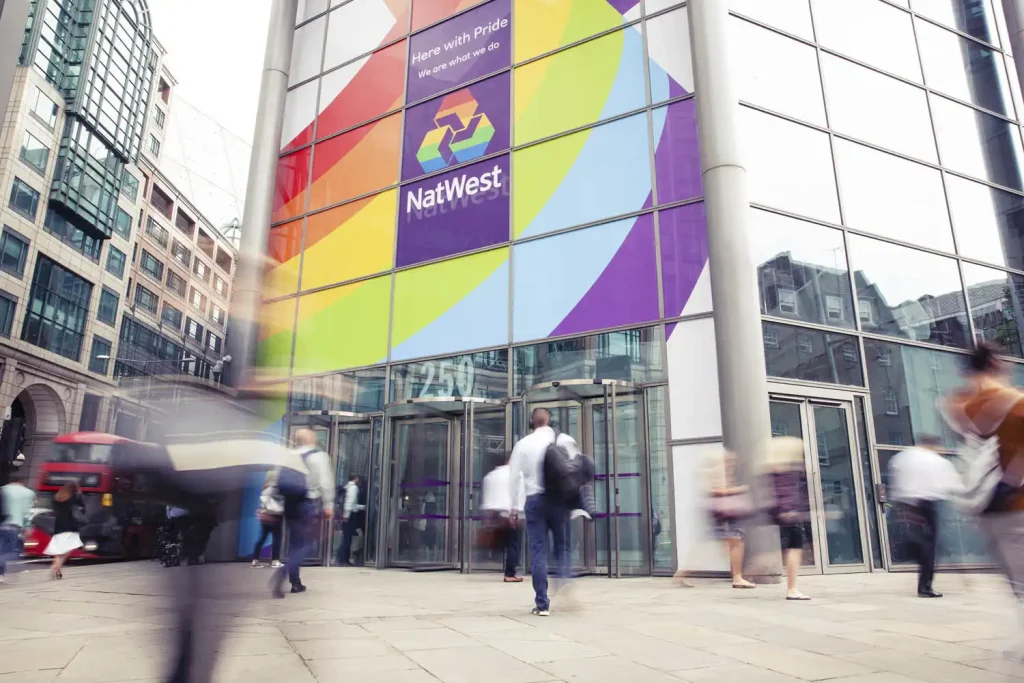
Image Credit - By Emily Alexandra, Wikimedia Commons
From Taxpayer Bailouts to Private Ambition
A company’s history dictates its future aggression levels. This acquisition marks the first major move since the bank returned to private ownership in May 2025. For years, the group operated under the shadow of government control following the financial crisis.
The government previously absorbed a £10.5 billion loss to rescue the bank. That period focused on survival and stability. Now, the narrative shifts to "future confidence." The leadership wants to show they can stand on their own and grow aggressively.
This deal sheds the legacy of the bailout period. It signals that the bank is ready to compete with global players without the government holding its hand. The move is a statement of intent. They are using their freedom to reshape the UK wealth market.
The acquisition acts as a signal to the wider economy. The CEO believes a broader service range will stimulate economic growth. Through the encouragement of national investment, they hope to drive prosperity exceeding their own balance sheet.
The Integration and Cost-Cutting Reality
Mergers promise growth, but they almost always start with subtraction. The bank anticipates huge savings by combining operations. Data published by Investegate shows they target roughly £100 million per year in cost savings. These savings come from eliminating overlap between the two businesses.
Streamlining drives this part of the plan. Operations will be simplified through shared technology and services. However, this optimization comes with a price tag of its own. The same report notes that implementation costs are expected to reach £150 million.
The reality of "integration benefits" usually involves difficult decisions regarding staff. The CEO acknowledged that cost savings and redundancies are anticipated. Consultation with staff and customers is planned, but the direction is clear.
Will there be job cuts at Evelyn Partners?
The CEO confirmed that redundancies are anticipated as they merge operations to save £100 million annually. Integration poses a significant risk. The bank must retain the key talent that makes Evelyn valuable. There are 270 financial planners and 325 investment managers at Evelyn. Keeping them happy while cutting costs is a delicate balancing act.
Evelyn’s Heritage and the Private Equity Exit
Every acquisition is also someone else’s lucrative exit strategy. The NatWest Group newsroom highlights that the firm has a heritage spanning over 180 years. The firm recently rebranded from Tilney Smith & Williamson in 2022. It brings deep roots and a strong reputation to the NatWest Evelyn Partners combination.
The sellers in this deal are private equity giants. Permira has held a stake since 2014, and Warburg Pincus took a minority stake in 2020. For them, this sale confirms their investment thesis. The Permira Managing Director called the deal an endorsement of the platform’s quality.
Evelyn operates across 21 UK locations. This footprint provides physical reach that complements the bank's digital ambitions. The shared history of high-quality service made the two firms a natural fit.
However, the brand integration remains an open question. Initially, the Evelyn brand will be retained. Future reviews will decide if it eventually disappears into the banking group’s corporate identity. Consolidation often leads to the erasure of the smaller brand over time.
What Comes Next for Customers and Shareholders
Delays in rewards test the loyalty of those footing the bill. The deal has a long timeline. Closing is targeted for Summer 2026. This means the full benefits—and the full pain—of integration won't be felt for some time.
Shareholders face a delay in capital returns. As reported by Finextra, the next share buyback is pushed to the H1 2027 results. The outlet adds that the bank also committed to a separate £750 million share buyback, but the timeline shift frustrates those looking for quick cash.
The deal impacts the bank's safety buffers. The CET1 ratio, a key measure of financial strength, will drop by approximately 130 basis points. The bank is spending its safety margin to buy growth.
The process involves ongoing consultation until the closing date. Customers will watch closely to see if service levels drop during the changeover. The leadership promises unparalleled advice and investment management. Now they have to deliver it.
The Wealth Strategy Gamble
The NatWest Evelyn Partners deal represents a decisive pivot toward wealth and stability. With a payment of £2.7 billion, the bank attempts to escape the volatility of interest rates. They are betting that fee-based income from affluent clients will provide a safer future than traditional lending.
This transaction changes the bank's DNA. It moves them from a high-street lender to a wealth management powerhouse. The risks of integration and the high price tag remain real. If successful, the bank secures its place as the leader in the UK market. If not, the cost of ambition will weigh heavily on its shares for years to come. The time of government bailouts is over; the time of high-stakes corporate gambling has begun.
Recently Added
Categories
- Arts And Humanities
- Blog
- Business And Management
- Criminology
- Education
- Environment And Conservation
- Farming And Animal Care
- Geopolitics
- Lifestyle And Beauty
- Medicine And Science
- Mental Health
- Nutrition And Diet
- Religion And Spirituality
- Social Care And Health
- Sport And Fitness
- Technology
- Uncategorized
- Videos

