
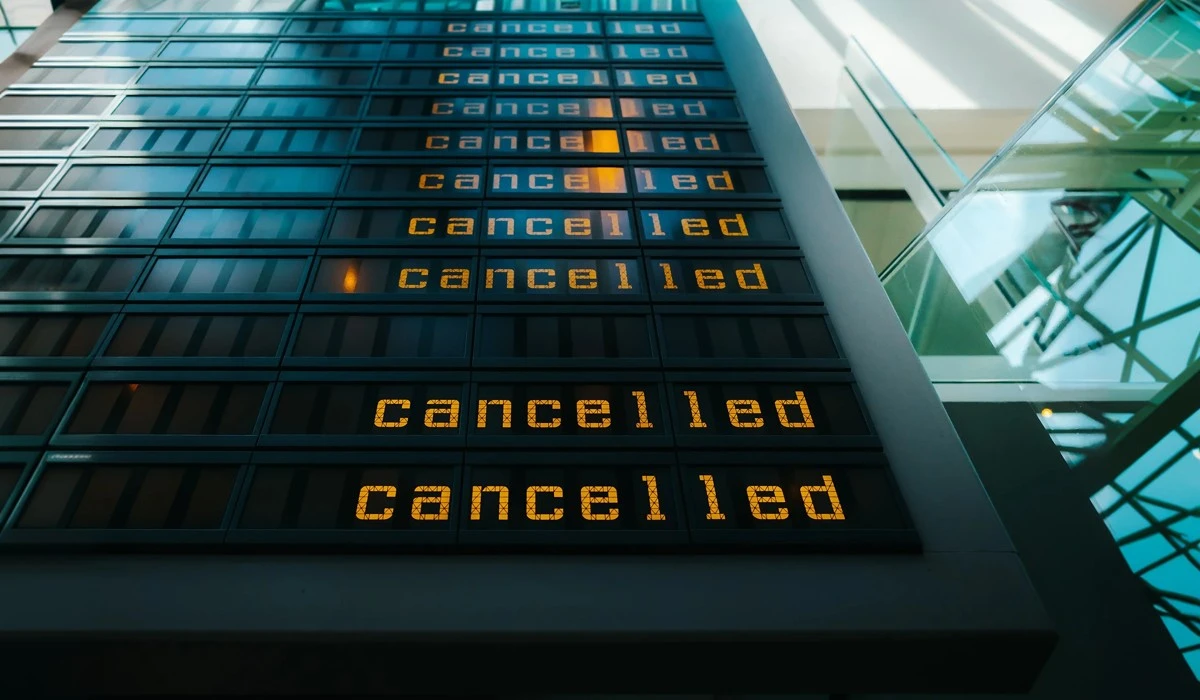
Middle East Flight Cancellations Disrupt Global Travel
A straight line on a map often represents the cheapest way to connect two cities, but it requires unquestioned trust in the ground below. When rockets fire in one region, airlines must suddenly alter flight paths halfway across the globe, tearing up months of strict logistical planning.
According to Reuters, the initial February 28 US and Israeli strike on Iran resulted in virtually empty airspace across the region. This grounded operations across massive Gulf hubs almost instantly. AOL reports that hundreds of thousands of airline passengers have had their travel plans thrown into disarray, as airlines face over 60,000 Middle East flight cancellations since February 28 alone, directly affecting six million travelers.
This massive disruption exposes a deep vulnerability in global air travel. We are witnessing an unprecedented supply chain shock. Modern airlines rely heavily on point-to-point convenience mixed with rapid hub turnarounds. When geopolitical stability fractures, that entire operational structure collapses.
The Geographic Trap Behind Middle East Flight Cancellations
Perfect geographic positioning guarantees incredible market dominance during peacetime, while ensuring maximum exposure during regional disputes. A location halfway between East and West turns a local border closure into a worldwide scheduling disaster.
Dubai airport started as a simple sand runway and basic refuel stop in the 1960s. Today, it operates as a massive global connector. As reported by Reuters, Etihad Airways started operations in 2003, and former CEO James Hogan famously utilized the three-hour flight radius reaching the Middle East, India, and China. This blank slate advantage allowed Gulf carriers to build brand-new facilities. They offered a superior service proposition and seamless one-stop travel to secondary cities worldwide.
Aviation expert Andrew Charlton notes that this perfect geographic placement provides immense global reach. Competitive disruption initially allowed Gulf airlines to offer lower fares and capture massive market share from legacy carriers.
The East-West Pivot Point
During normal conditions, these hubs manage over 3,000 daily flights. They handle 90 to 100 arrivals per hour. Ground crews execute rapid one-to-two hour turnarounds for enormous jetliners. John Grant points out that this extreme speed relies entirely on the region serving as a reliable East-West pivot point.
A sudden military crisis forces carriers to abandon this highly streamlined node. The resulting Middle East flight cancellations expose how heavily modern routing depends on this specific strip of desert.
When Detours Break the Bank: Fuel, Weight, and Route Adjustments
Rerouting an aircraft around a conflict zone forces carriers to trade passenger revenue for thousands of gallons of heavy jet fuel. Every extra hour in the sky rapidly destroys the profit margin for that specific flight.
Adding miles to a route drastically changes flight economics. Flight planners view simple path circumvention as an easy task on a screen. In reality, airlines must actively plan mandatory safe diversion airports within strict engine-out flying times. Adding flight time requires heavier fuel loads.
Aviation analyst Henry Harteveldt explains that this extra fuel weight forces airlines to reduce their passenger count, stripping away vital revenue. People often wonder, how do longer flight routes affect ticket prices? Airlines absorb the extra fuel and crew costs initially, but they eventually pass these massive expenses down to consumers through permanent fare hikes.
The Financial Costs of Extra Fuel
The JL43 flight from Tokyo to London currently faces an extra 2.4 hours of travel time. This detour burns an additional 5,600 gallons of fuel, representing a 20 percent increase in consumption.
John Strickland notes that extra flight time guarantees heavier fuel burn and significantly higher operational costs. Based on a Reuters report, jet fuel prices hovered around $85 to $90 per barrel prior to the US-Israeli strikes but have since soared to between $150 and $200. Furthermore, the Gulf region usually supplies around 50 percent of Europe’s jet fuel imports, adding severe supply chain pressure.
The Crew Displacement Domino Effect
A two-hour delay over a closed border eventually forces a flight attendant to hit their legal duty limit three continents away. Moving the airplane solves only half the problem; sourcing a rested crew determines if the flight actually departs.
Global aviation operates on incredibly rigid schedules planned up to 12 months in advance. When airlines implement sudden Middle East flight cancellations, they scatter flight crews far away from their scheduled bases. Extended detours and technical stops in countries like Turkey or the United Arab Emirates force crews to exceed their mandatory duty hours.
Travelers often ask, why do airspace closures cause delays worldwide? Diverting a single long-haul jet traps specific aircraft and crew members out of position, preventing them from operating their next completely unrelated flights.
Rigid Schedules and Landing Fees
Industry expert Mike Arnot highlights that airlines cannot simply add sudden capacity to fix these scheduling gaps. Disrupted hubs create intense alternative route competition.
Brendan Sobie adds that carriers face extra landing fees for fuel stops while prioritizing immediate crew safety over schedule integrity. A true operational recovery links directly to the exact speed of airspace reopening.
High-Risk Zones and the Squeeze on Global Air Travel
Closing a major airspace corridor pushes thousands of heavy jets into narrow, adjacent skyways, creating massive bottlenecks in the sky. Concentrating commercial traffic around active military zones drastically elevates both collision risks and financial liabilities.
The European Union Aviation Safety Agency flags 13 high-risk nations requiring strict airspace avoidance:
- Iran, Iraq, and Syria
- Russia and Ukraine
- Lebanon and Yemen
- Sudan, Somalia, Mali, and Libya
- Afghanistan and Pakistan
Avoiding these specific zones forces airlines into incredibly tight alternative corridors. Tony Stanton explains that this extreme congestion drives up operational risks. Aviation insurance companies respond to these crowded borders by dramatically hiking war risk insurance premiums. Carriers eventually absorb these costs into higher ticket prices.
Multiplying Navigation Chokepoints
Current data highlights severe travel extensions. Transport Research from May 2025 shows the Riga to Tbilisi route takes 28 percent longer. Seoul to Warsaw flights add 22 percent more flight time, while Montreal to New Delhi routes extend by 14 percent. Researchers warn that diversion landings prompt high-stress rapid decisions, potentially causing severe controller errors.
A final report from OPSGROUP observed a 500 percent increase in GPS spoofing since 2024. This severe navigation interference affects 1,500 daily flights, stripping pilots of reliable location data. Global air travel faces constant friction from these multiplying choke points. Additional threats complicate travel everywhere. Expert Muhammad Wafid highlights that large volcanic eruptions create severe aviation hazards. Meanwhile, political unrest like the February 2026 Mexico disruptions and the US-Venezuela conflict interrupt tourism globally.
Middle East Flight Cancellations and the Safety Perception Gap
Passengers sitting comfortably inside a heavily secured luxury terminal remain totally insulated from the military reality unfolding just miles outside the airport walls. A single audible explosion permanently shatters that illusion of safety.
Industry leaders hotly debate the true security of Gulf hubs. Terminals provide top-tier ground security, screening passengers flawlessly. Conversely, modern warfare brings severe external threats directly to the perimeter. A March 16 drone strike near Dubai airport sparked a fire and forced a total operational shutdown.
Concerned flyers naturally ask, are airports safe during regional conflicts? Highly secure terminals protect travelers on the ground, but the surrounding airspace remains vulnerable to sudden military actions and drone interference.
Lasting Mental Effects
Passenger Sarah Goodwin reported hearing audible missile strikes while trapped in Doha. Past tragedies haunt the aviation industry. The 2014 MH17 downing claimed 298 lives. A December 2024 Azerbaijan Airlines crash resulted in 38 casualties.
Johannes Thomas warns of a lasting mental effect, predicting a two-to-three year recovery timeline due to this altered safety perception. Post-conflict safety assessments require multi-factor operational checks prior to any return. Ian Scott expresses zero confidence regarding regional stability, advising complete avoidance of future Gulf routing.
The Hub-and-Spoke Vulnerability in the Gulf Aviation Model
A transit-heavy business model thrives solely on uninterrupted global flow, collapsing into expensive parking lots the moment geopolitical tensions pause that movement. Depending entirely on international layovers makes a regional economy hyper-sensitive to external wars.
The Gulf aviation model completely relies on connecting international travelers. The transit passenger ratio reveals the depth of this dependence. In 2023, transit passengers made up 74 percent of Doha’s traffic, 54 percent in Abu Dhabi, and 47 percent at Dubai airport.
These hubs process staggering volumes. Dubai handled 95.2 million passengers in 2025, while Doha saw 54.3 million and Abu Dhabi recorded 33 million. Dubai airport alone surpassed 92 million international passengers in 2024, beating London Heathrow’s 83 million. Abu Dhabi and Doha combined for around 87 million.
Economic Diversification at Risk
Kristian Coates Ulrichsen notes that the validity of this business model sits under severe threat. The United Arab Emirates relies on this core economic engine. Dubai deliberately diversified its economy, relying heavily on constant tourism and international business travel. A prolonged regional conflict poses a massive risk of financial damage to these emirates.
The recent Strait of Hormuz blockage created a massive refinery chokehold. This fuel scarcity leads directly to flight reductions. Andrew Charlton observes that a short conflict typically results in airlines flooding the market with cheap tickets to regain trust. A prolonged conflict pushes airlines toward alternative hubs, guaranteeing price inflation. Safety fears directly deter transit passengers, striking a heavy blow against regional growth.

Why European Airlines Cannot Fill the Gulf Capacity Void
Grounding a dominant regional carrier leaves a massive seating deficit that competitors literally lack the physical aircraft to replace. Competitors simply lack the physical planes required to bridge this sudden gap.
Gulf carriers control a massive 9.5 percent share of global aviation capacity. Cirium data shows Emirates, Etihad, and Qatar control over 32 percent of routes between the European Union and Asia. They dominate over 57 percent of routes between the EU and Australasia.
During a mid-March press event in Paris, the International Air Transport Association addressed the massive Middle East flight cancellations. Aviation leader Willie Walsh confirmed that European carriers completely lack the resources to substitute this lost Gulf capacity.
The Massive Fleet Discrepancy
Gulf carriers built their dominance utilizing massive fleet resources. The Boeing 777 carries 300 seats over a 7,000 nautical mile range, connecting distant continents without fuel stops. The Airbus A380 boasts a passenger capacity exceeding 500 people, moving small towns of individuals in a single flight.
Western airlines operate nowhere near enough of these massive jets on standby. Grounded aircraft create an unfillable void. Normal conditions see more than 3,000 daily Gulf flights pushing through regional airspace. European competitors cannot simply borrow planes to run these routes. Stranded passengers wait indefinitely because alternative carriers lack the sheer scale required to move them.
Navigating the Aftermath of Broken Skyways
The rapid surge in Middle East flight cancellations exposes the fragile reality of international transit. Moving six million people across the globe requires perfect harmony between fuel supplies, crew schedules, and secure airspace. When a single geographic anchor falters, the resulting shockwaves hit every corner of the travel industry.
Gulf carriers built an incredibly productive transit empire from the desert sand. That operational speed now faces its ultimate stress test. Carriers must absorb skyrocketing jet fuel costs, navigate dangerous airspace chokepoints, and fight to win back traveler confidence.
A swift post-crisis bounce-back remains possible. James Hogan emphasizes traveler return certainty once crises finally resolve. True recovery, however, requires entirely new operational strategies alongside reopened borders. The current rerouting forces airlines and passengers to pay a heavy premium for safe skies, permanently altering the cost of global connection.
Recently Added
Categories
- Arts And Humanities
- Blog
- Business And Management
- Criminology
- Education
- Environment And Conservation
- Farming And Animal Care
- Geopolitics
- Lifestyle And Beauty
- Medicine And Science
- Mental Health
- Nutrition And Diet
- Religion And Spirituality
- Social Care And Health
- Sport And Fitness
- Technology
- Uncategorized
- Videos

