
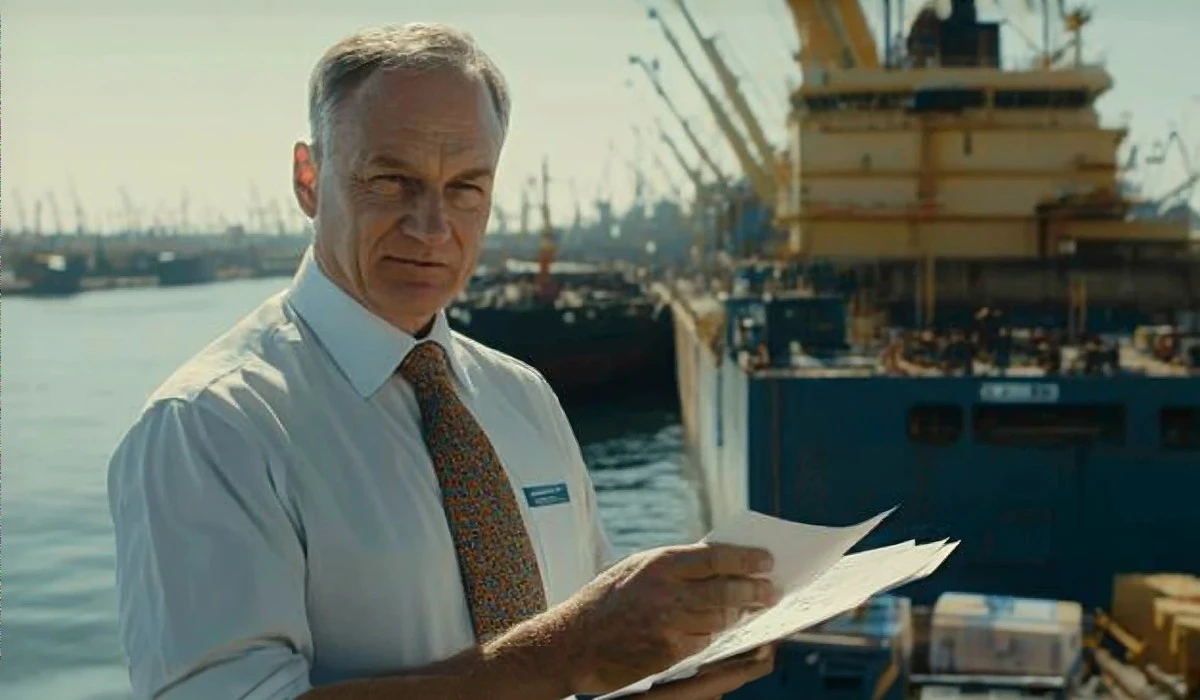
Maritime Law & Shipping Contracts Secure Terms
Most global traders think they control their supply chain because they signed a deal. In reality, a single signature on a back-page clause often strips away your rights before the ship even leaves the dock. You hand over your goods and your legal leverage simultaneously. If you ignore how Maritime Law & Shipping Contracts work, you essentially gamble with your freight. Small font sizes hide massive liabilities. One wrong word turns a profitable voyage into a legal nightmare.
You might think your insurance covers everything. In many cases, specific sea rules leave you paying for someone else's mistake. Recognizing these rules marks the difference between a secure arrival and a total financial loss. Carriers often hide behind century-old protections that limit what they owe you. You must take an active role in defining these terms. Secure contracts prevent surprises when the weather turns or the port closes. Knowledge creates the safety net your business needs to survive on the open water.
Navigating the Foundations of Maritime Law & Shipping Contracts
Global shipping relies on a specific set of rules that date back centuries. These rules balance the risks between ship owners and cargo owners. According to GovInfo, the Harter Act was approved on February 13, 1893, and is necessary to identify the start of modern protections. This law was sponsored by U.S. Representative Michael Daniel Harter, as noted by eajournals.org. GovInfo further reports that the law was designed to prevent carriers from using clauses that nullify liability for negligence. Before this, carriers often wrote contracts that freed them from all liability for their own negligence. Now, the law forces carriers to meet a minimum standard of care for your goods.
Private vs. Public International Maritime Rules
Public rules involve treaties between nations, while private rules involve the specific deals you sign. Local port regulations often change how you handle cargo on the ground. Meanwhile, international conventions dictate what happens once the ship hits the high seas. Most shippers fail to realize that local laws might conflict with international standards. What is the difference between admiralty and maritime law? While often used interchangeably, maritime law refers to the substantive rules of the sea, whereas admiralty law specifically deals with the jurisdictional and procedural aspects of legal cases involving ships.
The "Tackle-to-Tackle" rule provides a clear example of how timing changes your protection. Research from digitalcommons.law.villanova.edu indicates that under the U.S. Carriage of Goods by Sea Act (COGSA) of 1936, the carrier’s liability is strictly limited to the "tackle to tackle" period between loading and discharge. Justia Law clarifies that this coverage applies from the moment goods are loaded until they are offloaded, unless the involved parties contractually agree to extend those terms. If a forklift drops your container in the warehouse before loading, COGSA does not apply. You need to know which law covers the "custodial" periods before and after the sea voyage.
Becoming an Expert in Bill of Lading Law for Maximum Security
The bill of lading acts as the most powerful tool in your shipping arsenal. It serves three distinct roles that protect your financial interests. If you treat it as a simple receipt, you leave money on the table. Bill of lading law creates a framework that prevents carriers from delivering your goods to the wrong person. It ensures the person holding the original document has the legal right to claim the cargo.
The Triple Function of the Bill of Lading
Hapag-Lloyd states that every bill of lading serves as a receipt, evidence of the carriage contract, and proof of cargo ownership. As explained by TT Club, a "Clean Bill" signifies that the carrier received the shipment in apparent good condition. Marine Insight adds that the alternative term for a document noting damage is a "soiled bill of lading." This small change shifts the entire burden of proof. With a clean bill, you can easily prove the carrier damaged the goods during transit. Without it, you must prove the cargo was perfect before it reached the dock.
Negotiable vs. Non-Negotiable Terms
Negotiable bills, often called "Order Bills," allow you to trade ownership of the cargo while it is still at sea. This flexibility helps banks secure loans against the value of the goods. In contrast, a non-negotiable sea waybill only allows delivery to a specific person. You should choose the document type based on your payment terms. If you haven't received payment yet, keep the negotiable bill. This prevents the buyer from taking the goods without paying you first.
Necessary Jurisdictional Realities in Maritime Shipping Law

Where you sue a carrier often matters more than why you are suing them. Different countries interpret maritime shipping law in ways that can double or triple your recovery amount. You must check the "Choice of Law" clause in every contract. This clause dictates which country's judges or arbitrators will hear your case. Ignoring this section means you might have to fly to a distant country to fight for a small claim.
Choosing the Right Governing Law
Marlin Blue highlights that London and Singapore are the preferred locations for maritime arbitration because they offer specialized courts with expert judges. Is a bill of lading a legal contract? Yes, it acts as a legally binding document that serves as evidence of the contract of carriage between the shipper and the carrier. Shippers often prefer these jurisdictions because they offer predictable outcomes. Predictability allows you to assess your risks accurately before a dispute even starts.
The Effect of the Hague-Visby Rules
The 1924 Hague Rules created a global "floor" for carrier obligations. The 1968 Hague-Visby Rules updated these standards to match modern shipping needs. Under these rules, carriers face specific liability limits based on Special Drawing Rights (SDR). Currently, the limit sits at 666.67 SDR per package. If your cargo is heavy, you might use the 2 SDR per kilogram limit instead. These numbers dictate the maximum check a carrier will ever write you for a lost container.
Strategic Clauses to Bolster Maritime Law & Shipping Contracts
Standard contracts usually protect the carrier more than the shipper. You must insert specific clauses to balance the scales. Customizing your Maritime Law & Shipping Contracts allows you to account for modern risks like port strikes or cyber-attacks. Without these specific additions, you might find yourself stuck with massive bills for delays you didn't cause.
Defining Force Majeure After the Pandemic
Old contracts defined Force Majeure as "acts of God," like hurricanes or lightning strikes. Today, you need broader language. Your contract should explicitly list port closures, pandemics, and canal blockages as valid excuses for delays. This prevents the carrier from charging you penalties when a global event stops the ship. Specificity in these clauses saves you from long arguments about what counts as an "unforeseeable" event.
Demurrage and Detention Safeguards
Carriers charge demurrage when your container stays in the port too long. They charge detention when you keep the empty container outside the port past the deadline. Most contracts grant 7 to 14 days of "free time." Steamship Mutual notes that the "Once on Demurrage, Always on Demurrage" maxim is a standard industry rule. According to OOCL, this means charges are assessed for every calendar day, including weekends and holidays, once the free time expires. You should negotiate for 21 days of free time if you know the destination port suffers from frequent congestion.
Risk Allocation and Liability Management
Risk management determines your long-term profitability. You must know exactly when the risk of loss passes from the seller to the buyer. Trade.gov explains that maritime contracts utilize Incoterms to define the exact point where risk transfers from the seller to the buyer. However, the contract of carriage with the ship owner adds another layer of complication. You need to identify every gap where neither insurance nor the carrier will pay for damage.
Limitation of Liability and the "Package" Limit
In the United States, COGSA limits carrier liability to $500 per "package." This rule creates massive problems for high-value cargo. If you ship a $50,000 machine in one crate, the carrier only owes you $500 if they drop it. Who is liable for cargo damage under maritime law? Generally, the carrier is held liable for damage unless they can prove the loss resulted from an exempted peril, such as an act of God or inherent vice of the goods. To avoid the $500 trap, you must declare a higher value on the bill of lading and pay a higher freight rate.
The Himalaya Clause also changes your risk profile. This clause extends the carrier's legal protections to third parties like stevedores and terminal operators. If a crane operator drops your container, the Himalaya Clause prevents you from suing them for more than the $500 limit. You must account for these limitations by carrying your own comprehensive marine insurance policy.
Modern Compliance Trends in Maritime Shipping Law
Environmental rules are changing the way ships operate. These new laws affect your costs and your delivery schedules. Maritime shipping law now includes strict requirements for carbon emissions and fuel types. If a ship fails to comply, authorities can detain it, leaving your cargo stuck at anchor. You need to ensure your contracts address who pays for these environmental upgrades.
Decarbonization and Green Clauses
Reuters reports that the FuelEU Maritime regulation was implemented on January 1, 2025. Data from the European Commission’s Mobility and Transport department shows the rule mandates a 2% greenhouse gas reduction initially, eventually reaching 80% by 2050. BIMCO mentions that carriers use specific operation clauses to adjust ship speeds and reduce fuel consumption for better fuel efficiency. Your contract must state whether the carrier can slow down the ship to save fuel without breaching their promise to deliver the goods quickly.
Sanctions and Geopolitical Risk Clauses
War and sanctions can turn a routine route into a legal minefield. The International Maritime Organization notes that the IMO 2020 rule limited fuel sulphur content to 0.50%. Now, geopolitical tensions require even stricter contract language. Skuld.com suggests including "Liberty Clauses" that allow vessels to deviate from a route during conflicts. Furthermore, BIMCO advises using "Sanction Clauses" that permit a party to cancel a charter party if a carrier becomes blacklisted.
Enforcement and Dispute Resolution Mechanisms
A contract is only as good as your ability to enforce it. When a carrier breaches Maritime Law & Shipping Contracts, you must act fast. Ships move constantly, and your evidence can disappear the moment the vessel leaves the pier. You need a clear plan for gathering data and filing claims. Most maritime disputes never see a courtroom because the parties use arbitration instead.
Arbitration vs. Litigation at Sea
As noted by UNUM, arbitration provides a private and expert-driven method for settling disputes. The London Maritime Arbitrators Association (LMAA) recorded over 3,000 appointments in 2024, according to their official statistics. UNUM also states that shippers often select this route because proceedings are generally faster than court trials. Also, arbitrators usually have decades of experience.
Recently Added
Categories
- Arts And Humanities
- Blog
- Business And Management
- Criminology
- Education
- Environment And Conservation
- Farming And Animal Care
- Geopolitics
- Lifestyle And Beauty
- Medicine And Science
- Mental Health
- Nutrition And Diet
- Religion And Spirituality
- Social Care And Health
- Sport And Fitness
- Technology
- Uncategorized
- Videos

