
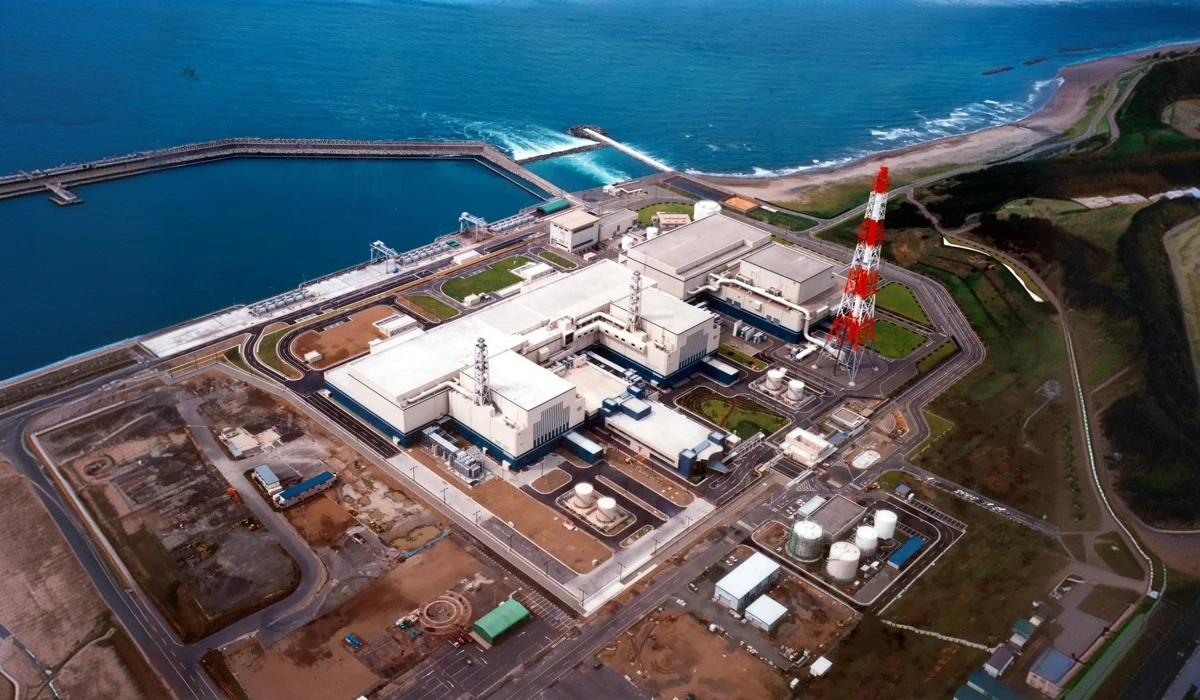
Image Credit - by IAEA Imagebank, CC BY-SA 2.0, via Wikimedia Commons
Japan Restarts Massive Nuclear Plant For Power
When a nation shuts down its primary power source for over a decade, it forces a frantic search for alternatives that eventually leads right back to the start. Japan is doing more than resuming power; the country is attempting to overwrite a history of disaster with a promise of economic survival. This friction creates a trap where the desperate need for energy security compels leaders to ignore the trembling ground beneath their feet.
The focus of this high-stakes wager is the Kashiwazaki-Kariwa nuclear plant, a sleeping giant that is finally waking up. After the Fukushima disaster in 2011, the government locked down all 54 reactors, freezing the sector in place. Now, faced with surging demands from data centers and semiconductor factories, the logic of safety is losing ground to the logic of profit. The re-opening of this facility marks a critical turning point, but it also exposes deep cracks in the foundation of Japan's energy strategy.
The Signal to Restart
A planned delay often reveals more about a system’s fragility than a smooth operation ever could. The physical act of restarting a reactor is simple, but the timing reveals a desperate race against economic decline.
According to World Nuclear News, technicians finally brought the Kashiwazaki-Kariwa nuclear plant Reactor No. 6 back online when they withdrew control rods at 19:02 local time. This event marked the 1st time the operator, TEPCO, has successfully restarted a unit since the 2011 meltdown. The process did not happen smoothly; Reuters reported that the restart faced a delay because TEPCO had to investigate a malfunction with an alarm system. Why is Japan restarting nuclear plants? The government needs to secure energy self-sufficiency and meet surging demand from data centers and semiconductor factories. This specific reactor alone pumps out 1.36 gigawatts of power, enough to supply roughly 1 million homes. Yet, the restart is just the beginning of a long validation process leading toward commercial operations targeted for February 2024.
A Giant Among Reactors
Size often masks vulnerability, and the sheer scale of this facility creates a dependency that is hard to break. As noted by The Guardian, the facility in Niigata Prefecture holds the distinction of being the world's biggest nuclear plant, historically boasting a massive total capacity of 8.2 gigawatts across seven reactors—enough to power millions of households.
Currently, only Unit 6 is active, leaving a vast amount of potential power sitting idle. The government has set a target for Reactor No. 7 to join the grid by 2030. Before 2011, nuclear power provided about 30% of Japan’s electricity. By 2023, that number had plummeted to just 8.5%. The national goal is to push that share back up to 20% by 2040. The sheer size of the Kashiwazaki-Kariwa nuclear plant makes it the linchpin of this strategy. Without it, the math for Japan's energy future simply does not add up.
The Crisis of Trust
A safety manual is useless if the people holding it have a habit of hiding the pages they don't like. TEPCO, the utility company behind the plant, faces a public that remembers its history of cover-ups and failures.
The operator claims it has dedicated itself to security management improvements, but recent events suggest otherwise. In late 2023, a scandal broke involving the mishandling of confidential documents, some of which were lost on a car roof. This mirrors issues at other utilities, such as Chubu Electric, where reviews were suspended due to quake data manipulation. Is TEPCO reliable now? Despite improved safety claims, recent scandals like document mishandling suggest internal culture issues remain unresolved. Criticizers argue that these incidents prove the company is untrustworthy. Expert Florentine Koppenborg notes that these revival efforts are insignificant, describing them as merely "a drop on a hot stone" regarding the overall decline of the industry. The gap between corporate promises and operational reality remains wide.
The Geographic Trade-off
Power lines only flow one way, carrying electricity to the city while leaving the risk anchored in the countryside. This arrangement creates a "lopsided exchange" where rural communities bear the burden for urban consumption.
The Kashiwazaki-Kariwa nuclear plant sits in Niigata, yet the power it generates feeds the hungry grid of Tokyo, hundreds of kilometers away. Local resident Yumiko Abe calls this arrangement illogical: Tokyo consumes the power, but Niigata takes the risk. While national polls show over 50% support for the restart, local sentiment is far more hostile. A petition against the restart gathered 40,000 signatures. Local officials argue that subsidies distort the will of the people, forcing them to accept danger in exchange for funding. The democratic process itself has come under fire. Governor Hanazumi pledged to seek a "public mandate," yet no referendum took place. Instead, the decision relied on an assembly vote, which critics labeled an offence to democracy.

Image Credit - by 皓月旗, CC BY-SA 4.0, via Wikimedia Commons
Economic Desperation
National borders vanish when energy needs spike, forcing nations to align their grids with geopolitical realities. The drive to restart goes beyond lighting homes; it centers on reducing reliance on foreign powers.
LNG imports are expected to drop by 4 million metric tons in 2026 due to the reactor coming back online. This shift is vital for Prime Minister Sanae Takaichi, who assumed office in October 2023 with a sharp focus on energy self-sufficiency. The government argues that renewables are unreliable in Japan's mountainous terrain and cannot support the Net Zero emissions target by 2050 without nuclear aid. Furthermore, the restart strengthens US-Japan cooperation on Small Modular Reactors (SMRs) to counter the dominance of China and Russia in the energy sector. Cabinet Secretary Kihara emphasized that the restart is essential for controlling tariffs and balancing supply and demand.
Nature vs. Engineering
Engineering marvels often fail because they are built to withstand history rather than the unpredictable future. The ground beneath the plant does not care about safety upgrades or watertight doors.
According to The Guardian, the Kashiwazaki-Kariwa nuclear plant sits directly on an active fault zone, having already sustained damage and a transformer fire during a 6.8-magnitude earthquake in 2007. The newspaper also reports that TEPCO has installed 15-meter seawalls and watertight doors to bolster tsunami protection, alongside mobile generators and fire engines for emergency cooling. But experts warn that preparations focus too much on past disasters while ignoring unprecedented threats. What are the risks of the Kashiwazaki-Kariwa plant? The facility sits on an active fault line with evacuation routes that heavy winter snows often block. Infrastructure gaps compound the danger. Evacuation plans remain inadequate, and heavy winter snows frequently paralyze the roads. In a disaster, residents fear they would be trapped. Niigata locals know that the promise of safety is fragile when the earth itself is unstable.
The Financial Reality
A restart resembles a temporary patch rather than a true revival for an industry slowly fading into obsolescence. The costs of maintaining these aging giants are skyrocketing beyond initial predictions.
Economic reality is clashing with political ambition. The expense of meeting strict safety standards has made nuclear power no longer the "cheap" option it once was. Florentine Koppenborg points out that state subsidies are difficult to maintain without contradicting the narrative that nuclear power is affordable. The government is tied financially, trying to balance the massive costs of restarts against the potential for consumer price hikes. Analysts like Filippo Pedretti see this as a major turning point that ends post-Fukushima paralysis, but the financial viability remains in question. As the Global Outlook from the IAEA predicts capacity will double by 2050, Japan must decide if the high price of the Kashiwazaki-Kariwa nuclear plant is an investment or a liability.
Rolling the Dice on Kashiwazaki-Kariwa
The restart of the Kashiwazaki-Kariwa nuclear plant represents a high-stakes gamble on Japan's future rather than a standard industrial operation. The government is betting that engineering can conquer geology and that economic need outweighs local fear. Leaders are prioritizing the demands of Tokyo's power grid over the anxieties of rural residents living in the shadow of the reactor. The tension between the desire for energy independence and the reality of physical risk will define the following decade of Japanese policy. As the reactor hums back to life, the question remains whether this is a step toward stability or a stride toward another unforeseen crisis.
Recently Added
Categories
- Arts And Humanities
- Blog
- Business And Management
- Criminology
- Education
- Environment And Conservation
- Farming And Animal Care
- Geopolitics
- Lifestyle And Beauty
- Medicine And Science
- Mental Health
- Nutrition And Diet
- Religion And Spirituality
- Social Care And Health
- Sport And Fitness
- Technology
- Uncategorized
- Videos

