
Is This The End For Victoria’s Licola Village?
When a charity manages a town like an investment portfolio, the residents eventually become liabilities on a balance sheet. This tension sits at the center of the current conflict in Victoria’s high country. A beloved village, maintained for decades by a service organization, now faces total liquidation. The owners cite financial survival and fiduciary duty. The residents see the erasure of a community’s soul. The Licola town sale goes beyond a real estate transaction. It exposes the fragile nature of communities built on land they do not own. Families who poured life savings into local businesses now face eviction. A history stretching back to timber mills and gold rushes risks disappearing into a developer's portfolio. The clash between spreadsheets and human connection drives every argument, petition, and eviction notice involved in this dispute.
The Real Cost of the Licola Town Sale
Market value rarely accounts for the sweat equity invested by a community. While the land holds a specific price tag, the memories and heritage attached to it carry no weight in a financial audit. The numbers behind the town sale reveal a staggering appreciation in value. According to ABC News, the Lions Club originally acquired the town in 1969. At that time, they paid roughly $20,000 for the property. Decades later, the asking price sits between $6 million and $10 million. This massive jump reflects the land's potential instead of the current business revenue.
A report by Realestate.com.au notes that the property covers 45 acres of freehold land. The listing also specifies that it includes five separate titles. The sale listing highlights a 34-site caravan park and a capacity to sleep over 300 people. These figures attract developers looking for a blank slate. However, for the five permanent residents, these numbers represent their homes. The discrepancy between the original purchase price and the current asking price fuels the local frustration. Residents argue that a non-profit organization should prioritize heritage over maximum profit.
A Verbal Lease Versus a Written Eviction
Security disappears the moment a handshake deal meets a legal contract. Business owners often operate on trust, assuming shared values will protect their tenure, but new management usually prioritizes written terms over verbal history. As stated in a Change.org petition, Leanne O’Donnell bought the General Store in 2022. She stepped into the role with a clear understanding of the town's rhythm. She believed her tenure would last. According to her, the verbal implication suggested a lease term of 15 years. This expectation drove her to invest heavily in the business. She poured her life savings into the store, treating it as a long-term commitment to the area. The reality shifted in January 2025.
The Lions Club notified the town of the impending sale. The eviction deadline for the store operator landed on January 31, 2025. This abrupt timeline shattered the 15-year expectation. The board views the eviction as a necessary step for asset liquidation. They describe the situation as a simple case of "pack up and move." O'Donnell views it differently. Her business relies on the unique location. You cannot simply move a general store that serves a specific remote community. The business model depends entirely on the flow of travelers through the Alpine National Park. The conflict here is stark. One side sees a tenant lease ending. The other side sees the destruction of a livelihood built on good faith.
Why the Lions Club Is Selling Licola
Organizations often cut off their physical roots to save their mission. When maintenance costs outpace revenue, sentimental assets turn into financial anchors that threaten the entire operation. The Lions Club maintains that the sale is a matter of survival rather than greed. Their spokesperson points to a rigorous operational review. This review highlighted a grim reality. Escalating costs make ownership unviable. Insurance premiums continue to rise. The infrastructure, much of it dating back decades, requires constant, expensive repairs.
The Lions Chairman emphasizes their fiduciary duty. Their primary mission involves youth support programs. Every dollar spent fixing a water pipe in Licola means one less dollar for a child in need. They argue that the camp attendance figures have declined. The facility-based model no longer serves their goals well. Through the town sale, they intend to funnel the proceeds into a new foundation. This foundation would support professional camps across Victoria, replacing the burden of property management with flexible funding.
Living Off-Grid in Victoria's Only Private Town
Self-sufficiency sounds romantic until the infrastructure requires a corporate budget to maintain. Living off the grid demands difficult systems that most municipal residents never have to consider. ABC News reports that Licola holds a unique title: it stands as the only completely off-grid town in Victoria. The town does not rely on the state electricity network. Instead, it powers itself through a massive solar microgrid. This system received a significant upgrade in 2019 to ensure reliability. Realestate.com.au highlights that the town also manages its own water and waste treatment.
Is Licola completely off-grid?
Yes, the town operates independently from the main power grid, using its own solar energy system and water treatment facilities. This independence adds value to the property but also technical difficulty. The town serves as the gateway to the Alpine National Park. It sits 254 kilometers east of Melbourne. The isolation draws visitors but complicates logistics. The Lions Club argues that maintaining this level of infrastructure distracts from their core purpose. For the residents, this self-sufficiency is a badge of honor. They keep the lights on and the water running without state help. The sale threatens to hand this delicate setup over to a buyer who may not understand the technical demands of an off-grid village.
The Community Fight Against the Sale
Public outcry serves as the only weapon when legal standing is weak. When a community lacks the deed to the land, they must leverage moral pressure to stall the transaction. The resistance to the town sale gathered speed quickly. Updates on Change.org show that a petition to stop the sale and save the town attracted over 8,000 signatures. This number far exceeds the town’s tiny population of five. It shows the broad effect Licola has on travelers, campers, and former residents.
Locals describe the town as a "home away from home." They argue that the Lions Club is prioritizing a balance sheet over people. Speaking to Realestate.com.au, the store operator frames the conflict as "heart vs. spreadsheets." She feels powerless against property owners who view the town as a unit of capital. Realestate.com.au reports that a GoFundMe campaign launched with a high ambition: the goal is to raise $8 million, though as of now, the fund has raised about $6,700. The gap between the raised amount and the asking price is enormous. However, the effort signals the residents' determination. They want to preserve the town's character and prevent over-commercialization.
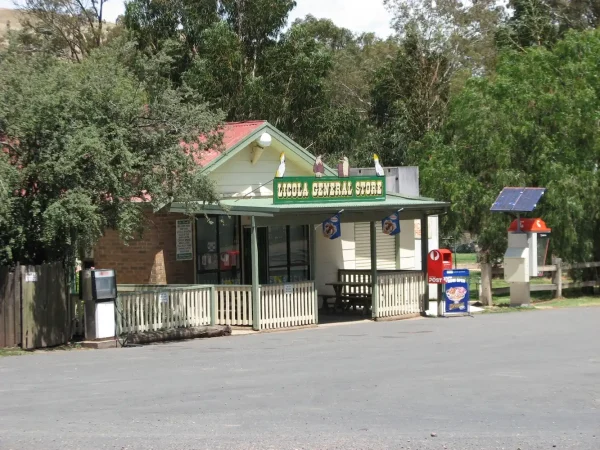
Image Credit - by Melburnian, CC BY 3.0, via Wikimedia Commons
Essential Services at Risk for Travelers
Removing a single business in a remote area creates a service vacuum that stretches for hundreds of kilometers. In the city, a closed store is an inconvenience; in the wilderness, it is a safety hazard. The Licola General Store provides goods beyond milk and bread. It serves as a critical pitstop for travelers heading into the mountains. The Country Fire Authority (CFA) relies on the location for supplies and access. The town also houses a post office with a history dating back to 1908.
Why is Licola being sold?
As reported by Realestate.com.au, the Lions Club states that rising insurance costs and aging infrastructure make owning the town financially unsustainable for their charity work. Closing the store removes these essential services. The board’s decision to remove the post box and shut down the store leaves a gap in the map. Travelers rely on this stop for fuel and information. A Facebook commenter noted that closing during peak season defies logic. The reliance on the store is absolute for anyone venturing into the deep bush. The 2007 floods, which destroyed the Cheynes Bridge, showed how vulnerable the area can be. During disasters, a central hub like the General Store becomes a command center. Residents fear that a private developer will not maintain these public services. They worry the town will turn into a private resort, closed off to the travelers who have depended on it for decades.
The History of the Timber Mill Town
Buildings often outlive the industry that created them. Licola started with a specific industrial purpose, and its current layout still reflects that original design. The town established itself in the 1950s. It functioned primarily as a timber mill. The houses standing today were originally built for mill workers. This industrial origin explains the town's layout and its cluster of buildings. When the mill closed in 1968, the town faced its first existential crisis. The Lions Club stepped in a year later. They bought the town to repurpose it for charitable camps. For over 50 years, this arrangement protected the town from the open market. The current crisis mirrors the 1960s. Once again, the town's primary purpose has evaporated.
Who owns Licola wilderness village?
The Lions Club currently owns the entire town, but they are in the process of selling it to new owners. The shift from a timber town to a charity camp preserved the physical structures. Now, the move to a private asset threatens to alter that preservation. The store operator argues that removing the business erases this community heritage. The "town soul" risks disappearing if the new owners decide to bulldoze the worker cottages for modern luxury cabins.
The Future of the Land and Its People
Developers see potential yield where residents see anchored memories. The final sale will decide whether Licola remains a public gateway or becomes a private fortress. The potential buyers for the sale likely view the property through a commercial lens. The Lions Club has made its position clear. They intend to liquidate the asset to survive. The residents have made their position clear. They want to preserve the town as a community asset. The store operator fears heartbreak. She sees the potential acquisition by developers as the end of the town she loves.
Her deep emotional attachment contrasts sharply with the board's strategic detachment. The Lions Club believes the proceeds will do more good elsewhere. They plan to support youth through different channels. The petition and the protests highlight a disconnect. The sellers look at the future of their organization. The residents look at the future of their home. The outcome of this sale will set a precedent for other charity-owned assets in Australia. It asks a difficult question: Does a long-term tenant have any moral claim to the land they tend?
Conclusion: The Final Transaction
Ownership provides the legal right to sell, but residency creates the moral right to belong. The Licola town sale proves that these two concepts often do not overlap. The Lions Club will likely succeed in selling the property. The financial pressure of insurance and maintenance leaves them few options. However, the cost of this transaction extends beyond the price paid by the buyer. It includes the displacement of a community and the loss of a historic safe haven for travelers. As the eviction deadline passes, the town waits to see if its soul serves as part of the deal or if it will be evicted along with the tenants.
Recently Added
Categories
- Arts And Humanities
- Blog
- Business And Management
- Criminology
- Education
- Environment And Conservation
- Farming And Animal Care
- Geopolitics
- Lifestyle And Beauty
- Medicine And Science
- Mental Health
- Nutrition And Diet
- Religion And Spirituality
- Social Care And Health
- Sport And Fitness
- Technology
- Uncategorized
- Videos

