

International Oil and Gas Law: Guide For Pros
Imagine a driller hits a pocket of gas five miles beneath the ocean floor. Pressure builds. The metal holds, but the permit expired yesterday. Suddenly, a technical success becomes a legal disaster that wipes out five years of profit. Most companies focus on the drill bit, yet the real power lies in the fine print of global treaties.
Operating a rig without a thorough understanding of the rules creates massive financial risk. Comprehending International Oil and Gas Law determines who stays in business after a high-pressure event. These laws provide the actual guardrails for every deepwater project on the planet. Professionals who follow international drilling regulations build projects that withstand both physical pressure and high-stakes litigation.
The UNCLOS Framework and Maritime Sovereignty
Nations claim the seabed through the UNCLOS framework. According to the UNCLOS text, Article 76 defines the "Continental Shelf" as comprising the seabed and subsoil of the submarine areas that extend beyond its territorial sea. As outlined in UNCLOS Part VI, this legal definition gives a coastal state sovereign rights for the purpose of exploring and exploiting its natural resources. If you move a rig into these waters, you enter that nation’s jurisdiction.
Understanding these boundaries prevents illegal drilling in disputed zones. Many companies face delays because they fail to verify who owns the subsoil. UNCLOS sets the stage for every offshore contract. It tells you which government collects the royalties and which coast guard inspects your safety valves.
Harmonizing National Statutes with Global Standards
Most countries blend their local laws with international benchmarks. They often adopt ISO 19900 standards for offshore structures to ensure the metal doesn't fatigue in heavy seas. This creates a predictable environment for global operators. What are the main rules for offshore drilling? The primary rules include the United Nations Convention on the Law of the Sea (UNCLOS) for jurisdictional boundaries and MARPOL for preventing marine pollution. These frameworks ensure that operators maintain a baseline of environmental and operational safety regardless of their location.
Host Government Contracts (HGCs) act as the bridge between these global rules and local needs. These contracts define your safety obligations before you even move the rig. A solid contract includes "Stabilization Clauses." These clauses freeze the law at the time of signing. This prevents a government from passing a new, expensive safety law and forcing you to pay for it overnight.
Reducing Liability through Proactive Compliance
Legal adherence protects the parent company from total ruin. When a major accident happens, lawyers try to "pierce the corporate veil." They want to take money from the headquarters, rather than the local branch. Following international drilling regulations creates a vital shield against these claims.
The AIPN Model Joint Operating Agreement (JOA) helps manage this risk between partners. It contains "Exculpatory Clauses." These limit an operator’s liability to their partners unless they commit "Gross Negligence" or "Wilful Misconduct." Documenting every safety check proves you met the legal standard of care. This documentation saves billions when a partner tries to sue for project delays or equipment failures.
Enhancing Investor Confidence and ESG Scoring
Banks only fund projects with clear legal pathways. Most major lenders follow the Equator Principles (EP4). As stated in the Equator Principles EP4 document, this framework serves as a baseline for financial institutions to assess and manage environmental and social risks when funding projects. Transparent alignment with International Oil and Gas Law makes your project a safer bet for high-level investors.
A high ESG score often leads to lower interest rates on project loans. If you adhere to the 1992 Rio Declaration, where national authorities endeavor to ensure the polluter bears the cost of pollution, investors trust your long-term viability. They know you have budgeted for cleanup and remediation from day one. This legal transparency turns compliance into a financial asset.
Blowout Preventer (BOP) and Well-Control Mandates
After the Deepwater Horizon disaster, the legal requirements for well control changed forever. The industry adopted API Standard 53 as the global benchmark. As recorded in the Federal Register, this standard mandates dual shear rams on blowout preventers, requiring that operators use two shear rams in subsea BOP stacks. These rams must have the power to cut through thick drill pipe and seal the well in seconds.
International law now requires real-time pressure monitoring for all subsea wells. Regulators want to see the data at the same time the driller sees it. This prevents "blind" drilling where the shore team has no idea a kick is happening. These technical legal requirements ensure that a small mistake doesn't turn into a global headline.
Third-Party Verifications and Safety Case Regimes
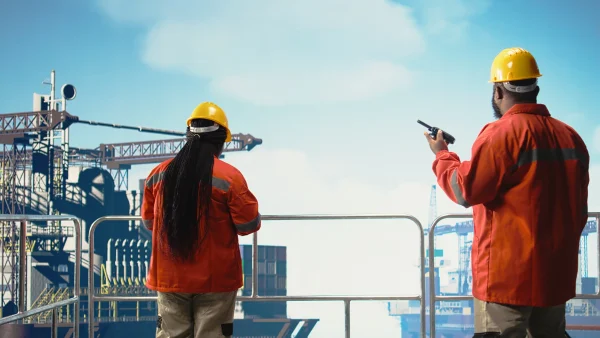
The "Safety Case" model serves as the benchmark for offshore operations. A report by the Society of Petroleum Engineers notes that the central recommendation of the Lord Cullen Report was the introduction of the Offshore Installation Regulations (Safety Case) in 1992. According to HSE guidance, this method requires the duty holder to show that major accident hazards have been identified and their risks evaluated. Who is responsible for safety on an oil rig? Under most international frameworks, the licensed operator holds primary responsibility for the safety of personnel and the environment. However, contractors must also comply with specific safety management systems as mandated by the host country’s drilling regulations.
The MODU Code from the International Maritime Organization (IMO) also plays a huge role. It provides the construction standards for mobile rigs. It covers everything from stability in a hurricane to the fire-fighting equipment in the galley. Following these codes ensures your rig can work in any ocean without needing a total rebuild to meet local laws.
MARPOL and Waste Management Protocols
The MARPOL treaty dictates how you handle waste at sea. Annex I specifically targets oil discharge. According to MARPOL Annex I regulations, you cannot dump oily mixtures into the ocean unless the effluent, without dilution, has an oil content not exceeding 15 parts per million. Rigs must use automatic shut-off systems to stop the flow if the sensors detect too much oil.
Annex V bans the disposal of all plastics. As noted by the Australian Maritime Safety Authority regarding MARPOL Annex V, garbage regulations explicitly include all plastics. This seems simple, but on a rig with 200 people, it requires massive logistics. You must track every piece of trash and prove it returned to shore. Following these international drilling regulations prevents massive fines and protects the local ecosystem from long-term damage.
Methane Abatement and New Emission Standards
Modern drilling permits now include climate targets. The Global Methane Pledge has pushed regulators to demand leak detection and repair (LDAR) programs. You must use infrared cameras to find "fugitive emissions" from valves and seals.
If you ignore these standards, you risk losing your "Social License to Operate." Neighboring countries can also sue under the Espoo Convention. As outlined by UNECE regarding the Espoo Convention, the party of origin must ensure that an environmental impact assessment is undertaken prior to a decision. Managing methane today protects the project from the lawsuits of tomorrow.
The Jones Act and Maritime Labor Protections
Worker rights vary by region, but the Maritime Labour Convention (MLC) 2006 sets a global floor. Often called the "Seafarers' Bill of Rights," it ensures decent living conditions and fair pay. On a rig, this means providing safe cabins, clean water, and medical care.
In the United States, the Jones Act provides specific protections for workers on vessels. If you operate a mobile rig, your crew might fall under these maritime laws rather than standard land-based labor laws. This distinction changes how you handle injury claims and insurance. Knowing which law applies ensures your crew stays protected and your company stays out of court.
Training Standards and Competency Certifications
Training prevents human error, which causes most rig accidents. OPITO standards provide the global benchmark for safety training. According to OPITO standards, to achieve the Basic Offshore Safety Induction and Emergency Training (BOSIET), learners will need to complete the 4 mandatory units. Can a company be fined for international drilling violations? Yes, companies can face massive administrative fines and the revocation of their drilling licenses if they fail to meet the safety or environmental standards set by international treaties. These penalties are often enforced by national regulators who adopt global standards into their local legal codes.
Competency represents a strict legal requirement under International Oil and Gas Law. If an accident happens and your crew lacks the right certificates, your insurance might refuse to pay. Standardized training ensures that a driller from Brazil can work safely with a subsea engineer from Norway.
Planning for the End of the Well Life Cycle
You must plan for the death of a well before it even starts producing. As mandated by OSPAR Decision 98/3, the dumping or leaving wholly or partly in place of disused offshore installations is prohibited. You cannot simply leave an old platform to rust. You must plug the well with cement and pull the steel out of the water.
This "Decommissioning" process costs millions. Governments now demand "Financial Assurance Bonds" or escrow accounts to cover these future costs. They want to ensure that if your company goes bankrupt, the taxpayer doesn't get stuck with the bill. Applying these international drilling regulations helps you budget accurately for the entire life of the asset.
Parent Company Guarantees and Financial Security
Regulators often demand a Parent Company Guarantee (PCG). This legal document links the tiny local subsidiary to the multi-billion-dollar parent company. It ensures that the "big" company pays for any environmental damage or decommissioning costs.
Using these financial instruments shows you are a responsible operator. It also helps you win bids for new blocks. Governments prefer companies that show they can handle the "end of life" phase of a project. Securing these funds early stabilizes the project's financial future and fulfills your legal duties under International Oil and Gas Law.
Digitization and Real-Time Regulatory Monitoring
Technology is changing how we follow the law. ISO 15926 standards now allow for "Digital Twins." This is a virtual copy of your rig that updates in real-time. Regulators can log in from a thousand miles away and check your safety systems.
This remote auditing reduces the need for physical inspections and speeds up the permit process. It also creates an "unalterable record" of safety. If a valve fails, the digital twin records exactly when and why it happened. This data provides a powerful defense in legal disputes, proving that you followed all international drilling regulations to the letter.
Emerging Frontiers and Arctic Drilling Constraints
Drilling in the Arctic brings unique legal challenges. The Arctic Council’s SAR Agreement mandates that countries work together on search and rescue. Because the environment is so fragile, the rules for waste and spill response are much tougher than in the Gulf of Mexico.
In these sensitive areas, the law moves faster than the technology. You must stay ahead of new treaties that could ban certain types of drilling fluid or limit the drilling season. Success in these new frontiers requires a mindset that treats legal compliance as a core part of the engineering process.
Securing the Future of Global Energy
Safe drilling doesn't happen by accident. It results from experts' understanding of the complicated world of International Oil and Gas Law. These rules set limits and provide a clear path for sustainable growth. Following the standards for well control, worker safety, and environmental protection reduces the risks that kill projects.
Operators should see international drilling regulations as a tool for excellence. When you build your project on a foundation of legal adherence, you protect your people, your profits, and the planet. This proactive approach ensures that the global energy industry remains a force for progress for decades to come. Adhering to International Oil and Gas Law is the only way to lead in a world that demands both energy and accountability.
Recently Added
Categories
- Arts And Humanities
- Blog
- Business And Management
- Criminology
- Education
- Environment And Conservation
- Farming And Animal Care
- Geopolitics
- Lifestyle And Beauty
- Medicine And Science
- Mental Health
- Nutrition And Diet
- Religion And Spirituality
- Social Care And Health
- Sport And Fitness
- Technology
- Uncategorized
- Videos

