
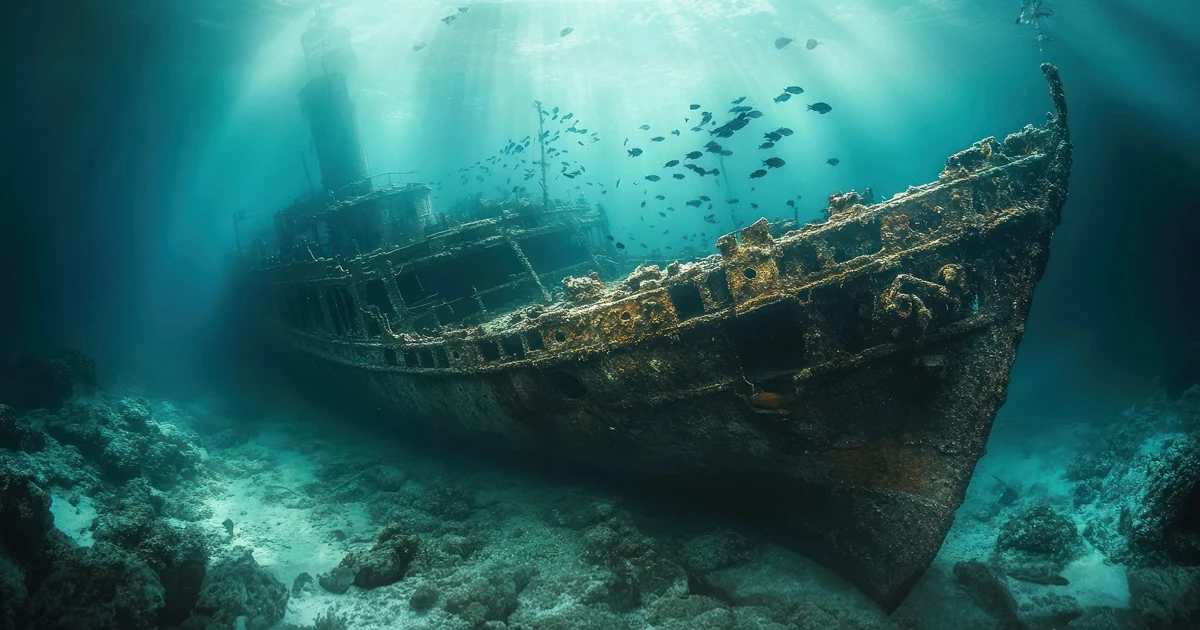
How The Shadow Fleet Leaves Sailors Starving
When a massive cargo ship stops moving, the money usually stops flowing with it. But sometimes, the lack of radio contact acts as a deliberate business plan. Thousands of sailors right now are floating in a legal void, watching their food supplies rot while their employers vanish into thin air.
Ivan, an officer on a crude oil tanker, watched his ship leave the Russian Far East in November 2025. The destination was China. The cargo was valuable, worth nearly $50 million. Yet, by February 2026, Ivan and his crew sat stranded in international waters. They had no fresh meat, no fish, and no clear way home. They became statistics in a growing global crisis driven by the shadow fleet. This underground network of aging, uninsured vessels keeps oil moving while leaving crews behind. The surge in these ghost ships has created a dangerous reality where abandonment is just another line item on a balance sheet.
The Hunger Trap and the Frozen Paycheck
Hunger is often the first sign that a corporate shell company has decided to cut its losses. For Ivan and his crew, the trouble started quietly. Their vessel carried about 750,000 barrels of Russian crude oil. The value of that oil stood at roughly $50 million. Logic suggests that an owner would want to protect such a massive asset. However, the math on the ship told a different story.
The crew had not received wages for months. By the time the International Transport Workers' Federation (ITF) stepped in during December 2025, the total arrears for Ivan’s ship alone hit $175,000. That debt seems small compared to the $50 million in cargo. Yet, the ship sits idle. China refused port entry. The owners went silent.
Life on board shifted from work to survival. Ivan reported that provisions depleted rapidly. The kitchen ran out of meat, grain, and fish. Morale collapsed. The crew found themselves existing in a "day-to-day survival mode," fueled only by hunger and anger. This is the human cost of the shadow fleet operations. Sailors sign contracts expecting a career, but they end up as hostages on floating prisons.
Global Abandonment: A Spike in the Statistics
A single unpaid wage bill looks like a mistake, but hundreds of them look like a strategy. The year 2025 marked a dark turning point for maritime labor. According to a report by Euronews, the number of abandoned ships spiked to 410 globally. This represents a 33% increase from 2024. Beyond being empty boats, these vessels serve as floating homes for 6,223 seamen who lost their freedom and their income.
The ITF defines abandonment clearly. A ship is abandoned if the owner fails to pay for repatriation, stops paying wages for two months or more, or fails to provide basic maintenance and support. By these standards, the industry is failing at a record rate.
What causes ship abandonment?
Ship abandonment occurs when vessel owners face financial trouble or determine that walking away from a vessel is cheaper than fixing it or paying the crew.
The drivers of this spike involve multiple factors. Geopolitical instability and global conflicts disrupted supply chains. Freight costs became volatile. But a primary culprit is the rise of the shadow fleet. Reuters highlights that owners use these ships to bypass Western price caps on Russian oil. When the political heat gets too high, or the ship requires expensive repairs, the owners simply disappear. The ITF recovered $16.5 million in unpaid wages in 2025, but the total owed was $25.8 million. Millions of dollars remain stolen from the workers who keep the world economy moving.
The Shadow Fleet and the Registry Game
Instead of retiring, old vessels simply turn off their tracking systems and change their names to keep working. As noted by Philstar, 78 percent of the shadow-fleet tankers were older than 15 years. In a normal market, these ships would go to the scrapyard. In the current market, they carry sanctioned oil for Russia, Iran, and Venezuela.
The growth of this fleet relies on regulatory blind spots. The Gambia, a small West African nation, offers a stark example. Lloyd’s List reported that in 2023, The Gambia had zero oil tankers in its registry, but by March 2025, that number jumped to 35 tankers. This sudden growth does not reflect a booming domestic oil industry. It reflects foreign owners seeking a flag that asks fewer questions.
The Star reports that these ships operate in the margins, often as aging vessels of obscure ownership that are likely uninsured and sail under flags of convenience. When they break down or get blocked from ports—like Ivan’s ship outside China—the owners have little incentive to intervene. The vessel becomes a liability. The crew becomes collateral damage.
Flags of Convenience: The Legal Shield
Rules only work when the people enforcing them actually exist. The maritime industry runs on a system called "Flags of Convenience" (FOC). A ship owner in Greece or Russia can register their vessel in Panama or the Marshall Islands. This allows them to hire cheaper labor and pay lower taxes. It also allows them to hide.
In 2025, FOC states like Panama, Liberia, and the Marshall Islands accounted for 46.5% of all merchant ships by weight. Data from Safety4Sea reveals that these registries accounted for 82% of the abandonment cases, meaning a staggering 337 ships flying these flags were abandoned in a single year. Mark Dickinson of Nautilus International points out the core failure here. There is no "genuine link" required between the owner and the flag state.
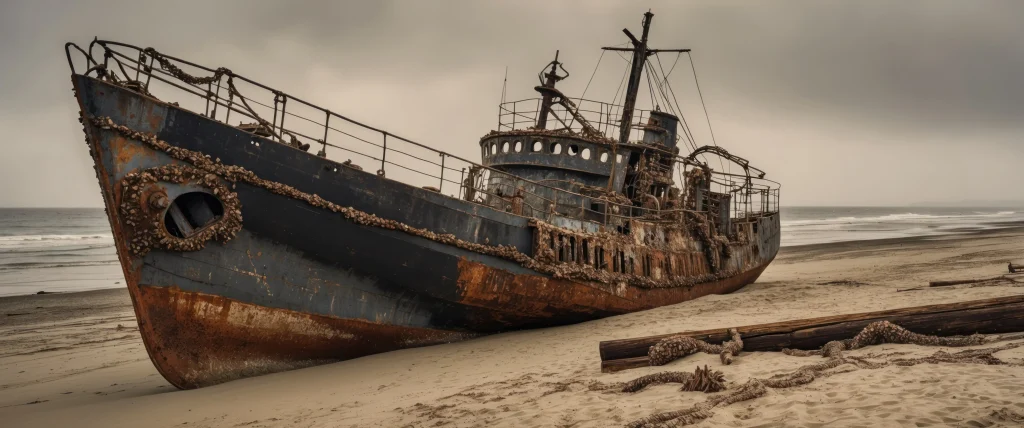
Why are Flags of Convenience dangerous?
Flags of Convenience allow ship owners to remain anonymous and avoid strict regulations, making it difficult to hold anyone accountable when things go wrong.
The registry nations often lack the power or the will to enforce laws on the ships flying their flags. They collect the registration fees but fail to protect the crews. When Ivan’s ship got stuck, there was no strong government advocate demanding his release. The FOC system creates a layer of legal fog that protects the shadow fleet operators while exposing sailors to immense risk.
The Human Toll on Indian Seafarers
Labor flows to where the money is, even when the money turns out to be a lie. The abandonment crisis hits certain nationalities harder than others. In 2025, Indian sailors suffered the most. A total of 1,125 Indian seamen found themselves abandoned. This accounts for 18% of the global total.
Filipinos and Syrians also faced high rates of abandonment, with 539 and 309 sailors affected respectively. These workers often support extended families back home. When the wages stop, the consequences ripple through entire communities. The mental health degradation on board these ships is severe. The uncertainty of return creates a unique psychological torture. Men like Ivan do not know if they will be stuck for weeks or years.
Stephens Cotton, the General Secretary of the ITF, calls this a "calculated act." He argues that seafarers are often blind to the risks. They sign contracts without knowing the ship’s true destination or the owner’s history. They walk onto the deck expecting a job and find themselves in a trap.
Scrapping vs. Abandonment: The Economics
Leaving a ship to rot often costs less than bringing it home legally. The decision to abandon a ship relies on financial calculation rather than emotion. An old tanker might fetch $10 to $15 million if sold for scrap metal. However, official scrapping channels require compliance with environmental laws and international banking rules.
The shadow fleet operates outside the US dollar system to avoid sanctions. They often use crypto or non-USD currencies. This makes accessing legitimate scrapping markets difficult. Furthermore, if a ship has legal issues or sanctioned cargo on board, the risk of arrest is high.
What happens to abandoned ships?
Abandoned ships often sit at anchor until they deteriorate, pose environmental threats, or are eventually sold off by local authorities to cover port dues.
Owners weigh the options. Scrapping brings a profit, but abandonment avoids the cost of repatriation and outstanding wages. If the wage bill and the potential legal fines exceed the scrap value, the owner walks away. Experts on "ghost ships" agree that disappearance is a preferred financial strategy over regulatory compliance. The ship becomes a total loss on paper, but the owner saves millions in liability.
Environmental Ticking Time Bombs
A stranded tanker is a ticking time bomb waiting for the weather to turn against it. The risk extends beyond the crew. These abandoned vessels are old and poorly maintained. They carry millions of gallons of oil and hazardous fuel.
The "FSO Safer" in the Red Sea serves as a grim warning. Abandoned since 2015, it held 1 million barrels of oil. It threatened to destroy heat-resistant corals, one of the last surviving reef ecosystems. A spill there would have been catastrophic.
The shadow fleet increases these risks. In December 2025, a ship named "Eagle S," flying a Cook Islands flag, severed five undersea cables in the Gulf of Finland. The ship had transported sanctioned oil before being scrapped in Turkey. This case highlights the chaos these vessels cause. They lack insurance. They lack oversight. When they crash or leak, no one picks up the phone. The "RULET" project by NOAA in the US has already identified 20,000 shipwrecks, categorizing them by pollution risk. The surge in abandonments adds fresh hazards to this list every month.
The Regulatory Fight Back
Paper laws struggle to catch steel ships that operate in the dark. Authorities are attempting to close the net. India took decisive action in September 2025 by blacklisting 86 foreign vessels. This move aims to protect the thousands of Indian sailors disproportionately affected by the crisis.
However, enforcement remains difficult. The legal gap is massive. International Maritime Organization (IMO) protocols exist for wreck removal, but they require an identifiable owner. Shell companies make this impossible.
For sailors like Ivan, the only defense is vigilance. He has promised to check vessel conditions and provisions before signing any future contract. He plans to perform online checks for sanctions or bans. But this places the burden of safety on the worker, not the industry. Until the loophole of the shadow fleet is closed, the sea will remain a lawless place for the people who work there.
The Human Cost of the Shadow Fleet
The maritime industry relies on trust, but the current system rewards those who break it. The rise of the shadow fleet has turned the ocean into a jurisdiction-free zone where ships vanish and sailors starve. The case of Ivan and his crew represents a direct result of a business model that prioritizes sanctions evasion over human life.
Owners hide behind Flags of Convenience, stripping vessels of their identity and crews of their rights. While regulators scramble to blacklist ships and recover wages, the economic incentives still favor abandonment. Until genuine links between owners and ships are enforced, the shadow fleet will continue to grow, leaving more seafarers trapped in the quiet desolation of international waters. The cost of this cheap oil is paid for by the men waiting for a rescue that might never come.
Recently Added
Categories
- Arts And Humanities
- Blog
- Business And Management
- Criminology
- Education
- Environment And Conservation
- Farming And Animal Care
- Geopolitics
- Lifestyle And Beauty
- Medicine And Science
- Mental Health
- Nutrition And Diet
- Religion And Spirituality
- Social Care And Health
- Sport And Fitness
- Technology
- Uncategorized
- Videos

